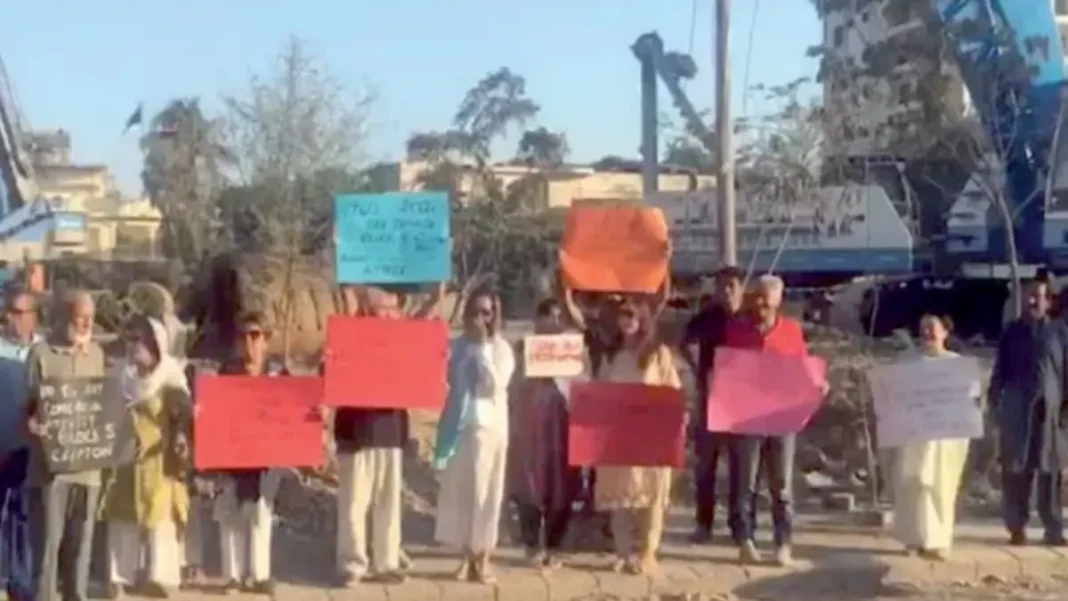
The Clifton high-rise protest brought residents of Karachi’s Clifton neighbourhood onto the streets against the high-rises reshaping their area, saying the area’s civic foundations are crumbling beneath the concrete boom, The Express Tribune reported.
Residents gathered outside Cross Court near Do Talwar and asked how buildings of 40 to 46 storeys were being approved in a neighbourhood already short of water, sewerage, drainage and parking. They demanded accountability from the authorities that issue construction approvals, and an immediate halt to illegal building.
Clifton is among Karachi’s costliest residential areas, yet protesters said it has no working sewerage system, its roads are broken, and rubbish collection is far from adequate. Rubbish piles up on several streets, and even a moderate downpour leaves parts of the area under several feet of water. In some streets, sewage sits stagnant while new towers keep rising.
Clifton high-rise protest: a waterway under threat
The protesters also raised Nehr-e-Khayyam, describing the waterway as essential for draining rainwater and for keeping the area’s environment in balance.
They feared encroachments, building along its banks and growing commercial activity would damage its original character and reduce its capacity to drain water. They called for an independent technical assessment of the work around the waterway, and for its boundaries to be protected from encroachments and needless construction.
The Sindh Building Control Authority is the body that approves building plans in the province. Residents want to know how approvals for such tall buildings were granted while basic utilities were already stretched thin.
Daily life under construction
The protesters said round-the-clock building, the steady commercialisation of residential streets and the spread of padel courts were adding pressure to a system already under strain. They questioned the logic of allowing towering structures when the neighbourhood’s basic services could not cope.
Clifton is also home to the diplomatic missions of several countries. Residents said the alleged illegal building and the poor state of civic services raised serious questions about how the relevant authorities were performing.
Building safety is a Karachi issue
Karachi has paid a heavy price for weak building oversight before. The Gul Plaza case is still before the courts, with a shopkeeper telling the court that gates were locked and alarms were missing when fire swept through the building.
That case is a reminder of what is at stake when approvals and safety checks fail. Clifton’s residents are asking for the same lesson to be applied before a disaster, not after one.
The city’s wider pressures are visible in other ways too. Karachi has recorded 197 encounter killings this year, a sign of the strain on law and order, while local government reform moves slowly, as Islamabad’s delimitation of 130 union councils shows. Even the air carries a warning: smog has gripped Punjab, with hazardous readings across the province’s cities.
For Clifton’s residents, the demand is simple. Stop illegal building, fix the sewers, water and roads first, and protect Nehr-e-Khayyam before the next tower rises. The residents said they would keep protesting until the authorities acted on their demands.
Frequently asked questions
Where did Clifton residents protest?
Outside Cross Court near Do Talwar in Clifton, Karachi, against illegal constructions and failing civic services.
How tall are the buildings residents object to?
Residents questioned how 40- to 46-storey buildings were allowed in an area short of water, sewerage, drainage and parking.
What is Nehr-e-Khayyam?
A waterway in Clifton that residents describe as vital for rainwater drainage and the area’s environmental balance.
What do residents want?
Accountability from the authorities issuing construction approvals, an immediate halt to illegal building, and an independent technical assessment of work around Nehr-e-Khayyam.
Why does building safety matter in Karachi?
The Gul Plaza case, still before the courts, showed what can happen when approvals and safety checks fail in a Karachi building.