Quick Facts
- Location: Bhabrana Mohalla, Jhang-Magghiana, Jhang city, Punjab, Pakistan
- Altitude: Around 150 metres above sea level (Punjab plain)
- Famous For: A splendid three-storey pilgrims’ dharamsala built by Bhai Hema Ji for the fair on Guru Nanak’s birthday
- Nearest City: Jhang itself; Faisalabad is about 70 kilometres away
- Accessibility: Inside Jhang city, reached by road from Lahore, Faisalabad, or Multan; the building currently houses families, so view respectfully from outside unless invited in
- Known Landmarks: The three-storey dharamsala, Heer Ranjha’s tomb, the Shrine of Sultan Bahoo at Garh Maharaja
- Best For: Sikh heritage seekers, spiritual travellers, lovers of old Punjab’s layered history
Why Visit Dharamsala Bhai Hema Ji, Jhang
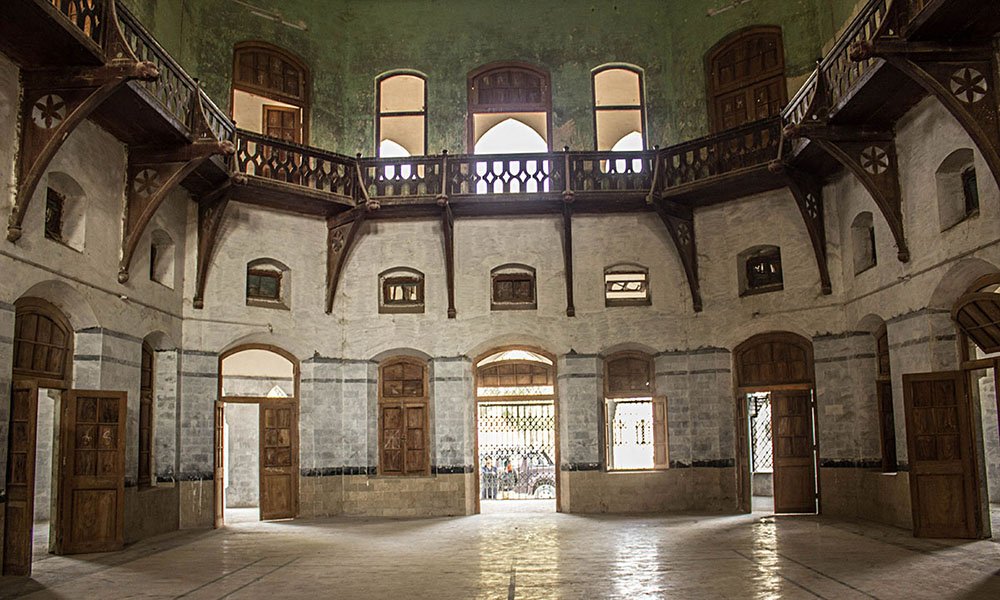
In the Bhabrana Mohalla of Jhang-Magghiana stands a large, beautiful three-storey building that once welcomed pilgrims from across the region. Bhai Hema Ji built it for the travellers who assembled for the fair on the birthday of Guru Nanak, and every need of those pilgrims was cared for within its walls. Today it is a quiet monument to a time when Jhang was a meeting point of faiths — a Sikh pilgrims’ rest house in a city now known for Sufi shrines and the legend of Heer Ranjha.
This is heritage travel at its most honest. The dharamsala is not polished for tourists; refugee families have lived in it since 1947, and the building, repaired by the Government of Pakistan in 1953-54, is again in need of care. Visiting is an act of remembrance: you come to see the architecture, to understand what the Guru Nanak birthday fair meant to this region, and to keep the story of Bhai Hema Ji’s generosity alive by telling it.
The dharamsala suits travellers who love the deeper layers of Punjab’s history — the Sikh, Sufi, and folk traditions that share the same soil. It pairs naturally with Jhang’s other landmarks: the tomb of Heer and Ranjha, the shrine of Sultan Bahoo, and the old bazaars of Magghiana. If you are the kind of traveller who seeks out the places the tour buses skip, Jhang will reward you.
Come in the cool months, walk the mohalla with respect for the families who live in the building, photograph the facade from the street, and then spend the afternoon at Heer’s tomb and the Chenab riverbank. Few places in Punjab compress so many stories into one city.
History of Dharamsala Bhai Hema Ji, Jhang
The dharamsala’s story begins with devotion and hospitality. Bhai Hema Ji, a Sikh of Jhang, built this large three-storeyed building in the Bhabrana Mohalla of Jhang-Magghiana as a pilgrims’ rest house for the fair organised on the birthday of Guru Nanak Dev Ji. Historical accounts of Sikh shrines in Pakistan record that every need of the pilgrims was provided for within the building itself — food, shelter, and a place of gathering — making it a complete dharamsala in the old Sikh sense: not just a prayer hall, but a house of the faith that fed and sheltered the sangat.
Jhang gave the dharamsala its setting. One of the oldest districts of Punjab, in the Sandal Bar region between the Chenab and the Jhelum, Jhang was long a place where Sikh, Muslim, and Hindu communities lived side by side. The city is the homeland of the Heer Ranjha legend and of the great Sufi saint Sultan Bahoo, and before 1947 its Sikh community maintained several shrines, including the well-known Gurdwara Bhai Khan Chand in Chambeli Bazaar. The dharamsala of Bhai Hema Ji was part of that plural landscape, drawing pilgrims each year for the Guru’s birthday fair.
Partition changed everything. The Sikh families of Jhang migrated, the fairs ceased, and the dharamsala’s halls filled instead with refugee families arriving from across the new border. Recognising the building’s significance, the Government of Pakistan arranged its repair in 1953-54. The dharamsala survived, but the decades since have worn it down again: surveys found refugee families still settled in it and the building once more in need of extensive repairs.
Today the dharamsala stands as a beautiful, weathered witness to Jhang’s layered past. It is best appreciated from the outside, with respect for its current residents — a three-storey reminder that this city once rang with the songs of Guru Nanak’s birthday fair, in the same streets that now host the Urs of Sultan Bahoo.
Top Things to Do in Dharamsala Bhai Hema Ji, Jhang
See the Three-Storey Dharamsala Facade
Walk through Bhabrana Mohalla in Jhang-Magghiana to view the dharamsala’s splendid three-storey frontage. Because families live in the building, treat it as a residential heritage site: admire from the street, do not enter uninvited, and ask politely if you hope to see the interior. Early morning light shows the old brickwork at its best.
Visit the Tomb of Heer and Ranjha
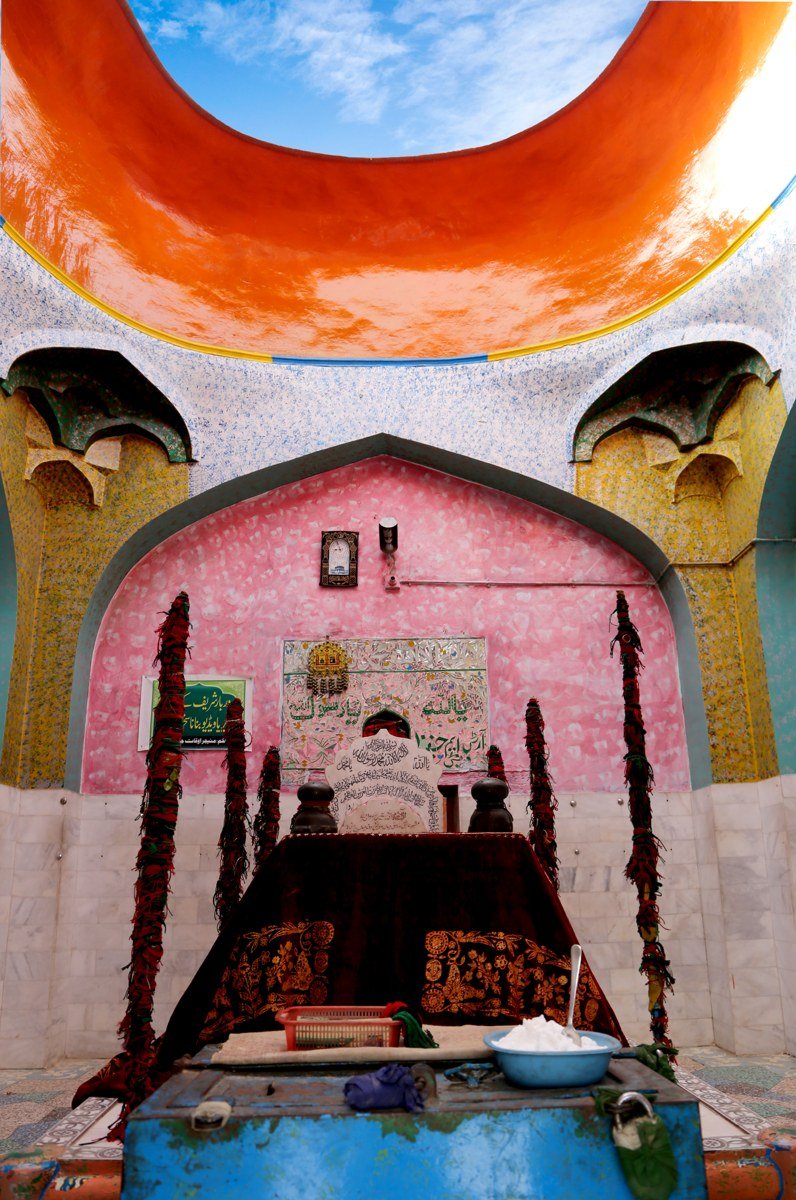
Jhang’s most famous landmark is the tomb of the legendary lovers, where Heer and Ranjha are said to rest in a single grave beneath an eye-catching dome. The limestone plaque reads “Darbar Ashiq-e-Sadiq Mai Heer wa Mian Ranjha” — the court of the true lovers. Pilgrims of love come here to pray for their wishes, and the shrine’s atmosphere is unlike anything else in Punjab.
Pay Respects at the Shrine of Sultan Bahoo
South of Jhang at Garh Maharaja stands the shrine of the 17th-century Sufi saint Sultan Bahoo, one of Punjab’s most visited dargahs. The complex, with its mosque, courtyard, and decorated tombs, is a fine example of the region’s shrine architecture. During the annual Urs, millions gather here amid folk singers, food stalls, and the famous Dargah Bazar.
Explore Magghiana’s Old Bazaars and Chambeli Bazaar
Jhang’s twin towns, Jhang Sadar and Magghiana, hold old bazaars worth wandering. In Chambeli Bazaar stands the Gurdwara Bhai Khan Chand, another of the city’s Sikh shrines, also repaired in 1953-54. The bazaars sell everyday Punjabi goods, sweets, and cloth at honest prices.
Walk the Chenab Riverbank
Jhang sits on the eastern bank of the Chenab, and the riverbank at sunset is the city’s natural gathering place. Combine it with a visit to the nearby Trimmu Barrage, where the Chenab and Jhelum meet, for wide water views and birdlife in winter.
Famous Places In and Around Dharamsala Bhai Hema Ji, Jhang
- Tomb of Heer and Ranjha: The legendary lovers’ shared grave under its distinctive dome — Jhang’s signature landmark.
- Shrine of Sultan Bahoo: The great Sufi saint’s dargah at Garh Maharaja, south of Jhang, with its mosque and Dargah Bazar.
- Gurdwara Bhai Khan Chand: The well-known Sikh shrine in Chambeli Bazaar, Magghiana, repaired by the government in 1953-54.
- Trimmu Barrage: The barrage near Athara Hazari where the Chenab and Jhelum rivers meet — good for river views and winter birds.
- Chenab Riverbank: Jhang’s riverside promenade area, best at sunset.
How to Reach Dharamsala Bhai Hema Ji, Jhang
Jhang is well connected by road to Punjab’s main cities. From Lahore, the drive is about 193 kilometres, roughly 3.5 to 4 hours via the motorway and connecting roads. From Faisalabad it is about 70 kilometres, just over an hour. From Islamabad, Jhang is around 400 kilometres, about 7 hours of driving; from Multan it is around 200 kilometres.
The nearest airports are Faisalabad International Airport, about 70 kilometres away, and Lahore’s Allama Iqbal International Airport for international connections. Jhang has a railway station on the branch line, with trains connecting to Lahore, Faisalabad, and Multan, though road transport is faster and more frequent. Public vans and buses run constantly between Jhang, Faisalabad, and Lahore from the cities’ bus stands.
Within Jhang, the dharamsala is in Bhabrana Mohalla of Jhang-Magghiana. Rickshaws are the easiest way to reach the mohalla and to move between the dharamsala, Chambeli Bazaar, and the Heer Ranjha tomb. Ask a local driver for “Bhabrana Mohalla” and you will be guided in.
Route Details
- Reach Jhang by road from Lahore (about 193 km), Faisalabad (about 70 km), or Multan (about 200 km).
- Head to Jhang-Magghiana, the twin town on the city’s eastern side.
- Ask locally for Bhabrana Mohalla; the three-storey dharamsala is the mohalla’s landmark building.
- View the building respectfully from the street; enter only if residents invite you.
- Combine the visit with the Heer Ranjha tomb and Chambeli Bazaar in the same half day.
Where to Stay in Dharamsala Bhai Hema Ji, Jhang
Jhang has a modest range of accommodation: mid-range hotels and budget guesthouses in Jhang Sadar and Magghiana, with air conditioning and restaurants at budget-friendly rates. They are functional rather than luxurious, and perfectly adequate for a one or two night heritage trip.
Travellers who want more comfort can base themselves in Faisalabad, about 70 kilometres away, which has a much wider choice of hotels, and visit Jhang as a long day trip. Book ahead if your visit coincides with the Urs of Sultan Bahoo, when the whole region fills with pilgrims.
Where to Eat: Local Foods of Dharamsala Bhai Hema Ji, Jhang
Jhang’s food is classic Sandal Bar Punjabi cooking: rich, buttery, and unpretentious. The signatures are daal cooked in desi ghee, sarson da saag with makhan (white butter) in winter, fresh tandoori roti, and tall glasses of lassi. Dhabas around the bus stands and bazaars serve full meals at very budget-friendly prices — a hearty lunch for one person typically costs a few hundred rupees.
Do not leave without trying the sweets: Jhang’s mithai shops sell fresh barfi, gulab jamun, and patisa. In winter, look for stalls selling roasted peanuts and rewari. Carry water and snacks for the mohalla walks, and if a local family offers you tea near the dharamsala, accept — Punjabi hospitality is the region’s other great dish.
Weather in Dharamsala Bhai Hema Ji, Jhang
Jhang has the classic Punjab plains climate: a short, mild winter and a long, hot summer. From April to September the city is hot, with May and June temperatures pushing toward 47 degrees Celsius. The pleasant window runs from November to February, which is the recommended season for heritage walks and the dharamsala visit.
| Season | Temperature Range | Conditions |
|---|---|---|
| Winter (Dec-Feb) | 5 to 20 C | Cool, pleasant days; foggy mornings possible; best season for visiting |
| Spring (Mar-Apr) | 15 to 35 C | Warming fast; mornings still good for sightseeing |
| Summer (May-Aug) | 35 to 47 C | Very hot with the monsoon in July-August; avoid midday; not recommended |
| Autumn (Sep-Nov) | 20 to 38 C | Cooling gradually; late autumn is excellent for the old town |
Language and Culture of Dharamsala Bhai Hema Ji, Jhang
Punjabi is the language of Jhang, spoken here in the Jhangvi (Jhangochi) dialect with its Saraiki colouring. Urdu is widely understood, and you will manage the whole trip in Urdu. The city’s culture blends Sufi devotion, the romance of the Heer legend, and the earthy humour of Sandal Bar — people are direct, warm, and quick to help a visitor.
At the dharamsala, remember it is both a heritage site and people’s home. Dress modestly, keep your voice down in the mohalla, and do not photograph residents without permission. At the shrines — Heer’s tomb and Sultan Bahoo’s dargah — cover your head, remove shoes where required, and respect the customs of the devotees. Women should carry a scarf for shrine visits.
Shopping in Dharamsala Bhai Hema Ji, Jhang
Jhang’s bazaars are working markets rather than tourist traps, which keeps prices honest. Chambeli Bazaar and the Magghiana lanes sell cloth, khaddar, bangles, and household goods. The sweet shops are the essential stop — buy fresh mithai and dry fruits for the journey. During the Urs of Sultan Bahoo, the Dargah Bazar at Garh Maharaja becomes a huge fair of its own, selling religious items, handicrafts, toys, and food. Bargaining is gentle and expected.
Local Events and Festivals
The Urs of Hazrat Sultan Bahoo at Garh Maharaja is the defining event of the Jhang region. Held each year on the Islamic calendar (in the month of Jumada al-Thani), it draws millions of devotees to the saint’s shrine for several days of qawwali and folk music, with singers performing the Kalam of Sultan Bahoo around the dargah. The Dargah Bazar overflows with food stalls, handicrafts, and pilgrims’ goods, and the whole area glows with lights. If your trip coincides with the Urs, book accommodation early and expect crowds — and an unforgettable night.
Travel Tips for Dharamsala Bhai Hema Ji, Jhang
Packing Essentials
Carry a headscarf for shrine and dharamsala visits, and wear slip-on shoes for the places where you remove them. Sun protection and water are essential from March to October. In December and January, Jhang gets morning fog and chilly nights, so pack a warm layer. A small notebook is useful — the stories locals tell about Heer, Sultan Bahoo, and the old Sikh mohallas deserve to be written down.
Safety Tips
Jhang is a calm, welcoming city for travellers. Keep to the usual precautions: secure valuables in crowded bazaars, travel with a local driver if you are new to the area, and avoid driving in the dense winter fog at night. At the dharamsala, follow residents’ guidance and keep the visit brief and respectful.
Money & Connectivity
Carry cash for the bazaars, dhabas, and shrine donations; Jhang has ATMs in the main commercial areas but the old mohallas are cash-only. Mobile signals from all major networks work well in the city. Download an offline map of Jhang-Magghiana before your mohalla walk.
Best Time to Visit Dharamsala Bhai Hema Ji, Jhang
Winter (November to February) — the best season
This is the best time to visit the dharamsala and explore Jhang. Days are cool and clear, the old-town walks are comfortable, and the Chenab riverbank is at its most pleasant. Watch for morning fog on the roads in December and January.
Spring (March to April) — the shoulder season
Temperatures climb but early mornings are still fine for sightseeing. A good time for travellers who want quieter streets.
Summer (May to August) — avoid
Jhang’s summer is long and severe, with temperatures approaching 47 degrees. Heritage walks become exhausting; the monsoon adds humidity in July and August. Skip unless you have no choice.
Autumn (September to October) — the return
As the heat breaks, October restores comfortable days for the dharamsala, the tomb, and the bazaars. A fine, uncrowded time to see the city.
Final Thoughts
The Dharamsala of Bhai Hema Ji is a place that asks for your imagination. Stand before its three storeys and picture the Guru Nanak birthday fair in full swing: pilgrims arriving from across the region, every need met within these walls, the songs of the sangat rising over the mohalla. That Jhang, the plural Jhang of shared shrines and festivals, lives on in this building — weathered, inhabited, and waiting to be remembered.
Go in winter, see the dharamsala with respect, then let Jhang tell you its other stories: Heer’s tomb, Sultan Bahoo’s shrine, the Chenab at sunset. For more on the Sikh heritage of Pakistan, see our Ali Baig Gurdwara guide, and explore every destination in our Explore Pakistan collection.
FAQs
Where is Dharamsala Bhai Hema Ji located?
It is in Bhabrana Mohalla of Jhang-Magghiana, in Jhang city, Punjab, Pakistan.
What is the best time to visit Dharamsala Bhai Hema Ji?
November to February, when Jhang’s weather is cool and pleasant. Jhang is very hot from April to September.
How do I reach Jhang?
By road from Lahore (about 193 km), Faisalabad (about 70 km), or Multan (about 200 km). The nearest airports are Faisalabad and Lahore.
Who was Bhai Hema Ji?
Bhai Hema Ji was a Sikh of Jhang who built this three-storey dharamsala for the pilgrims assembling at the fair on Guru Nanak’s birthday, providing for all their needs within the building.
Can I enter the dharamsala?
Refugee families live in the building, so view it respectfully from the street and enter only if the residents invite you in.
What is near the dharamsala?
The tomb of Heer and Ranjha, the Gurdwara Bhai Khan Chand in Chambeli Bazaar, the Chenab riverbank, and — a drive south — the shrine of Sultan Bahoo at Garh Maharaja.
Where should I stay in Jhang?
Jhang has mid-range hotels and budget guesthouses. For more comfort, base yourself in Faisalabad, about 70 kilometres away, and visit Jhang as a day trip.
What food should I try in Jhang?
Classic Sandal Bar Punjabi food: daal in desi ghee, sarson da saag with makhan in winter, tandoori roti, lassi, and fresh mithai from the city’s sweet shops.