Some places in Pakistan pull you in with towering peaks and turquoise lakes. Others pull you in with a quiet story the wind has been carrying for centuries. Jogiwara Sher Nath, Bannu belongs to the second kind. Just outside the ancient city of Bannu, in the fields before the village of Bazaar Ahmed Khan, stand the tree-shaded ruins of a shrine that once drew worshippers from across the region — the monument of Sher Nath, the Jogi who became a Sikh and whose miracles are still part of local memory. If you are the kind of traveler who hunts for the layers of history everyone else drives past, this small, melancholic, beautiful spot deserves a place on your list.
Quick Facts
- Location: Fields just before the entrance to Bazaar Ahmed Khan village, about 3 km from Bannu city, Khyber Pakhtunkhwa, Pakistan
- Altitude: Around 370 metres above sea level (Bannu basin)
- Famous For: The ruined shrine and monument of Sher Nath, a Jogi who became a Sikh; local legends of his miracles; a rare piece of Sikh heritage in southern KP
- Nearest City: Bannu (about 3 km)
- Accessibility: Easy road access from Bannu city by car, rickshaw or taxi; the ruins sit in open fields by the village track
- Known Landmarks: The tree-ringed foundations of the old shrine building; nearby Akra archaeological site
- Best For: History lovers, heritage travelers, photographers, and anyone tracing the Sikh and Gandharan heritage of Pakistan
Why Visit Jogiwara Sher Nath, Bannu
Pakistan’s frontier districts are full of stories that never made it into the guidebooks, and Jogiwara Sher Nath is one of the most poignant. This was once a living place of worship, built around the memory of Sher Nath — a Jogi, an ascetic of great reputed powers, who later embraced Sikhism. The miracles attributed to him are still told in the villages around Bannu. Today only the foundations of the old building survive, wrapped in trees and silence, but standing there you can feel the weight of everything this land has carried: Hindu ascetics, Sikh devotees, Pashtun farmers, and centuries of faith layered on the same soil.
For heritage travelers, Jogiwara Sher Nath is a powerful complement to Bannu’s much older archaeology. The same district that holds the 4,000-year-old settlement of Sheri Khan Tarakai and the great Early Historic city of Akra also holds this quiet Sikh-era monument. Visiting it connects the dots between the region’s prehistoric, Buddhist, and Sikh pasts in a single afternoon. It is the kind of stop that turns a transit town into a destination.
This is also a place for the photographer and the contemplative traveler. The ruins sit in open fields before Bazaar Ahmed Khan, surrounded by old trees, with the dry Sulaiman foothills on the horizon and the green of irrigated Bannu all around. Morning light through the trees, the foundations half-sunk into the earth, the occasional villager passing with a story to tell — it is melancholic, yes, but it is also deeply peaceful. If you believe travel should teach you something, Jogiwara Sher Nath will not disappoint.
Finally, a visit here matters because heritage like this survives only when people come. Pakistan’s Sikh monuments outside Punjab get few visitors and little maintenance. By coming, asking questions, photographing respectfully, and writing about what you saw, you become part of the reason places like this are remembered at all.
History of Jogiwara Sher Nath, Bannu
The story of Jogiwara Sher Nath begins with the man himself. According to local tradition recorded in Historical Sikh Shrines in Pakistan by Iqbal Qaiser, Sher Nath was a Jogi — a Hindu ascetic — renowned for his spiritual powers and the miracles attributed to him. At some point in his life he embraced Sikhism, and after his passing a place of worship grew up around his memory at Jogiwara, in the fields outside what is now Bazaar Ahmed Khan village. For generations it served local devotees before falling into ruin; today only its foundations survive, and it is best described as a monument to a vanished place of worship.
The shrine’s existence makes most sense against the wider Sikh history of the Bannu region. Bannu lay on the western edge of the Sikh Empire’s reach in the early 19th century, and Sikh administrators, soldiers, and traders moved through the Kurram and Tochi valleys, leaving behind shrines and gurdwaras. After the British annexation of Punjab in 1849, Bannu became a frontier district of the new province, and its Sikh community continued to maintain its holy places through the colonial era until the Partition of 1947 scattered them.
But Bannu’s history runs far deeper than the Sikh period, and that is what makes a visit to Jogiwara Sher Nath so rewarding. The philologist Michael Witzel traced the name Bannu to the Avestan Varena, and the Sanskrit grammarian Panini recorded it as Varnu. In the 6th century BCE the basin was known as Sattagydia, the land of the “hundred cows.” Alexander the Great’s campaigns touched this region in 327 BCE, the Mauryans under Chandragupta reclaimed it in 305 BCE, the Indo-Greeks arrived around 180 BCE, and the Kushans folded it into their empire in the 1st century CE. The Bannu Archaeological Project — a collaboration of Pakistani and British archaeologists begun in the 1980s — showed that the nearby site of Akra was a major urban centre occupied from around 2000 BCE until the 11th century CE, while Sheri Khan Tarakai preserves the oldest known village settlement in the region, dating from the late 5th to the early 3rd millennium BCE.
So when you stand at the foundations of Jogiwara Sher Nath, you are standing at the youngest layer of one of the oldest continuously inhabited landscapes in Pakistan. The Jogi-turned-Sikh, his miracles, his ruined shrine — they are the latest chapter of a story that began before the pyramids were finished. Few travel experiences in the country put time in perspective quite like this one.
Top Things to Do in Jogiwara Sher Nath, Bannu
Walk the Ruins of the Shrine
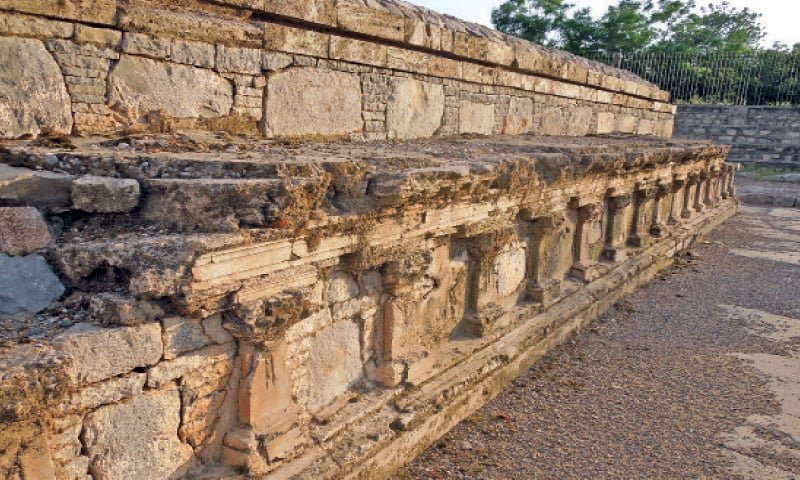
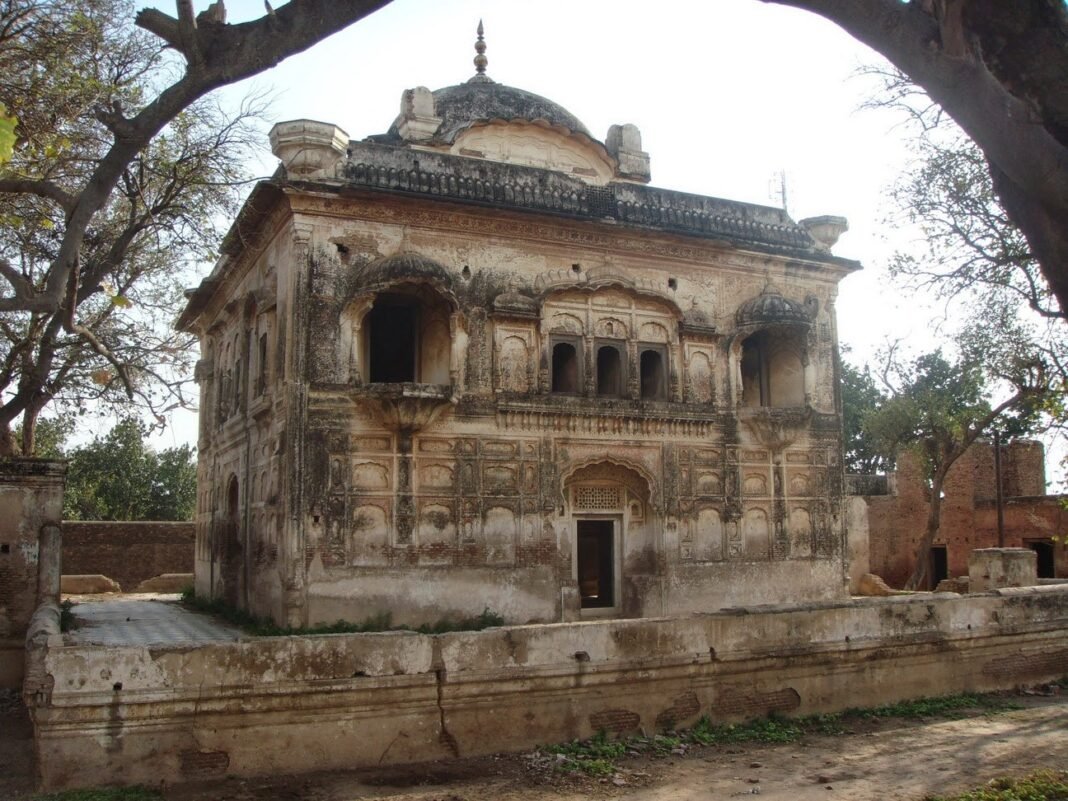
The heart of any visit is the site itself. The old building’s foundations lie in the fields just before the entrance to Bazaar Ahmed Khan, ringed by trees that have grown up around the masonry. Walk the perimeter slowly, look at the brickwork, and imagine the structure that once stood here. Because the site is unexcavated and unmarked, bring the story with you — knowing that Sher Nath was a Jogi of reputed miracles who became a Sikh transforms a pile of old bricks into a place of genuine spiritual history. Tread gently: this is a heritage site, not a picnic ground, so do not move stones or dig.
Talk to the Villagers of Bazaar Ahmed Khan
The living heritage of Jogiwara Sher Nath is not in the stones — it is in the people. The residents of Bazaar Ahmed Khan and the surrounding villages still tell the stories of Sher Nath’s miracles, and an hour of conversation over tea can teach you more than any plaque. Ask respectfully, listen well, and you may hear versions of the legend that have never been written down. Pashto is the local language, so traveling with an Urdu-speaking local contact or guide from Bannu city makes this much richer.
Explore the Akra Archaeological Site
Combine your visit with Akra, the most important Early Historic site in the Bannu area. Covering some 80 hectares, it is the largest archaeological site in the district, first occupied around 2000 BCE and possibly inhabited until the 11th century CE. The Bannu Archaeological Project’s work here revealed a major Iron Age urban centre with trade links reaching Central Asia. It puts the modest Sikh-era ruins of Jogiwara in breathtaking chronological context — two millennia of urban life in one afternoon’s drive.
Photograph Bannu’s Rural Landscape
The countryside around Bazaar Ahmed Khan is classic Bannu: flat, fertile fields watered by the Kurram and Tochi rivers, date palms, and the dry ridges of the Sulaiman range on the horizon. Early morning and late afternoon give the best light, and the tree-shaded shrine ruins photograph beautifully against the open fields. Always ask before photographing people, and in this conservative region it is wise to avoid photographing women without explicit permission from the family.
Wander Bannu’s Old Bazaars
Back in Bannu city, the old bazaars are worth an hour or two. Bannu has long been famous for its cloth weaving, cotton fabrics, and its weekly Jumma (Friday) fair, which still draws crowds from surrounding villages. The bazaars are also the place to taste Bannu’s food culture and buy its famous dates, honey, and Bannu masala to take home.
Famous Places In and Around Jogiwara Sher Nath, Bannu
- Akra archaeological site — Bannu’s great ancient city, occupied from around 2000 BCE to the 11th century CE.
- Sheri Khan Tarakai — the region’s oldest known village settlement (late 5th to early 3rd millennium BCE), a key site of the Bannu Archaeological Project.
- Bannu city bazaars — cloth markets, the Jumma fair, and the town’s food streets.
- Kurram River banks — the river that made Bannu’s basin fertile, with pleasant rural scenery.
- Gurdwara Bhai Bannu, Mangat — another Sikh heritage site of the wider region, for travelers tracing Sikh history across Pakistan (see our Gurdwara Bhai Bannu travel guide).
How to Reach Jogiwara Sher Nath, Bannu
Reaching Jogiwara Sher Nath means reaching Bannu first, and Bannu is well connected by road to the rest of Khyber Pakhtunkhwa and Punjab. The shrine ruins themselves are about 3 km from Bannu city, just before the village of Bazaar Ahmed Khan — a short taxi or rickshaw ride, or a pleasant drive if you have your own vehicle. Ask any local driver for “Bazaar Ahmed Khan” and then for the old shrine in the fields before the village; the tree-covered ruins are a known local landmark.
From Islamabad: roughly 300 km via Kohat, taking about 5 to 6 hours by car on the Indus Highway (N-55) and connecting roads. The route runs south through Kohat and the southern districts of KP into the Bannu basin.
From Lahore: roughly 550 to 600 km, an 8 to 10 hour drive depending on the route — most travelers go via Islamabad or via Mianwali. This is best done as an overnight stop or as part of a longer southern KP itinerary.
From Karachi: over 1,300 km by road — realistically a two-day drive. Most visitors fly to Islamabad or Peshawar and continue by road.
From Peshawar: about 190 km south, roughly 4 to 5 hours by road through Kohat and Karak.
Nearest airport: Bannu Airport serves the city but has limited scheduled services, so most travelers use Bacha Khan International Airport in Peshawar (about 190 km away) or Islamabad International Airport (about 300 km) and drive from there. Daewoo and other coach services connect Bannu with Peshawar, Islamabad, Lahore, and Dera Ismail Khan (about 140 km away).
Route Details
- Islamabad to Bannu: Take the M-1 toward Peshawar, exit toward Kohat via the Kohat Tunnel road, then follow the N-55 (Indus Highway) south through Karak to Bannu. Allow 5 to 6 hours with a rest stop.
- Bannu city to Bazaar Ahmed Khan: Head out of the city toward the village (about 3 km). Local drivers know the way.
- Village to the shrine: Just before the village entrance, look for old ruins in the fields, surrounded by trees. The site is on foot-accessible farmland — park on the track and walk in.
Road conditions are generally good on the highways but the final approach is a village track, so a car with reasonable clearance is ideal, especially after rain. Avoid driving the rural tracks at night.
Where to Stay in Jogiwara Sher Nath, Bannu
There is no accommodation at the shrine site itself — you will stay in Bannu city, just a few kilometres away, which has a reasonable range of options for a southern KP town. Do not expect luxury resorts here; Bannu is a working agricultural and market city, and its hotels reflect that. What you will find is honest, affordable lodging and famously warm Pashtun hospitality.
Mid-range hotels: Bannu city’s main roads and the cantonment area have several mid-range hotels with air-conditioned rooms, attached baths, and on-site restaurants. These are the most comfortable option for heritage travelers and the best base for exploring the shrine, Akra, and the bazaars. Rooms are typically budget-friendly by Pakistani city standards.
Guesthouses: A number of private guesthouses operate in and around the city, often quieter than the main-road hotels. If you are traveling with family, a guesthouse can be a good fit — ask a local contact for a recommendation, as the best ones run on word of mouth.
Budget options: Simple hotels and musafir khanas near the bus stands and bazaars cater to traders and through-travelers. They are very cheap but basic; fine for a night if you are on a tight budget and not fussy.
What not to expect: There are no international chains, no boutique heritage hotels, and no campsites geared to tourists in the immediate area. Book nothing in advance from abroad beyond a phone confirmation — a quick call to the hotel a day before arrival is the local norm. For a longer heritage tour of southern KP, many travelers base themselves in Bannu for one or two nights and move on to Dera Ismail Khan or Kohat.
Where to Eat: Local Foods of Jogiwara Sher Nath, Bannu
Bannu’s food is one of the best reasons to linger. The district’s fertile basin, watered by the Kurram and Tochi rivers, produces wheat, vegetables, and famously sweet dates — and the local kitchen makes the most of them.
Bannu pulao: The town’s signature dish. Bannu is famous across KP for its fragrant beef pulao, cooked with local rice, whole spices, and the district’s own masala blends. Any visit to Bannu without trying the pulao is incomplete.
Painda: A beloved Pashtun dish of torn bread soaked in rich meat or chicken curry — hearty, communal, and deeply satisfying after a day in the fields around the shrine.
Chapli kebab and grilled meats: Like the rest of KP, Bannu does kebabs superbly. The bazaar food streets around the city centre serve fresh chapli kebabs, seekh kebabs, and tikka well into the evening.
Dates (khajoorein) and honey: Bannu is famous for its dates and its honey — both make excellent edible souvenirs. Buy them from the bazaar rather than roadside stalls for the best quality.
Qehwa (green tea): The default drink of hospitality. You will be offered qehwa everywhere, from the hotel to the village — accept it; refusing can seem rude.
A full meal at a local restaurant is very budget-friendly. Stick to busy, freshly-cooked food stalls, drink bottled or boiled water, and you will eat extremely well for very little.
Weather in Jogiwara Sher Nath, Bannu
Bannu sits in a low, sheltered basin, which gives it a classic southern KP climate: genuinely hot summers, mild and pleasant winters, and most of its rain in the winter months and the monsoon. The shrine visit itself involves walking open fields, so the season you choose shapes the experience completely. Here is what to expect across the year, based on Bannu’s long-term climate averages:
| Season | Temperature Range | Conditions |
|---|---|---|
| Winter (Dec–Feb) | 2°C to 18°C | Cool, crisp and sunny days with cold nights; occasional winter rain. Excellent for walking the fields and ruins. |
| Spring (Mar–Apr) | 8°C to 33°C | Warming up fast; green fields, comfortable mornings. One of the best windows for heritage visits. |
| Summer (May–Jul) | 22°C to 42°C | Intensely hot, especially May and June; monsoon showers arrive in July. Visit ruins only at dawn or dusk. |
| Autumn (Aug–Oct) | 19°C to 37°C | Monsoon tapers off; September–October turns pleasant. Another fine window for exploring. |
The sweet spot for Jogiwara Sher Nath is October to March, when daytime temperatures sit in the comfortable teens and twenties and the low sun makes the ruins and fields glow. May and June are punishing — if you must come then, plan the shrine walk for early morning and spend midday in Bannu’s bazaars or your hotel.
Language and Culture of Jogiwara Sher Nath, Bannu
Bannu is a Pashtun-majority district, and the cultural texture of a visit here is Pashtun to the core. The main language is Pashto, specifically the Banuchi (Baniswola) dialect spoken by the Banuchi tribe, alongside Wazir and Dawar communities. Urdu is widely understood in Bannu city and works fine in hotels and bazaars, but in villages like Bazaar Ahmed Khan you will get much further with a Pashto-speaking companion.
Hospitality (melmastia) is a point of honour. Do not be surprised if a villager you just met insists you sit for tea, or if a shopkeeper spends twenty minutes telling you the history of the area. Accept graciously, and a small gift for children or a thank-you to your host goes a long way.
Bannu is socially conservative. Dress modestly — long sleeves and trousers for men, and for women a headscarf and loose, full clothing are strongly advisable. Ask permission before photographing people, and never photograph women without the explicit consent of the family. Remove shoes if you are invited into a home or a hujra (guest house), and use your right hand when eating or exchanging things. Friday is the congregational prayer day; the bazaars are at their liveliest around the Jumma fair but many shops close briefly at prayer time.
Shopping in Jogiwara Sher Nath, Bannu
Bannu’s bazaars are the souvenir run of this trip — practical, local, and cheap.
The Jumma (Friday) fair: Bannu is famous across the region for its weekly Friday fair, when traders and villagers pour into the city. It is part market, part social event, and the single best day to see Bannu at full colour. Time a Friday into your itinerary if you can.
Cloth and cotton fabrics: Cloth weaving and cotton fabric manufacturing are among Bannu’s major industries. The bazaars sell unstitched fabric, bedsheets, and traditional cloth at very reasonable prices.
Dates, honey, and Bannu masala: The district’s famous dates and honey, plus packets of Bannu masala, are the edible souvenirs to carry home. Buy from established bazaar shops for quality.
Handicrafts: Look for locally made embroidered items and traditional caps in the old bazaar lanes. Bargaining is expected and good-natured — start at about two-thirds of the asking price and meet in the middle.
There are no shopping malls in Bannu geared to tourists; the bazaar is the experience, and it is a good one.
Travel Tips for Jogiwara Sher Nath, Bannu
Packing Essentials
Sun protection is non-negotiable for most of the year: a hat, sunscreen, and sunglasses, plus sturdy walking shoes for the uneven field paths around the ruins. Carry drinking water — there are no facilities at the shrine site. In winter (December–February), nights drop near freezing, so pack a warm jacket even though days are mild. A power bank is useful, and modest, full-coverage clothing matters year-round here.
Safety Tips
Bannu is in southern Khyber Pakhtunkhwa, not far from the former tribal areas, and the security picture can change. Check current travel advisories before you go, travel with a local contact or guide who knows the area, and stick to daylight hours for village and field visits. Register your travel plans with someone reliable, keep your CNIC or passport on you, and cooperate politely at any checkpoints. The people of Bannu are warm and welcoming to respectful visitors — most trips here are uneventful — but this is not a place for unplanned solo wandering after dark.
Money & Connectivity
Bring cash in Pakistani rupees. Bannu city has banks and ATMs, but there are no ATMs at the shrine or in the villages, and card payments are rare outside larger hotels. Mobile signals from all major networks (Jazz, Telenor, Zong, Ufone) generally work in Bannu city and the surrounding villages, though data speeds can be slow. Download offline maps before heading to Bazaar Ahmed Khan.
Best Time to Visit Jogiwara Sher Nath, Bannu
October to March — The Ideal Season
This is when to come. Daytime temperatures range from the high teens to the low thirties, the fields are green after the rains, and walking the ruins is genuinely pleasant. Winter mornings can be misty and atmospheric — beautiful for photography. This is also the most comfortable season for combining the shrine with Akra and the Bannu bazaars.
April — The Shoulder Month
Still very doable, with warm days and cool mornings, though temperatures climb quickly toward month’s end. Start your field visits early in the day.
May to September — The Hot Season
Bannu’s summer is fierce, regularly crossing 40°C in May and June, with monsoon humidity in July and August. Heritage walking is miserable at midday. If summer is your only option, visit the ruins at dawn, retreat to the city by 10 a.m., and use the evenings for bazaars and food.
Final Thoughts
Jogiwara Sher Nath will never compete with the postcard valleys of the north, and it should not try. Its power is quieter: a tree-shaded ruin in a farmer’s field, a saint’s legend still alive in village memory, and four thousand years of human history stacked in the district around it. For travelers who want to understand Pakistan — not just photograph it — this small corner of Bannu offers something the famous places cannot: the feeling of discovering a story almost nobody else has heard.
Go in the cool months, bring a local friend, eat the pulao, buy the honey, and stand a while among the foundations where Sher Nath’s shrine once stood. You will leave Bannu with fuller bags and, if you let it happen, a fuller sense of how deep this country’s roots go. For more northern adventures after your heritage tour, browse our Explore Pakistan collection.
FAQs
Where is Jogiwara Sher Nath located?
About 3 km from Bannu city in Khyber Pakhtunkhwa, in the fields just before the entrance to Bazaar Ahmed Khan village. The ruins of the old shrine stand surrounded by trees.
Who was Sher Nath?
According to local tradition, Sher Nath was a Jogi (Hindu ascetic) of great reputed spiritual powers who later embraced Sikhism. A place of worship grew around his memory at Jogiwara; today only its foundations survive.
What is the best time to visit Jogiwara Sher Nath?
October to March, when Bannu’s weather is cool and pleasant for walking the fields. Avoid May and June, when temperatures regularly exceed 40°C.
How do I reach Jogiwara Sher Nath from Islamabad?
Drive about 300 km via Kohat (5–6 hours) to Bannu city, then take a taxi or rickshaw 3 km to Bazaar Ahmed Khan village. The ruins are in the fields just before the village entrance.
Is Bannu safe for tourists?
Bannu is in southern KP near the former tribal areas, so check current travel advisories, travel with a local contact or guide, and stick to daylight hours. Most visits by respectful travelers are uneventful.
Is Jogiwara Sher Nath suitable for families?
Yes, with caveats. The site is a short, easy walk in open fields — fine for children in the cool season. There are no facilities at the site, so bring water, sun protection, and snacks.
Where should I stay when visiting?
In Bannu city, 3 km away. The city has mid-range hotels, guesthouses, and budget options. There is no accommodation at the shrine itself.
What food is Bannu famous for?
Bannu pulao (fragrant beef pulao), painda, chapli kebabs, and the district’s famous dates, honey, and Bannu masala — all available in the city bazaars.