Quick Facts
- Location: Chota Bazaar, old city of Dera Ismail Khan, Khyber Pakhtunkhwa; also reachable from Topan Wala Bazaar
- Altitude: Around 177 metres (Dera Ismail Khan city level)
- Famous For: The spot where Guru Nanak Dev Ji stayed during his fourth journey (Udasi); the Thara Sahib (sacred seat) inside the darbar
- Nearest City: Dera Ismail Khan itself; Mianwali is roughly 122 km to the east
- Accessibility: Easy by road from Islamabad via Mianwali; the dharamsala sits inside the old city bazaar, walkable from the main road
- Known Landmarks: The double-storey square darbar building with marble-framed doors; Government Higher Secondary School No. 3 now occupies the complex
- Best For: Sikh heritage pilgrims, history lovers, cultural travellers and anyone exploring the old city of Dera Ismail Khan
Why Visit Dharamsala Guru Nanak Dev Ji, Dera Ismail Khan
Some places pull you in with mountains. Others pull you in with meaning. The Dharamsala of Guru Nanak Dev Ji in Dera Ismail Khan belongs firmly to the second kind. This is not a grand, polished shrine with manicured lawns and tourist signage. It is a quiet, working piece of history tucked into the old bazaars of one of the Indus valley’s oldest cities, where the founder of Sikhism once sat, taught and rested during his fourth great journey.
That simple fact is the whole reason to come. When you stand in the narrow streets of Chota Bazaar and find the old double-storey building whose four doors still carry their marble frames, you are standing where Guru Nanak Dev Ji’s devotees built a dharamsala centuries ago, on the very spot of his stay. Inside the darbar lies the Thara Sahib, the sacred seat where he sat. For Sikh pilgrims, that is a profoundly moving encounter with the earliest days of their faith, long before the grand gurdwaras of later centuries.
For everyone else, this dharamsala travel guide to Dera Ismail Khan opens a door into a layered Pakistan that most travellers never see. D.I. Khan is a city of Saraiki bazaars, centuries of Indus trade, ancient mounds and Sufi shrines. The dharamsala is one thread in that weave, and tracing it leads you through the old city’s living streets, its sweet shops, and its riverfront evenings. It is heritage travel at its most honest: no ticket booth, no souvenir stall, just a building, a story, and a neighbourhood that has carried both for generations.
This destination is perfect for travellers who collect stories rather than selfies. If you are a Sikh pilgrim tracing Guru Nanak’s footsteps across Pakistan, this is an essential stop. If you are a history lover, a student of religious heritage, or a photographer of old cities, the dharamsala and its surroundings will reward you richly. Families with an interest in culture can fold it into a day exploring D.I. Khan’s bazaars and riverbank. And the best time to plan that day is the cool, golden window from November to February, when the city’s fierce summer has finally released its grip.
History of Dharamsala Guru Nanak Dev Ji, Dera Ismail Khan
The story begins with Guru Nanak Dev Ji himself, born in 1469 at Talwandi (present-day Nankana Sahib) and the founder of Sikhism. Over his lifetime he undertook a series of long journeys, known as Udasis, carrying his message of one God, honest living and equality across South and Central Asia. During his fourth Udasi, the journey that took him toward the holy lands of Arabia, he passed through Dera Ismail Khan and stayed at this spot in what is now Chota Bazaar.
Where Guru Nanak stayed, his devotees later raised a dharamsala. In the early Sikh tradition, the dharamsala was the community’s first kind of religious centre: a place where the congregation gathered, the Guru’s teachings were recited, and travellers were welcomed. Scholars of Sikh history note that the dharamsala stood at the very centre of early Sikh community life and gradually evolved into what we now call the gurdwara. This shrine in Dera Ismail Khan is a living example of that original form, predating the elaborate gurdwara architecture of later centuries.
The building that survives today is a handsome one. A large double-storey square structure, it once hosted the Prakash (ceremonial installation of the scriptures) in its central hall, with residential rooms around it for visiting pilgrims. Inside the darbar stands the Thara Sahib, the pious seat marking where Guru Nanak himself sat. All four doors of the complex carry marble frames, a detail that survives to this day and speaks of the care the sangat once lavished on it.
Before 1947, the dharamsala was maintained by the Shiromani Gurdwara Parbandhak Committee (SGPC). After Partition, like many Sikh shrines in Pakistan, it passed into the custody of the Waqf Department. Today the building houses Government Higher Secondary School No. 3, and it remains in good structural condition. It is a poignant, very Pakistani story: a sacred place that has kept serving its community, first as a house of worship, now as a house of learning.
Top Things to Do in Dharamsala Guru Nanak Dev Ji, Dera Ismail Khan
Stand Before the Dharamsala and Find the Thara Sahib
The heart of any visit is the building itself. Enter from Chota Bazaar through the main gate and take in the double-storey square darbar, its marble-framed doors still intact. Because a school now runs inside, the most respectful approach is to visit in the afternoon after classes end, or on a holiday, and to ask the staff politely before stepping in. If you are granted entry, the Thara Sahib inside the darbar is the spiritual centre of the whole site. Pause there a while. Pilgrims who come here describe the experience less as sightseeing and more as a quiet homecoming to the earliest days of Sikhism.
Walk the Old Bazaars: Chota Bazaar and Topan Wala Bazaar
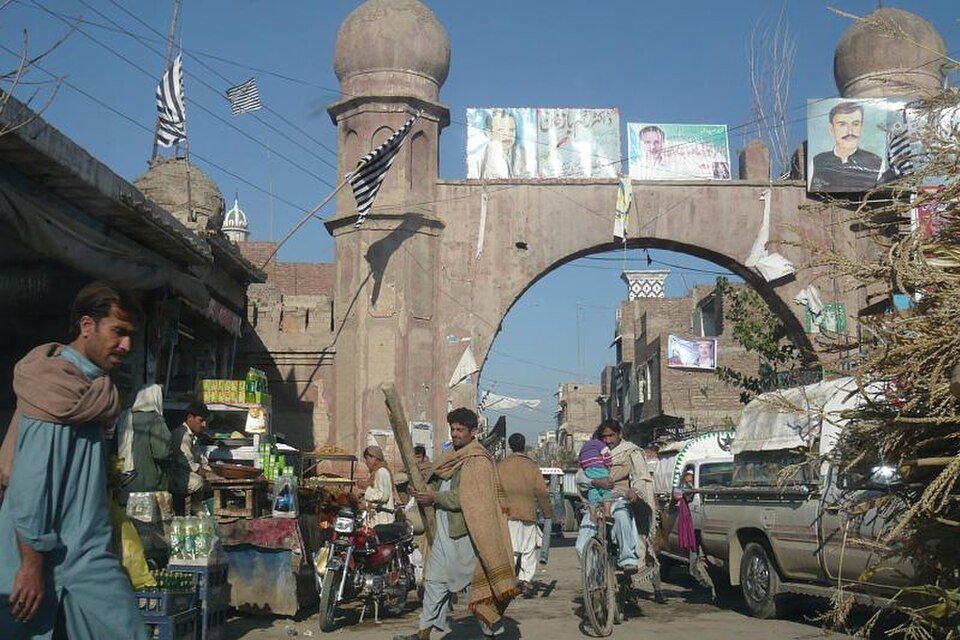
The dharamsala does not stand alone; it belongs to the old city, and the old city is the other half of the experience. Chota Bazaar and Topan Wala Bazaar are classic Saraiki market streets: narrow, shaded, fragrant with spices and frying oil, lined with shops selling everything from cloth to kitchenware. Walk slowly. Stop for chai. The bazaar is where D.I. Khan shows you who it is, and the dharamsala’s gate opening directly onto this street tells you how deeply the shrine was woven into everyday life.
Visit Gurdwara Kali Devi Nearby
A short distance from the dharamsala stands another of Dera Ismail Khan’s Sikh heritage sites, Gurdwara Kali Devi. Pairing the two makes for a meaningful half-day Sikh heritage trail through the old city. If you are mapping the fuller circuit, the city also holds Gurdwara Amir Shah Singh, and our companion guides to both are linked below.
An Evening on the Indus
Dera Ismail Khan sits on the west bank of the mighty Indus, and the river is the city’s evening living room. After the bazaars close their shutters, head toward the riverbank to watch the sun drop behind the water. Fishermen, evening walkers and tea stalls gather here, and it is the perfect, unhurried end to a heritage day.
Taste the City’s Famous Sohan Halwa
No visit to D.I. Khan is complete without its most famous sweet. The city’s sohan halwa, a dense, ghee-rich confection studded with nuts, is sold in the old bazaar sweet shops and makes the ideal edible souvenir. Buy a box for the road; you will be thanked for it at home.
Famous Places In and Around Dharamsala Guru Nanak Dev Ji, Dera Ismail Khan
- Gurdwara Kali Devi, Dera Ismail Khan — another historic Sikh shrine in the old city, an easy walk from the dharamsala.
- Gurdwara Amir Shah Singh, Dera Ismail Khan — completes the city’s trio of Sikh heritage sites.
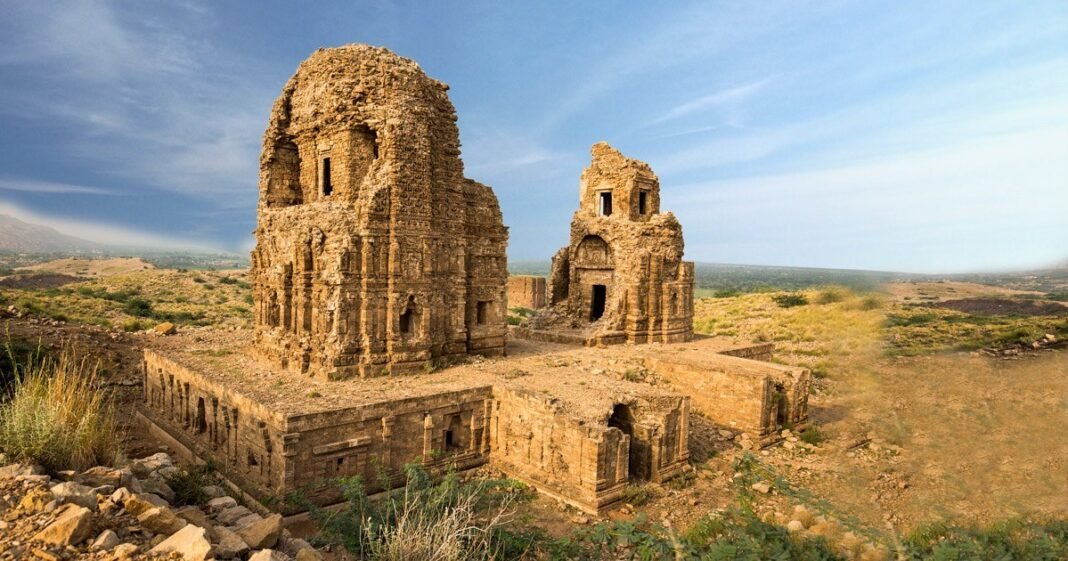
- Bilot Sharif — ancient temples and a historic fort in the foothills outside the city, a rewarding half-day excursion.
- Sheikh Badin National Park — rugged hills and wildlife to the north of the city for nature-inclined travellers.
- The Indus riverfront — the city’s natural landmark and evening gathering place.
How to Reach Dharamsala Guru Nanak Dev Ji, Dera Ismail Khan
Reaching this dharamsala travel guide’s destination is a straightforward road journey into southern Khyber Pakhtunkhwa. Dera Ismail Khan is well connected by highway, and once you are in the city, the shrine is inside the old bazaar quarter, easily reached on foot or by rickshaw.
From Islamabad: Approximately 340 km by road, taking around 5 to 7 hours depending on traffic and stops. The usual route runs south through Khushab and Mianwali (about 122 km of that stretch is the Mianwali to Dera Ismail Khan road) on the N-50/N-55 corridor. It is a comfortable day’s drive on mostly good highways.
From Lahore: There is no single direct highway, so most travellers route via Islamabad or via the motorway network toward Mianwali. Allow a full day of driving, roughly 7 to 9 hours, and consider breaking the journey overnight in Islamabad.
From Karachi: This is a long haul of well over 1,000 km by road, so flying is the sensible choice. Take a flight to Islamabad and continue by road, or fly to Multan and drive up through Muzaffargarh and the Indus corridor.
Nearest airport: Dera Ismail Khan Airport (DSK) has only limited and irregular commercial service, so plan on Islamabad International Airport as your reliable gateway, then drive down. Within the city, ride-hailing is patchy; auto-rickshaws and Qingqis are the practical way to reach Chota Bazaar, and the dharamsala itself is best explored on foot.
Road conditions are good year-round on the main highways, though summer heat makes midday driving tiring; start early. In the monsoon months, check local conditions before setting out, as low-lying stretches near the Indus can see waterlogging.
Route Details
A simple step-by-step for the most common approach, from Islamabad: (1) leave Islamabad on the M-2 motorway toward Lahore and exit toward Khushab/Mianwali; (2) follow the Khushab to Mianwali road south; (3) continue from Mianwali to Dera Ismail Khan on the Mianwali-D.I. Khan road (roughly 122 km); (4) enter D.I. Khan city and head for the old city quarter; (5) ask any shopkeeper for Chota Bazaar, the dharamsala’s main gate opens directly onto it, and it is also reachable from Topan Wala Bazaar. Keep the shrine visit for the afternoon so you can pair it with the bazaars and an Indus sunset.
Where to Stay in Dharamsala Guru Nanak Dev Ji, Dera Ismail Khan
Dera Ismail Khan is a working city rather than a tourist resort, so accommodation is practical and budget-friendly rather than luxurious. Mid-range hotels cluster in the main city areas and along the principal roads, offering clean air-conditioned rooms, attached baths and usually an in-house restaurant. These are the best choice for most travellers: comfortable, central, and inexpensive by big-city standards.
Guesthouses and smaller lodges fill the budget tier, particularly around the bus stands and commercial streets. They are basic but perfectly serviceable for a night or two, and the owners are often excellent sources of local guidance. If you are travelling on official or institutional business, the city also has government rest houses, though these generally require advance booking through the relevant department.
There is no need to stay near the dharamsala itself; the old bazaar quarter has no tourist hotels. Base yourself in the main city, which keeps you within a short rickshaw ride of Chota Bazaar, the riverfront and the restaurants. Book ahead if you are visiting during a local event or the winter wedding season, when the better hotels fill up. Camping is not a practical option in the city; save the tents for the hills of Sheikh Badin.
Where to Eat: Local Foods of Dharamsala Guru Nanak Dev Ji, Dera Ismail Khan
D.I. Khan’s food is hearty Saraiki-Punjabi fare, and eating your way through the old city is half the fun of the trip. The undisputed star is sohan halwa, the city’s signature sweet. Dense, glossy with desi ghee and studded with almonds and pistachios, it is made in the old bazaar’s sweet shops in big flat trays and sold by weight. Buy it fresh and warm if you can.
Beyond the sweet shops, the bazaars and main roads are lined with dhabas and restaurants serving the classics: chicken and mutton karahi, dal fry with tandoori roti, chana chaat, samosas and pakoras from street fryers, and seasonal fruit juices. Barbecue skewers, seekh kebabs and grilled fish appear in the evenings, especially near the busier commercial streets. Meals at local restaurants are budget-friendly; a filling dinner at a mid-range restaurant costs far less than the same meal would in Islamabad or Lahore.
For breakfast, do as the locals do: a roadside dhaba serving halwa puri or anda paratha with doodh patti. Carry water and prefer busy stalls with high turnover, the usual street-food wisdom that keeps every trip delicious and trouble-free.
Weather in Dharamsala Guru Nanak Dev Ji, Dera Ismail Khan
Dera Ismail Khan sits on the hot Indus plains, and its weather is the single biggest factor in planning your visit. Summers are long and genuinely fierce, which is why every experienced traveller aims for the November to February window, when days are mild and golden and evenings carry a pleasant chill. Spring and autumn are the shoulder seasons: warm but manageable. Here is what to expect across the year (approximate ranges for the plains around the city):
| Season | Temperature Range | Conditions |
|---|---|---|
| Winter (Nov-Feb) | 8-22°C | Mild, sunny days and cool nights; the best season for bazaar walks and heritage visits |
| Spring (Mar-Apr) | 20-33°C | Warming up; pleasant mornings, hot afternoons; still a good time to visit |
| Summer (May-Aug) | 34-45°C | Long, intensely hot days; June to August averages sit in the mid-30s with peaks far higher; avoid midday outings |
| Autumn (Sep-Oct) | 28-38°C | Heat eases gradually; October brings noticeably comfortable evenings |
Language and Culture of Dharamsala Guru Nanak Dev Ji, Dera Ismail Khan
The everyday language of Dera Ismail Khan is Saraiki, warm and musical, and you will hear it in the bazaars, the rickshaws and the sweet shops. Urdu is widely understood and works everywhere a visitor needs it, and Pashto is common too, reflecting the city’s position near the tribal districts. A smile and a greeting in Urdu will carry you through every interaction.
Culturally, D.I. Khan is conservative and deeply hospitable. Dress modestly, especially when visiting the dharamsala and walking the old bazaar: covered shoulders and knees for both men and women is the respectful norm. Because the shrine building now houses a school, be especially considerate. Visit outside school hours, ask permission before entering or photographing, and keep your voice low around classrooms. The staff and neighbourhood are accustomed to respectful visitors and respond warmly to courtesy.
Friday afternoons are quiet as the city pauses for Jummah prayers; plan bazaar wandering for other times. If you are offered chai by a shopkeeper, accept it. In D.I. Khan, as across the Saraiki belt, hospitality is not a performance; it is a point of honour.
Shopping in Dharamsala Guru Nanak Dev Ji, Dera Ismail Khan
Shopping here means the old bazaars, not malls, and that is exactly the charm. Chota Bazaar and Topan Wala Bazaar are the places to browse: cloth merchants selling khaddar and lawn, crockery and kitchenware stalls, spice shops with their pyramids of colour, and the sweet shops where sohan halwa is the star purchase. A box of sohan halwa, packed for travel, is the souvenir every visitor carries home.
You will also find dried fruits, dates and nuts at good prices, along with everyday handicrafts and embroidered items in the smaller lanes. Bargaining is expected in the bazaars but keep it friendly; a smile gets you further than a hard bargain. There are no verifiable large shopping malls attached to this heritage quarter, and none are needed. The bazaar itself is the attraction.
Travel Tips for Dharamsala Guru Nanak Dev Ji, Dera Ismail Khan
Packing Essentials
Sun protection is non-negotiable for most of the year: a cap, sunglasses and sunscreen, plus a reusable water bottle you keep refilling. In the November to February season, add a warm layer for the evenings, when temperatures can dip toward single digits. Comfortable walking shoes matter more than anything else, since the dharamsala and bazaars are explored on foot over uneven old-city streets. Carry a small daypack for your halwa boxes and bazaar finds.
Safety Tips
Dera Ismail Khan rewards the usual sensible precautions. Visit the dharamsala in daylight and outside school hours, and always ask before entering the school premises or taking photographs. Keep valuables discreet in crowded bazaars. Check current travel advisories for southern Khyber Pakhtunkhwa before your trip, as conditions in the wider region can change. Travelling with a local contact or guide, even informally, smooths everything.
Money & Connectivity
ATMs are available in the main city areas, but the old bazaars run on cash, so withdraw before you head into Chota Bazaar. Mobile signals from all major networks are generally reliable in the city. Data coverage is fine for maps and messaging; as always in old-city lanes, download an offline map before you wander.
Best Time to Visit Dharamsala Guru Nanak Dev Ji, Dera Ismail Khan
Winter (November to February) — The Ideal Season
This is when Dera Ismail Khan is at its best. Days are mild and sunny, perfect for slow walks through Chota Bazaar, unhurried time at the dharamsala, and long evenings by the Indus. If you have any flexibility at all, put your trip in this window.
Spring (March to April) — Still Very Good
Mornings stay pleasant and the bazaars are lively. Afternoons grow warm, so plan shrine and bazaar visits for early in the day and rest through the midday heat.
Summer (May to August) — Avoid If You Can
The plains turn punishingly hot, with June to August averages in the mid-30s and far hotter peaks. Sightseeing becomes an exercise in endurance. If you must travel in summer, do everything before 10 in the morning or after sunset.
Autumn (September to October) — The Comeback
Heat loosens its grip through October, and evenings turn comfortable again. Late October is a fine, crowd-free time for a heritage trip.
Final Thoughts
The Dharamsala of Guru Nanak Dev Ji in Dera Ismail Khan will not overwhelm you with spectacle, and that is precisely its power. It is a place where history sits quietly inside everyday life: a school bell ringing where scriptures were once recited, children learning their lessons beneath marble-framed doors, the Thara Sahib still holding the memory of a traveller who changed the spiritual map of South Asia five centuries ago.
Come for the shrine, but stay for the city around it. Walk the bazaars, taste the sohan halwa, watch the Indus at sunset, and let D.I. Khan show you the Pakistan that exists beyond the postcards. For Sikh pilgrims, this dharamsala travel guide marks an essential stop on Guru Nanak’s trail. For the rest of us, it is a reminder that the deepest travel experiences are often the quietest ones. Plan it for winter, go with respect, and you will leave with a story worth telling. For more journeys through Pakistan’s living heritage, keep exploring our Explore Pakistan series.
FAQs
Where is Dharamsala Guru Nanak Dev Ji located?
It stands in Chota Bazaar in the old city of Dera Ismail Khan, Khyber Pakhtunkhwa, and can also be reached from Topan Wala Bazaar.
What is the best time to visit the dharamsala?
November to February, when Dera Ismail Khan’s weather is mild and pleasant. Avoid the May to August heat if possible.
How do I reach Dera Ismail Khan from Islamabad?
By road, approximately 340 km via Mianwali, taking 5 to 7 hours. Coaches and private cars both cover this route comfortably.
Can I go inside the dharamsala building?
The building now houses Government Higher Secondary School No. 3. Visit in the afternoon after classes or on a holiday, ask the staff politely, and be respectful of the school environment.
Is the dharamsala safe for families?
Yes, with normal city precautions. It is a heritage visit inside a busy bazaar quarter; go in daylight and keep children close in crowded lanes.
Where should I stay in Dera Ismail Khan?
Mid-range hotels in the main city areas are the best bet: clean, air-conditioned and budget-friendly, within a short rickshaw ride of the old bazaar.
What food is Dera Ismail Khan famous for?
Sohan halwa, the ghee-rich nutty sweet sold in the old bazaar, is the city’s signature. The dhabas also serve excellent karahi, barbecue and fresh tandoori bread.
What makes this dharamsala historically unique?
It marks the spot where Guru Nanak Dev Ji stayed during his fourth Udasi, and its Thara Sahib is his original seat. As an early dharamsala, it represents the very first form of Sikh congregational life, before the gurdwara as we know it evolved. Read more about the city’s Sikh heritage in our guides to Gurdwara Kali Devi and Gurdwara Amir Shah Singh in Dera Ismail Khan.