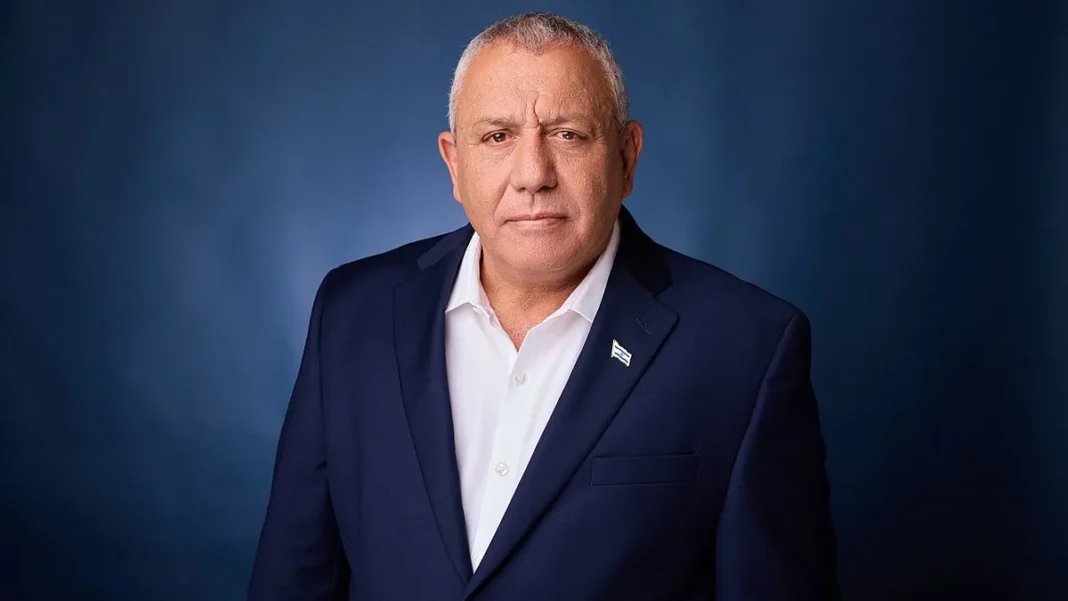
Eisenkot Israel Government Bid Wins Arab Backing
Israel’s largest Arab list said on Thursday it would back Gadi Eisenkot to form the next government, bolstering his chances of being picked over Prime Minister Benjamin Netanyahu, who lost the support of an allied religious party.
Herzog was holding a second day of consultations with political parties after the October 27 election, in which neither Netanyahu, a polarising right-winger who has led Israel through three years of war, nor Eisenkot, a former military chief promising to restore national unity, secured enough votes for a majority.
Eisenkot Israel government bid: how the numbers work
Arab-majority lists won an unprecedented 19 seats in the election, making them potential kingmakers if Eisenkot’s opposition chooses to work with them, something which remains unclear.
Both Arab lists said on Thursday they were backing Eisenkot.
The Joint List, which bagged 11 seats, said in a statement that “it will inform Herzog this evening of its decision to recommend that Gadi Eisenkot be tasked with forming the government”.
Raam, which won eight seats, also endorsed Eisenkot.
Netanyahu’s bloc, including United Torah Judaism, has 53 seats in the new parliament, compared to 48 for Eisenkot’s bloc. The Arab parties’ 19 seats sit outside both blocs, and their backing gives Eisenkot the wider support Herzog weighs when he hands out the mandate.
Netanyahu loses a long-time ally
Meanwhile, United Torah Judaism, which backed Netanyahu after the previous five elections, in its meeting with Herzog declined to recommend Netanyahu again as prime minister, although it also did not side with Eisenkot.
The party informed Herzog “that it has decided not to recommend any member of Knesset to form a government”, the president’s office said in a statement, referring to the 120-member parliament in which United Torah Judaism has won seven seats.
Alongside Shas, another ultra-Orthodox party, they have pushed to maintain the exemption from military service for religious students.
Netanyahu has preserved the exemption but stopped short of enshrining it in law, in the face of much resentment from many other Israelis, as reservists serve multiple tours due to the wars in Gaza, Lebanon and Iran.
“In whatever government is next formed, our immediate item is sorting out the status of Torah students,” United Torah Judaism lawmaker Isaac Pindrus said.
Eisenkot, who has tried to appeal to secular Israelis from left to right, has been adamant about ending exemptions from military service.
What happens next
Once Herzog gives his mandate to a lawmaker, the person will have 28 days to form a government, with a potential 14-day extension. If the lawmaker fails, Herzog will then task someone else.
Eisenkot could form a government with the Arab parties’ numbers but would risk losing support from some in the opposition, notably Avigdor Liberman, who shares the outgoing government’s hawkish views on the Palestinians.
Netanyahu has relentlessly attacked the opposition for even the prospect of an alliance with Arab lawmakers. In a video on Wednesday filmed in the prime minister’s office, Netanyahu alleged there were “serious suspicions” that foreign powers put money into the election and questioned the loyalty of Arab citizens.
Why the Arab lists matter now
Feature Pakistan has followed this election at each step. The final results on October 30 showed no bloc with a majority. The election commission rejected fraud claims on November 4, and Herzog pressed for a compromise government the same day.
Thursday’s endorsement is the next step in that sequence, and it is the first time Arab lists have held kingmaker power on this scale. Their 19 seats are the largest Arab representation in Israel’s history, and they arrived on the back of anger over Netanyahu’s hard-right government, whose ministers have vowed to treat Arab Israelis much like Palestinians in war-ravaged Gaza and the occupied West Bank.
Netanyahu had already tried to blunt that rise before the vote. He pressed Arab parties during the campaign and later alleged election fraud. The voters answered with record Arab gains, and now those gains decide who gets the first chance to govern.
Dawn reported the endorsements on Thursday night.
Frequently asked questions
Who is Gadi Eisenkot?
Eisenkot is a former Israeli military chief who leads the opposition bloc. He promises to restore national unity and end military service exemptions for ultra-Orthodox students.
How many seats do Arab parties hold?
Arab-majority lists won 19 seats, an unprecedented total: the Joint List won 11 and Raam won eight. Both backed Eisenkot to form the government.
Who chooses the next prime minister of Israel?
Isaac Herzog chooses whom to ask to form a government. Traditionally, the mandate goes to the person recommended by more parties.
How long does the nominee have to form a government?
The nominee has 28 days, with a possible 14-day extension. If the nominee fails, Herzog tasks someone else.