Netanyahu Pressure on Arab Parties Grows
Netanyahu pressure on Arab parties grew on Thursday, 29 October 2026, as the prime minister’s bloc piled pressure on Israeli Arab leaders over unproven accusations of foreign funding. The push came as Israel counted the final votes from Tuesday’s election, which left no bloc with a majority in the 120-seat Knesset.
President Isaac Herzog called for an investigation into the fraud allegations, but cautioned against stigmatising the entire Arab Israeli community, who voted at unprecedented rates. National Security Minister Itamar Ben Gvir went further, encouraging Israel to order the arrest of Arab party leaders immediately.
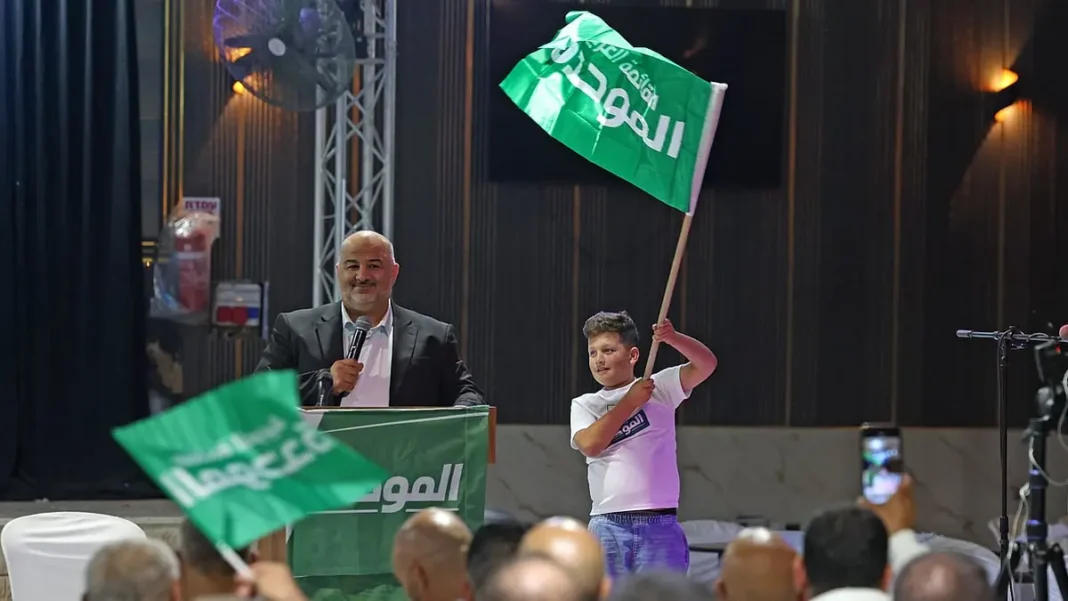
Ra’am party leader Mansour Abbas said he welcomed an investigation into the claims, adding that his moderate Islamist party had no connection with the accusations. A key Arab party has rejected the accusations outright. The pressure campaign matters because Arab parties may hold the key to forming the next government, and the accusations, if they gain traction, could weaken their standing in coalition talks.
Netanyahu pressure on Arab parties: the election arithmetic
With most votes counted, Prime Minister Benjamin Netanyahu’s bloc of right-wing, far-right and ultra-Orthodox parties was projected to win 53 seats, well short of the 61 needed for a majority. Rival Gadi Eisenkot’s opposition bloc was projected to win 48 seats. Parties representing Arab Israelis were projected to win an unprecedented 19 seats, split between the Joint List and Ra’am.
The arithmetic gives Eisenkot a theoretical path to 67 seats with Arab support, above the 61 needed. But most Jewish political leaders have shunned formal alliances with Arab parties since Israel’s founding, and Eisenkot himself said during the campaign that he would not govern with Israeli Arab lawmakers. Netanyahu has suggested a government relying on Arab votes would lack legitimacy.
Yair Golan, head of Israel’s main left-wing party and part of Eisenkot’s camp, broke with that position. “We must no longer accept Netanyahu’s racist division between Jewish votes and Arab votes,” he said on X. “We have a responsibility. And we have an opportunity to form a government of change in partnership with Israel’s Arab citizens.”
Turnout reached 77.7 per cent, the highest in more than two decades, and was particularly high among Israelis of Palestinian descent, who make up more than a fifth of the population. Many were motivated by open racism from members of Netanyahu’s cabinet, including Ben Gvir, who has been convicted of inciting racial hatred against Arabs.
Caretaker government and what happens next
Netanyahu looks set to remain caretaker prime minister during coalition talks, and potentially until another election next year. A caretaker government formally holds the same powers as a regular government, but experts say it carries a duty of restraint and less discretion in some areas. That distinction matters because the caretaker government retains powers over the war with Iran, a point Eisenkot raised directly.
“Netanyahu, don’t you dare use Israel’s security for your political needs,” Eisenkot told supporters. He called Netanyahu “a caretaker prime minister, without a mandate or the people’s trust”, and warned that he might use security for political ends. Netanyahu’s office has previously rejected accusations that he uses the Iran conflict for political gain.
The prospect of a caretaker government without a parliamentary majority weighed on Israeli markets. The shekel weakened around 1.6 per cent to 3.10 to the US dollar, and Tel Aviv’s key stock indexes fell more than 3 per cent.
Full results are expected by Thursday evening or Friday morning. After the final tally, President Herzog will consult party leaders on whom they want as prime minister, then tap the candidate he believes has the best chance of forming a government. That nominee will have up to 42 days to form a government. If no government emerges, another election follows, with the present cabinet staying on as caretaker.
The election was Israel’s first since the Hamas-led attacks of 7 October 2023, which killed 1,200 people and led to conflicts in Gaza, Lebanon and Iran. The pressure on Arab parties is therefore not a side story. It goes to the heart of whether the next government is formed with Arab votes, without them, or not at all.