Every old city has a doorway it is known by. In Bahawalpur — the city of palaces, the former capital of a princely state — that doorway is Fareed Gate. Standing at the mouth of the Shahi Bazaar, this historic gate has watched centuries of traders, rulers and travelers pass beneath its arches, and after a major conservation project completed in 2026, it is looking its best in decades. This Fareed Gate, Bahawalpur travel guide will show you why this landmark deserves a stop on your southern Punjab itinerary, who it is perfect for, and when to visit so the desert heat does not get in the way.
Bahawalpur itself is one of Pakistan’s most rewarding heritage cities, yet it sits quietly off the main tourist radar. Founded in 1748 by Nawab Bahawal Khan I, it grew into the capital of the princely State of Bahawalpur under the Abbasi Nawabs — builders of Noor Mahal, Darbar Mahal, Gulzar Mahal and the great Derawar Fort out in the Cholistan Desert. The old walled city once had seven gates; Fareed Gate is the most famous survivor, named for the 19th-century Sufi poet Khwaja Ghulam Farid, whose spiritual poetry shaped the culture of southern Punjab and Cholistan.
A visit to Fareed Gate is not a trek or an expedition — it is a slow, atmospheric walk through living history. You come for the architecture, stay for the bazaar, and leave with a feel for a city that was once a kingdom. It pairs perfectly with Noor Mahal, the Bahawalpur Museum and a desert run to Derawar Fort, making Bahawalpur one of the finest 2-3 day heritage trips in Punjab. Read on for the gate’s history, what to see and do around it, how to reach Bahawalpur from Islamabad, Lahore and Karachi, where to stay and eat, the weather year-round, and the best time to visit.
Quick Facts
- Location: Entrance to the old walled city and Shahi Bazaar, Bahawalpur, Punjab, Pakistan (29.40°N, 71.68°E)
- Altitude: Low desert-plain city — flat, easy walking
- Famous For: The most iconic of Bahawalpur’s seven historic old-city gates; named for Sufi poet Khwaja Ghulam Farid; freshly conserved in 2026 with restored streetscapes, lighting and the Shahi Bazaar trail
- Nearest City: Multan, around 100 km to the north — Bahawalpur is itself a major city
- Accessibility: Excellent road links via the N-5; Bahawalpur Airport with domestic flights; railway station on the main line
- Known Landmarks: Fareed Gate, Shahi Bazaar, Jamia Masjid Al-Sadiq, Noor Mahal (2.5 km), Bahawalpur Zoo (est. 1942)
- Best For: Heritage lovers, photographers, bazaar wanderers, families, and anyone exploring the princely-state trail of southern Punjab
Why Visit Fareed Gate, Bahawalpur
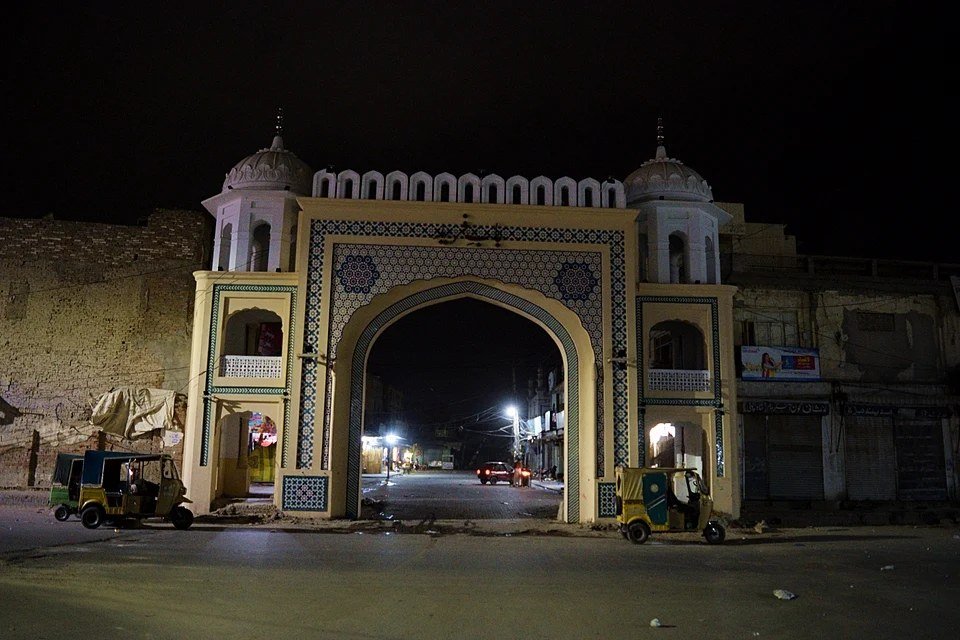
Some landmarks you photograph; Fareed Gate you walk through — and that makes all the difference. Passing under its arches into the Shahi Bazaar is like stepping through a doorway in time: the noise of the modern city falls behind you, and ahead stretch the narrow lanes where Bahawalpur has traded for generations. The gate is not a fenced-off monument but a working part of the city — shopkeepers open their shutters beneath it, rickshaws thread past it, and at night the conservation lighting brings out details in the brickwork you miss by day. It is heritage you can touch.
The timing of your visit matters, because Fareed Gate has just been reborn. In August 2026, the Walled City of Lahore Authority completed an 11-month conservation of the gate and the trail from it to Jamia Masjid Al-Sadiq — a project costing over Rs 442 million that restored old buildings around the gate to their original shapes, added traditional wooden balconies, laid tuff tiles, put electrification underground and installed decorative lighting through the Shahi Bazaar. Visiting now means seeing the gate and its streetscape at their finest in living memory.
Fareed Gate is also the perfect key to Bahawalpur. From here, the city’s great attractions fan out in every direction: Noor Mahal’s Italianate domes 2.5 km away, the Bahawalpur Museum’s coins and camel-skin paintings, the 1942 zoo, and beyond the city, the mighty Derawar Fort rising from the Cholistan Desert. Travelers who come for the gate routinely stay for the palaces — and travelers who come for the palaces always end up photographing the gate. It is the city’s most recognizable symbol, and it earns the title.
Finally, there is the Sufi connection. The gate honors Khwaja Ghulam Farid, the great 19th-century Sufi poet of Cholistan, and his spiritual presence still hangs over this region — in the shrines, the music and the gentle manners of the people. A visit to Fareed Gate is, in a small way, a visit to the world he sang about: the desert, the devotion, the meeting of cultures at the edge of the Thar. If you want to understand southern Punjab’s soul, start here.
History of Fareed Gate, Bahawalpur
Bahawalpur was founded in 1748 by Nawab Bahawal Khan I, and as it grew into the capital of the princely State of Bahawalpur, it became a walled city — like most great cities of the era, protected by walls and entered through gates on the routes to other cities and states. The old city had seven gates: Bikaneri, Bohar, Multani, Ahmedpuri, Dirawari, Mori and Shikarpuri. Each gate faced a direction and a destiny — Multani Gate toward Multan, Dirawari Gate toward Derawar Fort, Bikaneri Gate toward the Bikaner state across what is now the Indian border.
The gate we now call Fareed Gate was originally the Bikaneri Gate, named for the Bikaner route. It was later renamed for Khwaja Ghulam Farid, the 19th-century Sufi poet of Cholistan whose kafis and spiritual teachings shaped the culture of the entire region. The renaming reflects something deep about Bahawalpur: a city that chose to name its grandest surviving gate not for a conqueror or a trade route, but for a poet-saint.
The gate served for generations as one of the main entrances to the city — local tradition holds it was the way the rulers themselves entered Bahawalpur. Over the 20th century, as the walls came down and the city sprawled, the gate ended up standing in the middle of a very busy market, a monument in the thick of daily life. A 2015 beautification effort stalled and left the area disrupted, but the comprehensive 2025–2026 WCLA conservation — restoring the gate, the surrounding historic buildings and the Shahi Bazaar trail to Jamia Masjid Al-Sadiq — has finally given this landmark the setting it deserves, reopening it fully to the public, traders and shopkeepers.
Top Things to Do in Fareed Gate, Bahawalpur
Walk Through the Gate at Opening Light
Arrive early, when the Shahi Bazaar is waking up and the light is soft on the brickwork. Walk slowly under the arches — note the traditional Bahawalpur-state styling, the red brick, the elegant arches and decorative elements blending Mughal and local influences — and look back at the gate from inside the old city for the classic photograph. Morning is also when the bazaar is at its most authentic, before the day’s heat and crowds build.
Explore the Shahi Bazaar
The bazaar that runs from the gate is the commercial heart of old Bahawalpur, where people have traded for generations. Wander its lanes for textiles, bangles, spices, sweets and everyday goods at local prices. The 2026 conservation laid tuff tiles, installed underground electrification and added decorative lighting here — the bazaar now looks its historic best, especially in the evening when the fancy lights come on. Bargain politely; this is a working market, not a tourist trap.
See the Gate by Night
Return after dark. The conservation lighting was designed to bring out architectural details invisible by day, and the illuminated gate against the night sky — with the bazaar glowing behind it — is one of Bahawalpur’s great evening sights. The murals of local life painted along Circular Road add color to the nighttime walk.
Walk the Conserved Trail to Jamia Masjid Al-Sadiq
The WCLA project upgraded the full trail from Fareed Gate to Jamia Masjid Al-Sadiq, the historic mosque gifted to the city by Nawab Sadiq Muhammad Khan Abbasi V. Walk it end to end: restored building facades, traditional wooden balconies, tiled flooring — a heritage trail that did not exist in this form before 2026. The mosque itself, awaiting its own preservation funds, is a fine example of the Nawabi religious architecture of the state.
Visit the Nearby Palaces and Museum
Make Fareed Gate the start of a Bahawalpur palace day: Noor Mahal (built in the 1870s, 2.5 km southwest of the gate), with its Italianate architecture and museum; Gulzar Mahal and Darbar Mahal nearby; and the Bahawalpur Museum and Library, home to medals, postage stamps and coins of the former state plus manuscripts, wood carvings, camel-skin paintings and stone carvings from Islamic and pre-Islamic eras. Our Bahawalpur Museum travel guide covers the collection in detail.
Day-Trip to Derawar Fort
No Bahawalpur trip is complete without Derawar Fort — the colossal square fortress of the Abbasi Nawabs rising from the Cholistan Desert, with its forty massive bastions visible for miles. The old Dirawari Gate of the city once pointed the way there. Go for sunset, when the baked-brick walls glow red-gold. See our Derawar Fort travel guide for the full expedition plan.
Famous Places In and Around Fareed Gate, Bahawalpur
Noor Mahal: The 1870s palace of the Nawabs, 2.5 km southwest of the gate — Bahawalpur’s most photographed building.
Jamia Masjid Al-Sadiq: The historic congregational mosque at the end of the conserved trail, gifted by Nawab Sadiq Muhammad Khan Abbasi V — see our Al-Sadiq Mosque Bahawalpur travel guide.
Bahawalpur Zoo: Established in 1942, a 25-acre zoological garden about 760 metres north of the gate — one of the oldest zoos in the country.
Bahawalpur Museum: Coins, manuscripts, camel-skin paintings and carvings of the former princely state.
Derawar Fort: The great desert fortress of Cholistan — the essential day trip.
How to Reach Fareed Gate, Bahawalpur
Fareed Gate stands in the old city center — any rickshaw or taxi driver in Bahawalpur knows it. The gate is walkable once you are in the old city, and the surrounding area is open to visitors at any time of day.
From Lahore: About 400 km south via the N-5 through Multan — roughly 6-7 hours by car or coach. Daewoo and other coach services run frequently between Lahore and Bahawalpur.
From Islamabad: Around 700 km via the M-4/M-5 motorway network to Multan, then the N-5 south to Bahawalpur — a full day’s drive (10-12 hours). Most travelers fly to Lahore or Multan and continue by road, or take an overnight train.
From Karachi: The long way — about 900 km by road via Hyderabad and Sukkur (14+ hours), so flying is the sensible option. Bahawalpur Airport has domestic connections; from the airport it is 20-30 minutes to the old city.
By rail: Bahawalpur Junction sits on the main Karachi–Peshawar line with frequent expresses (Tezgam, Khyber Mail, Karachi Express and others). The station is close to the city center — 10-15 minutes to Fareed Gate by rickshaw.
Local transport: Rickshaws and Qingqi vans are the way to move around the old city; the lanes near the gate are best explored on foot. For Noor Mahal, the museum and Derawar Fort, hire a car with driver for the day.
Route Details
Step 1: Reach Bahawalpur — by road (N-5 from Multan/Lahore, motorway network from Islamabad), by air into Bahawalpur Airport, or by rail to Bahawalpur Junction. Step 2: Head for the old city center — ask for “Fareed Gate” or “Shahi Bazaar”; every local knows it. Step 3: Park or dismount at the edge of the bazaar area and explore the gate and lanes on foot — the conserved trail to Jamia Masjid Al-Sadiq is a signed walking route. Step 4: Plan palace and museum visits for the cooler morning hours, the bazaar for late afternoon, and the illuminated gate for the evening.
Where to Stay in Fareed Gate, Bahawalpur
Bahawalpur is a large city with a full range of accommodation, and staying near the old city puts Fareed Gate, the bazaar and the food streets within easy reach.
Mid-range hotels: The city center and Model Town areas have comfortable mid-range hotels with restaurants, Wi-Fi and air conditioning — the practical choice for most travelers, at very reasonable rates by big-city standards.
Budget guesthouses: Simple, clean guesthouses cluster near the railway station and the old city — ideal for backpackers and budget heritage travelers.
Upscale options: Bahawalpur has a few higher-end hotels for those who want more comfort after a dusty day in the bazaars and desert.
Two nights is the sweet spot: one day for Fareed Gate, the Shahi Bazaar, Noor Mahal and the museum; one day for Derawar Fort and the Cholistan Desert. Book ahead in winter (December–February), when southern Punjab’s heritage season peaks.
Where to Eat: Local Foods of Fareed Gate, Bahawalpur
The lanes around Fareed Gate are a food lover’s territory. The old-city eateries serve the hearty staples of southern Punjab and the Saraiki belt: saag with desi ghee, dal and sabzi with fresh tandoori roti, seekh kebabs and chicken tikka from the bazaar grills, and thick, creamy lassi to wash it down. Breakfast in the bazaar means halwa puri, chanay and doodh patti chai.
Bahawalpur’s sweet shops are famous across the region for desi-ghee sweets — stock up on barfi, gulab jamun and patisa from the old sweet houses near the gate; they make excellent gifts. The nearby food street mentioned by visitors is the place for an evening grazing session. Everything is very budget-friendly: a full bazaar meal costs a fraction of big-city prices, and even a comfortable restaurant dinner stays easy on the wallet. Eat where the locals queue — that is the whole rule.
Weather in Fareed Gate, Bahawalpur
Bahawalpur sits at the edge of the Cholistan Desert, and its climate shows it: long, fiercely hot summers, short mild winters, and very little rain outside the monsoon. Fareed Gate, the bazaar and the palaces are all outdoor experiences, so winter is unambiguously the season to come. Summer sightseeing here is punishing — plan around it.
| Season | Temperature Range | Conditions |
|---|---|---|
| Winter (Dec–Feb) | 12–27°C days, cool nights | Mild, sunny and dry — ideal for the gate, bazaar and desert fort; light jacket for evenings |
| Spring (Mar–Apr) | 19–39°C | Heating up fast; March workable, April hot; dry with clear skies |
| Summer (May–Sep) | 30–44°C | Extremely hot; June peaks around 43°C; monsoon brings most of the year’s ~230 mm rain in July–August; sightsee at dawn/dusk only |
| Autumn (Oct–Nov) | 19–37°C | Cooling and drying; November pleasant — a fine second-choice season |
Language and Culture of Fareed Gate, Bahawalpur
Bahawalpur is a meeting point of languages: Saraiki dominates the bazaars and homes, Punjabi is widely spoken, and Urdu works everywhere for visitors. English is understood in hotels and by guides. A greeting in Saraiki (“Assalam-o-Alaikum” works universally) opens doors and smiles.
The culture is shaped by the Nawabi legacy and the Sufi tradition of Khwaja Ghulam Farid — courteous, devout and deeply hospitable. The old city is conservative: dress modestly (covered shoulders and knees), especially around the mosque and shrines. Remove shoes before entering Jamia Masjid Al-Sadiq. In the bazaar, greet shopkeepers, accept offered tea, and bargain with good humor rather than hardness — relationships matter more than rupees here. Ask before photographing people, and note that the area around the gate is a working commercial district: be mindful of traffic, porters and shopfronts as you walk and shoot.
Shopping in Fareed Gate, Bahawalpur
Bahawalpur is one of Punjab’s great handicraft cities, and the Shahi Bazaar is the place to buy. The city’s signature crafts come from the Cholistan region: hand-knotted carpets and rugs, embroidery (the region’s phulkari-style needlework), pottery, and the distinctive camel-skin paintings — lamps and vases painted with intricate designs, a true Bahawalpur specialty. The Punjab government has supported craft development here, and dedicated handicraft outlets sell authentic pieces.
Beyond crafts, the bazaar offers khussa shoes, bangles, fabrics and the famous local sweets to carry home. Prices are local prices — far below Lahore or Islamabad for comparable work — and polite bargaining is expected. There are modern markets and a few malls in the newer parts of Bahawalpur if you need them, but the soul of shopping here is the old bazaar under the shadow of the gate.
Travel Tips for Fareed Gate, Bahawalpur
Packing Essentials
Sun protection for most of the year: hat, sunglasses, sunscreen. Comfortable walking shoes — the bazaar lanes and the conserved trail are cobbled and uneven. A light jacket for winter evenings. Cash in small notes for the bazaar, rickshaws and donations at shrines. A camera with room for hundreds of shots: the gate, the bazaar, the palaces and the desert will fill your memory card.
Safety Tips
Bahawalpur is generally safe for tourists and the old-city area around the gate is busy and well-trafficked during the day. Go in the morning or late afternoon to avoid the worst heat; the illuminated gate is lovely at night, but stick to the main lit streets and bazaar after dark. Keep valuables discreet in crowded lanes. Drink bottled or filtered water, as in most of Pakistan. If visiting in summer, carry water everywhere and rest during midday.
Money & Connectivity
ATMs are plentiful in Bahawalpur’s commercial areas — withdraw before diving into the old bazaar lanes, where shops are cash-only. All major mobile networks (Jazz, Telenor, Zong, Ufone) have strong coverage with 4G in the city. Currency exchange is available in the main markets if you need it.
Best Time to Visit Fareed Gate, Bahawalpur
Winter (December to February) — The Best Season
Mild days in the low to mid-20s, cool nights, dry air — perfect for the gate, the bazaar walk, Noor Mahal and a Derawar Fort day trip. This is when Bahawalpur shines, and when most heritage travelers come. Book hotels ahead.
Spring (March to April) — Warming Up
March is still pleasant for sightseeing; April turns seriously hot. If you come in spring, do the outdoor sights early morning and save the museum and bazaar shade for midday.
Summer (May to September) — Avoid
With highs around 43-44°C and the monsoon humidity of July–August, summer is the wrong season for a walled-city walking trip. If you must come, see the gate at dawn and spend midday indoors.
Autumn (October to November) — Very Good
Temperatures fall back to comfortable levels, the rains end, and the light turns golden — an excellent shoulder season with fewer visitors than winter.
Final Thoughts
Fareed Gate is a reminder that history in Pakistan is not locked in museums — it is lived in, traded under and walked through every day. This gate has stood through the princely state, Partition and the modern city, and its 2026 restoration means you will see it at its best. Come for the architecture, stay for the bazaar, and let Bahawalpur’s palaces, museum and desert fort turn a quick stop into a full southern-Punjab adventure.
Go in winter, walk the conserved trail to Jamia Masjid Al-Sadiq, eat in the bazaar, and time your Derawar Fort run for sunset. Bahawalpur rewards the traveler who slows down — and it all starts at the gate. For the mountain half of your Pakistan journey, our guides to Malam Jabba and the Hunza Valley will take you from desert forts to high peaks.
FAQs
Where is Fareed Gate located?
In the old walled city of Bahawalpur, Punjab, at the entrance to the Shahi Bazaar — in the city center, easily reached on foot or by rickshaw.
Why is it called Fareed Gate?
It is named for Khwaja Ghulam Farid, the 19th-century Sufi poet of Cholistan. It was originally the Bikaneri Gate, named for the route toward Bikaner, and is one of the seven historic gates of old Bahawalpur.
What is the best time to visit Fareed Gate, Bahawalpur?
Winter (December–February), when days are mild and dry — ideal for the gate, bazaar and nearby palaces. Avoid the May–September heat.
How do I reach Bahawalpur?
By road via the N-5 from Multan/Lahore (Lahore is about 400 km), by rail on the main Karachi–Peshawar line, or by air into Bahawalpur Airport with domestic connections.
Is Fareed Gate good for families?
Very — flat, easy walking, no climbing, and the bazaar, zoo and palaces nearby keep all ages engaged. Go in the cooler months and carry water.
What is there to do near Fareed Gate?
Walk the Shahi Bazaar, follow the conserved trail to Jamia Masjid Al-Sadiq, visit Noor Mahal and the Bahawalpur Museum, and day-trip to Derawar Fort in the Cholistan Desert.
Where can I stay near Fareed Gate?
In Bahawalpur city — mid-range hotels in the center and Model Town, budget guesthouses near the station and old city, and a few upscale options. Two nights covers the city and Derawar Fort.
What should I buy in Bahawalpur?
Cholistani handicrafts: hand-knotted carpets, embroidery, pottery and camel-skin painted lamps — plus khussa shoes and the famous local desi-ghee sweets from the old sweet houses.