High in the Gojal region of upper Hunza, where the Karakoram Highway threads between glaciers and the border with China draws near, sits a village most travelers pass without stopping. That is their loss. Gircha is one of the oldest Wakhi settlements in all of upper Hunza — a quiet village at 2,832 meters where the Wakhi people trace their ancestry to a single founding settler, where a historic mosque was moved stone by stone to escape the river’s erosion, and where the silence is broken only by wind, water, and the occasional jeep heading for the Khunjerab Pass.
This Gircha travel guide will help you decide whether to add this hidden village to your northern Pakistan journey. If you are a cultural traveler who wants to meet the Wakhi people beyond the tourist hubs, a photographer looking for unspoiled mountain village scenes, or an adventurer using Gojal as a base for the high Karakoram, Gircha deserves a stop — and maybe a night.
Quick Facts
- Location: Gojal Tehsil, Hunza District, Gilgit-Baltistan, Pakistan — on the Karakoram Highway near Sost
- Altitude: around 2,832 meters (9,291 feet) above sea level
- Famous For: one of the oldest Wakhi villages of upper Hunza; Bibi Nekbakht Mosque; Wakhi heritage and mountain scenery
- Nearest City: Gilgit, roughly 80 km to the south; Sost (the border town) is just a few kilometers north
- Accessibility: directly on the Karakoram Highway; reachable by car, van, or bus on the Gilgit-Sost-Khunjerab route
- Known Landmarks: Bibi Nekbakht Mosque, traditional Wakhi houses, views of the surrounding Karakoram peaks
- Best For: cultural travelers, photographers, trekkers acclimatizing in Gojal, and anyone seeking Hunza beyond the crowds
Why Visit Gircha
Hunza’s famous spots — Karimabad, Attabad Lake, the Passu Cones — are magnificent, but they are also busy. Gircha offers something increasingly rare in the Karakoram: a living Wakhi village that tourism has not yet reshaped. With a population of just a few hundred people, it is a place where you can walk the lanes, greet elders, and see daily mountain life continuing as it has for generations — terraced fields, stone houses, apricot orchards, and prayer from the old mosque.
The village’s age is its distinction. Gircha is counted among the oldest Wakhi settlements in upper Gojal, founded by a settler remembered as Bobo e Sufi, regarded as the first man to settle the region and the ancestor of the present-day Wakhi people. For travelers interested in the human story of the mountains — not just the peaks but the people who learned to live beneath them — there is no better classroom than a village that has been continuously inhabited by the same community for centuries.
Gircha also makes practical sense as a stop. It sits right on the Karakoram Highway between Gilgit and the Khunjerab Pass, making it a natural pause on the journey north. At 2,832 meters, it is a useful acclimatization stop before the much higher Khunjerab (4,693 meters), and it is close to Sost’s facilities while remaining peaceful. Photographers will find the combination of traditional architecture, working farmland, and looming Karakoram walls endlessly rewarding — especially in autumn, when the poplars and apricot trees turn gold. Pair it with our Attabad Lake guide and Aliabad Hunza guide to build a complete Gojal itinerary.
Come to Gircha if you want to understand Hunza rather than just photograph it. The village will not entertain you with resorts and restaurants — it will welcome you with something better: authenticity.
History of Gircha
Gircha’s history is the history of the Wakhi people in Gojal. According to local tradition, the village was settled by Bobo e Sufi, remembered as the first man to settle in this part of upper Hunza and the ancestor of the Wakhi families who live here today. That founding makes Gircha one of the oldest Wakhi villages in the region — a settlement that predates the modern borders, the highway, and the tourist maps by centuries.
The name itself carries history. One explanation traces “Gircha” to the word “Grich,” meaning a hut near spring water — a fitting name for a settlement built around the mountain springs that make life possible at this altitude. An alternative theory connects the name to the snail-shell fossils and reef formations found in the area, which are of considerable archaeological interest and hint at a time, millions of years ago, when these mountains lay beneath an ancient sea.
Like all of Gojal, Gircha was part of the princely state of Hunza, governed by the Mir of Hunza, until the state’s autonomy ended in 1974 during Zulfikar Ali Bhutto’s political reforms. Gulmit served as the tehsil headquarters and the Mir’s summer capital, while villages like Gircha lived by farming, herding, and trade along the old caravan routes. The Wakhi people of Gojal are predominantly Nizari Ismaili Muslims, followers of the Aga Khan, a faith tradition that has shaped the region’s famous emphasis on education, community service, and hospitality to visitors.
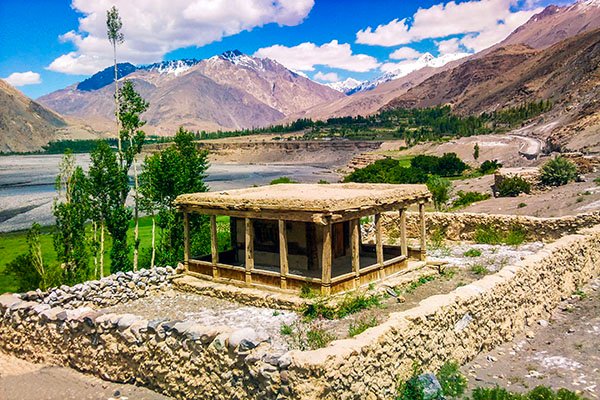
The most visible chapter of Gircha’s recent history is written in the story of the Bibi Nekbakht Mosque. As the river’s erosion threatened the mosque’s original site, the community relocated the building — an act that says everything about how this village values its heritage. The mosque stands today as both a place of worship and a monument to Gircha’s determination to carry its past into the future. In recent decades, the Karakoram Highway has brought the wider world to Gircha’s doorstep, and the village now balances its ancient rhythms with the opportunities and pressures of the tourist road to China.
Top Things to Do in Gircha
Visit the Bibi Nekbakht Mosque
The relocated Bibi Nekbakht Mosque is Gircha’s most significant landmark. Ask a local to tell you the story of its move — how the community dismantled and rebuilt their mosque to save it from the eroding riverbank. It is a story of devotion and engineering that no guidebook can fully capture. Dress modestly and respect prayer times.
Walk the Village Lanes
Gircha rewards slow walking. The stone-and-timber Wakhi houses, some of them very old, line narrow lanes between terraced fields. In summer the fields are green with barley and potatoes; in autumn the whole village glows gold. Greet people, accept the inevitable invitation for tea, and let the village set the pace.
Photograph the Karakoram Backdrop
The peaks rising around Gircha provide a dramatic frame for the village. Early morning light on the high summits, with the village still in shadow below, is the classic shot. The Passu Cones and the Batura massif dominate views in this part of Gojal — you do not need to travel far for world-class mountain photography.
Learn About Wakhi Culture
The Wakhi people have their own language, poetry, and music traditions. Upper Hunza is home to renowned Wakhi poets, and music and dance remain central to community life. If you are lucky enough to be present during a local gathering, you may hear the traditional instruments and songs that have carried Wakhi stories for generations. Always ask before photographing people.
Use Gircha as an Acclimatization Stop
At 2,832 meters, Gircha is an ideal overnight stop for travelers heading to the Khunjerab Pass at 4,693 meters. Spending a night here lets your body adjust gradually — a far wiser strategy than racing from Gilgit (1,500 meters) straight to the top of the pass in a single day.
Explore the Fossil Country
The snail-shell and reef fossils found around Gircha are a reminder that the Karakoram was once a seabed. Keep an eye on exposed rock faces as you walk — you are walking on geological history. Collecting is discouraged; look, photograph, and leave the stones for the next traveler.
Famous Places In and Around Gircha
- Sost: a few kilometers north — the border town and customs post for the Khunjerab crossing, with the famous Sost dry port bazaar.
- Khunjerab Pass: around 100 km north — the highest paved international border crossing in the world at 4,693 meters.
- Passu: south on the KKH — the Passu Cones, Passu Glacier, and the famous Hussaini suspension bridge.
- Gulmit: the old summer capital of Hunza state, with its polo ground and historic character.
- Attabad Lake: the brilliant turquoise lake formed by the 2010 landslide — see our Attabad Lake travel guide.
- Batura Glacier: one of the longest glaciers outside the polar regions, accessible from the Gojal side.
How to Reach Gircha
Route Details
- From Islamabad (around 560-580 km, 12-16 hours): Follow the Karakoram Highway all the way through Gilgit and on to upper Hunza. Gircha lies on the KKH just south of Sost. Most travelers break this journey with a night in Gilgit or Hunza.
- From Gilgit (around 80 km, 2.5-3.5 hours): Drive north on the KKH through lower Hunza, past Attabad Lake and Passu, to Gircha. The road is paved and in reasonable condition.
- From Lahore/Karachi: Fly or drive to Islamabad first, then follow the KKH route above.
- Nearest airport: Gilgit Airport, with PIA flights from Islamabad (weather permitting). From Gilgit, hire a car or take a van north on the KKH.
- Public transport: NATCO and private vans run the Gilgit-Sost route daily in season; ask the driver to drop you at Gircha.
The KKH through Gojal is generally open from May to October. In winter, snow can close sections of the highway and the Khunjerab Pass itself closes to traffic. Within the village, everything is on foot — there are no taxis in Gircha, which is part of the charm.
Where to Stay in Gircha
Gircha is a small village, not a resort town, so accommodation is simple and authentic. Family-run guesthouses and homestays are the main options — clean rooms, home-cooked food, and hosts who treat you as a guest rather than a customer. This is the best way to experience Wakhi hospitality, and your hosts can arrange local walks and cultural introductions. For more conventional hotels, Sost (a few kilometers north) and Gulmit and Passu (to the south) have a wider range of guesthouses and mid-range hotels. Many travelers stay in Passu or Gulmit and visit Gircha as a day stop, but spending a night in the village itself is a richer experience. Book ahead in the July-August peak season, when Gojal fills up.
Where to Eat: Local Foods of Gircha
Wakhi mountain cuisine is built for altitude: hearty, warming, and made from what the terraces and orchards provide. Expect fresh wheat bread baked daily, barley and buckwheat dishes, potatoes from the high fields, and dairy products — butter, yogurt, and cheese — from village livestock. Dried apricots and apricot oil are staples, eaten year-round and sold everywhere in Gojal. Salted milk tea is the drink of hospitality and you will be offered it constantly — accept it. Meals at village guesthouses are home-cooked and generous; your hosts will likely serve you the best of what they have. For restaurant variety, Sost and Passu have more options, including Pakistani and Chinese dishes catering to the border trade. Food here is inexpensive by any standard — a full home-cooked dinner costs very little.
Weather in Gircha
At 2,832 meters, Gircha has a true high-mountain climate: short, pleasant summers and long, bitterly cold winters. The village sits well above the snow line in winter, and the tourist season is compressed into the months when the KKH and the Khunjerab route are reliably open.
| Season | Temperature Range | Conditions |
|---|---|---|
| Winter (Dec-Feb) | -15°C to 0°C | Severe cold, heavy snow; the village is cut off from casual tourism; only for the fully prepared |
| Spring (Mar-May) | 0°C to 18°C | Slow thaw; blossom in the orchards by late April-May; crisp and quiet before the season |
| Summer (Jun-Sep) | 10°C to 25°C | Pleasant and sunny; the prime season for village walks, photography, and onward travel to Khunjerab |
| Autumn (Oct-Nov) | -5°C to 15°C | Golden harvest colors; spectacular but cooling fast; November brings the first serious snow |
Language and Culture of Gircha
The people of Gircha are Wakhi, speaking the Wakhi language — an ancient Eastern Iranian tongue quite distinct from the Shina spoken further south. Most villagers also speak Urdu, and many younger people speak English. The community is predominantly Nizari Ismaili Muslim, and the Ismaili emphasis on education means you will find the village remarkably literate and outward-looking. Hospitality to guests is a point of honor: you will be offered tea and food, and refusing too firmly can cause genuine disappointment — accept graciously. Dress modestly, ask permission before photographing people, and remove shoes when entering homes and the mosque. The Wakhi are proud of their heritage; showing genuine interest in their language, poetry, and history is the fastest way to be welcomed as a friend rather than processed as a tourist.
Shopping in Gircha
Shopping in Gircha means buying from the people who made the things. Hand-knitted woolen socks, caps, and shawls are practical souvenirs from a cold mountain village — and genuinely useful on the rest of your trip. Dried apricots, apricot oil, and walnuts from village orchards are the classic edible purchases. You may find traditional Wakhi embroidery and caps if you ask around. There are no shops in the Western sense; trade happens through guesthouse hosts and village contacts. For a wider selection, the Sost bazaar a few kilometers north serves the border trade and stocks goods from both Pakistan and China.
Local Events and Festivals
Navroz (March 21): The Persian New Year is the most important traditional celebration for the Wakhi and Ismaili communities of upper Hunza. Villages mark the arrival of spring with special foods, music, and community gatherings after the long winter — though at Gircha’s altitude, March is still very much winter, and the celebrations have a hardy mountain character.
Harvest season (September-October): The apricot, apple, and grain harvests bring the village’s busiest and most festive weeks, with families working the terraces together and the autumn colors at their peak — the best time to see Gircha at its most alive.
Travel Tips for Gircha
Packing Essentials
Even in summer, nights at 2,832 meters are cold — bring a warm jacket, layers, and a good sleeping bag liner if staying in simple guesthouses. Sun protection is essential at this altitude: sunscreen, sunglasses, and a hat. Sturdy walking shoes for the village lanes and terraces, and a water bottle you can refill.
Safety Tips
Gojal is among the safest regions in Pakistan for travelers, with very low crime and a community that looks after visitors. The real precautions are mountain ones: altitude (take it easy on your first day), sun exposure, and dehydration. Drink water constantly, even when you do not feel thirsty.
Money & Connectivity
Bring cash from Gilgit or Hunza — there are no ATMs in Gircha. Mobile coverage exists along the KKH corridor (SCOM has the best local network, with Jazz and Telenor also present), but signals fade inside the village and in side valleys. Download offline maps before you come.
Best Time to Visit Gircha
Summer (June to September) — the prime window
Warm days, green terraces, open roads, and the full Gojal experience — this is when to come for village walks, photography, and the journey onward to Khunjerab Pass. July and August are busiest; June and September are quieter and just as beautiful.
Autumn (October) — golden and brief
October brings the famous golden colors — poplars, apricots, and willows all turning at once against the dark peaks. It is spectacular but short; by November the cold closes in and the tourist season ends.
Spring (late April to May) — blossom and quiet
The orchards bloom in late April and May, the village wakes from winter, and you will have the lanes almost to yourself. Nights are still cold, but the days are fresh and clear.
Winter (December to March) — only for the experienced
Deep snow, severe cold, and limited access. The village endures it beautifully, but visiting requires serious winter-mountain preparation and flexible plans.
Final Thoughts
Gircha is not a destination that shouts. It does not have a famous lake or a fortress on a postcard. What it has is rarer: a centuries-old Wakhi village, still living its own life, in one of the most spectacular mountain corridors on Earth. In an age when every beautiful place is photographed a million times, Gircha remains a place you experience rather than consume.
If your northern Pakistan journey takes you up the Karakoram Highway toward Sost and the Khunjerab Pass, give Gircha a day — or better, a night. Walk the lanes, drink the salted tea, listen to the stories of Bobo e Sufi and the moving of the mosque, and watch the evening light climb the peaks. You will leave understanding Hunza in a way the viewpoints alone can never teach. For more of the region, our Explore Pakistan guides continue north to the border and south to the great valleys.
FAQs
Where is Gircha located?
Gircha is a village in Gojal Tehsil of Hunza District, Gilgit-Baltistan, on the Karakoram Highway a few kilometers south of Sost, at around 2,832 meters altitude.
What is Gircha famous for?
It is one of the oldest Wakhi villages of upper Hunza, traditionally founded by Bobo e Sufi, and is known for the historic Bibi Nekbakht Mosque and its unspoiled Wakhi mountain culture.
What is the best time to visit Gircha?
June to September for the best weather and open roads; October for the golden autumn colors. Winter (December-March) brings severe cold and snow.
How do I reach Gircha?
Drive the Karakoram Highway north from Gilgit (around 80 km, 2.5-3.5 hours) toward Sost; Gircha lies on the highway just south of Sost. Vans on the Gilgit-Sost route can drop you there.
Who are the Wakhi people?
The Wakhi are an ethnic group speaking the Wakhi language, native to the high valleys of the Pamir and Karakoram including Gojal. In upper Hunza they are predominantly Nizari Ismaili Muslims, known for their hospitality, education, and rich poetic and musical traditions.
Is Gircha safe for tourists?
Yes — Gojal is among the safest regions in Pakistan for travelers. Take standard mountain precautions regarding altitude, sun, and hydration.
Where can I stay in Gircha?
Family-run guesthouses and homestays in the village offer the most authentic experience; Sost, Passu, and Gulmit nearby have a wider range of hotels and guesthouses.
What should I eat in Gircha?
Home-cooked Wakhi mountain food — fresh bread, barley and potato dishes, dairy products, dried apricots, and salted milk tea — served by guesthouse hosts.
Can I visit Khunjerab Pass from Gircha?
Yes — Gircha is a natural staging point, around 100 km south of the pass. Spending a night here helps you acclimatize before ascending to 4,693 meters.
What is the Bibi Nekbakht Mosque?
Gircha’s historic mosque, which the village community relocated to save it from river erosion — a landmark that embodies the village’s devotion to its heritage.