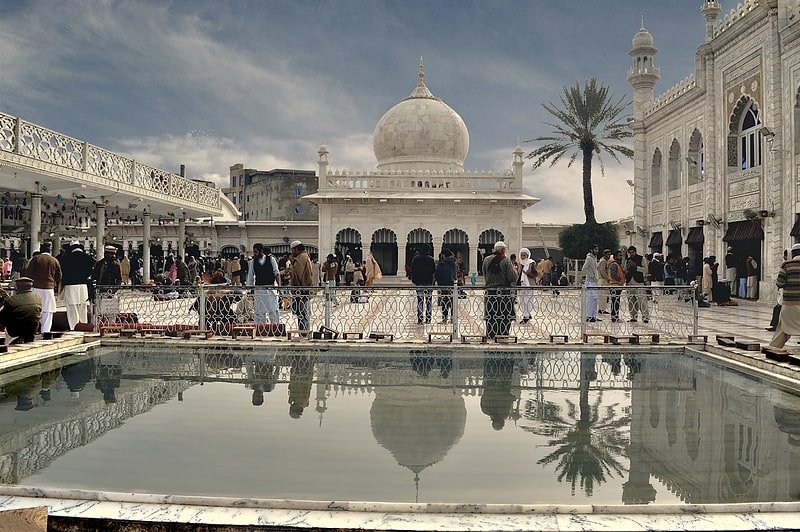
At the foot of the Margalla Hills, in Islamabad’s E-11 sector, lies one of Pakistan’s most beloved spiritual landmarks: Golra Sharif, the shrine of the great Sufi saint Pir Meher Ali Shah. Part pilgrimage site, part living museum of Sufi culture, Golra Sharif draws thousands of visitors every week, from devoted followers who have come for generations to curious travellers discovering Pakistan’s Sufi heritage for the first time. Whether you come seeking spiritual peace, stunning Islamic architecture, or a deeper understanding of the country’s soul, this Golra Sharif travel guide shows why this shrine deserves a place on your Islamabad itinerary, and when to go.
Quick Facts
- Location: Golra Sharif village, Sector E-11, Islamabad Capital Territory, at the foothills of the Margalla Hills
- Altitude: Around 520 metres above sea level
- Famous For: The shrine and tomb of Pir Meher Ali Shah (1859-1937), the revered Sufi saint, scholar, and Punjabi poet of the Chishti order
- Nearest City: Islamabad (a 20-30 minute drive from the city centre); Rawalpindi is about 18 km to the southeast
- Accessibility: Easily reached by car or taxi via Srinagar Highway and Margalla Road; the shrine is open daily from early morning to late evening
- Known Landmarks: The saint’s marble tomb, the grand mosque, the shrine of his father Hazrat Sarkar, the langar (community kitchen), library and museum
- Best For: Spiritual seekers, students of Sufism and Islamic history, photographers of Islamic architecture, families on a peaceful day trip
Why Visit Golra Sharif
Golra Sharif is where Islamabad’s modern face meets its spiritual heart. The capital is known for its planned avenues and modernist landmarks, but here, tucked against the Margalla Hills, is a place that has pulsed with devotion for over a century. The moment you step through the shrine’s gates, the city’s noise falls away. The white marble gleams, the air carries the scent of roses and incense, and the sound of Quranic recitation drifts from the mosque. It is one of the most peaceful places in the capital region, and you do not need to be a follower to feel it.
The shrine honours a genuinely remarkable figure. Pir Meher Ali Shah (1859-1937) was not only a Sufi saint of the Chishti order but a scholar of formidable depth, a poet whose Punjabi verses are still sung at Sufi gatherings across the region, and a theologian whose writings shaped Islamic thought in the subcontinent. His famous couplet, “Kithay Meher Ali, kithay teri sana; Gustakh akhiyan kithay ja larian” (Where is Meher Ali, and where is Your praise; where have these bold eyes dared to gaze), is an expression of humility that captures his spiritual worldview. Visiting his shrine is a window into a rich intellectual and mystical tradition.
Golra Sharif is also a living community, not a frozen monument. The langar serves free meals to visitors every day. Qawwali and dhikr gatherings fill the shrine with music and devotion. The annual Urs, the three-day death anniversary observed from the 27th to the 29th of Safar, transforms the complex into a sea of pilgrims from across Pakistan. Come on an ordinary day for serenity, or during Urs for an unforgettable immersion in Sufi culture.
Finally, Golra Sharif pairs beautifully with the area’s other heritage. The historic Golra Railway Station, a British-era junction from 1882, stands nearby and now houses the Pakistan Railways Heritage Museum. The Margalla Hills rise right behind the shrine, and the ancient Buddhist caves of Shah Allah Ditta are a short drive away. A Golra Sharif visit can anchor a full day of Islamabad heritage.
History of Golra Sharif
The village of Golra is far older than the shrine. Local tradition tells that a man named Shahabal-Din came here from Soun Sakessar in District Sargodha for hunting. When he set his dogs on the rabbits, he was astonished to see the rabbits turn and chase the dogs instead. Taking this strange event as a sign of some unseen spiritual power in the place, he settled here permanently with his family, and his descendants, known as Awans, gave the settlement its name: Golra. The village, covering some 654 acres, sits about 18 kilometres northeast of Rawalpindi in what is now Islamabad’s E-11 sector.
Golra became a spiritual centre in the late 19th and early 20th centuries through Pir Syed Meher Ali Shah Gilani (1859-1937). A follower of the Chishtiyya Sufi order with deep ties to the Qadriya order through his spiritual guide, he was a master of Islamic scholarship, steeped in the metaphysical philosophy of Wahdat al-Wujood (the Unity of Being) as elaborated by the great Andalusian mystic Ibn Arabi. His learning was so profound that in 1933 the philosopher Muhammad Iqbal wrote to him asking about Ibn Arabi’s concept of Space and Time, though the saint, deep in meditation and unwell, could not reply.
Pir Meher Ali Shah was also a formidable defender of orthodox Islamic belief in his time, known for his scholarly refutation of new religious movements, and a poet whose verses in Punjabi continue to move Sufi devotees. He passed away in 1937, and his tomb at Golra Sharif became one of the most visited Sufi shrines in the region. The shrine complex, with its mosque, tomb chamber, and ancillary buildings, was developed in the early 20th century in a refined Islamic architectural style; the shrine’s architect is recorded as Babu Lal-Muhammad Chughtai.
The shrine has been guided through the decades by its custodians, the Sajjada Nashins. The longest-serving was Pir Syed Shah Abdul Haq Gilani, who cared for the shrine for some 46 years, from 1974 until his passing in July 2020, and Pir Syed Naseer Uddin Naseer Gilani is widely known as one of its notable custodians. Today the shrine is managed by the heirs of these families. The saint’s legacy is honoured nationally: in 2013 Pakistan Post issued a commemorative postage stamp in his tribute, and the Pir Mehr Ali Shah Arid Agriculture University in Rawalpindi bears his name.
Top Things to Do in Golra Sharif
Pay Your Respects at the Saint’s Tomb
The heart of Golra Sharif is the marble tomb chamber of Pir Meher Ali Shah. Enter with respect, cover your head as local custom suggests, and spend a quiet moment in the chamber. Devotees offer flowers and chadars (decorative cloths) at the grave, and the atmosphere of devotion is palpable. Whether you come as a believer or a respectful observer, the tomb is the spiritual centre of the complex and the reason the shrine exists.
Admire the Mosque and Architecture
The shrine’s mosque is a beautiful example of early-20th-century Islamic architecture, with its elegant minarets, arched colonnades, marble courtyard, and the ablution pool that mirrors the dome. Photographers will find endless compositions here, especially in the soft light of morning. Walk the courtyard slowly and study the tilework and carved details that make this one of Islamabad’s most photogenic religious buildings.
Experience the Langar
The shrine’s langar, the free community kitchen, serves meals to visitors every day, and sharing this simple food is one of the most moving parts of a Golra Sharif visit. Sit with fellow visitors, devotees and travellers alike, and eat the same meal. It is Sufi hospitality in its purest form: no one is turned away, and no payment is expected. If you wish, you can contribute to the langar fund as an act of charity.
Visit the Library and Museum
The shrine complex includes a library and a small museum holding manuscripts, books, and relics connected to the saint and the Sufi tradition of the region. For visitors interested in the intellectual side of Golra Sharif, the scholarly legacy of Pir Meher Ali Shah, his writings on metaphysics and theology, this is a quiet corner worth seeking out.
Attend a Qawwali or Dhikr Gathering
On Thursday evenings and during religious occasions, the shrine comes alive with qawwali, the devotional Sufi music, and dhikr, the rhythmic remembrance of God. The music, the harmonium, and the tabla create an atmosphere that visitors describe as transporting. Check locally for the schedule, and arrive early to find a good spot.
Walk to the Historic Railway Station
Just a short distance from the shrine stands Golra Railway Station, the 1882 British-era junction that now houses the Pakistan Railways Heritage Museum, with its vintage locomotives and the royal saloon once used by Quaid-e-Azam Muhammad Ali Jinnah. Combining the shrine and the museum makes for a full and varied day out.
Famous Places In and Around Golra Sharif
Golra Railway Station and Heritage Museum: The 1882 junction turned railway museum, minutes from the shrine. Faisal Mosque: Islamabad’s iconic national mosque, about 20 minutes away. Bari Imam Shrine: The shrine of another great saint, Shah Abdul Latif Kazmi (1617-1705), in the eastern Margallas. Shah Allah Ditta Caves: Ancient Buddhist caves in the Margalla foothills. Margalla Hills: Hiking trails with city views, right behind the shrine.
How to Reach Golra Sharif
Golra Sharif is one of the easiest heritage destinations to reach in the capital region. Located in Sector E-11 at the foot of the Margalla Hills, it is a 20 to 30 minute drive from central Islamabad via Srinagar Highway and Margalla Road. From Rawalpindi, take Peshawar Road toward Islamabad and follow the signs for E-11 and Golra Sharif; the shrine is well signposted locally.
From Lahore, the drive to Islamabad takes about four hours via the M-2 motorway, and from there it is a short hop to Golra Sharif, making the shrine an easy addition to any Islamabad trip. From Karachi, fly to Islamabad International Airport (about a two-hour flight) and take a taxi or ride-hailing car to the shrine, roughly a 30 to 40 minute drive from the airport depending on traffic. The nearest airport is Islamabad International Airport.
Public transport options include taxis and ride-hailing services, which are plentiful in Islamabad and can take you directly to the shrine’s gates. Local vans and Suzuki pickups run along the main roads near E-11, but for comfort and simplicity, a car or taxi is the best choice, especially if you are combining the shrine with the railway museum.
Route Details
From central Islamabad (Blue Area), take Jinnah Avenue west to Srinagar Highway, continue toward the Margalla Hills, and exit toward Sector E-11. Follow Margalla Road and the local signs for Golra Sharif village; the shrine complex is at the heart of the old village, with the railway station nearby. Parking is available around the shrine, though it fills quickly during Urs and on Thursdays. From Rawalpindi’s Saddar area, take Peshawar Road north, cross into Islamabad’s sectors, and follow signs for E-11.
Where to Stay in Golra Sharif
Golra Sharif is a day-trip destination, and almost all visitors stay in Islamabad, which offers Pakistan’s widest range of hotels. The sectors near the shrine, E-11, F-11, and D-12, have comfortable mid-range hotels and guesthouses that put you within minutes of both the shrine and the Margalla Hills trails. For more choice, the hotel clusters around Blue Area, F-6, F-7, and the airport road cover every budget from simple guesthouses to five-star luxury.
Budget travellers will find clean, simple guesthouses across the residential sectors at very reasonable rates, while families often prefer the serviced apartments in E-11 and F-11 for their space and kitchenettes. If you are visiting during the Urs (27-29 Safar), book early: hotels near the shrine fill with pilgrims, and prices rise. For most of the year, though, Islamabad’s hotel market is competitive and walk-in availability is good.
Where to Eat: Local Foods of Golra Sharif
Start with the langar. The shrine’s free community kitchen serves simple, hearty meals, typically daal, rice, roti, and vegetables, to all visitors every day, and eating there is both a cultural experience and a blessing. Beyond the langar, the streets around the shrine are lined with dhabas serving classic desi food: nihari, haleem, daal fry, chicken karahi, and fresh tandoori roti, at budget-friendly prices.
The nearby markets of E-11 and F-11 offer more variety, from desi restaurants to fast food and continental cafes. Islamabad’s famous food streets are a short drive away if you want to make an evening of it. For sweets, look for the traditional mithai shops near the shrine, and do try the doodh patti from the tea stalls that serve the steady stream of pilgrims. As in all of Islamabad, food is hygienic and varied, and vegetarians will have no trouble.
Weather in Golra Sharif
Golra Sharif shares Islamabad’s pleasant climate, softened slightly by the Margalla Hills at its back. Winters are cool and crisp, summers are hot with a monsoon break, and spring and autumn are glorious. The shrine is open year-round, and because most of the visit is on foot in the open courtyard, the shoulder seasons are the most comfortable.
| Season | Temperature Range | Conditions |
|---|---|---|
| Winter (Dec-Feb) | Around 0 to 18°C | Cool, clear days; chilly mornings; very comfortable for sightseeing; pack a warm jacket |
| Spring (Mar-Apr) | Around 15 to 28°C | Mild and green; the Margalla Hills bloom; the best season to visit |
| Summer (May-Jul) | Around 30 to 40°C | Hot afternoons; visit early morning or evening; monsoon rains in July bring relief |
| Autumn (Aug-Nov) | Around 18 to 32°C | Post-monsoon freshness; pleasant evenings; another excellent season for the shrine |
Language and Culture of Golra Sharif
The language of Golra Sharif is the language of its devotees: Punjabi and Urdu dominate, with visitors from every province adding Saraiki, Pashto, and Sindhi to the mix on busy days. The shrine’s culture is the culture of Sufism: love, tolerance, and devotion expressed through poetry, music, and service. You will see people of all backgrounds praying side by side, and the atmosphere is one of remarkable harmony.
Visitors should dress modestly and respectfully: cover shoulders and legs, and women are expected to cover their heads within the shrine complex (a dupatta or scarf suffices). Remove your shoes before entering the tomb chamber and the mosque. Photography is generally tolerated in the courtyard, but ask before photographing devotees, and avoid photography inside the tomb chamber during prayers. Keep your voice low near the grave, and accept any food or drink offered with your right hand.
Shopping in Golra Sharif
The small bazaar around the shrine sells the classic paraphernalia of a Sufi shrine: chadars (decorative cloths for the grave), rose petals and garlands, tasbih (prayer beads), topi caps, attar (perfume oils), and religious books and CDs of qawwali. These make meaningful souvenirs of your visit. The E-11 and F-11 markets nearby offer everyday shopping, from groceries to clothing, and Islamabad’s larger malls, including the Centaurus in Blue Area, are a 20-minute drive away for anything else.
Local Events and Festivals
Urs of Pir Meher Ali Shah (27-29 Safar): The shrine’s great annual event. For three days, observed on the 27th, 28th, and 29th of the Islamic month of Safar, tens of thousands of devotees converge on Golra Sharif for the saint’s death anniversary. The programme includes Quranic recitations, naat and qawwali gatherings, dhikr, scholarly discourses on the saint’s teachings, and massive langar meals. The shrine is decorated, the bazaar buzzes late into the night, and the spiritual energy is at its peak. If you want to witness Sufi culture at full flood, time your visit for the Urs, but book your hotel early and arrive prepared for crowds.
Eid celebrations: The shrine and its mosque host large Eid prayers and festive gatherings, drawing families from across the twin cities.
Travel Tips for Golra Sharif
Packing Essentials
Bring a headscarf or dupatta, modest clothing that covers shoulders and legs, and socks, since you will remove your shoes at the tomb and mosque and the marble can be hot or cold. Carry a small bag for your shoes, some cash for donations and bazaar purchases, and a water bottle, especially in summer.
Safety Tips
Golra Sharif is a peaceful, well-managed shrine visited by families daily. The usual precautions apply: keep your belongings with you in crowds, especially during Urs, and be wary of anyone demanding money for access, the shrine itself is free to enter. Women travellers are generally comfortable here, though during the busiest Urs days it is wise to stay with your group.
Money & Connectivity
Entry to the shrine is free. Carry cash for the bazaar, food stalls, and voluntary donations; there is no formal ticket. ATMs are available in the E-11 and F-11 markets nearby. All major mobile networks (Jazz, Telenor, Zong, Ufone) have strong signals in the area, and Islamabad’s 4G coverage is excellent.
Best Time to Visit Golra Sharif
Spring (March to April)
The finest season: mild weather, green Margalla Hills, and comfortable courtyard visits. Ideal for combining the shrine with hiking and other Islamabad sightseeing.
Winter (November to February)
Cool, clear, and crowd-free on ordinary days. A lovely time for a peaceful visit, with crisp morning light on the marble.
Urs (27-29 Safar)
For the cultural experience of a lifetime. The dates shift each year with the Islamic calendar, so check the calendar in advance. Expect large crowds and book accommodation early.
Summer (May to August)
Hot but manageable if you visit early in the morning or in the evening. The monsoon rains of July and August cool things down and wash the marble clean.
Final Thoughts
Golra Sharif is more than a shrine; it is a living chapter of Pakistan’s spiritual story. In the tomb of Pir Meher Ali Shah, in the free meals of the langar, in the qawwali that rises on Thursday evenings, you encounter a tradition of love and devotion that has shaped this land for centuries. It asks nothing of you but respect, and it gives back a sense of peace that stays with you long after you leave the Margalla foothills.
If you are in Islamabad, do not miss it. Go in the morning light, share a langar meal, walk the marble courtyard, and then cross to the old railway station nearby for a completely different slice of history. For more of the capital’s heritage, read our guides to the Faisal Mosque and the Bari Imam Shrine, and explore the full Explore Pakistan collection.
FAQs
Where is Golra Sharif?
Golra Sharif is a village in Sector E-11 of the Islamabad Capital Territory, at the foothills of the Margalla Hills, about 18 km northeast of Rawalpindi and a 20-30 minute drive from central Islamabad.
Who was Pir Meher Ali Shah?
Pir Syed Meher Ali Shah Gilani (1859-1937) was a renowned Sufi saint of the Chishti order, an Islamic scholar and metaphysician, and a celebrated Punjabi poet. His shrine at Golra Sharif is one of Pakistan’s most visited Sufi landmarks.
When is the Urs of Golra Sharif?
The annual three-day Urs, marking the saint’s death anniversary, is observed from the 27th to the 29th of Safar in the Islamic calendar. It draws tens of thousands of devotees with qawwali, dhikr, discourses, and langar meals.
How do I reach Golra Sharif from Islamabad?
Drive via Srinagar Highway and Margalla Road to Sector E-11 (20-30 minutes from the city centre), or take a taxi or ride-hailing car directly to the shrine’s gates. From the airport it is roughly a 30-40 minute drive.
Is there an entry fee at Golra Sharif?
No. Entry to the shrine is free for all visitors. The langar meals are also free, though voluntary donations are welcome.
Is Golra Sharif suitable for families?
Yes. It is a peaceful, well-managed shrine visited by families every day, with easy access, food available on site, and no difficult terrain. It makes an excellent half-day trip with children.
What should I wear to the shrine?
Dress modestly: cover shoulders and legs, and women should cover their heads with a dupatta or scarf. Remove your shoes before entering the tomb chamber and the mosque.
What else can I see near Golra Sharif?
The Golra Railway Station heritage museum (1882) is minutes away, the Faisal Mosque is about 20 minutes by car, the Bari Imam Shrine lies in the eastern Margallas, and the Shah Allah Ditta Buddhist caves and Margalla hiking trails are close by.