This Gurdwara Bhai Bannu, Mangat travel guide introduces one of the most historically significant Sikh shrines in Pakistani Punjab: the gurdwara built on the very spot where the first copy of the Sikh scripture was ever made. Inside you will find the remarkable story of Bhai Bannu and the “Bhai Bannu wali Bir”, the Ranjit Singh-era architecture with its Persian-style frescoes, how to reach Mangat from Lahore, Islamabad and Karachi, the best time to visit, where to stay and eat, and practical tips for a respectful heritage trip.
Quick Facts
- Location: Mangat town, tehsil Phalia, district Mandi Bahauddin, Punjab, Pakistan — on the Mandi Bahauddin–Gujrat road
- Altitude: Around 220 metres above sea level (Punjab plain)
- Famous For: The spot where Bhai Bannu prepared the first-ever copy of the Adi Granth (the “Bhai Bannu wali Bir”); a splendid darbar built by the royal command of Maharaja Ranjit Singh in 1802; floral frescoes and Persian angels motifs on its walls and roof
- Nearest City: Mandi Bahauddin, about 12 kilometres away
- Accessibility: Right on the Mandi Bahauddin–Gujrat road, 12 km from Mandi Bahauddin railway station; easy by car, van or local transport
- Known Landmarks: The frescoed darbar hall, the old tank beside it, the upper-floor dome, 1930s–40s visitor graffiti on the walls
- Best For: Sikh pilgrims and heritage travellers, lovers of Sikh art and architecture, anyone interested in the history of the Sikh scripture
Why Visit Gurdwara Bhai Bannu, Mangat
Every Sikh scripture in the world traces back, in one way or another, to a single village in what is now Mandi Bahauddin district. When Guru Arjan, the fifth Sikh Guru, compiled the Adi Granth at Amritsar — the first volume of the scripture that would become the Guru Granth Sahib — it was Bhai Bannu of Mangat who was entrusted to carry it to Lahore for binding, and Bhai Bannu who had the foresight to ask: should we not make a copy, in case the original is ever lost? The Guru agreed. That copy — the “Bhai Bannu wali Bir” — was prepared right here in Mangat, and the Guru commanded that it be kept here. This gurdwara stands on that exact spot.
For the historically minded, that makes Mangat one of the most important Sikh sites in Pakistan. It is not a shrine built around a legend; it is a shrine built around a documented act of preservation. The first backup copy of one of the world’s great scriptures was written out by hand in this village, in a devotee’s house, more than four centuries ago. Standing here, you are standing at the birthplace of the Sikh textual tradition.
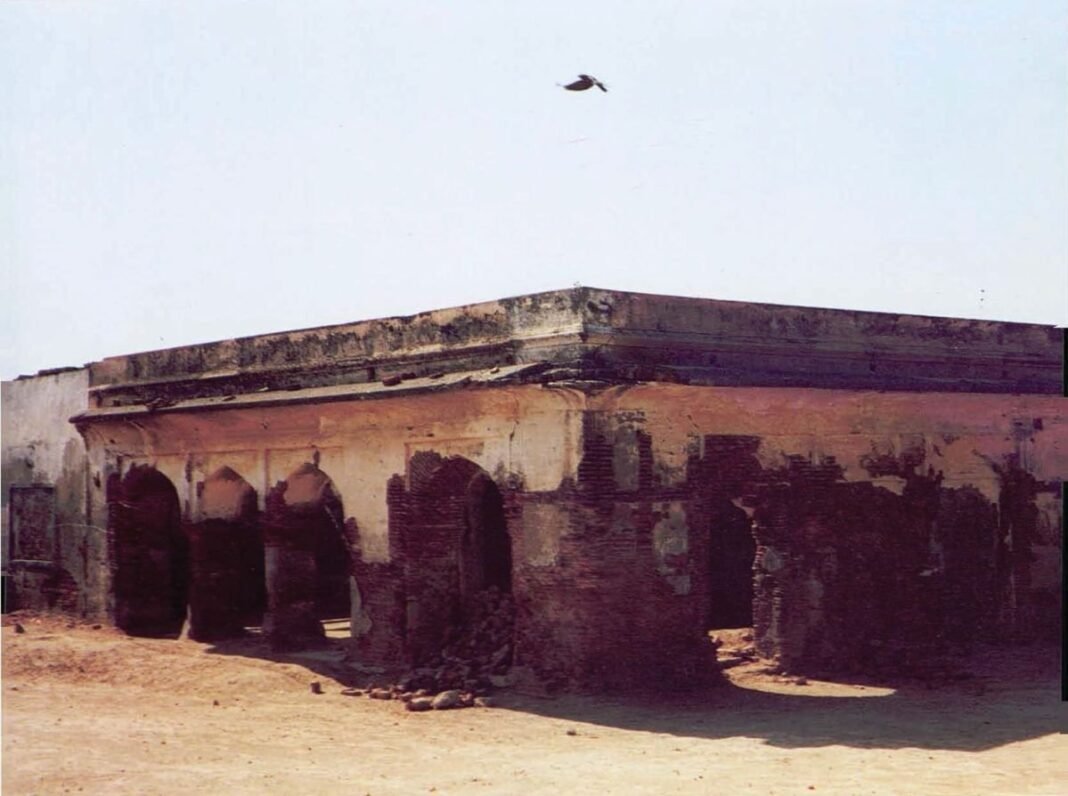
Then there is the building itself. In 1802, Maharaja Ranjit Singh ordered a beautiful gurdwara raised beside the old tank — a splendid darbar whose walls and roof carry floral frescoes and the Persian angels motifs you can also see on the Shahi Hammam in Lahore. The architecture tells its own story in brick: thin bricks and a fortified wall from the Maharaja’s own reign, thicker bricks from a later expansion. And the walls carry something even more touching — the names of ordinary visitors from the 1930s and 1940s, scratched into the plaster with their village names, a guestbook that Partition froze in time.
Mangat is not a polished tourist site. The tank is silting up, a vegetable market bustles outside the gate, and the building is crumbling in places even as the great dome holds. Come for the history — the deepest Sikh history in this part of Punjab — and come in the cool months when the light on the frescoes is at its best.
History of Gurdwara Bhai Bannu, Mangat
The story begins with Bhai Bannu, a celebrated disciple of Guru Arjan and a native of Mangat village. Bhai Bannu was a contemporary of the fifth and sixth Sikh Gurus, Guru Arjan and Guru Hargobind, and he rendered diligent service during the construction of the Harmandar Sahib (the Golden Temple) at Amritsar. When Guru Arjan compiled the Adi Granth at Amritsar — the first Bir, later known as the Kartarpuri Bir, containing the banis of the first five Gurus and the bhagats — he chose Bhai Bannu for a task of supreme trust: carry the manuscript to Lahore for binding, since quality binding was not available in Amritsar in those days.
Before setting out, Bhai Bannu made a proposal that would echo through Sikh history. It would be wise, he argued, to make a copy of the Bir first — a backup that would preserve the contents forever in case something untoward happened to the original volume. The Guru agreed. Bhai Bannu carried the first Bir to his native village, Mangat, and there prepared the copy that came to be known as the “Bhai Bannu wali Bir”. Once the binding was done to his satisfaction, he took both volumes to Guru Arjan at Amritsar. The Guru commanded him to take his own copy back to Mangat and keep it there — and Bhai Bannu installed the Bir in his house.
For over two centuries the Bir remained in Mangat. Then, in 1802, during Sikh rule, a beautiful gurdwara was built by the royal command of Maharaja Ranjit Singh at the side of the tank, on the very spot where Bhai Bannu had prepared the copy — and the Adi Granth was installed in it. The shrine came to be known as Gurdwara Bhai Bannu. A large endowment of land was attached to it. Later, mahants were given control of the gurdwara and removed the Bir from the site; but after the Sikhs regained control through the Gurdwara Reform Movement of the 1920s, the Bir was reinstalled.
The Maharaja himself visited the shrine in February 1838, while travelling from Mardan to Lahore, and made an ardas (offering) of Rs 300 — a royal seal of approval on the shrine’s importance. The Bhai Bannu wali Bir remained at the gurdwara until the Partition of August 1947, when the heirs of Bhai Bannu carried it across the new border to Kanpur, where it rests today.
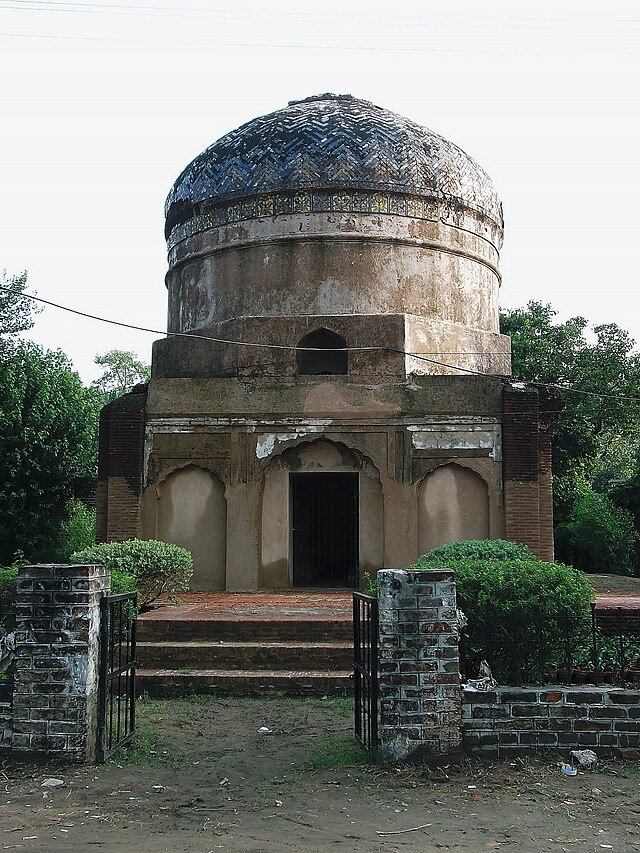
Since Partition the building has survived but suffered. The floral frescoes still grace the walls, the great dome of the upper floor stands mostly intact, and the original brick and plaster of the Ranjit Singh-era core remain in good condition. But the tank is filling with dust, a vegetable market has grown up outside the gurdwara, and the outer paintings — Hindu mythological figures in the lower hallway — are fading. It is a monument waiting, patiently, for the care its history deserves.
Top Things to Do in Gurdwara Bhai Bannu, Mangat
Stand Where the First Copy Was Written
The single most powerful thing to do at Mangat is also the simplest: stand in the darbar and remember what happened here. In a devotee’s house on this ground, the first copy of the Adi Granth was written out by hand — the backup that Bhai Bannu’s foresight demanded and the Guru’s wisdom approved. No other Sikh site in Pakistan can claim quite this role in the history of the scripture. Take a quiet moment; this is a place for reflection, not selfies.
Study the Frescoes and Persian Angels
The gurdwara’s decoration repays close looking. Floral frescoes — the delicate flower-and-vine painting of the Sikh court style — cover the walls, while the roof carries Persian angels motifs of exactly the kind seen on the walls of the Shahi Hammam in Lahore and on Sardar Ganda Singh Batalia’s samadhi in Gujranwala. These are the visual language of Maharaja Ranjit Singh’s Punjab, and Mangat is one of the few places outside Lahore where you can still see it in something close to its original setting.
Read the Brickwork Like a Timeline
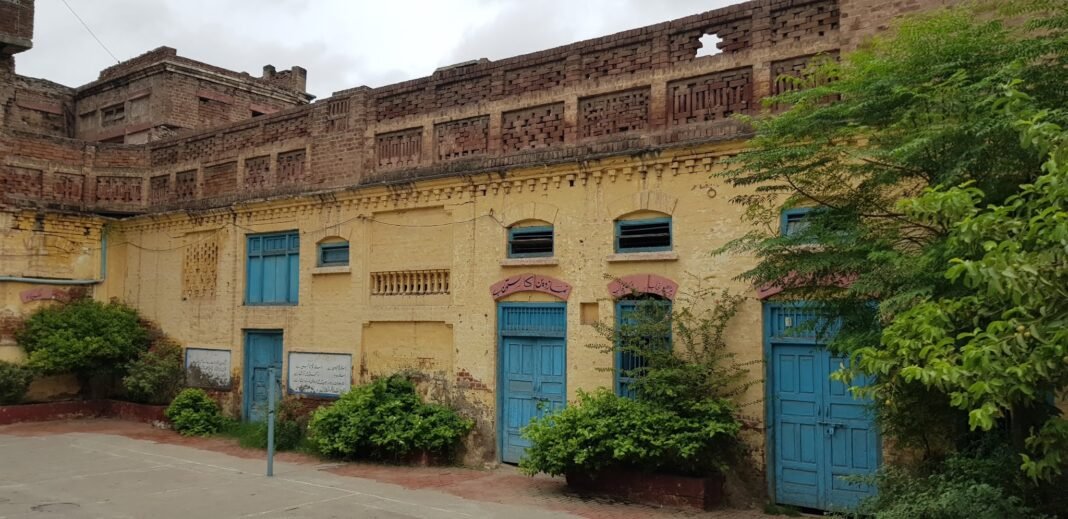
Look closely at the walls and you can read the building’s history in its bricks. The fortified wall and the thin bricks of the sanctum belong to the Ranjit Singh-era construction of 1802; the thick bricks of the exterior mark a later expansion. The part built under the Maharaja closely resembles the gurdwara at Tarn Taran across the border — the same court, the same craftsmen, the same moment in Sikh architecture.
Find the 1930s–40s Graffiti
Some of the most moving details at Mangat are also the humblest: the names of visitors from the 1930s and 1940s, written on the walls in their own hands, many identifying their home villages. These were pilgrims who came when the Bir was still here and the fairs still ran. The building is crumbling around them, but the graffiti survives — a frozen guestbook of a vanished Punjab.
Walk the Tank and the Old Compound
The old tank beside which the Maharaja’s darbar was raised is silting up, but walking its edge gives you the full composition of the shrine: water, darbar, dome. The upper floor’s large dome is mostly intact and dominates the skyline of this flat country. Early morning or late afternoon light is kindest to the brickwork and the frescoes.
Famous Places In and Around Gurdwara Bhai Bannu, Mangat
Mangat town bazaar — the small-town market around the shrine, with its vegetable market outside the gurdwara gate and everyday Punjabi commerce. Mandi Bahauddin city — the district town 12 km away, a major grain market with busy bazaars. Gujrat — about 45 km east, the historic pottery and ceramics town of Punjab. The Chenab riverbank — the great river flows through this district; its banks near the towns make a peaceful evening stop. Phalia — the tehsil town, a typical Punjabi market town on the road network.
How to Reach Gurdwara Bhai Bannu, Mangat
Mangat sits on the Mandi Bahauddin–Gujrat road, one of the district’s main arteries, so reaching it is straightforward. The usual approach is to travel to Mandi Bahauddin city first — by road or rail — and then drive 12 kilometres to Mangat. Any driver in Mandi Bahauddin knows the gurdwara; it is a landmark of the town.
From Lahore: Around 185–190 kilometres via Gujranwala and the Gujrat road network (or via the motorway and Sialkot–Gujrat roads), roughly 3.5 to 4 hours by car. Mangat makes a comfortable day trip from Lahore if you start early.
From Islamabad: Around 250 kilometres via the M-2 motorway and connecting roads through the Kharian–Dinga belt or via Gujrat, roughly 4 to 4.5 hours. Many travellers combine Mangat with Gujrat in a single day from the capital.
From Karachi: Around 1,350 kilometres — a two-day drive via the motorway network. Flying to Lahore (or Sialkot) and driving onward is far more practical.
Nearest airport: Sialkot International Airport is the closest major airport (roughly 90 km); Lahore’s Allama Iqbal International Airport (around 190 km) has far more flight options. Rail: Mandi Bahauddin railway station has train connections on the branch line network; the shrine is 12 km from the station by road. Road conditions: The Mandi Bahauddin–Gujrat road is metalled and in regular use; village streets around the shrine are narrow. Winter fog (December–January) can slow morning driving across this belt.
Route Details
Step 1: Reach Mandi Bahauddin city from Lahore, Islamabad or Gujrat by road or rail. Step 2: From Mandi Bahauddin, take the Gujrat road east for about 12 kilometres to Mangat town. Step 3: The gurdwara stands beside the road near the town’s tank — ask any shopkeeper for “Bhai Bannu da Gurdwara”. Step 4: Park in the bazaar area and walk the last stretch; the vegetable market outside the gate marks the spot. Step 5: After your visit, return to Mandi Bahauddin for food and onward connections, or continue east to Gujrat.
Where to Stay in Gurdwara Bhai Bannu, Mangat
Mangat is a small town, so overnight visitors stay in Mandi Bahauddin city, 12 kilometres away. The city has a range of modest hotels and guesthouses serving traders from the grain market — clean, functional rooms at budget-friendly rates. Do not expect luxury; do expect hot food and a working fan.
Travellers who want more comfort base themselves in Gujrat (about 45 km east), which has proper mid-range hotels, or in Lahore for a day trip. If you are doing a multi-day Sikh heritage circuit of Punjab, Lahore remains the most practical headquarters: it puts Mangat, Kartarpur, Nankana Sahib and the Lahore shrines all within day-trip range, with the full spectrum of accommodation from budget to five-star.
Book ahead during the wheat-harvest season (April–May) and on public holidays, when the city’s trader hotels fill up. On ordinary days, rooms in Mandi Bahauddin are easy to find on arrival.
Where to Eat: Local Foods of Gurdwara Bhai Bannu, Mangat
This is the food country of the Punjab plain at its most generous: wheat, dairy and desi ghee. In Mangat and Mandi Bahauddin, eat like the locals do — tandoori rotis straight from the clay oven, dal makhani-style lentils, saag in winter, and lassi so thick it needs a spoon. The dhabas along the Gujrat road serve karahi, daal fry, kebabs and fresh tandoori chicken at prices that will make city travellers smile.
Mandi Bahauddin’s grain-market prosperity shows on its food streets: look for the busy kebab and tikka shops in the city bazaar, chana chaat and fruit chaat stalls in the afternoon, and sweet shops selling barfi, gulab jamun and jalebi. In summer, the sugarcane belt means fresh cane juice (ganne ka rus) from roadside presses — cheap, sweet and very Punjabi. Keep to freshly cooked food and bottled or boiled water, as you would anywhere in rural Punjab.
Weather in Gurdwara Bhai Bannu, Mangat
Mangat shares the classic weather of the upper Punjab plain: a foggy winter, a brief glorious spring, a long hot summer and a monsoon that arrives in July. The shrine visit involves walking an open compound and studying walls and frescoes in natural light, so the cool, clear months from November to March are far and away the best time to come.
| Season | Temperature Range | Conditions |
|---|---|---|
| Winter (Dec–Feb) | 4–20°C | Cool days, cold nights; dense morning fog common in Dec–Jan |
| Spring (Mar–Apr) | 20–33°C | Pleasant and green; wheat harvest colours the fields gold in April |
| Summer (May–Jul) | 33–45°C | Hot and dry; loo winds in June; visit only in early morning |
| Autumn (Aug–Nov) | 26–38°C | Monsoon humidity Aug–Sep; clear, pleasant weather from October |
Language and Culture of Gurdwara Bhai Bannu, Mangat
Punjabi is the mother tongue here, spoken in the warm, direct style of the upper Punjab; Urdu is understood everywhere. Mangat is a working agricultural town, not a tourist stage — people are busy, friendly and straightforward. A greeting of “Assalam-o-Alaikum” and a smile open every door.
At the shrine, follow Sikh custom: cover your head, remove your shoes before entering the darbar area, dress modestly, and keep the precinct free of tobacco and noise. The gurdwara is not an active place of worship with a resident granthi in the way the great shrines are, so you are visiting a heritage monument — behave as you would in a historic mosque or temple: quietly, respectfully, and without touching fragile frescoes or leaning on old plaster. Ask before photographing people in the bazaar outside.
Shopping in Gurdwara Bhai Bannu, Mangat
Mangat’s bazaar serves daily needs rather than tourists, but it is a pleasant place to browse: everyday Punjabi goods, fresh produce from the famous vegetable market outside the gurdwara gate, and small sweet shops. For real shopping, head to Mandi Bahauddin’s bazaars — the grain-market town has solid shops for khussa shoes, lawn and cotton cloth, and steel and brass household goods.
Gujrat, 45 km east, is the area’s famous shopping detour: the city has been Punjab’s ceramics and pottery centre for generations, and its shops sell beautiful glazed pottery, clay utensils and decorative tiles at source prices. There are no shopping malls in Mangat or on the immediate road; Gujrat and Lahore have the malls if you need them. Edible souvenirs travel best: buy desi ghee, fresh jaggery (gur) in winter, and the district’s citrus in season.
Travel Tips for Gurdwara Bhai Bannu, Mangat
Packing Essentials
Bring a head covering for the shrine, sturdy walking shoes (the compound ground is uneven), sun protection, and drinking water. In winter, pack warm layers — nights near the Chenab belt drop close to freezing and the morning fog is thick. A torch is useful if you want to study the dimmer frescoes inside the lower hallway. Carry any personal medication; the nearest well-stocked pharmacy is in Mandi Bahauddin city.
Safety Tips
Mandi Bahauddin district is settled and safe for daytime heritage visits. Travel in daylight, keep your driver or a local contact aware of your plans, and secure valuables as usual. The old building has fragile sections — do not climb stairs or walls that look unstable, and keep children close. The tank edge may be slippery; view it from the bank, not the rim.
Money & Connectivity
Cash is king in Mangat — carry Pakistani rupees, as no cards are accepted at the town’s shops and dhabas. ATMs are available in Mandi Bahauddin city; withdraw there before driving to the village. Mobile coverage (Jazz, Zong, Telenor, Ufone) is good across the district, and data works well enough for navigation. Save an offline map of the Mandi Bahauddin–Gujrat road before you set out.
Best Time to Visit Gurdwara Bhai Bannu, Mangat
Winter (November–February): The Ideal Season
Cool, clear days are made for this trip: comfortable walking weather, soft light on the frescoes, and green wheat fields all around. December and January bring fog that can delay morning starts — plan to reach Mangat by late morning and you will be fine.
Spring (March–April): Lovely and Lively
Spring is the harvest season, and the countryside is at its most beautiful. Temperatures are pleasant, the skies are clear, and the bazaars are full of energy. March is an excellent alternative if you want to avoid winter fog entirely.
Summer (May–July): For Early Birds Only
The upper Punjab summer is genuinely harsh, crossing 40°C for weeks. If summer is your only option, arrive at the shrine by 7 a.m., finish within the hour, and spend the hot middle of the day in Mandi Bahauddin or Gujrat. Carry ample water.
Autumn (August–October): The Monsoon Break
August and September are humid with monsoon showers; the compound can be muddy. From October onward the weather turns delightful and the tourist crowds are non-existent — a sweet spot for photographers and slow travellers.
Final Thoughts
There are grander gurdwaras in Pakistan and more famous ones, but few with a story as fundamental as Mangat’s. The first copy of the Sikh scripture was written here, by hand, because one devotee had the wisdom to say: let us make sure this is never lost. The Maharaja’s darbar, the frescoes, the angels on the roof, the pilgrims’ names on the walls — all of it grew from that single act of preservation.
Visit in the cool months, read the brickwork, find the old graffiti, and stand a while in the darbar. Then tell the story when you get home; places like Mangat survive on being remembered. For more journeys through Punjab’s sacred landscape, explore the Explore Pakistan collection, and continue the Sikh heritage trail with our Ali Baig Gurdwara travel guide and the Gurdwara Amir Shah Singh, Dera Ismail Khan guide.
FAQs
Where is Gurdwara Bhai Bannu located?
In Mangat town, tehsil Phalia, district Mandi Bahauddin, on the Mandi Bahauddin–Gujrat road, about 12 km from Mandi Bahauddin railway station.
Why is Gurdwara Bhai Bannu historically important?
It stands where Bhai Bannu prepared the first-ever copy of the Adi Granth (the “Bhai Bannu wali Bir”) in the early 1600s, on Guru Arjan’s command. The gurdwara itself was built by Maharaja Ranjit Singh’s royal order in 1802.
What is the best time to visit Mangat?
November to March for cool, clear weather. March avoids the winter fog and shows the harvest landscape at its best.
How do I reach Mangat from Lahore?
Drive about 185–190 km (3.5–4 hours) to Mandi Bahauddin city, then 12 km east on the Gujrat road to Mangat town.
Is the gurdwara an active place of worship?
It is primarily a heritage monument today; the Bhai Bannu wali Bir was taken to Kanpur at Partition in 1947. Visit it as a historic shrine, with the respect due to any sacred site.
Is it suitable for families?
Yes. The compound is open and easy to walk, and the story fascinates older children. Bring water and sun cover; facilities are basic.
Where can I stay near Mangat?
In Mandi Bahauddin city’s trader hotels (12 km), in Gujrat (45 km) for more comfort, or in Lahore as a day trip.
What should I not miss at the shrine?
The floral frescoes and Persian angels motifs, the two eras of brickwork, the intact upper dome, and the 1930s–40s visitor graffiti on the walls.