This Gurdwara Bhai Pheru, Bhai Pheru travel guide introduces a shrine with one of the most extraordinary origin stories in Punjab: the town that grew around the samadh of an honest ghee-seller whom Guru Har Rai made his collector and Guru Gobind Singh honoured as “Sachchi Dahri” — the True Beard. Inside you will find the miracle of the oil skins, the dramatic Bhai Pheru Morcha of 1922–25, the 1910 gurdwara at the end of the town’s Anarkali Market, how to reach Bhai Pheru from Lahore, Islamabad and Karachi, the best time to visit, where to stay and eat, and how to combine it with Changa Manga and Kasur.
Quick Facts
- Location: At the end of the local Anarkali Market, Bhai Pheru town (Phoolnagar), district Kasur, Punjab, Pakistan — on the Lahore–Multan road
- Altitude: Around 200 metres above sea level (Punjab plain)
- Famous For: The samadh of Bhai Pheru (1640–1706), the honest ghee-seller turned collector of Guru Har Rai, honoured by Guru Gobind Singh as Sachchi Dahri; the town itself is named after him; also known as Gurdwara Sangat Sahib
- Nearest City: Lahore, about 60 kilometres away
- Accessibility: Right on the Lahore–Multan road (N-5), an easy drive from Lahore; the gurdwara stands at the end of the town’s Anarkali Market
- Known Landmarks: The 1910 gurdwara building, the samadh of Bhai Pheru, the Anarkali Market, the town that grew around the shrine
- Best For: Sikh pilgrims and heritage travellers, students of the Gurdwara Reform Movement, lovers of Punjab’s small-town shrines, anyone combining Kasur and Changa Manga in one trip
Why Visit Gurdwara Bhai Pheru, Bhai Pheru
How many towns in the world are named after an honest accountant? Bhai Pheru — today officially Phoolnagar, though everyone still uses the old name — exists because of one man: Sangtia, a humble seller of ghee, who so impressed Guru Har Rai with his integrity that the Guru renamed him, made him collector of the entire Nakka region, and held him up as the one honest man among all his collectors. When Bhai Pheru died, a samadh was raised over him; around the samadh a settlement grew; and the settlement became a town that still carries his name four centuries later. To visit Bhai Pheru is to visit a place where honesty literally built a city.
The shrine rewards the historically curious twice over. First there is the seventeenth-century story — the miracle of the oil skins at Kartarpur, the audit in which only Bhai Pheru’s accounts were found clean, the title of Sachchi Dahri (True Beard) bestowed by Guru Gobind Singh himself. Then there is the twentieth-century drama: the Bhai Pheru Morcha of 1922–25, one of the stirring campaigns of the Gurdwara Reform Movement, when the Shiromani Gurdwara Parbandhak Committee took over this shrine from its mahant — and the mahant fought back, leading to arrests, agitation, and a standoff that made headlines across Punjab.
Practically speaking, this is one of the most accessible Sikh heritage sites in Pakistan: sixty kilometres from Lahore on a major highway, at the end of a colourful small-town market, combinable in a single day with the Changa Manga forest and the shrine city of Kasur. The present gurdwara building dates to 1910, raised by the mahant and the local sangat together, and the Evacuee Trust Property Board has contributed to its repair and maintenance in recent years. Come in the cool months, walk the Anarkali Market to the shrine’s door, and stand where a ghee-seller’s honesty founded a town.
History of Gurdwara Bhai Pheru, Bhai Pheru
The town of Bhai Pheru lies about sixty kilometres from Lahore on the Lahore–Multan road, and the Gurdwara Bhai Pheru — also called Gurdwara Sangat Sahib — stands majestically at the end of the local Anarkali Market. The shrine’s story begins with a man whose real name was Sangtia. He was a seller of ghee, and one day he was carrying his oil skins full of ghee to Kartarpur when one of the followers of Guru Har Rai purchased the ghee from him, asking him to collect the money the following day. Sangtia emptied his oil skins into the buyer’s vessels — and the next morning found his skins full of ghee again, as if never emptied.
Witnessing this miracle, Sangtia sought out Guru Har Rai and became his follower. The Guru converted him and changed his name to “Bhai Pheru” — the name that would become famous across the region. Guru Har Rai then appointed him as the masand, the collector, of the Nakka area: a position of real responsibility, gathering the offerings of the Sikh congregation. When reports of misappropriation by the Guru’s collectors came to light, a thorough audit was ordered — and it was found that only Bhai Pheru had maintained his accounts honestly and scrupulously. The Guru prayed for the continuation of his langar, the community kitchen that was the heartbeat of the Sikh congregation.
Bhai Pheru lived from 1640 to 1706, and his devotion earned him one of the most affectionate honours in Sikh history: Guru Gobind Singh bestowed upon him the title of Sachchi Dahri — the “True Beard.” When Bhai Pheru died in the Nakka area, a samadh (memorial) was built over his resting place, and a settlement grew around it that became known as Bhai Pheru. During Sikh rule, large endowments of land — some 2,750 acres — were attached to the shrine, which was administered by a line of priests belonging to the Sangat Sahib Ke sect of Udasi Sikhs. The present building of the gurdwara was constructed in 1910 AD through the collaborative efforts of the mahant and the local sangat, in the traditional Sikh architectural style.
The shrine’s modern history is dominated by the Bhai Pheru Morcha, one of the significant campaigns of the Sikh Gurdwara Reform Movement of the 1920s. As the Shiromani Gurdwara Parbandhak Committee (SGPC), formed in 1920, campaigned to bring Sikh places of worship under central democratic management, negotiations were opened with the mahant of Bhai Pheru, Kishan Das. He agreed to transfer the gurdwara and its vast landed property in consideration of a monthly pension of Rs 400 and free rations for life — and on 28 December 1922, the Shiromani Committee took possession of the shrine.
But the mahant soon repudiated the agreement, filing a police complaint of trespass against the manager Jagat Singh and the staff appointed by the Committee. On 7 December 1923, the police arrested Jagat Singh and ten other Sikhs; thirty-four more arrests followed on 2 January 1924, with regular batches of volunteers offering arrest from 5 January onward. The agitation — the Bhai Pheru Morcha — became one of the celebrated morchas of the reform movement, until it was called off after a murder that took place on 20 December 1925. The episode left Bhai Pheru’s name written into the political as well as the spiritual history of the Sikhs.
After Partition, the shrine passed to the Evacuee Trust Property Board, which has contributed to its repair and maintenance, keeping it standing as a place of worship and pilgrimage. The town around it — renamed Phoolnagar in official records but still universally called Bhai Pheru — remains what the saint’s samadh made it: a living memorial to the honest ghee-seller.
Top Things to Do in Gurdwara Bhai Pheru, Bhai Pheru
Visit the Samadh of Bhai Pheru
The heart of the complex is the samadh of Bhai Pheru himself — the memorial raised where the saint died in the Nakka area, around which the entire town grew. Stand here and recall the audit: of all the Guru’s collectors, only this man’s accounts were clean. It is one of the most morally vivid stories in Punjab’s sacred geography, and the samadh is its physical anchor. Behave as you would at any shrine — covered head, bare feet, quiet voice.
See the 1910 Gurdwara Building
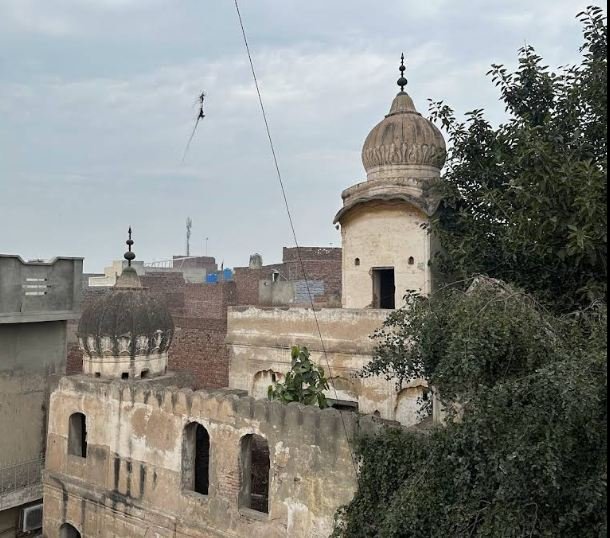
The present gurdwara, raised in 1910 by the mahant in collaboration with the local sangat, is a handsome example of traditional Sikh shrine architecture — dignified, symmetrical, and built for congregation. Note the craftsmanship of the pre-Partition era: this was the last generation of gurdwara building in undivided Punjab, and Bhai Pheru’s is a fine specimen. Recent preservation efforts by the Evacuee Trust Board have helped keep it in repair.
Walk the Anarkali Market to the Shrine
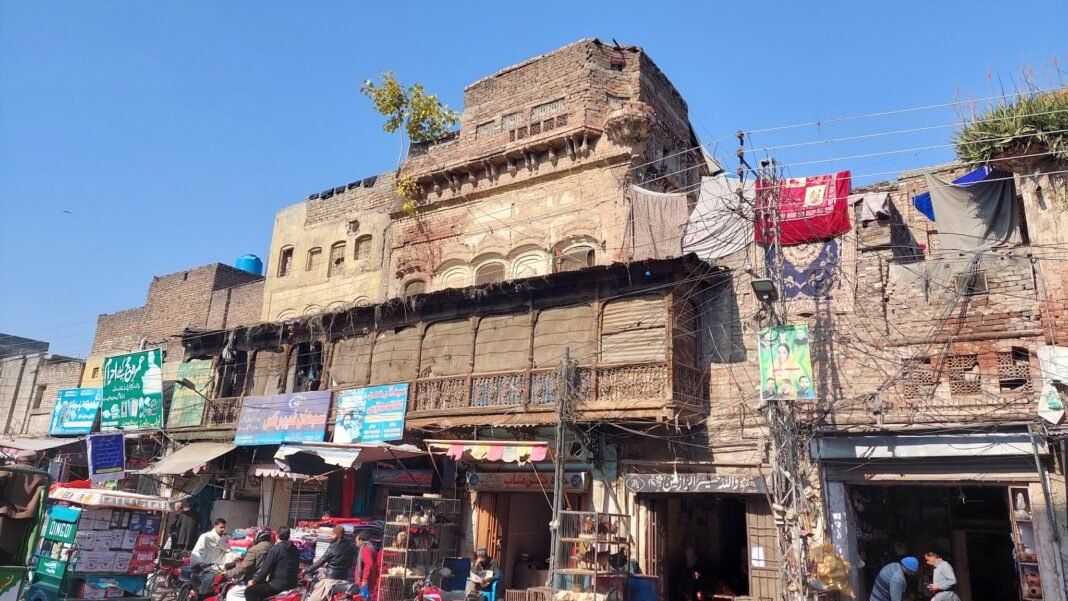
The approach to the gurdwara is half the experience. The shrine stands at the end of Bhai Pheru’s local Anarkali Market — a bustling small-town bazaar of cloth merchants, sweet shops, and everyday Punjabi commerce. Walk its length in the morning, when the light is good and the crowds are thin, and let the market’s energy carry you to the shrine’s quiet door. It is a wonderful contrast: commerce outside, contemplation within.
Reflect on the Morcha
For students of history, Bhai Pheru offers a direct connection to the Gurdwara Reform Movement — the non-violent Sikh struggle of the 1920s that reshaped the management of Sikh shrines. The arrests of December 1923 and January 1924 happened here, on this ground. Reading the morcha’s story before you visit transforms the shrine from a pretty building into a chapter of living history.
Combine with Changa Manga and Kasur
Bhai Pheru sits in a rewarding triangle. The Changa Manga forest — one of the largest man-made forests in the world — lies a short drive away, and the shrine city of Kasur, with its Sufi shrines and famous food, is within easy reach. Together they make a full, varied day out from Lahore: nature, Sufi heritage, and Sikh heritage in a single circuit.
Famous Places In and Around Gurdwara Bhai Pheru, Bhai Pheru
Changa Manga forest — the vast irrigated forest plantation, a beloved picnic and nature spot, about 15 km from Chhanga Manga railway station. Kasur — the historic shrine city, famous for its Sufi saints, Kasuri methi and falooda. Ganda Singh Wala border — the Kasur-sector border crossing with its flag ceremony. Gurdwara Bhai Bannu, Mangat — another great Punjab shrine of the Sikh textual tradition; see our Gurdwara Bhai Bannu, Mangat travel guide. Lahore — the provincial capital’s Mughal and Sikh monuments are an hour away; start with our places to visit in Islamabad and Explore Pakistan guides for wider trip planning.
How to Reach Gurdwara Bhai Pheru, Bhai Pheru
Bhai Pheru sits directly on the Lahore–Multan road (N-5), sixty kilometres from Lahore, which makes it one of the simplest shrine visits in Punjab. Drive out of Lahore on Multan Road, follow the N-5 south, and you will reach the town in about an hour and a half. In the town, ask for the Anarkali Market — the gurdwara stands at its end and is well known locally.
From Lahore: About 60 kilometres via Multan Road (N-5), roughly 1.5 hours by car. An easy half-day trip, best combined with Changa Manga or Kasur.
From Islamabad: About 350 kilometres via the M-2 motorway to Lahore and then the N-5 south, roughly 5.5 to 6 hours. Most visitors from the capital combine Bhai Pheru with a Lahore stay.
From Karachi: Over 1,200 kilometres — fly to Lahore and drive onward; the shrine is a simple day trip from the city.
Nearest airport: Allama Iqbal International Airport, Lahore (about 70–80 km). Rail: Pattoki and Kot Radha Kishan stations on the Lahore–Multan main line serve this belt; Chhanga Manga station is about 15 km from the shrine’s locality. From any of these, a short car or rickshaw ride reaches Bhai Pheru. Road conditions: The N-5 is a major highway in regular use; town streets around the Anarkali Market are narrow and busy — park at the market’s edge and walk in.
Route Details
From Lahore, take Multan Road (N-5) south past the city’s outskirts, through Manga Mandi toward Pattoki. Bhai Pheru (Phoolnagar) lies on this highway — watch for the town’s main bazaar turnoff. Drive into the town centre, find the Anarkali Market, and follow it to its end, where the gurdwara stands. From Islamabad, the M-2 motorway brings you to Lahore; exit toward the city’s southern bypass and join the N-5 south. Morning departures from Lahore miss the heaviest highway traffic and get you to the shrine in the best light.
Where to Stay in Gurdwara Bhai Pheru, Bhai Pheru
Bhai Pheru is a small town: expect simple roadside hotels and guesthouses along the N-5 used by highway travellers — basic, clean, and very affordable. Most visitors do far better basing themselves in Lahore, an hour and a half away, where the full range of accommodation awaits — from budget guesthouses in the old city to mid-range business hotels on the main boulevards to five-star luxury. Pattoki, the nearest larger town on the highway, has a handful of simple hotels if you want to stay closer to the Changa Manga–Bhai Pheru circuit. For a heritage-focused trip, a Lahore base with an early start gives you the shrine, the market, Changa Manga and Kasur in one comfortable day.
Where to Eat: Local Foods of Gurdwara Bhai Pheru, Bhai Pheru
The Kasur–Pattoki belt serves classic rural Punjabi food, and the dhabas along the N-5 are some of the most honest eating in the province. Expect dal fry with tarka, fresh tandoori roti, seasonal sabzi, and the region’s beloved lassi — thick, cold, and crowned with malai. In Bhai Pheru’s Anarkali Market, the sweet shops and samosa stalls do a brisk trade; a breakfast of halwa puri or cholay with fresh naan is the local way to start the day.
If your circuit includes Kasur, do not miss the city’s two edible claims to fame: Kasuri falooda, the rich rose-and-vermicelli dessert the city is famous for across Pakistan, and dishes flavoured with kasuri methi (dried fenugreek), the region’s signature herb. A full dhaba meal on this highway is famously budget-friendly — hearty food at prices that feel like a different era. Carry drinking water, and note that as at any gurdwara, only vegetarian food without onion-garlic excesses is appropriate if you are eating near the shrine itself.
Weather in Gurdwara Bhai Pheru, Bhai Pheru
Bhai Pheru sits on the Punjab plain at around 200 metres, with the classic central-Punjab climate: mild winters, a short spring, a long and severe summer, and a humid monsoon. November to March is the pleasant window — cool enough for comfortable sightseeing, with the clear winter light that photographers love.
| Season | Temperature Range | Conditions |
|---|---|---|
| Winter (Dec–Feb) | 7°C to 21°C | Cool and pleasant; foggy mornings possible in December–January; ideal sightseeing weather |
| Spring (Mar–Apr) | 16°C to 33°C | Mild and green; comfortable for the market walk and shrine visit |
| Summer (May–Jul) | 30°C to 45°C | Intensely hot, especially June; avoid midday visits entirely |
| Autumn (Aug–Nov) | 21°C to 38°C | Monsoon humidity through August; October–November clear and comfortable |
Language and Culture of Gurdwara Bhai Pheru, Bhai Pheru
Punjabi is the language of the town — the warm Majhi dialect of central Punjab — with Urdu universally understood. The town is named after a Sikh saint and its shrine is Sikh, but its population today is Muslim Punjabi, and the two heritages coexist with the easy familiarity of old Punjab. You will be received as a guest; a greeting in Punjabi earns an instant smile.
Gurdwara etiquette applies at the shrine: cover your head, remove your shoes, dress modestly, and leave tobacco, alcohol and meat outside. The shrine is also known as Gurdwara Sangat Sahib — “sangat” meaning the congregation — and the spirit of the place is congregational and welcoming. If a caretaker is present, a polite introduction and a small donation toward the shrine’s upkeep are customary and appreciated. In the Anarkali Market, the usual bazaar courtesies hold: bargain lightly and good-naturedly, and ask before photographing shopkeepers.
Shopping in Gurdwara Bhai Pheru, Bhai Pheru
The Anarkali Market of Bhai Pheru is a classic small-town Punjab bazaar: cloth merchants, crockery, farm supplies, sweet shops, and fresh produce. It is excellent for everyday Punjabi goods at small-town prices — and for the experience itself, which is worth more than any purchase. Kasur’s markets, a short drive away, are famous for kasuri methi (buy the dried herb; it keeps for months and transforms a curry) and for leather goods. If your trip extends to Lahore, the old city’s bazaars — Ichhra, Anarkali, Shah Alam — offer the province’s richest shopping, from khussa shoes to books on Sikh history. There are no shopping malls in Bhai Pheru, and none are needed; the market street is the attraction.
Travel Tips for Gurdwara Bhai Pheru, Bhai Pheru
Packing Essentials
A headscarf or handkerchief for the gurdwara, comfortable walking shoes for the market street, sun protection and water for warmer months, and a light jacket for winter mornings. If you plan to buy kasuri methi or sweets in Kasur, bring a sturdy bag. Keep your camera handy for the 1910 building’s facade.
Safety Tips
The Lahore–Multan highway is a busy, well-travelled road; drive defensively and avoid night driving on the N-5 where possible. In town, the usual small-town common sense applies — the community is welcoming to visitors, and the shrine is a respected landmark. Winter fog (December–January) can be dense on this highway in the early morning; delay departure until it lifts.
Money & Connectivity
Small ATMs exist in the towns along the N-5, but withdraw in Lahore or Pattoki to be safe — the Anarkali Market runs on cash. Mobile coverage from all major networks is good along this populated highway belt, with 4G data readily available. Keep small notes handy for market purchases and shrine donations.
Best Time to Visit Gurdwara Bhai Pheru, Bhai Pheru
Winter (November to March) — the ideal season
Cool days, clear skies, and the shrine at its most inviting. The market walk is pleasant, the 1910 building photographs beautifully in winter light, and combining the visit with Changa Manga’s picnic season is perfect. This is when to come.
Spring (March to April) — pleasant and brief
Mild temperatures and green fields make for a lovely visit. The crowds are thin and the light is soft — a fine alternative to winter.
Summer (May to July) — avoid
The plain simmers past 40°C and the shrine visit becomes an endurance test. If you must travel then, go at dawn and combine it with an air-conditioned Lahore base.
Autumn (August to October) — the shoulder season
Humid through August, but October turns glorious: clear, golden, and crowd-free. A rewarding time for the Changa Manga–Bhai Pheru–Kasur circuit.
Final Thoughts
Gurdwara Bhai Pheru is proof that the best travel stories are not always the most famous ones. A ghee-seller’s honesty, a Guru’s trust, a miracle at Kartarpur, a town raised around a samadh, a non-violent struggle for the shrine’s soul in the 1920s — few single sites in Punjab pack so much meaning into one visit. And it is all just an hour and a half from Lahore, at the end of a market street, waiting.
Come in winter, walk the Anarkali Market slowly, stand at the samadh of the man they called Sachchi Dahri, and carry home the simplest and hardest lesson in the Sikh tradition: that honesty, scrupulously kept, can found a town. For more journeys through the province’s sacred geography, browse our Explore Pakistan collection.
FAQs
Where is Gurdwara Bhai Pheru located?
At the end of the local Anarkali Market in Bhai Pheru town (Phoolnagar), district Kasur, about 60 km from Lahore on the Lahore–Multan road.
Who was Bhai Pheru?
Born Sangtia (1640–1706), a ghee-seller who became a devoted follower of Guru Har Rai, was appointed collector of the Nakka area, proved the only honest collector in an audit, and was honoured by Guru Gobind Singh as “Sachchi Dahri” (True Beard). The town is named after him.
What is the Bhai Pheru Morcha?
A 1922–25 campaign of the Sikh Gurdwara Reform Movement: the SGPC took over the shrine on 28 December 1922, the mahant repudiated the deal, and waves of arrests (December 1923–January 1924) followed before the agitation ended in December 1925.
What is the best time to visit?
November to March — cool, clear weather ideal for the shrine, the market walk and combining with Changa Manga.
How do I reach Bhai Pheru from Lahore?
Drive south on Multan Road (N-5) for about 60 km — roughly 1.5 hours — then follow the town’s Anarkali Market to its end.
Is it suitable for families?
Yes — an easy, safe day trip from Lahore, and children enjoy the market walk and the Changa Manga forest nearby.
Where can I stay nearby?
Simple highway hotels in Bhai Pheru itself; far better to base yourself in Lahore (1.5 hours away) with its full range of hotels.
What should I eat nearby?
Highway dhaba food — dal, fresh tandoori roti, lassi — and in Kasur, the famous Kasuri falooda and dishes with kasuri methi.