This Gurdwara Chaubacha Sahib, Lahore travel guide tells one of the most poignant stories in Punjab’s sacred geography: the canal-side shrine where Guru Nanak once washed his feet, where the Udasi saint Ram Rai raised a place of worship in the 1600s, and whose historic building — long crumbling and occupied — was demolished by district authorities in October 2022. Inside you will find the full history of the shrine and its four towers, what remains at the site today, the story of the demolition, how to reach Dharampura from anywhere in Lahore and beyond, the best time to visit, and the rich constellation of nearby sights — led by the shrine of Hazrat Mian Mir — that makes this corner of Lahore worth your journey.
Quick Facts
- Location: Dharampura, north of the Chaubacha Sahib bus stop, between Mughalpura and Dharampura by the canal, Lahore, Punjab, Pakistan
- Altitude: Around 217 metres above sea level (Lahore plain)
- Famous For: The small pool where Guru Nanak washed his feet; the shrine of Ram Rai with its distinctive four towers (chaubacha); a sacred site associated with Hazrat Mian Mir
- Nearest City: Lahore itself — the shrine is inside the city
- Accessibility: In a dense urban neighbourhood by the canal; reachable by car, rickshaw or metro bus to Dharampura. Important: the historic building was demolished in October 2022 — visit for the site, the story and the neighbourhood, not for an intact shrine
- Known Landmarks: The Chaubacha Sahib bus stop, the canal between Mughalpura and Dharampura, the nearby shrine of Hazrat Mian Mir
- Best For: Sikh pilgrims and heritage travellers, students of Lahore’s layered religious history, photographers of old Lahore, anyone tracing Guru Nanak’s footsteps in Punjab
Why Visit Gurdwara Chaubacha Sahib, Lahore
Let us be honest with you first, because honesty is what this journey deserves: the historic building of Gurdwara Chaubacha Sahib no longer stands. In October 2022, district authorities demolished it, citing safety concerns after years in which the structure — occupied by refugee families, denied to pilgrims, crumbling for decades — had been allowed to decay past saving. The Sikh community had written repeatedly to the authorities and to the Evacuee Trust Property Board asking for repair; the replies never came; the bulldozers did.
So why visit? Because some places matter for what happened on their ground, not just for what stands on it. This is where Guru Nanak once sat and washed his feet in a small pool — a pool that the Udasi saint Ram Rai, companion of emperors and disciple of Mian Mir, turned into a place of worship in the seventeenth century. This is where a village settled in 1668 grew around a saint’s memory, where four towers rose over a rectangular prayer hall, where generations of devotees came before Partition scattered them. The building is gone; the sanctity of the ground, for those who feel such things, is not.
And there is a second reason: the neighbourhood. Chaubacha Sahib sits in one of Lahore’s most historically dense corridors — between Mughalpura and Dharampura, by the canal, in the orbit of the great Sufi shrine of Hazrat Mian Mir. A visit here is really a visit to old Lahore’s canal-side quarters: the bus stops and bazaars, the shrine of the saint who mentored princes, the living city layered over the sacred one. For the heritage traveller who has seen Lahore Fort and Badshahi Mosque, this is the deeper cut — the Lahore that guidebooks skip, where Sikh, Sufi and Mughal histories share the same streets.
Come in winter, come with the full story in your head, and come to pay attention to what remains: a place name on a bus stop, a neighbourhood’s memory, and the remarkable tale of Guru Nanak’s footprint by the canal.
History of Gurdwara Chaubacha Sahib, Lahore
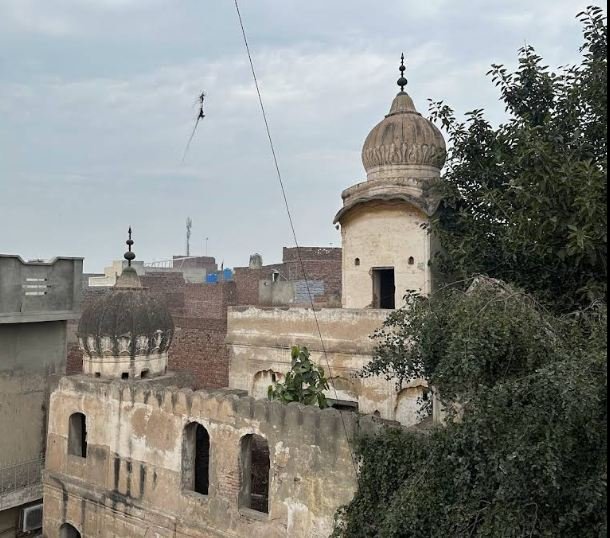
The Chowbachcha Sahib bus stop lies between Mughalpura and Dharampura, by the canal flowing through Lahore, and just north of it stood the shrine — a spacious building with a huge main door. About two hundred steps inside the entrance, the passage split into two lanes leading to small round doors — four similar doors in all — and within them a rectangular building with four towers on its four sides: the Prakashasthan, the sanctum. It was the four towers that gave the shrine its name — chau, four. Here, tradition holds, Guru Nanak once visited, and the small pool in which he washed his feet became the spiritual heart of the place.
The shrine’s founding story belongs to the seventeenth century and to one of the most interesting figures in Punjab’s religious history: Ram Rai, an Udasi and a follower of the Nanakpanth. According to the historical chronicles documented by historian Iqbal Qaiser in The Sikh Sacred Places in Pakistan, Ram Rai came to Lahore in the company of Aurangzeb to meet the great Sufi saint Hazrat Mian Mir. Holding that this was ground sanctified by Guru Nanak’s visit, Ram Rai settled here. In those days the well of the place had fallen into disuse, and under the Muslim administration of the time the Sikhs found it difficult to draw water — the pot the Muslims used was made of cow hide, which Sikhs and Hindus could not use. Ram Rai obtained the walking stick of Guru Nanak from Mian Mir and used it to dig the dysfunctional well — and by God’s blessing, water came out. A wall and a place of worship were then constructed around it.
A few years later Aurangzeb departed for Delhi to become emperor, and Ram Rai handed the caretaking of the gurdwara to his disciple Shah Ji and also left for Delhi. The area around the shrine was settled as a village in 1668, and the settlement’s income was designated for the gurdwara — though no land was formally endowed to it. The main gate and boundary wall were later constructed by a devotee named Charan Das, whose marble plate was found at the main gate (now defaced). Alongside the shrine stood a worship place of Ram Rai himself, and in the centre the pond of burnt brick in which Guru Nanak had washed his feet.
Partition in 1947 emptied the shrine of its congregation. In the decades that followed, the building declined badly: migrant families from Uttar Pradesh and Madhya Pradesh settled in the holy place, the structure fell into very poor condition, and access to Sikh pilgrims was effectively denied. Heritage surveys in the 2010s found a spacious but badly deteriorated building, its sanctity intact in memory but its fabric failing.
The end came in October 2022. With the structure judged a safety threat to the locality, a team of district authorities demolished Gurdwara Chaubacha Sahib. Local reporting noted that community members had repeatedly written to the authorities and to the Evacuee Trust Property Board seeking repair and renovation — without response. The ETPB chairman publicly questioned the demolition order. Whatever the justifications, the physical shrine of Ram Rai — the four towers, the huge door, the two lanes, the small round doors — is now a memory and a place name. What survives is the site itself, the name on the bus stop, and one of the richest Sikh-Sufi stories in Lahore.
Top Things to Do in Gurdwara Chaubacha Sahib, Lahore
Stand at the Sacred Site
Begin at the place itself, north of the Chaubacha Sahib bus stop between Mughalpura and Dharampura. The building is gone, but the ground is the ground: this is where Guru Nanak washed his feet, where Ram Rai dug his well with the Guru’s walking stick, where the four-towered Prakashasthan stood. For pilgrims, standing here with the story in mind is the entire point. Be quiet, be respectful, and remember that for the neighbourhood, this remains a place with a name and a meaning.
Visit the Shrine of Hazrat Mian Mir
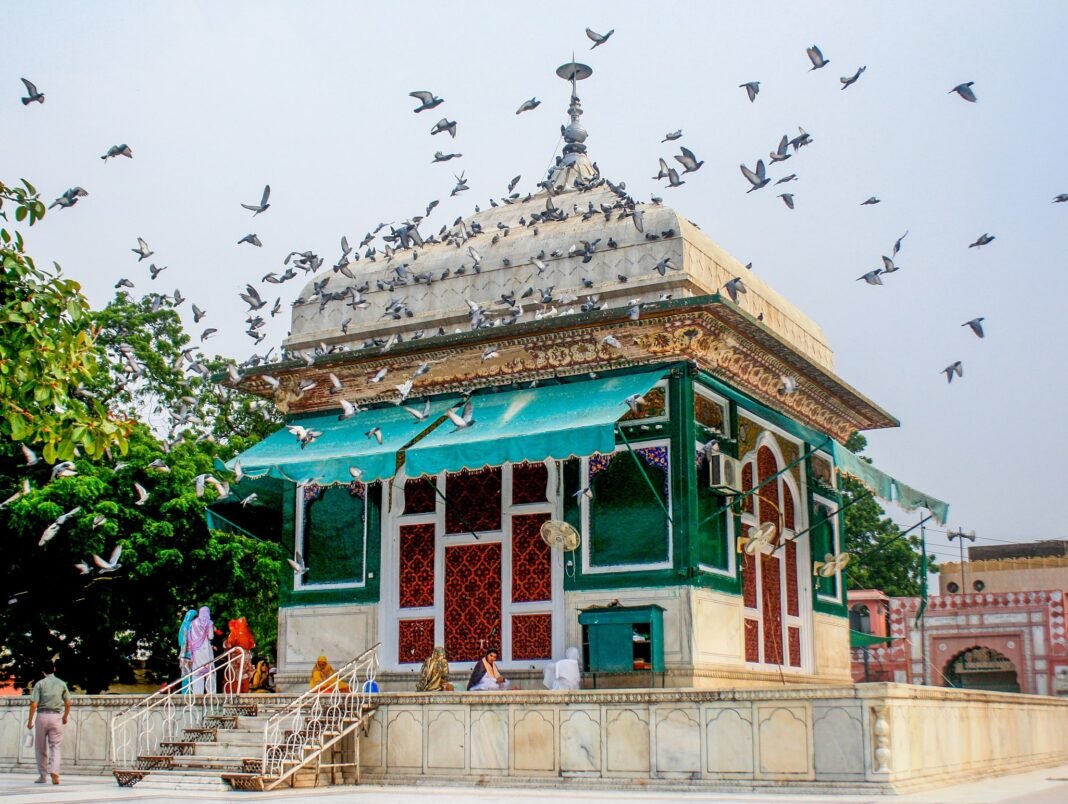
The essential companion visit — and the reason the Chaubacha story exists at all. Hazrat Mian Mir, the great Sufi saint of Lahore, was the spiritual mentor of the Mughal prince Dara Shikoh, and it was from him that Ram Rai obtained Guru Nanak’s walking stick. His shrine, with its beautiful Mughal-era architecture, lies close by and is one of Lahore’s most serene sacred places. The Sikh-Sufi connection embodied in this single episode — a Sufi saint’s relic founding a Sikh shrine — is worth the whole journey.
Walk the Canal-Side Neighbourhood
The canal between Mughalpura and Dharampura is old Lahore at its most everyday: the bus stop that still carries the shrine’s name, the bazaars, the workshops, the tea stalls. Walk it in the morning and you will see a working-class Lahore that most visitors never meet. The contrast — a vanished shrine remembered in a bus stop’s name — is the kind of detail that stays with travellers.
Trace Guru Nanak’s Lahore
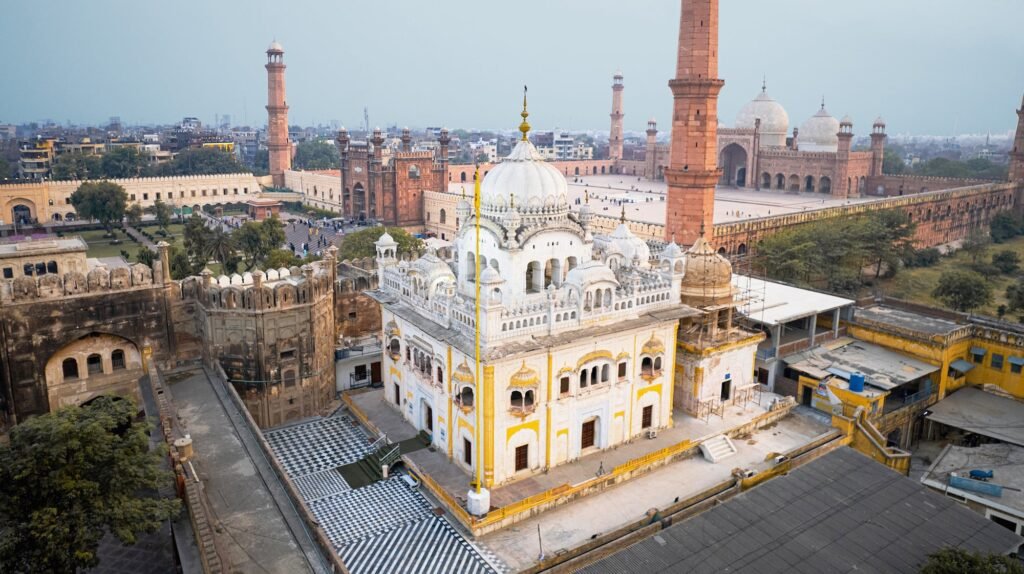
Chaubacha Sahib is one thread in the larger tapestry of Guru Nanak’s associations with Lahore — a city the Guru visited and where his followers later raised some of their most important shrines. Pair this visit with the city’s great surviving Sikh heritage: Gurdwara Dera Sahib by the Lahore Fort, the samadhis across the Ravi, and the shrines of the old city. Together they map a sacred geography that Partition could not erase.
Photograph Old Dharampura
The lanes around Dharampura and Mughalpura hold fragments of old Lahore — Mughal-era tombs, colonial buildings, shrine architecture, and the canal itself. Morning light on the canal is lovely, and the Mian Mir shrine complex is genuinely photogenic. As always in residential religious neighbourhoods, ask before photographing people and keep your distance during prayers.
Famous Places In and Around Gurdwara Chaubacha Sahib, Lahore
Shrine of Hazrat Mian Mir — the beautiful Sufi shrine at the heart of the Chaubacha story, a must-visit. Lahore Canal — the waterway that defines this whole quarter, lined with parks and walking paths. Shalimar Gardens — the Mughal paradise garden, a short drive east. Lahore Fort and Badshahi Mosque — the city’s great Mughal monuments, west across the old city. Gurdwara Bhai Lalo Ji, Tatliali — continue your Sikh-heritage journey to the 1939 domed gurdwara of the Gujranwala belt; see our Gurdwara Bhai Lalo Ji, Tatliali travel guide. Gurdwara Bhai Bannu, Mangat — the shrine of the first copy of the Adi Granth; see our Gurdwara Bhai Bannu, Mangat travel guide.
How to Reach Gurdwara Chaubacha Sahib, Lahore
The site is inside Lahore, in the Dharampura quarter north of the Chaubacha Sahib bus stop, between Mughalpura and Dharampura by the canal. Within the city, it is a straightforward rickshaw, taxi or ride-hailing trip from anywhere — ask for the Chaubacha Sahib bus stop on the Dharampura side of the canal. The Lahore Metrobus serves the broader corridor; from the nearest station, a short rickshaw ride completes the journey.
From Islamabad: About 380 kilometres via the M-2 motorway, roughly 4.5 to 5 hours by car. Enter Lahore and follow the canal road east toward Dharampura/Mughalpura.
From Lahore (city): 20–40 minutes by car from most central areas depending on traffic; the canal road is the most direct route to Dharampura.
From Karachi: About 1,200 kilometres — fly to Lahore. From Allama Iqbal International Airport, Dharampura is roughly 12–15 km, about 30 minutes by car.
Nearest airport: Allama Iqbal International Airport, Lahore (about 12–15 km). Rail: Lahore Junction railway station connects to the whole country; Dharampura is a 20-minute drive from the station. Road conditions: Lahore’s main roads are excellent; the neighbourhood lanes around the site are narrow and congested — park on the main road and walk in. Avoid the canal road during evening rush hour.
Route Details
From central Lahore (say, Gulberg or the Fort area), take the canal road east toward Dharampura. Cross toward the Mughalpura–Dharampura stretch and watch for the Chaubacha Sahib bus stop — the site lies in the locality just north of it. From the airport, take the airport road to the canal and follow it west to Dharampura. From Islamabad via the M-2, take the Lahore ring road/canal exits and navigate to Dharampura. Because this is a dense residential quarter, the most pleasant approach is on foot for the last few hundred metres: park near the bus stop and walk the lanes, asking locals for the old gurdwara site — older residents remember exactly where the four towers stood.
Where to Stay in Gurdwara Chaubacha Sahib, Lahore
You are in Lahore, so accommodation is unlimited. For this visit, the most convenient bases are the mid-range and upper-range hotels of Gulberg, DHA and the cantonment — all within 20–30 minutes of Dharampura — offering comfortable rooms, restaurants and reliable transport links. Budget travellers will find clean, affordable guesthouses and small hotels around the old city and along the main boulevards. At the top end, Lahore’s well-known five-star hotels offer full-service luxury. Because the Chaubacha site itself needs only an hour or two, most visitors fold it into a wider Lahore stay: base yourself centrally, spend a morning at the site and the Mian Mir shrine, and the afternoon at Shalimar or the Fort. There is no reason to stay in Dharampura itself, which is a residential quarter without tourist hotels.
Where to Eat: Local Foods of Gurdwara Chaubacha Sahib, Lahore
You are in Lahore — the food capital of Pakistan — and the neighbourhoods around Dharampura eat very well indeed. The local specialities are the classics of Lahori cuisine: a breakfast of halwa puri or paya with fresh tandoori naan, the midday crowds at the dal and kebab shops, and the evening sizzle of chargha, tikka and seekh kebab. The canal-side dhabas serve honest Punjabi food — dal fry, seasonal sabzi, fresh roti — at very budget-friendly prices.
For the full Lahore food pilgrimage, head to the famous food streets: Fort Road Food Street by the Badshahi Mosque and the Gawalmandi food street, both serving the city’s legendary dishes amid historic surroundings. Lahori lassi — thick, malai-topped, served in tall glasses — is unmissable, as are the old city’s sweet shops with their fresh jalebi, barfi and gulab jamun. A full traditional meal, even at the well-known food streets, remains remarkably reasonable. Carry water, and if you are visiting the Mian Mir shrine, note that the langar-style free food traditions of the shrine quarter are part of the area’s culture of hospitality.
Weather in Gurdwara Chaubacha Sahib, Lahore
Lahore sits at around 217 metres on the Punjab plain, with hot summers, a monsoon, and short, pleasant winters. November to March is the comfortable window for walking the canal-side neighbourhoods — exactly when Lahore itself is at its most enjoyable.
| Season | Temperature Range | Conditions |
|---|---|---|
| Winter (Dec–Feb) | 6°C to 20°C | Cool and pleasant; foggy mornings common in December–January; ideal for sightseeing |
| Spring (Mar–Apr) | 16°C to 33°C | Mild and blooming; Lahore’s famous spring, perfect for outdoor exploration |
| Summer (May–Jul) | 30°C to 45°C | Extremely hot, especially June; avoid midday outdoor visits |
| Autumn (Aug–Nov) | 20°C to 38°C | Monsoon humidity through August; October–November clear, golden and pleasant |
Language and Culture of Gurdwara Chaubacha Sahib, Lahore
Lahore speaks Punjabi with a Lahori accent all its own — warm, witty, and famously hospitable — with Urdu as the shared language of the bazaars and English widely understood in hotels and restaurants. Dharampura and Mughalpura are old, settled, mixed neighbourhoods where Sufi shrines, mosques and the memory of Sikh shrines coexist in the same streets.
The cultural notes for this visit are about sensitivity. The gurdwara building is gone and the site sits in a residential Muslim neighbourhood — behave as a respectful guest: dress modestly, keep your voice down, ask before photographing, and do not treat the site as a spectacle. At the shrine of Mian Mir, the usual Sufi-shrine courtesies apply: cover your head, remove your shoes where required, and accept the atmosphere of devotion. If you meet older residents who remember the four towers, listen — their memories are the only archive the demolition left behind.
Shopping in Gurdwara Chaubacha Sahib, Lahore
The Dharampura–Mughalpura corridor is a working commercial quarter rather than a tourist market, but its bazaars are authentic Lahore: cloth, crockery, hardware, and fresh produce at local prices. For serious shopping, the old city’s great bazaars are a short drive away — Ichhra for clothes, Anarkali for everything, Shah Alam for wholesale goods — and Lahore’s modern shopping malls (in Gulberg, DHA and the cantonment) offer air-conditioned retail with local and international brands. Books on Sikh and Mughal history are best found in the old bookshops of the city centre and around the Punjab University area. There is no mall in Dharampura itself, and the quarter’s charm is precisely its un-touristy commercial life.
Travel Tips for Gurdwara Chaubacha Sahib, Lahore
Packing Essentials
A headscarf for shrine visits (both the gurdwara site and Mian Mir), comfortable walking shoes for the neighbourhood lanes, sun protection and water, and a warm layer for winter mornings. Keep a small notebook — the stories older residents tell about the old shrine are worth writing down.
Safety Tips
Dharampura is a normal, busy Lahore neighbourhood, safe for daytime visits with standard city common sense: keep valuables close, agree rickshaw fares in advance, and avoid the most congested lanes at rush hour. The site itself carries an emotional charge for Sikh visitors — a demolished shrine — so keep any strong feelings private and dignified; the neighbourhood did not order the demolition. As everywhere in Lahore, keep your ID handy.
Money & Connectivity
ATMs are everywhere in Lahore — withdraw before heading into the neighbourhood lanes, which run on cash. All major networks (Jazz, Telenor, Zong, Ufone) have excellent 4G coverage. Ride-hailing apps work well for getting to and from Dharampura; for the last few hundred metres on foot, cash for a rickshaw is handy.
Best Time to Visit Gurdwara Chaubacha Sahib, Lahore
Winter (November to March) — the ideal season
Lahore in winter is at its glorious best: cool days, clear light, and the city’s outdoor life in full swing. The canal-side walk, the Mian Mir shrine, and the old neighbourhoods are all at their most pleasant. December–January mornings can be foggy — plan midday visits.
Spring (February to April) — beautiful and brief
Lahore’s famous spring: mild, blooming, and made for walking. The Basant season’s memory hangs over the old city, and the gardens are at their finest. An excellent alternative to winter.
Summer (May to July) — avoid
Lahore’s summer is among the hottest urban experiences in South Asia, past 45°C at its peak. The neighbourhood walk becomes punishing. If you must come, go at dawn.
Autumn (August to October) — the shoulder season
Humid through the monsoon months, but October is superb: clear skies, golden light, and the city shaking off the rains. A fine time for the canal-side quarters.
Final Thoughts
Gurdwara Chaubacha Sahib is a journey for the thoughtful traveller — not for the monument, which is gone, but for the story, which is extraordinary. A Guru’s footprint by a canal. A Sufi saint’s walking stick digging a well. Four towers over a prayer hall, a village settled in 1668, generations of devotion, and then the slow tragedy of neglect and the sudden finality of demolition. To stand on that ground knowing all of it is to understand something essential about Punjab: how much history lives in ordinary streets, and how easily it can be lost.
Come in winter, pair the site with the serene shrine of Mian Mir, walk the canal-side lanes of old Dharampura, and carry the story home. Some destinations you visit for what you see; this one you visit for what you remember. For more journeys through the province’s sacred geography, explore our Explore Pakistan collection.
FAQs
Where is Gurdwara Chaubacha Sahib located?
In Dharampura, Lahore — in the locality north of the Chaubacha Sahib bus stop, between Mughalpura and Dharampura by the canal.
Does the gurdwara building still exist?
No. The historic building was demolished by district authorities in October 2022, citing safety concerns, after decades of deterioration. The site and its history remain.
Why was it called Chaubacha Sahib?
Chau means four — the shrine’s rectangular prayer hall (Prakashasthan) was topped with four towers, one on each side.
What is the connection to Guru Nanak?
Tradition holds that Guru Nanak visited the spot and washed his feet in a small pool there; the Udasi saint Ram Rai later made the pool a place of worship in the 1600s.
What is the best time to visit?
November to March, when Lahore’s weather is cool and clear — ideal for walking the canal-side neighbourhood and visiting the nearby Mian Mir shrine.
How do I reach the site?
It is inside Lahore: take the canal road east to Dharampura and ask for the Chaubacha Sahib bus stop; the site is in the locality just north of it.
What else should I see nearby?
The shrine of Hazrat Mian Mir (essential — it is part of the Chaubacha story), the Lahore Canal, Shalimar Gardens, and the Lahore Fort and Badshahi Mosque.
Is it suitable for families?
Yes, as part of a wider Lahore day — combine the site and the Mian Mir shrine in the morning with Shalimar Gardens or the old city in the afternoon.