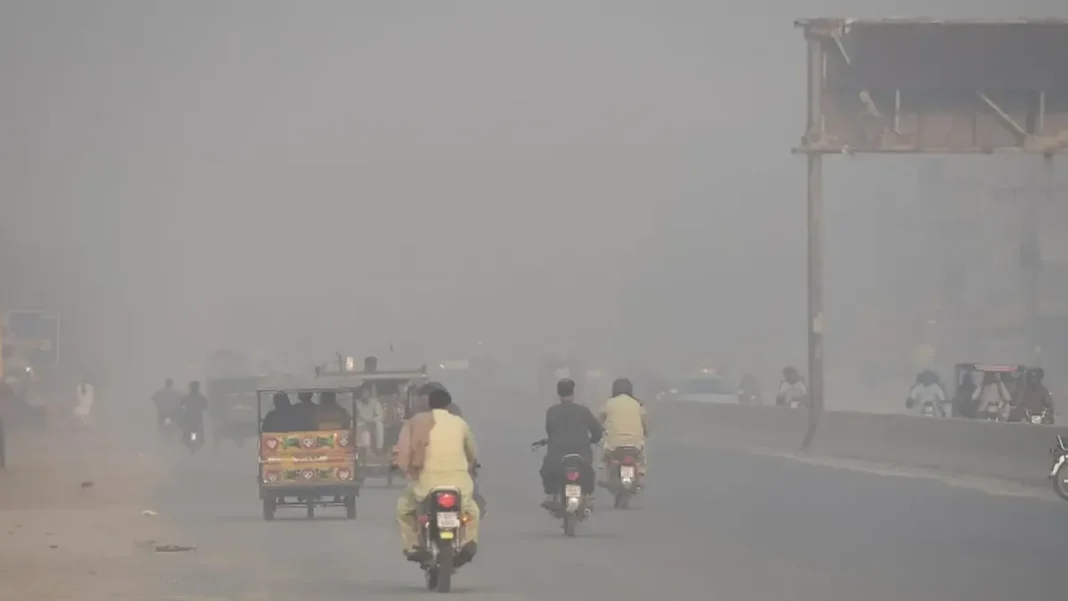
Lahore was ranked the world’s most polluted major city on Wednesday morning, October 28, as smog thickened over the city with the onset of colder weather. The Swiss air quality platform IQAir recorded a Lahore smog AQI 296 reading at 10am, placing the city at the top of its live ranking of major cities.
Cairo stood second with an AQI of 289, followed by Delhi at 272. Tashkent ranked fourth at 186, while Karachi placed fifth at 173, according to the ranking reported by Dawn. Lahore and Cairo both fell in the “very unhealthy” category on the United States AQI scale, and Delhi sat in the same category.
A reading of 296 signals air that can pose health risks, particularly for children, older people and those with breathing or heart conditions, and residents were advised to limit prolonged outdoor exertion.
Lahore smog AQI 296: what the ranking showed
| City | AQI at 10am, October 28 |
|---|---|
| Lahore | 296 |
| Cairo | 289 |
| Delhi | 272 |
| Tashkent | 186 |
| Karachi | 173 |
The worsening air quality coincided with colder early-morning conditions in Lahore, when smog reduced visibility and added to concern over the city’s deteriorating air. Smog has become one of the most pressing public health and environmental crises facing Pakistan in the past few years, with Lahore hit hardest in the winter months. The causes named in Dawn’s report are industrial emissions, vehicle pollution, stubble burning and air movement.
Why the smog worsened this week
Environment Protection Agency spokesperson Sajid Bashir told Dawn that the authorities were monitoring industries and had installed devices to record pollution levels. He said changing weather conditions were contributing to smog, and that measures were being taken to prevent stubble burning.
Easterly winds had been pushing polluted air from India’s border regions into Lahore, worsening smog across central Punjab, he said. Development work in Lahore and other cities of the province was also contributing to pollution, he added.
The government was procuring and installing 30 more modern fog cannons mounted on electric trucks to combat severe smog and air pollution. Anti-smog guns were being deployed on a priority basis in areas with higher pollution readings, particularly at locations with high levels of PM10, the coarse particulate matter that settles as dust. The machinery was being used to suppress dust on roads and in surrounding areas to limit its spread.
Punjab Climate Watch was working in three shifts to monitor industries in Lahore, with teams inspecting violations, registering cases and imposing fines. Bashir said measures were being taken to combat smog, but the process would take time.
How October 28 compares with earlier readings
This is not Lahore’s first time at the top of the ranking this season. On October 2, Lahore also topped IQAir’s list of the world’s most polluted cities, with an AQI of 167, classified as “unhealthy”. Last week, Lahore ranked as the world’s most polluted city, with its air quality classified as “hazardous”.
A day earlier, on October 27, Lahore ranked third among the world’s most polluted major cities with an AQI of 174, according to The Express Tribune. Readings move through the day and vary by monitoring station, so a single city figure is a snapshot rather than a fixed daily value. Other outlets reported higher Lahore readings earlier on Wednesday morning, including a city reading of 358 at 8am, before Dawn’s 10am figure of 296. The pattern is consistent: Lahore’s air deteriorated sharply in the morning, then eased slightly, while staying among the worst in the world.
Feature Pakistan has tracked the return of smog through the season, including the Lahore smog return as AQI climbed again. The October 28 ranking shows the problem has not eased with the colder weather, which is now trapping pollution closer to the ground.
What happens next
The EPA will keep monitoring industries and pollution hotspots, and the new fog cannons will be sent first to areas with the highest PM10 readings. For residents, the practical advice stays the same: avoid long outdoor exertion on high-pollution mornings, wear a mask outdoors if you have asthma or another breathing condition, and seek medical advice for a persistent cough, shortness of breath or chest tightness.