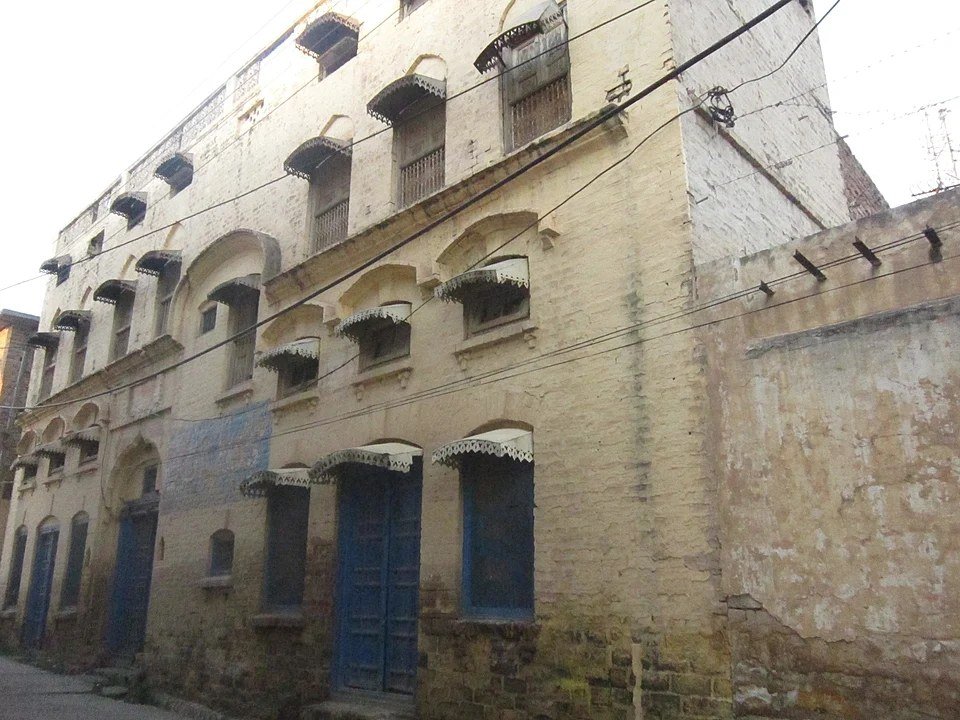
Every nation has a house that its people treat as sacred ground — not because of its architecture, but because of who was born inside it. Also, For Pakistan, one of those houses stands in Kashmiri Mohalla, Sialkot: Iqbal Manzil, the birthplace of Allama Muhammad Iqbal, the poet-philosopher whose ideas helped inspire the creation of Pakistan. Born here on November 9, 1877, Iqbal grew from this modest home into one of the most influential thinkers of South Asia. Today the house is a national monument and museum, preserving his belongings, manuscripts, and family history.
This iqbal manzil, sialkot travel guide will show you why this small house deserves a place on your itinerary — and how to plan the visit.
Quick Facts
- Location: Kashmiri Mohalla, Allama Iqbal Road (Chowk Adda Pasruria), Sialkot, Punjab, Pakistan.
- Altitude: Around 250 meters above sea level (Sialkot’s lowland plains).
- Famous For: Birthplace of Allama Muhammad Iqbal (born November 9, 1877); preserved as a national monument and museum with his personal belongings, photographs, manuscripts, and a library of Iqbal studies.
- Nearest City: Sialkot city itself; Lahore about 130 km away.
- Accessibility: Road — Sialkot is well connected via the M-11 Sialkot Motorway from Lahore and the N-5 from Gujranwala. Air — Sialkot International Airport serves domestic and international flights.
- Known Landmarks: The preserved birth house, the museum galleries, the family tree display; nearby Sialkot Fort and the Clock Tower.
- Best For: Literature and history lovers, students, families, school groups, and anyone interested in Pakistan’s intellectual heritage.
Why Visit Iqbal Manzil, Sialkot
Visit because some places let you stand where history began. Iqbal Manzil is not a grand palace or a sprawling museum complex. It is a family house in an old Sialkot neighborhood, and that is precisely its power. You walk through the rooms where a boy named Muhammad Iqbal grew up, see the everyday objects he touched, and feel the short distance between an ordinary Kashmiri-origin family of Sialkot and one of the great minds of the twentieth century. Few heritage sites in Pakistan offer that kind of intimate connection.
Come for the story the museum tells. The galleries trace Iqbal’s extraordinary journey: Middle in 1891, Matriculation in 1893, Intermediate from Scotch (later Murray) College Sialkot. Also, graduation from Government College Lahore in 1897 with honors and distinction in English and Arabic. In fact, an M.A. in Philosophy in 1899. Teaching at Oriental College Lahore. Then Cambridge, a ph.d. from Munich University in 1907. The Bar at Law from Lincoln’s Inn, London, in 1908.
The degrees on the walls, the sepia photographs of his parents Sheikh Noor Muhammad and Imam Bibi, his wives and children, the family tree stretching across generations — together they turn a famous name into a real human life.
The Poet’s Personal Belongings
Come for the objects. Also, museums often display the grand and official; Iqbal Manzil displays the personal. In fact, his ink pen, his hookah, his clothing and shoes, his books and manuscripts — the small things that made up his days. There is something deeply moving about seeing a great poet’s everyday belongings preserved with such care. The library, with its rare editions on Iqbal studies, draws researchers and literature lovers who sometimes spend hours here.
Finally, come because it is easy and meaningful to combine with a Sialkot day. The house sits in the old city, minutes from Sialkot Fort and the Clock Tower, in a city famous for its industry, sports goods, and warm Punjabi culture. Whether you are a student on an educational trip, a family teaching children about their heritage. A traveler collecting Pakistan’s essential historic sites, Iqbal Manzil rewards the visit — and entry is free.
History of Iqbal Manzil, Sialkot
The history of the house begins before Iqbal’s birth. Also, the family originally lived in Mohallah Khateekaan in Sialkot, where in 1861 Iqbal’s grandfather, Sheikh Muhammad Rafiq, bought a house in Kashmiri Mohallah — the house now known as Iqbal Manzil. Allama Muhammad Iqbal was born in this house on November 9, 1877, into a Kashmiri-origin family. His father was Sheikh Noor Muhammad and his mother Imam Bibi.
Iqbal’s Sialkot years shaped him. He completed his Middle examination in 1891 and Matriculation in 1893, then his Intermediate from Scotch College Sialkot (later renamed Murray College). Also, the institution where the influential teacher Syed Mir Hassan recognized and nurtured his talent. He graduated from Government College, Lahore in 1897 with honors, securing a scholarship with distinction in English and Arabic. It completed his M.A. in Philosophy in 1899. His practical career began at Oriental College, Lahore, where he taught Arabic from 1899 to 1902, before teaching English and Philosophy at Government College and Islamia College, Lahore.
Cambridge, Munich and Lincoln’s Inn
In 1905 he proceeded to Britain for higher education: graduation from Cambridge University, a ph.d. conferred by Munich University of Germany in 1907. Also, the Bar at Law examination from Lincoln’s Inn, London, in 1908. Returning to Lahore, he joined Government College as Professor of Philosophy and practiced law at the Lahore High Court — while his Urdu and Persian poetry, philosophy, and political thought grew into the intellectual force that would inspire the idea of a separate homeland for the Muslims of South Asia, earning him the title of Pakistan’s national poet and “Spiritual Father of Pakistan.”
The birth house itself was preserved as a national monument and converted into the Allama Iqbal Museum, housing a small library and the restored belongings of the poet. Also, the museum is open to everyone most days of the week, and entry is free — a deliberate choice to keep Iqbal’s legacy accessible to all Pakistanis. In fact, Museum officials have noted with some disappointment that visitor numbers remain modest, even on his birth anniversary (November 9) and death anniversary (April 21) — which makes your visit a small act of keeping that legacy alive.
Top Things to Do in Iqbal Manzil, Sialkot
Tour the Birth House Rooms
Walk through the preserved rooms of the house where Iqbal was born and spent his early years. The rooms are arranged as a museum, with each space telling part of the family story. Also, take your time — this is a small building. In fact, its power is in the details: the old doorways, the courtyard feel of a 19th-century Sialkot home, the sense of an ordinary household that produced an extraordinary mind.
See the Personal Belongings
The museum’s most touching exhibits are Iqbal’s personal effects: his clothing and shoes, his ink pen, his hookah (a well-known habit of his). Also, it prized everyday possessions displayed alongside old photographs. In fact, these objects, preserved and restored, offer the most human glimpse of the poet — not the statue on the pedestal. The man at his desk.
Study the Family Tree and Photographs
An enormous family tree on the museum walls lets you trace Iqbal’s Kashmiri ancestry. Also, sepia and color-toned photographs show his parents, wives, and children. In fact, for anyone interested in genealogy or social history, this is a rare, well-documented family archive on public display.
Browse the Library and Manuscripts
The small library houses rare editions on Iqbal studies, and the museum displays archival photographs and manuscripts. Also, literature enthusiasts and researchers are advised to allow up to 2.5 hours for a thorough visit — the library alone rewards a slow browse. In fact, students working on Iqbal’s poetry or philosophy will find this an inspiring place to read.
Explore the Old City Around It
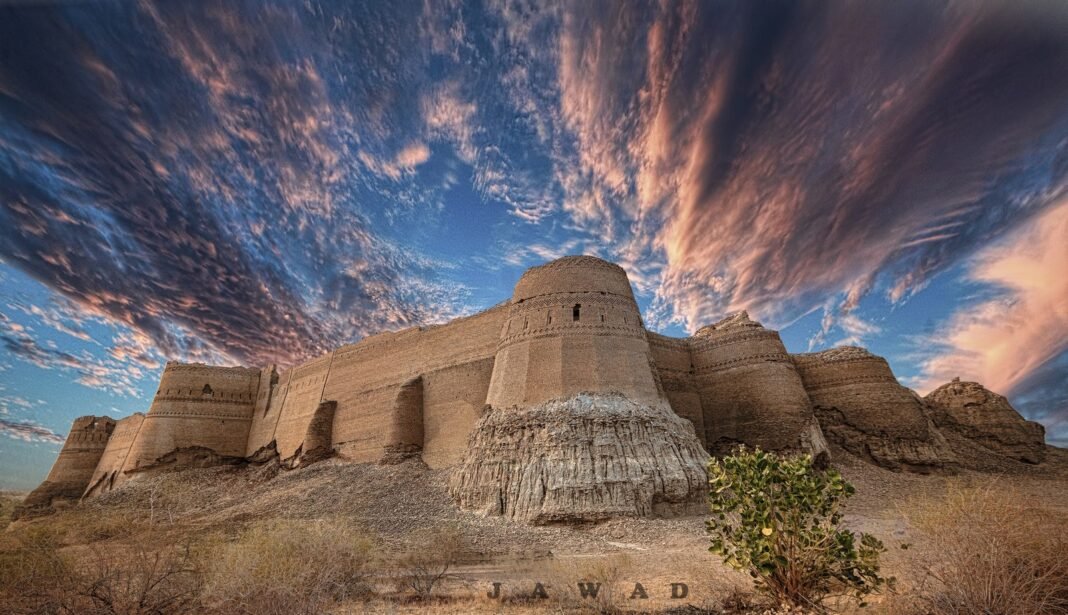
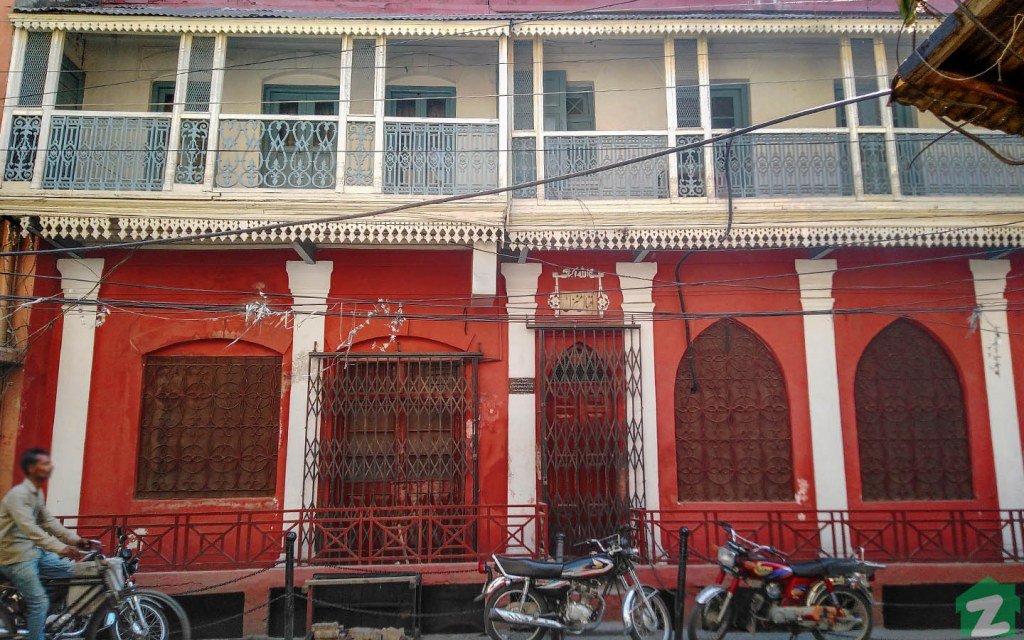
Kashmiri Mohalla and the surrounding old city are worth a walk: Sialkot Fort is just 0.3 km away. Also, the neighborhood’s narrow streets, old havelis, and bazaars give a vivid sense of the Sialkot Iqbal knew. In fact, combine the museum with the Clock Tower (3 km) and Gulshan-e-Iqbal Park (2.1 km) for a full heritage half-day.
Famous Places In and Around Iqbal Manzil, Sialkot
- Sialkot Fort — 0.3 km away; the historic fort at the heart of the old city.
- Sialkot Clock Tower — 3 km; the city’s famous landmark chowk.
- Gulshan-e-Iqbal Park — 2.1 km; a green escape named for the poet.
- Gurdwara Bair Sahib — historic Sikh heritage site in Sialkot; see our Gurdwara Bair Sahib travel guide.
- Gurdwara Baoli Sahib — another of Sialkot’s historic gurdwaras; see our Gurdwara Baoli Sahib travel guide.
- Sialkot’s Sports Goods Markets — the city is world-famous for its sports goods industry; the factory outlets and markets are a unique shopping experience.
How to Reach Iqbal Manzil, Sialkot
Sialkot is one of Punjab’s best-connected cities, with its own international airport and motorway links.
- From Lahore: About 130 km via the M-11 Sialkot Motorway — roughly 2 hours’ drive. This is the easiest approach; day trips from Lahore are very doable.
- From Islamabad: About 195 km via the M-1/M-11 motorways — roughly 2.5 to 3 hours’ drive.
- From Karachi: Fly to Sialkot International Airport (direct flights available) or to Lahore and drive. The road journey from Karachi is about 1,350 km and not practical for a short trip.
- Nearest airport: Sialkot International Airport, about 20–25 km from the city center, with domestic and international flights.
Within Sialkot, the museum is at Chowk Adda Pasruria on Allama Iqbal Road in Kashmiri Mohalla — every local taxi, rickshaw. InDrive/Careem driver knows “Iqbal Manzil.” The old-city streets around it are narrow, so expect to walk the last short stretch. Also, public vans and buses connect Sialkot with Lahore, Gujranwala, and Islamabad frequently throughout the day.
Route Details
Lahore → M-11 Sialkot Motorway → Sialkot → Allama Iqbal Road → Chowk Adda Pasruria → Kashmiri Mohalla → Iqbal Manzil. From the motorway exit, the drive into the old city takes 20–30 minutes depending on traffic. Also, a good Sialkot day plan: Iqbal Manzil (morning) → Sialkot Fort → Clock Tower and lunch → sports goods markets → Gulshan-e-Iqbal Park (evening).
Where to Stay in Iqbal Manzil, Sialkot
The museum is a 1–2 hour visit, so most travelers see it as part of a Sialkot day trip. But the city has solid accommodation if you stay over.
Mid-range hotels: Sialkot’s main roads (Paris Road, Kutchery Road, Daska Road) have comfortable mid-range hotels popular with business travelers, offering clean rooms and restaurants. Budget options: budget hotels and guesthouses cluster near the railway station and in the old city. Upscale: a few well-known higher-end hotels serve the city’s corporate visitors. Most Lahore-based travelers do this as a day trip and return the same evening. Book ahead during the wedding season or on Iqbal Day (November 9). The city sees extra visitors. Check recent reviews before choosing.
Where to Eat: Local Foods of Iqbal Manzil, Sialkot
Sialkot’s food is hearty Punjabi fare, and the old city around the museum has excellent options. Also, local favorites include mutton karahi, paye (slow-cooked trotters, a breakfast specialty), nihari, chicken tikka and seekh kebab. In fact, Sialkoti kulcha from old-city bakers. The bazaars near the Clock Tower have famous sweet shops — try gulab jamun, barfi, and jalebi fresh from the karahi. In addition, roadside dhabas serve filling meals at very budget-friendly prices. Mid-range restaurants on Paris Road and in the cantt area offer a more comfortable setting. A full traditional lunch in Sialkot is inexpensive by big-city standards.
Carry water for the old-city walk; the museum area has tea stalls and small eateries nearby.
Weather in Iqbal Manzil, Sialkot
Sialkot sits on the Punjab plains with hot summers, a strong monsoon, and mild winters. Approximate seasonal ranges:
| Season | Temperature Range | Conditions |
|---|---|---|
| Winter (Dec–Feb) | 5°C to 18°C | Mild and pleasant; foggy mornings in January; best season for sightseeing. |
| Spring (Mar–May) | 15°C to 38°C | March–April lovely; May turns very hot. |
| Summer (Jun–Aug) | 28°C to 42°C | Very hot and humid; monsoon rains June–September; plan indoor/morning activities. |
| Autumn (Sep–Nov) | 15°C to 35°C | Cooling down; October–November excellent — and November 9 brings Iqbal Day celebrations. |
Language and Culture of Iqbal Manzil, Sialkot
The local language is Punjabi, spoken everywhere in Sialkot with the region’s characteristic warmth. Also, Urdu is universally understood and English is widely spoken in business and educational circles. In fact, Sialkot is one of Pakistan’s most industrially dynamic cities, and its people are famously entrepreneurial and hospitable. The city’s culture blends deep Punjabi traditions with a strong sense of civic pride in its most famous son.
The museum is a place of national reverence, so behave accordingly: dress modestly, speak quietly in the galleries, do not touch the exhibits or lean on display cases, and ask staff before photographing (policies can vary). School groups are common — be patient and encouraging if you visit alongside one. The old-city neighborhood is conservative and residential; greet shopkeepers politely and dress respectfully.
Shopping in Iqbal Manzil, Sialkot
Sialkot is world-famous for its sports goods — footballs, cricket gear, and fitness equipment made here are used in international tournaments. Also, factory outlets and sports markets offer genuine gear at excellent prices, and this alone draws shoppers from across Pakistan. Beyond sports, the old-city bazaars sell surgical instruments (another Sialkot specialty), leather goods, traditional khussas. In fact, Punjabi suits and shawls. For Iqbal-themed souvenirs, look for books of Iqbal’s poetry (Urdu and Persian editions, plus translations) at bookshops near the museum and in the main bazaars — the most fitting memento of this visit. Bargaining is expected in the bazaars; factory outlets usually have fixed prices.
Local Events and Festivals
Iqbal Day — November 9: The single most important date for this destination. Every year on the anniversary of Allama Iqbal’s birth, the house sees large numbers of visitors who come to honor the poet’s legacy, and special events and commemorative activities are held — speeches, poetry recitations, and school ceremonies. It is the most vibrant day to visit, but also the most crowded. Arrive early in the morning. Death anniversary — April 21: A quieter day of remembrance, with visitors offering fateha. If you want the festive atmosphere, plan for November 9. If you prefer a contemplative visit, choose any other cool-season weekday.
Travel Tips for Iqbal Manzil, Sialkot
Packing Essentials
Comfortable walking shoes for the old-city lanes. Also, a hat and sunscreen in warmer months. In fact, a light shawl for the museum’s quiet galleries (and for modesty in the residential neighborhood). In winter, a medium jacket for foggy mornings. Carry small cash for rickshaws, tea stalls, and bazaar shopping, plus a bottle of water.
Safety Tips
Sialkot is a busy, generally safe commercial city. Also, in the old city, keep valuables secure in crowded bazaar lanes, watch your step on uneven streets, and travel by registered taxi or ride-hailing at night. The museum itself is calm and well-managed; supervise children around the exhibits. Standard big-city awareness is all you need.
Money & Connectivity
ATMs are plentiful across Sialkot, and hotels and larger restaurants accept cards — but carry cash for the old-city bazaars, rickshaws, and small eateries. Also, all major mobile networks have strong 4G coverage in Sialkot. Most hotels offer free Wi-Fi.
Best Time to Visit Iqbal Manzil, Sialkot
Winter (November–February) — Best Season
Mild, pleasant days perfect for walking the old city and touring the museum. Also, November 9 brings Iqbal Day — the most meaningful (and busiest) day to be here.
Spring (March–April) — Lovely
Warm but comfortable; good for combining the museum with Sialkot’s markets and parks before the summer heat.
Summer (May–August) — Hot
Very hot and humid with monsoon rains. Also, visit the museum in the morning, rest midday, and explore the city in the evening. Least comfortable season, but the museum is indoors and manageable.
Autumn (September–October) — Excellent
Cooling temperatures, clear skies, and thinner crowds than winter. A great window for a relaxed heritage day trip from Lahore.
Final Thoughts
Iqbal Manzil is small, quiet, and free — and it may be the most important house museum in Pakistan. Also, in an age of grand, crowded attractions, there is something profound about standing in the modest rooms where a boy from Sialkot began the journey that would reshape a subcontinent’s destiny. The personal belongings, the family photographs, the library’s rare editions. They turn history from a chapter in a textbook into something you can feel.
Go on a cool winter morning, ideally around November 9 if you want to feel the nation’s affection for its poet, or on any quiet weekday if you prefer reflection. Also, pair it with Sialkot Fort, the Clock Tower. The sports goods markets for a full day — and take home a volume of Iqbal’s poetry. For more heritage journeys across the country, explore our Explore Pakistan collection.
FAQs
Where is Iqbal Manzil located?
It is in Kashmiri Mohalla on Allama Iqbal Road (Chowk Adda Pasruria), Sialkot, Punjab — in the old city, about 0.3 km from Sialkot Fort.
When was Allama Iqbal born?
Allama Muhammad Iqbal was born in this house on November 9, 1877. Also, his grandfather Sheikh Muhammad Rafiq had bought the house in 1861.
What can I see inside Iqbal Manzil?
The museum displays Iqbal’s personal belongings (clothing, shoes, ink pen, hookah), family photographs and a large family tree, his degrees, manuscripts. Also, a small library with rare editions on Iqbal studies.
What are the museum timings and entry fee?
The museum is generally open Monday, Tuesday, Thursday, Saturday. Sunday from morning to late afternoon (around 9 AM–4/5 PM), closed on Wednesdays, with shortened hours on Fridays. Entry is free — but confirm timings locally before visiting, as they can change on public holidays.
What is the best time to visit Iqbal Manzil?
November to February offers the most pleasant weather. Also, November 9 (Iqbal Day) is the most vibrant day, with special commemorative events — arrive early as it gets crowded.
How do I reach Iqbal Manzil from Lahore?
Drive the M-11 Sialkot Motorway — about 130 km, roughly 2 hours. From Islamabad it is about 195 km (2.5–3 hours). Sialkot International Airport also serves the city.
Is Iqbal Manzil suitable for children and students?
Absolutely — it is one of Pakistan’s best educational visits. Also, school groups come regularly, and the personal objects and photographs make Iqbal’s story come alive for young visitors.
What else should I see in Sialkot?
Combine the museum with Sialkot Fort, the Clock Tower, Gulshan-e-Iqbal Park, the historic gurdwaras, and the world-famous sports goods markets.