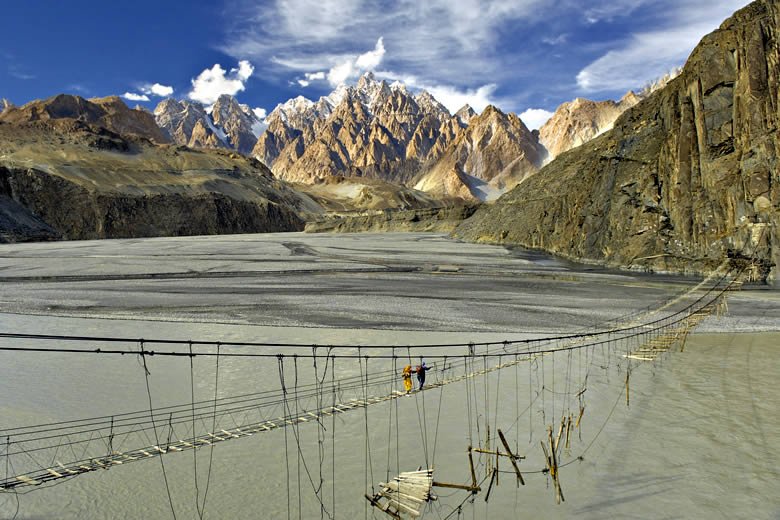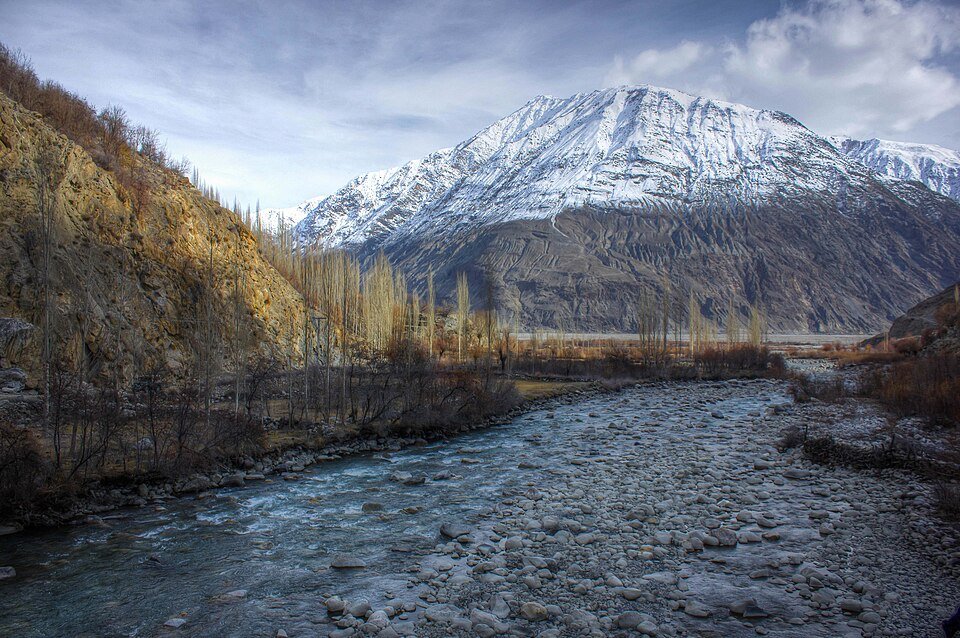
If you have already seen Hunza and Skardu, and you are hungry for the part of Gilgit-Baltistan that the tour buses never reach, Ishkoman Valley is your answer. This long, quiet valley in Ghizer district runs up toward the Afghan border and the Wakhan Corridor, dividing the Karakoram Range from the Hindu Kush, and it feels like the Pakistan of a generation ago: unhurried, wildly beautiful, and genuinely welcoming. This Ishkoman Valley travel guide will help you decide whether it belongs on your next northern adventure — and exactly when to go.
Quick Facts
- Location: A tehsil of Ghizer district, Gilgit-Baltistan, north of Gilgit; borders Afghanistan and the Wakhan Corridor
- Altitude: Around 2,100 to 3,700 m (7,000 to 12,000 ft) across the valley floor and its passes
- Famous For: Karambar Lake (one of the highest lakes on earth), apricot orchards, the Pakora Pass trekking route, and untouched high-mountain wilderness
- Nearest City: Gahkuch (district headquarters of Ghizer), about 90 km west of Gilgit
- Accessibility: Road access via Gahkuch off the Gilgit–Shandur road; upper valley tracks need a 4×4 jeep
- Known Landmarks: Karambar Lake, Chatorkhand town, Immit village and hot spring, Pakora Pass
- Best For: Trekkers, adventure travelers, photographers, and anyone chasing truly off-the-beaten-path Pakistan
Why Visit Ishkoman Valley
Some valleys in Pakistan you visit for comfort. Also, Ishkoman you visit for discovery. Drive past Gahkuch and turn north. The traffic thins to nothing: just the Ishkoman River racing beside the road, poplar trees leaning over fields, and peaks that seem to grow taller with every bend. Within an hour of leaving the main Gilgit–Shandur road you are in a valley of some thirty villages and around 30,000 people where life still moves to the rhythm of sowing and harvest, and where a stranger is more likely to be invited for tea than pointed at a gift shop.
The Seam of Two Great Ranges
What makes Ishkoman different from its famous neighbors is scale and solitude. The valley stretches from about 2,100 meters near its entrance to 3,700 meters and beyond toward the border, which means you pass through several climates in a single day — warm apricot orchards at the bottom, alpine pastures above, and glacier country at the top. Nowhere else in Gilgit-Baltistan do the Karakoram and the Hindu Kush meet so clearly: Ishkoman is literally the seam between the two great ranges, and standing in the upper valley you can feel the geography turn beneath your feet.
Then there is Karambar Lake, the crown of the valley. Meanwhile, sitting above 4,270 meters, it is one of the highest biologically active lakes in the world and the second-highest lake in Pakistan. A vast sheet of impossibly clear water ringed by the Pamir mountains. Reaching it is a serious multi-day trek through passes above 4,600 meters, and that effort is precisely the point. When you finally stand on its shore, there is no crowd, no tea stall, no noise — just water, wind. The kind of silence most travelers never experience.
Ishkoman is not for everyone, and that is its charm. Roads are rough, hotels are basic. The upper valley sits close to a sensitive border where access can be restricted without notice. But if you are an experienced traveler who finds Hunza too polished and Skardu too busy, Ishkoman rewards you with something rarer: a valley that still belongs to itself.
History of Ishkoman Valley
Ishkoman has no ancient capital or famous battlefield to anchor its history. Also, its story is the older, quieter story of the mountain frontier itself. In fact, the valley sits on one of the oldest corridors of movement in Central Asia. In addition, for centuries, caravans and traders moved through these high passes between the lands that are now Afghanistan, China. For example, the Indian subcontinent, and the valley’s mix of peoples — Wakhi, Khowar-speaking, Burushaski. Shina communities — is a living record of those comings and goings. Immit village, near the top of the inhabited valley, is described even today as a melting pot of cultures.
That identity is centuries old.
The Great Game’s Mountain Corridor
In the 19th century, Ishkoman fell within the orbit of the great game between the British and Russian empires. British interest in these valleys was strategic: passes like the Pakora and the routes toward the Wakhan were watched carefully as potential corridors toward British India. The valley was administered as part of the Gilgit Agency and later the Northern Areas, remote even by the standards of the frontier. There were no grand colonial hill stations here, no cantonment towns — just a chain of villages paying taxes in grain and, later, sending young men into the Northern Light Infantry.
Modern Ishkoman became known to Pakistani travelers only gradually. Also, the road from Gahkuch was rough and slow for decades. It was trekkers and mountaineers — drawn by peaks such as Koz Sar (6,677 m) and Chiantar Sar (6,416 m) and by the legendary Karambar Lake — who first put the valley on the adventure map. In fact, the valley’s designation as a tehsil of Ghizer district gave it an administrative center at Chatorkhand, and in recent years small guesthouses, homestays. A trickle of domestic tourists have followed.
The valley’s apricot economy, famous across the region, remains its economic backbone: Immit’s apricots are considered the finest in the area and are sold as far away as the Gilgit market. For deeper background on the district that Ishkoman calls home, see our guide to Gahkuch, the district headquarters.
Top Things to Do in Ishkoman Valley
Ishkoman is an active-travel destination first and a sightseeing destination second. Also, come with walking boots, patience, and a willingness to be flexible — the valley repays that attitude richly.
Trek to Karambar Lake
This is the headline adventure and one of the great treks of northern Pakistan. Karambar Lake — also spelled Qurumbar or Korumbar — sits at roughly 4,272 to 4,304 meters, making it one of the highest lakes in the world and the second-highest in Pakistan. Also, it is about 3.9 kilometers long and 2 kilometers wide, with an average depth of around 52 meters, and researchers have recorded some of the highest water-clarity readings ever measured in a Pakistani lake.
The trek is serious: routes cross passes such as the Karambar Pass and the Darkot Pass at altitudes above 4,600 meters, typically taking four to five days round trip from the last road head. They demand good fitness, acclimatization, and an experienced local guide with camping gear. The lake’s water flows down toward Ishkoman. Its outflow feeds the Qurumber River that joins the Ishkoman River below — standing at its shore, ringed by the Pamir and Hindu Kush, is a memory that stays with you for life.
Explore Chatorkhand, the Valley’s Heart
Chatorkhand is the administrative headquarters of Ishkoman and the natural base for exploring the valley. Also, it sits on the Karambar River where the green river belt meets rugged brown slopes and distant snow peaks — a contrast that photographers love. The town has the valley’s main bazaar, basic guesthouses, and a riverside setting perfect for slow evenings. Use it as your logistics hub: stock up on supplies, hire a jeep or guide, and arrange homestays deeper in the valley. Our Chatorkhand travel guide covers the town in detail.
Walk the Orchards of Pakora, Dain, and Ishkoman Villages
Between Chatorkhand and the upper valley lies a string of scenic villages — Dain, Pakora. Also, Ishkoman itself — wrapped in some of the finest apricot orchards in Gilgit-Baltistan. In late spring the blossoms turn the valley floor white and pink. By mid-summer the fruit is heavy on the branches. Walking these village lanes, past stone houses and irrigation channels, is the gentlest way to experience Ishkoman, and villagers are famously hospitable to respectful visitors. If you visit during harvest season, you will be offered more apricots than you can eat.
Visit Immit and Its Hot Spring
About 25 kilometers beyond Chatorkhand, Immit is the gateway village to Afghanistan and the Pamir Wakhan Corridor — and one of the most culturally distinctive places in the valley. Also, Immit has a natural hot spring, a melting pot of Wakhi and other mountain cultures. The most prized apricots in Ishkoman. Note that the road and track beyond Immit run close to the border. Access for tourists can be restricted by security authorities, so check the current situation locally before planning to push further. A hot-spring soak with high peaks all around is worth the journey in itself.
Trek the Pakora Pass
The Pakora Pass is Ishkoman’s classic expedition route — a famous trekking corridor historically connecting the valley toward Afghanistan’s Wakhan Corridor. Also, this is not a casual day hike: it is a high, glaciated pass suited to experienced trekkers with full support. In fact, for serious mountaineers, the surrounding peaks — Koz Sar, Chiantar Sar, Qalandar Zom. Shiniki — offer genuinely remote climbing objectives far from the crowds of the Karakoram’s famous 8,000-meter peaks.
Fish, Camp, and Photograph the Rivers
The Ishkoman and Karambar rivers are glacier-fed, fast, and strikingly beautiful. Also, anglers come for trout in the colder months; campers find endless riverside meadows. In fact, wildlife watchers should keep their eyes on the high slopes: the valley lies within the Qurumber National Park area, and snow leopards, ibex, golden eagles, Himalayan vultures, and marmots all live here. Dawn and dusk are the best hours for spotting ibex on the ridgelines.
Famous Places In and Around Ishkoman Valley
- Karambar Lake — the valley’s crown: one of the world’s highest lakes at over 4,270 m
- Chatorkhand — valley headquarters, bazaar, and logistics base
- Immit village and hot spring — cultural melting pot near the Wakhan frontier
- Pakora Pass — legendary trekking corridor toward the Wakhan Corridor
- Gahkuch — Ghizer’s district headquarters and the gateway town to Ishkoman
- Broghil Valley National Park — high-altitude wetland wilderness to the west; see our Broghil Valley guide
- Shandur Pass — the world’s highest polo ground, reachable via the Gilgit–Shandur road
- Naltar Valley — connected to Ishkoman by the high Naltar Pass trekking route
- Yasin Valley — Ghizer’s other great valley, an easy combined trip from Gahkuch
How to Reach Ishkoman Valley
Every route into Ishkoman runs through Gahkuch, the headquarters of Ghizer district on the Gilgit–Shandur road. Also, the journey is part of the experience: from Gilgit it is roughly 90 kilometers and about 3 hours of spectacular driving to Gahkuch, and from there a jeepable road climbs north into Ishkoman, reaching Chatorkhand about 30 kilometers on. In fact, Beyond Chatorkhand the road continues toward Immit, narrowing to a track that demands a sturdy 4×4 and, in places, nerves of steel.
From Islamabad, the classic northern route applies: fly or drive to Gilgit (about an hour by air when PIA flights operate, or 14–18 hours by road via the Karakoram Highway and Babusar), then drive on to Gahkuch. Also, From Lahore, expect a very long road journey of two full days via Islamabad and the KKH, or fly Lahore–Islamabad–Gilgit. From Karachi, flying to Islamabad and onward to Gilgit is by far the sensible option. The road journey is a multi-day expedition in itself.
Route Details
- Islamabad to Gilgit: PIA operates flights from Islamabad to Gilgit (roughly 1 hour, weather permitting — cancellations are common, so keep buffer days). By road, take the Hazara Motorway and Karakoram Highway via Mansehra, Naran, and Babusar Top (summer) or via Besham and Chilas (winter); allow 14–18 hours.
- Gilgit to Gahkuch: Head west on the Gilgit–Shandur road along the Gilgit River; about 90 km, roughly 3 hours, mostly good paved road.
- Gahkuch to Chatorkhand: Turn north into the Ishkoman valley; about 30 km of narrower mountain road, 1–1.5 hours by jeep or 4×4.
- Chatorkhand to Immit and beyond: Continue about 25 km through Dain, Pakora, and Ishkoman villages to Immit; rough track, jeep only.
- To Karambar Lake: From the end of the jeep track, a multi-day guided trek over high passes (4–5 days round trip) — hire a local guide and full camping kit in Chatorkhand or Gilgit.
The nearest airport is Gilgit Airport, with connections from Islamabad. Also, there is no public bus into Ishkoman; hire a private jeep in Gilgit or Gahkuch, or join an organized tour. Travel in winter (December–February) is difficult — the road beyond Chatorkhand is often snow-blocked — so the reliable season is roughly May to October.
Where to Stay in Ishkoman Valley
Set your expectations honestly: Ishkoman is not a place of resorts and room service. Accommodation is basic, warm, and characterful — and that is part of why you come.
Guesthouses in Chatorkhand and Pakora: The valley’s main town and a couple of the larger villages have simple guesthouses with clean rooms, hot water (sometimes), and home-cooked meals. Also, these are the comfortable mid-range option. In fact, expect modest tariffs roughly in the rs. 2,500–5,000 per night range in season, and always book ahead for July to September.
Homestays: Several Wakhi and Shina families in the valley host travelers. Also, this is the richest way to experience Ishkoman — sleeping in a village home, eating what the family eats, and hearing the valley’s stories firsthand. In fact, ask in Chatorkhand’s bazaar or arrange through a Gilgit-based tour operator.
Camping: Trekkers heading for Karambar Lake or the high passes camp throughout. Bring your own four-season tent and a warm sleeping bag, because even summer nights above 3,000 meters are cold. Riverside meadows near Pakora and Immit make fine base camps. For nights before and after the valley, Gahkuch and Gilgit have a full range of hotels, from budget to comfortable mid-range.
Where to Eat: Local Foods of Ishkoman Valley
The food of Ishkoman is the food of the high valleys: hearty, simple, and built for cold weather and hard work. Meanwhile, the signature dishes are familiar across Gilgit-Baltistan. Chapshuro — a savory meat-filled pastry, the region’s answer to a pie — is the dish to try first. Mamtu, delicate steamed dumplings filled with minced meat and onion, are a winter staple. In fact, a bowl of butter tea (salty, warming, an acquired taste you will acquire fast) is the standard welcome in any home.
Summer brings the valley’s true treasure: fruit. Ishkoman is famous across Ghizer for its apricots — Immit’s are considered the finest — and the orchards also yield cherries, mulberries, apples, and walnuts. Also, dried apricots and apricot oil are the classic take-home souvenirs. Dairy features heavily: yak cheese and fresh butter appear in village homes, and organic mountain honey is sold in the bazaar.
There are no restaurants in the fine-dining sense. Also, eat at your guesthouse or homestay, or at the small dhabas in Chatorkhand serving daal, sabzi, chapati, and rice. In fact, meals are budget-friendly — roughly rs. 400–800 per meal — and portions are generous. Carry snacks and water purification tablets for trekking days.
Weather in Ishkoman Valley
Ishkoman’s weather is pure high-mountain: short, glorious summers and long, hard winters. Because the valley spans 2,100 to 3,700 meters, conditions change dramatically with altitude. Also, a warm afternoon in Chatorkhand can be a snow flurry at the passes. Rainfall is scarce (the high ranges block the monsoon), most precipitation falls as snow between December and February, and glaciers melt from June to August, swelling the rivers. Always pack for cold, even in summer.
| Season | Temperature Range | Conditions |
|---|---|---|
| Winter (Dec–Feb) | Around -10°C to 5°C in the lower valley; far colder above 3,000 m | Heavy snow; the whole valley turns white; roads beyond Chatorkhand often blocked; only for the hardiest travelers |
| Spring (Mar–May) | Around 5°C to 20°C | Apricot and cherry blossoms in April–May; melting snow, lush green fields; some high tracks still closed early in the season |
| Summer (Jun–Sep) | Around 15°C to 30°C in the valley floor; near freezing at night above 3,500 m | Peak season; green meadows, full rivers, fruit harvest; best window for the Karambar Lake trek (July–September) |
| Autumn (Oct–Nov) | Around 5°C to 18°C | Golden poplars and harvest colors; crisp clear air; first snows arrive by November; roads begin to close |
Language and Culture of Ishkoman Valley
Ishkoman is one of the most linguistically diverse small valleys in Pakistan. Also, four languages are spoken here: Wakhi (an eastern Iranian language of the Pamir peoples), Khowar (the language of Chitral), Burushaski (the famous language isolate of Hunza). Shina (the main language of Gilgit). Most people also understand Urdu, so communication is rarely a problem, but learning a greeting in the local language earns enormous goodwill.
Culturally, the valley blends Ismaili, Sunni, and other traditions depending on the village. Also, Immit’s reputation as a cultural melting pot is well earned. Visitors should dress modestly (cover shoulders and knees. Women may want a headscarf for village visits), ask before photographing people, and accept hospitality graciously — refusing tea can genuinely offend. Friday is the weekly holiday in Muslim villages; plan bazaar visits accordingly. The people of Ishkoman are known across Ghizer for their warmth to guests. Treat their homes and fields with respect, take your litter with you, and you will be welcomed back.
Shopping in Ishkoman Valley
There are no malls in Ishkoman — shopping here means the Chatorkhand bazaar and village stalls. Also, the souvenirs are the valley’s own produce. Dried apricots are the number-one buy: Immit’s are the most prized. Also look for apricot kernel oil, organic mountain honey, yak-wool products (caps, shawls, socks), and walnuts and almonds in autumn. Handwoven pattu (woolen cloth) and embroidered caps appear in the bazaar, made by village women. Prices are honest and bargaining is gentle — a fraction of what the same goods cost in Islamabad’s craft markets.
For anything beyond local produce, Gilgit’s bazaars are the place to stock up before entering the valley.
Local Events and Festivals
Ishkoman itself does not host a famous calendar festival the way some valleys do. Also, its district offers one of Pakistan’s great cultural spectacles within reach. The Shandur Polo Festival, held each June at the Shandur Pass — the world’s highest polo ground — draws thousands of spectators for three days of fierce polo between Gilgit-Baltistan and Chitral, plus folk music, dance, and camping under the stars. In recent years it has been scheduled around June 20–22. Combining Ishkoman with Shandur in late June makes a superb two-part Ghizer itinerary: polo festival first, then the quiet of the valley. Within Ishkoman, village life follows the agricultural calendar.
The spring Tukhm Rezi (sowing) celebrations of the wider Ghizer region and the autumn harvest are the year’s natural festivals. If your homestay host invites you to a village gathering, say yes.
Travel Tips for Ishkoman Valley
Packing Essentials
- Warm layers and a good jacket — temperatures drop sharply after sunset even in August
- Sturdy trekking boots with ankle support for village paths and treks
- Sleeping bag (for camping or chilly guesthouses), sunscreen, and sunglasses — mountain UV is fierce
- Water purification tablets or a filter; a power bank (electricity is limited and intermittent)
- A basic medical kit including altitude-sickness medication, and any prescription medicines — the nearest real pharmacy is in Gahkuch
- Cash in small notes; snacks and dry fruit for long jeep rides
Safety Tips
- The upper valley runs close to the Afghan border: respect all checkposts, carry your CNIC/passport, and accept that access beyond Immit may be restricted — check the current situation locally
- Never travel the mountain roads after dark; landslides and rockfall are real hazards, especially after rain
- For the Karambar Lake trek, hire a registered local guide — the passes are remote, glaciated, and unforgiving
- Acclimatize: spend a night or two at valley altitude before attempting anything above 3,500 m
- Keep buffer days in your itinerary; weather and road closures change plans regularly in the high mountains
Money & Connectivity
- ATMs: None in Ishkoman — withdraw cash in Gilgit or Gahkuch before entering the valley
- Mobile signals: Coverage is patchy; SCOM (the GB-special network) works best, with limited signals from other networks in Chatorkhand
- Internet: Expect little to none beyond the main town; download offline maps before you go
- Guesthouses and homestays are cash-only; small shops may accept mobile transfers
Best Time to Visit Ishkoman Valley
Summer (June to September) — Peak Season
This is when Ishkoman is at its best and most accessible: green valleys, full rivers, apricot and cherry harvest, and open roads. July to September is the only realistic window for the Karambar Lake trek. Expect the most fellow travelers (still very few by Hunza standards) and book guesthouses ahead.
Spring (April to May) — Blossom Season
For photographers and romantics, spring is magical: apricot and cherry blossoms blanket the lower valley, the fields are brilliant green. Also, the crowds are zero. High passes and the lake trek are still snowbound, but village-to-village walking is perfect.
Autumn (October to November) — Golden Season
October brings harvest colors — golden poplars, red orchards, crystal air — and the year’s clearest mountain views. By November the first snows close the high tracks, so come early in the season and confirm road status.
Winter (December to March) — For the Hardy Only
The valley sleeps under snow; temperatures plunge well below freezing and most guesthouses close. Also, only experienced winter travelers with local contacts should attempt it. But those who do see Ishkoman at its most elemental.
Final Thoughts
Ishkoman Valley is not the easiest destination in Gilgit-Baltistan, and it is not trying to be. It is the valley you choose when you have seen the famous places and want the real thing: a frontier valley of apricot orchards and glacier rivers, where four languages meet, where Karambar Lake waits at the top of one of Pakistan’s great treks, and where the welcome is warmer than the weather.
Come in summer for the lake trek, in spring for the blossoms, or in autumn for the gold — but come with respect, with time to spare, and with an open heart. Ishkoman does not perform for tourists. It simply is, and that is exactly why it is worth the journey. For more northern inspiration, browse our Explore Pakistan collection or start with the classic Malam Jabba guide.
FAQs
Where is Ishkoman Valley located?
Ishkoman Valley is a tehsil of Ghizer district in Gilgit-Baltistan, northern Pakistan. Also, it lies north of Gahkuch, borders Afghanistan and the Wakhan Corridor, and forms the divide between the Karakoram and Hindu Kush ranges.
What is the best time to visit Ishkoman Valley?
June to September is the best overall window, with July to September essential for the Karambar Lake trek. April–May is best for blossoms, and October for autumn colors. Winter (December–February) is extremely cold with blocked roads.
How do I reach Ishkoman Valley?
Fly or drive to Gilgit, drive about 90 km (3 hours) west to Gahkuch on the Gilgit–Shandur road, then turn north into the valley by 4×4 jeep to Chatorkhand (about 30 km). There is no public transport into the valley — hire a jeep in Gilgit or Gahkuch.
Is Ishkoman Valley safe for tourists?
Yes, for prepared travelers. The valley is peaceful and locals are famously hospitable. The main cautions are natural (landslides, altitude, weather) and administrative: the upper valley near the border is sensitive, so carry ID, respect checkposts, and confirm access locally before pushing beyond Immit.
Is Ishkoman Valley good for families?
The lower valley (Chatorkhand and the orchard villages) suits adventurous families with older children. Also, the roads are rough and facilities basic. In fact, the Karambar Lake trek and high passes are for fit, experienced trekkers only — not for young children or elderly travelers.
Where can I stay in Ishkoman Valley?
Simple guesthouses in Chatorkhand and Pakora, village homestays with local families, and camping for trekkers. Book ahead for July–September. Also, for more comfort, base yourself in Gahkuch or Gilgit and day-trip into the lower valley.
What food is Ishkoman Valley famous for?
Apricots — Immit’s are considered the finest in the region — plus chapshuro (meat pastry), mamtu (dumplings), butter tea, yak cheese, organic honey, and dried fruit. Also, eat at guesthouses and dhabas; meals are budget-friendly.
Can foreigners visit Ishkoman Valley?
Foreign tourists do visit, usually with registered tour operators. Because the upper valley borders Afghanistan, check current permit and access requirements with a Gilgit-based operator before planning — rules can change, and access beyond Immit is sometimes restricted to locals.