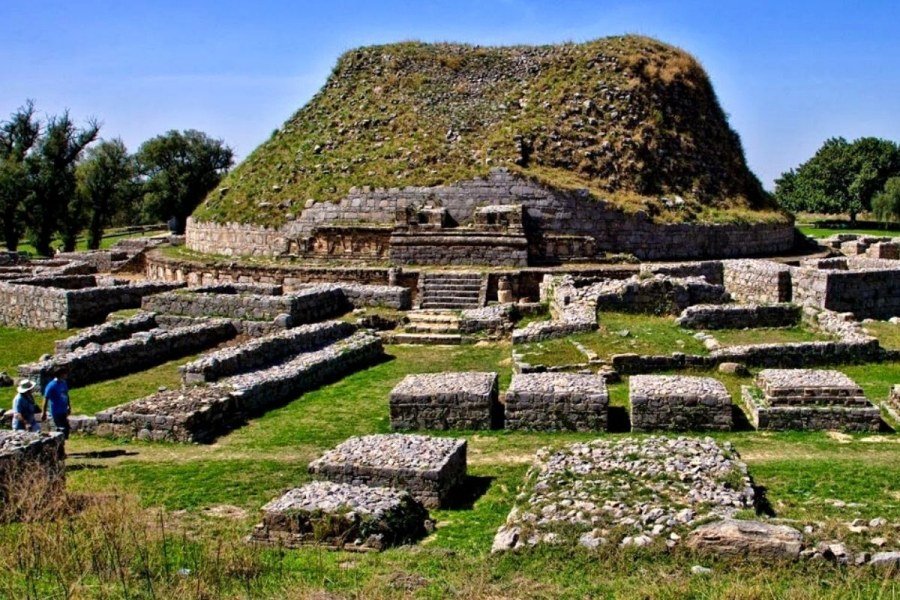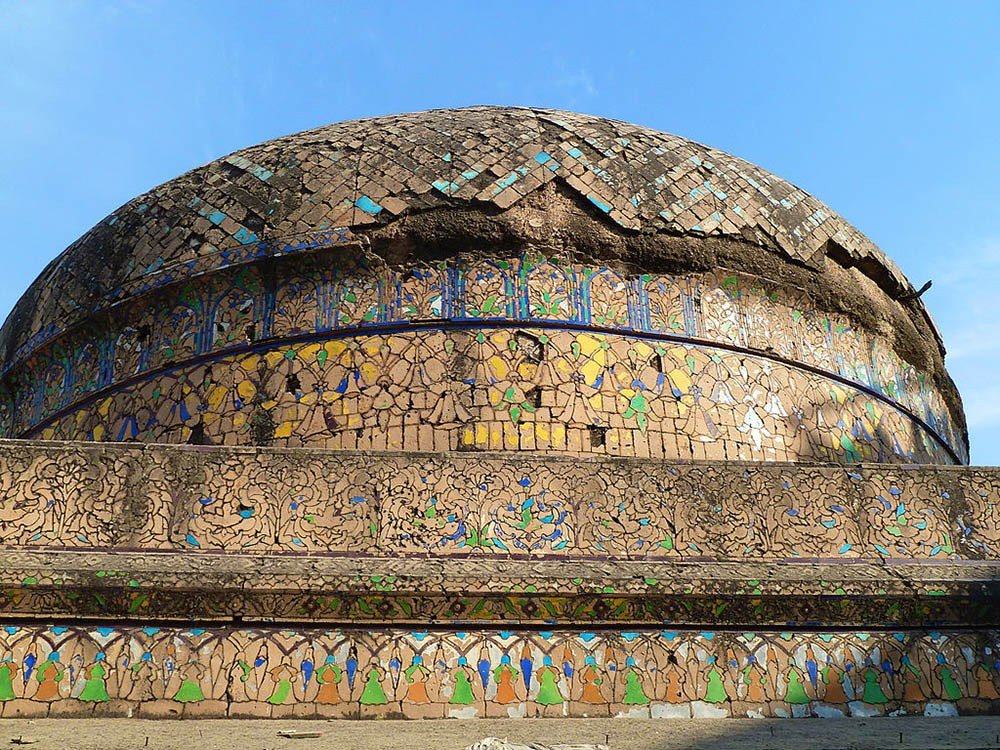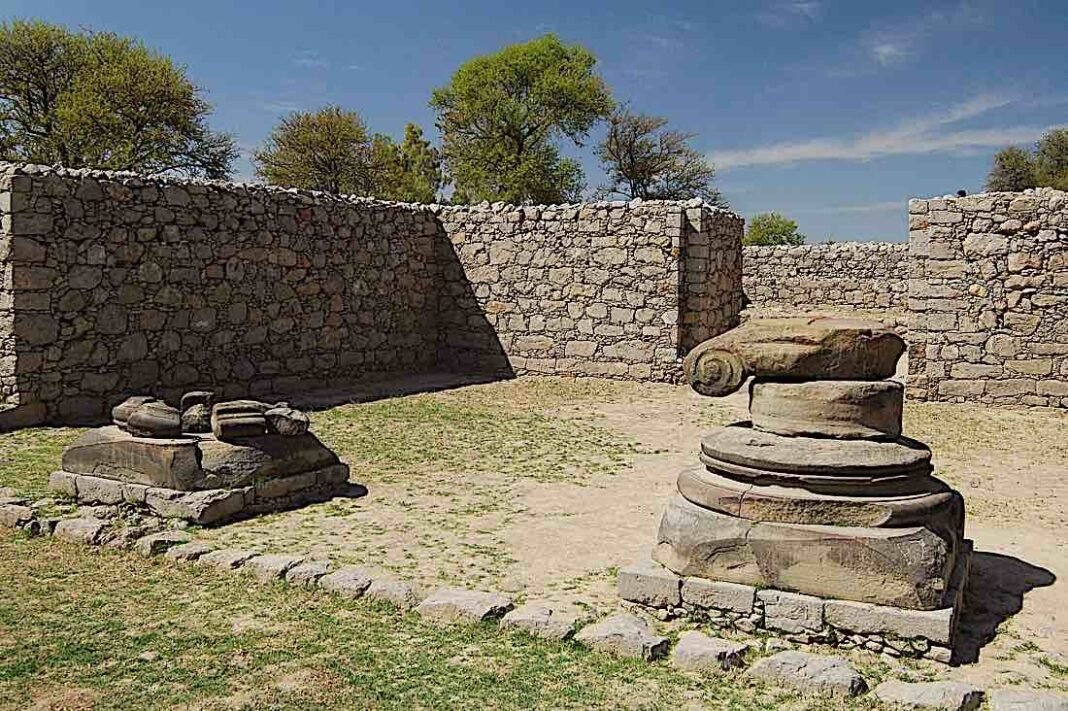
Imagine standing in a wheat field in Punjab and finding yourself looking at a building that could have been lifted straight out of ancient Greece. That is the strange, wonderful shock of Jandial Temple. It is the only Greek-style temple on the entire Indian subcontinent, a 2,000-year-old structure of Ionic columns, a raised stone sanctuary, and a layout that follows the classical Greek pattern of naos, pronaos, and opisthodomos, and it stands barely an hour from Islamabad, in the famous Taxila valley. If you have ever wondered what happens when the world of Alexander the Great collides with the world of the Buddha, Jandial Temple is your answer, and it is waiting with almost no crowds at all.
Most travelers come to Taxila for the Buddhist stupas and the excellent Taxila Museum. Jandial is different. It is quieter, stranger, and in some ways more moving. This is a place where Greek architects may once have worked beside local craftsmen, where a Zoroastrian fire may once have burned on a platform behind the shrine, and where the great philosopher Apollonius of Tyana is said to have walked in the first century CE. If you love history that refuses to fit into neat boxes, this Jandial Temple Taxila travel guide will help you plan the trip and fall a little in love with a ruin most people have never heard of.
Quick Facts
- Location: About 1 mile (roughly 1 to 1.5 km) north of Sirkap’s north gate, Taxila, Punjab, on an artificial mound beside Khanpur Road
- Famous For: The only ancient Greek temple on the Indian subcontinent, with Ionic columns; among the most Hellenic buildings ever found in Pakistan
- Nearest City: Taxila (a few minutes by car); Islamabad about 40 km to the southeast
- Accessibility: Easy day trip from Islamabad or Rawalpindi by road via the Grand Trunk Road; the site sits right off a metalled road with nearby parking
- Known Landmarks: The raised temple platform and column bases, the altar structure in front, and nearby Sirkap and the Taxila Museum
- Best For: History lovers, archaeology enthusiasts, photographers, curious day-trippers, and anyone tracing Alexander the Great’s legacy
- Best Time to Visit: October to March, when the Taxila valley is cool and the open site is comfortable
Why Visit Jandial Temple, Taxila
Because there is nothing else like it in South Asia. Buddhist stupas are wonderful, and Taxila has some of the finest, but the Jandial Temple is the one place where you can touch the Greek chapter of Pakistan’s story. When the excavator Sir John Marshall worked here in 1912-1913, he called it the most Hellenic structure yet discovered on Pakistani soil. Stand on the mound and you can see why: the temple follows a Greek plan so faithfully that scholars compare it to sanctuaries built an ocean away, yet it sits in a Punjabi landscape of fields and poplars.
It is also a place of beautiful mystery. Nobody knows with certainty which god was worshipped here. The layout is Greek, the columns are Ionic, but behind the shrine a staircase climbs to a platform where some scholars believe a Zoroastrian fire sanctuary once stood under the Indo-Parthians. Was this the temple of a Greek who had adopted the Persian faith? A Zoroastrian sanctuary built by Greek hands? A shrine of the Indo-Greek kings of Sirkap? The honest answer is that the debate is still open, and that uncertainty makes the visit richer, not poorer. You get to stand among the stones and choose your own theory.
And then there is the quiet. The great Buddhist sites of Taxila draw school buses and tour groups; Jandial draws almost nobody. On a weekday morning you may well have the mound to yourself, with only the wind in the grass and the low hills around the valley for company. For a traveler who wants to feel the deep past without a selfie-stick forest in the frame, that solitude is worth the trip alone.
Finally, Jandial pairs perfectly with the rest of Taxila. It sits between Sirkap, the Indo-Greek city, and the Taxila Museum, which holds the Gandhara treasures the archaeologists found across the valley. A single well-planned day can take you from the museum’s finest stucco Buddhas to a Greek temple on its mound to the double-headed eagle stupa of Sirkap. Few day trips in Pakistan pack this much history into so few kilometers.
History of Jandial Temple, Taxila
The story of Jandial begins with the fall of an empire and the birth of a crossroads. After Alexander the Great campaigned through the Punjab in 326 BCE, his successors and then the Greco-Bactrian kings carried Hellenistic culture deep into the subcontinent. In the second century BCE, the Indo-Greek kings Demetrius and Menander founded and rebuilt the city of Sirkap at Taxila on a strict Greek grid plan, with its streets laid out at right angles. Jandial stands about a mile north of Sirkap’s north gate, on a 15-meter-high artificial mound, and its alignment with the Greek city is so exact that several scholars believe it was built during Sirkap’s main Greek occupation, in the second century BCE, possibly by an architect trained in Asia Minor or Greece itself.
But that is only one theory. A second school of thought places the temple in the first century BCE, under the Indo-Parthians, who invaded these Hellenistic lands and brought the Zoroastrian faith with them, using Greek manpower and expertise to raise a sanctuary in the Greek style. A coin of the Indo-Scythian ruler Azes I was found in the temple’s rubble, which suggests the building stood in his time. The presence of the stair and platform behind the shrine, where a Parthian fire sanctuary may have existed, keeps the Zoroastrian reading alive. It is entirely possible that a Greek devotee of Zoroastrianism built it; in this age, Greeks in the East freely adopted other faiths, as the famous dedication to the god Garuda by the Greek envoy Heliodorus on the Heliodorus pillar at Besnagar shows.
What the excavations did establish is the building’s character. Under the direction of Sir John Marshall, the Archaeological Survey of India excavated Jandial in 1912-1913. The temple, built of limestone and once faced with stucco, measured roughly 45 by 30 meters. It was a distyle-in-antis structure, meaning it had two columns standing between two projecting walls, with the classical Greek sequence of pronaos (entrance hall), naos (cult room), and opisthodomos (back chamber) clearly readable. The columns carried voluted Ionic capitals, and friezes and decorated elements completed the Hellenistic vocabulary. In front of the temple stood a unique structure that scholars, using Greek parallels, identify as an altar, a feature found nowhere else in the Punjab.
The temple may also be the one described by Philostratus in his Life of Apollonius of Tyana. Philostratus wrote that Apollonius, the Pythagorean philosopher who traveled through the subcontinent in the first century CE, saw at Taxila a temple in front of the city wall, nearly a hundred feet in extent, made of stone covered with stucco, with bronze tablets nailed into its walls engraved with the exploits of Porus and Alexander. Modern scholars treat the account with caution, but it remains one of the most evocative ancient descriptions connected to the site. The building eventually fell into ruin in the early centuries CE, its columns toppled and its stucco long gone, until Marshall’s spades brought the plan back to light.
In 1980, Taxila’s archaeological sites, including Jandial, were inscribed on the UNESCO World Heritage List, a recognition of the valley’s extraordinary layering of Achaemenid, Greek, Scythian, Parthian, and Kushan remains. Today the Punjab Archaeology Department protects the site, and conservation work continues in stages. The temple will never be whole again, but its bones are honest, and they tell a story no other ruin in Pakistan can tell.
Top Things to Do in Jandial Temple, Taxila
Walk the Greek Plan of the Temple
The main pleasure of Jandial is reading the building like a text. Start at the front and trace the sequence the Greeks used everywhere: the entrance porch, the cult room, the back chamber. You can still pick out the projecting walls of the distyle-in-antis arrangement and the bases where the two Ionic columns stood. Bring the site plan from a guidebook or the museum if you can, and the foundations begin to speak. Few experiences in Pakistani archaeology are as quietly thrilling as standing in a Greek naos in the middle of Punjab.
Study the Ionic Capitals and Stucco Remains
Look closely at the carved stonework for the volutes, the scroll-like ornaments that mark the Ionic order, and for fragments of the limestone-and-stucco construction Marshall described. The temple was once faced in stucco that would have made the stonework gleam white in the sun, the same technique that gave the site its name in some accounts. Photographers should come in the low light of morning or late afternoon, when the shadows give the low walls their depth.
Climb the Rear Staircase to the Fire Platform
Behind the main shrine, a set of stairs rises to the platform where a Parthian-period fire sanctuary is thought to have stood. Whether or not a Zoroastrian flame ever burned here, the climb is worth it for the view alone: from the top you look across the fields toward Sirkap and the hills that ring the Taxila valley. It is the best vantage point on the site and the place to stand while you ponder the temple’s double identity, Greek and Iranian.
Visit Jandial Temple 2 (Mound D)
Most visitors never learn that Jandial has a lesser-known sibling. On another mound (Mound D), a little to the west of the main temple, lie the foundations of a second temple with a very similar plan and a large front porch about 58 feet across, first excavated back in 1863-1864. It is far less developed as a visitor site, but if you are a serious archaeology fan, walking between the two mounds along the line of the ancient high road to Gandhara, which once ran right between them, is a lovely half-hour detour. Read our Jandial Temple 2 travel guide before you go.
Famous Places In and Around Jandial Temple, Taxila
- Sirkap – the Indo-Greek walled city less than a kilometer south, with its grid streets and the double-headed eagle stupa; walkable from Jandial
- Taxila Museum – one of Pakistan’s finest museums, holding the Gandhara sculptures and finds from across the valley
- Dharmarajika Stupa – the great early Buddhist stupa complex a few kilometers east, attributed to the Mauryan age
- Bhir Mound – the oldest Taxila city site, with Achaemenid and Mauryan layers; see our Bhir Mound travel guide
- Jaulian Monastery – the beautifully sited Buddhist monastery on its hilltop, one of the valley’s most photogenic ruins
- Mohra Moradu – another fine monastery complex nearby, with a well-preserved stupa and monastic cells
- Giri Buddhist Remains – lesser-known Buddhist remains in the valley; see our Giri travel guide
- Khanpur Dam – the blue reservoir north of Taxila, popular for a scenic drive and boating after a morning among the ruins
How to Reach Jandial Temple, Taxila
Getting to Jandial is straightforward, which is part of its charm. The temple sits on Jandial Temple Road off Khanpur Road, roughly 40 km northwest of Islamabad, and the whole Taxila valley is served by the Grand Trunk Road, so any driver in the twin cities knows the way. Because the site is open and unshaded, plan to arrive in the morning, especially between October and March.
From Islamabad: About 40 km, roughly 1 to 1.5 hours depending on traffic. Take the Grand Trunk (N-5) Road northwest through Tarnol toward Taxila, then follow signs toward Sirkap and Khanpur Road to Jandial Temple Road. Ride-hailing apps and rented cars both work well for this route.
From Lahore: About 380 km via the M-2 motorway to Islamabad and then the GT Road to Taxila, roughly 5 to 6 hours. Most Lahore travelers make Taxila an overnight or weekend trip, often combining it with Islamabad.
From Karachi: About 1,450 km. Fly to Islamabad International Airport (about 35 km from Taxila) and drive or hire a car from there. The motorway network makes the onward journey smooth.
Nearest airport: Islamabad International Airport, roughly 35 to 40 km from the site. Taxis, ride-hailing cars, and hotel-arranged transport are all available at the terminal.
Road conditions and transport: The GT Road and the roads into Taxila are metalled and in good condition year-round. Local buses and passenger vans run regularly between Islamabad, Rawalpindi, and Taxila along the GT Road; from Taxila city, rickshaws and local taxis can take you to the temple. For comfort and flexibility, a private car or a hired driver for the day is the best option, letting you string Jandial together with Sirkap, the museum, and a second site or two. The archaeological sites of Taxila generally open in the morning and close around sunset, and an entrance fee usually applies across the Taxila sites; buy tickets at the site and keep them, as separate tickets may be needed for the museum.
Route Details
- Leave Islamabad on the Grand Trunk (N-5) Road heading northwest toward Taxila (via Tarnol).
- Continue through Taxila town, following signs for Sirkap / the archaeological sites.
- Turn onto Khanpur Road and then Jandial Temple Road; the temple mound rises just north of Sirkap, about 0.5 to 1.5 km beyond the Sirkap north gate.
- Park near the site entrance and walk up to the mound. Combine the visit with Sirkap (just south) and the Taxila Museum (a short drive east) in the same day.
Where to Stay in Jandial Temple, Taxila
There is no reason to look for a hotel at the temple itself; the smart move is to base yourself in Taxila town or, better, in Islamabad, where the choice is far wider. Taxila has a handful of modest hotels and guesthouses along the GT Road that suit budget travelers and school groups doing the archaeology circuit. They are simple, clean, and perfectly fine for a night if you want an early start at the sites.
Most visitors stay in Islamabad, 40 km away, where the range runs from luxury five-star hotels in the Blue Area and on the Margalla slopes to comfortable mid-range business hotels and a growing stock of well-kept guesthouses in the residential sectors. A mid-range hotel in Islamabad gives you a comfortable bed, a proper breakfast, and an easy 45-minute drive to Jandial in the morning. If you are traveling on a tighter budget, Rawalpindi’s older bazaar-area hotels are cheaper still and only a little farther.
For something different, the resorts and farmhouses around Khanpur Dam, north of Taxila, offer a scenic overnight option with water views, though you should confirm availability and access in advance. Camping is not established at the archaeological sites themselves, and overnight stays on the mounds are neither permitted nor advisable.
Where to Eat: Local Foods of Jandial Temple, Taxila
You will not find restaurants at the ruin itself, so eat in Taxila town or pack a picnic. The Taxila valley sits in the Potohar region of Punjab, and its food is hearty Punjabi fare: slow-cooked nihari, haleem, daal fry with tandoori roti, chana chaat, and sweet, thick lassi from the roadside dhabas along the GT Road. A dhaba lunch in Taxila town is delicious and easy on the wallet, the kind of meal where the roti arrives blistering hot and the daal tastes of wood smoke.
If you are based in Islamabad, you have the capital’s full spread waiting when you return: the Melody and Aabpara food streets, the Afghan-influenced eateries of F-7 and F-8, and everything from desi barbecue to continental at the Margalla-road restaurants. A satisfying day-trip formula is a light packed breakfast at the site, a dhaba lunch in Taxila, and dinner back in Islamabad.
One local note: Khanpur, just north of Taxila, is famous across Pakistan for its citrus orchards. In winter, roadside sellers pile the local oranges and kinnows high along the roads, and a bag of them makes the perfect snack for the drive between sites. A meal at a Taxila dhaba is generally very budget-friendly; expect a full lunch for very little by city standards.
Weather in Jandial Temple, Taxila
The Taxila valley has a classic Potohar climate: cold, foggy winters, a pleasant spring and autumn, a fierce early summer, and monsoon rains in July and August. Because the temple stands on an open, unshaded mound, the season you choose shapes the visit more than it would at a museum. Winter mornings can be misty and atmospheric, while May and June are genuinely harsh for walking among low stone walls under a high sun.
| Season | Temperature Range | Conditions |
|---|---|---|
| Winter (Dec-Feb) | 5-18°C | Cool and often foggy in the mornings; the most comfortable season for the open site. Carry a warm layer. |
| Spring (Mar-Apr) | 15-30°C | Pleasant and green, with wildflowers in the fields around the mound. Excellent for photography. |
| Summer (May-Jun) | 30-42°C | Hot and dry with a fierce midday sun; visit only at dawn or not at all. Carry water and a hat. |
| Autumn (Sep-Nov) | 18-32°C | Warm days cooling off nicely; clear skies return after the monsoon. A fine shoulder season. |
Note: the monsoon months of July and August bring heavy rain and humidity; the site stays open but paths can be muddy.
Language and Culture of Jandial Temple, Taxila
Taxila sits in the Potohar plateau, and the everyday language here is Punjabi in its Potohari dialect, with Urdu understood everywhere and English common among guides and museum staff. The culture is Punjabi and hospitable: expect a salaam, an offer of chai, and genuine curiosity about where you have come from. As at any archaeological and potentially sacred site, dress modestly, shoulders and knees covered, keep your voice low among the ruins, and do not climb on or remove any stonework. The site is protected, and the stones you see have survived two thousand years; they deserve a gentle visitor.
Shopping in Jandial Temple, Taxila
Jandial itself has no bazaar, but Taxila town and the museum shop cover the souvenir run. The Taxila Museum shop sells books on Gandhara art and Taxila’s history, postcards, and small replicas that make far better keepsakes than anything you will find at a roadside stall. In Taxila’s bazaars you can pick up everyday Punjabi goods, from embroidered khussas to local sweets. Serious shoppers should save their wallets for Islamabad’s Jinnah Super, Kohsar Market, or the craft shops of Saidpur Village, all an easy drive back. In winter, do what the locals do and buy a sack of Khanpur kinnows from a roadside seller on the way home.
Travel Tips for Jandial Temple, Taxila
Packing Essentials
Sun protection is non-negotiable: a hat, sunglasses, and sunscreen, because the mound offers no shade. Carry at least a liter of water per person; there are no shops at the site. Sturdy walking shoes handle the uneven ground and the climb to the rear platform. A camera with a zoom lens rewards you at both Jandial and Sirkap, and a small pair of binoculars is lovely for the valley views. In winter, add a warm jacket for foggy mornings.
Safety Tips
The Taxila valley is a well-traveled tourist area and the sites are routinely visited by school groups and foreign tourists. Standard sense applies: visit in daylight, keep valuables out of sight in parked cars, and hire registered guides or drivers through your hotel where possible. The mound’s edges and the rear staircase are uneven, so watch your step, especially with children. Confirm site timings locally before setting out, as hours can shift on public holidays.
Money & Connectivity
Carry cash in Pakistani rupees for entry tickets, parking, and dhaba meals; small notes are useful. ATMs are available in Taxila town and widely in Islamabad and Rawalpindi. Mobile signals from all major networks (Jazz, Telenor, Zong, Ufone) are generally good across the valley, and 4G data works at the site.
Best Time to Visit Jandial Temple, Taxila
Winter (December to February) – The Classic Season
Cool, often misty mornings and mild afternoons make this the ideal window. The low winter light is beautiful on the stonework, the fields around the mound are green, and you can walk the whole site in comfort. December and January can bring dense fog on the GT Road, so start a little later in the morning if you are driving from Islamabad.
Spring (March to April) – The Photographer’s Pick
Wildflowers, wheat turning gold in the surrounding fields, and temperatures that invite long, slow exploration. If your trip can flex, late March is arguably the single loveliest time to see the Taxila valley.
Summer (May to August) – Only for the Determined
May and June are brutally hot on the exposed mound; July and August add monsoon humidity and muddy paths. If summer is your only option, arrive at opening time, keep the visit short, and pair it with the air-conditioned Taxila Museum.
Autumn (September to November) – The Quiet Sweet Spot
Clear skies, cooling temperatures, and far fewer visitors than winter. October and November combine comfortable walking weather with that golden post-monsoon light.
Final Thoughts
Jandial Temple is not the biggest ruin in Taxila, nor the most famous, but it may be the most thought-provoking. It is a place where the classical world and the ancient East meet in a single building plan, where every theory about its god and its builders opens a new window onto the valley’s past. You will not find crowds or cafes here, and that is precisely the point.
If you are putting together an Explore Pakistan itinerary through the country’s ancient sites, give Jandial a morning. Walk the Greek plan, climb to the fire platform, then let Sirkap and the museum complete the story. Two thousand years after its builders raised those Ionic columns, the temple is still doing what it was built to do: making people stop, look up, and wonder.
FAQs
Where is Jandial Temple located?
Jandial Temple stands on an artificial mound about a mile north of Sirkap’s north gate in Taxila, Punjab, roughly 40 km northwest of Islamabad, just off Khanpur Road.
What is the best time to visit Jandial Temple?
October to March. The site is open and unshaded, so cool winter mornings and the mild weather of spring and autumn make for the most comfortable visit.
How do I reach Jandial Temple from Islamabad?
Drive northwest on the Grand Trunk Road toward Taxila (about 40 km, 1 to 1.5 hours), then follow Khanpur Road to Jandial Temple Road. Private car, hired taxi, or ride-hailing apps are the easiest options.
Is Jandial Temple safe for tourists?
Yes. It is a protected archaeological site in a well-traveled tourist valley, routinely visited by school groups and foreign tourists. Visit in daylight and take normal precautions.
Is Jandial Temple good for families?
Yes, with supervision. Children who like history will enjoy the “Greek temple in Punjab” story, but the terrain is uneven and there is no shade, so bring water, hats, and keep an eye on little ones near the mound edges.
Where should I stay when visiting Jandial Temple?
Most visitors stay in Islamabad (40 km away) for the widest choice of hotels, or in a modest hotel in Taxila town for an early start at the sites.
What food is available near Jandial Temple?
There are no restaurants at the site itself. Eat at the dhabas of Taxila town (hearty Punjabi food: nihari, daal, tandoori roti, lassi) or pack a picnic; in winter, buy Khanpur kinnows from roadside sellers.
What makes Jandial Temple unique?
It is the only ancient Greek temple on the Indian subcontinent, built on a Greek plan with Ionic columns, yet possibly used for Zoroastrian worship, a fusion found nowhere else in Pakistan and part of Taxila’s UNESCO World Heritage inscription.