Some places in Pakistan reward you with scenery. A few reward you with a story so dramatic it has echoed for more than four centuries. Karakaar, Buner — the historic Karakar Pass in the Hindu Kush, linking Buner and Swat in Khyber Pakhtunkhwa — does both. Stand at its 1,336-metre crest and you look down over the whole Buner valley, pine forests climbing around you and a waterfall spilling nearby; but you are also standing where, in February 1586, a Mughal army met the worst defeat of Emperor Akbar’s reign. This Karakaar Buner travel guide will help you decide whether this mountain pass belongs on your next northern adventure — and exactly when to go. For more of the region’s valleys and peaks, see our Char Sar, Buner guide and the Explore Pakistan collection.
Karakaar is not a resort town and has no ticket booth. It is a working mountain road, one of the great historic passes of the northwest, that happens to be beautiful. That is exactly its charm: it suits travelers who love the journey itself — road-trippers between Swat and Buner, history lovers tracing Mughal battlefields, photographers hunting pine-clad ridgelines, and anyone who wants a quiet stop that most tourist itineraries skip entirely.
Quick Facts
- Location: Hindu Kush range, on the boundary of Buner and Swat districts, Khyber Pakhtunkhwa, Pakistan
- Altitude: Around 1,336 m (4,384 ft) at the pass crest
- Famous For: The 1586 defeat of Emperor Akbar’s Mughal army, panoramic views over Buner valley, pine forests, and a waterfall near the top
- Nearest City: Daggar (Buner district headquarters) to the east; Barikot (Swat) to the west
- Accessibility: Paved mountain road, the 45 km Pir Baba–Barikot road; reachable by car, with the under-construction Karakar Tunnel set to shorten the Swat–Buner journey
- Known Landmarks: Karakar Pass crest viewpoint, Elum Ghar (Mount Ilam), the pass waterfall (Asmani Mor), Pir Baba shrine
- Best For: Road trips, history enthusiasts, nature lovers, photographers, and stopovers between Swat and Buner
Why Visit Karakaar, Buner
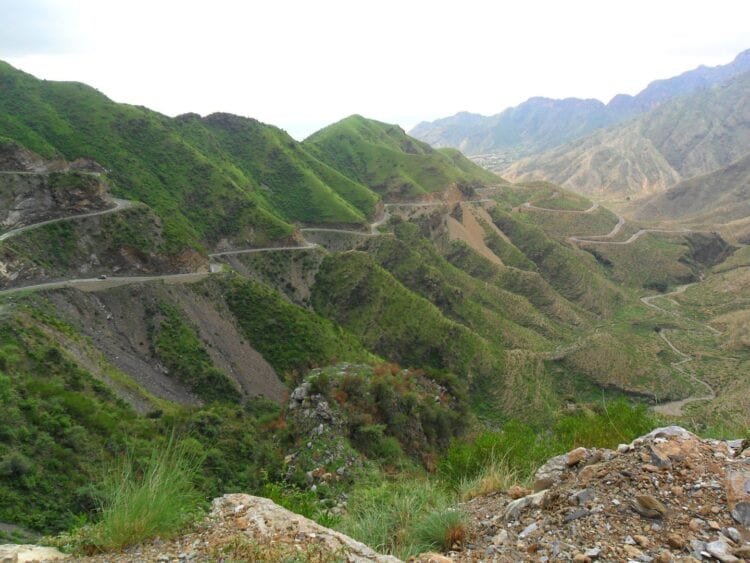
Let us start with the honest pitch: Karakaar will not give you chairlifts, hotels with infinity pools. Also, a food street. What it gives you is rarer — a place where landscape and history collide in a way you can feel. The drive up from either side winds through mature pine forest, the air cooling with every bend, until you crest the pass and the whole of Buner valley opens below you: terraced fields, villages tucked into the foothills, and ridge after ridge fading blue into the distance. It is the kind of view that makes you stop the car without being asked.
Then there is the history, and it is extraordinary. In February 1586, this quiet pass witnessed one of the great disasters in Mughal history. Emperor Akbar sent an army into the Yusufzai country of Swat and Buner, and at Karakar the Yusufzai lashkar under Kalu Khan destroyed it — killing its commander Birbal, one of Akbar’s closest companions, along with thousands of soldiers. Historians call it the worst catastrophe of Akbar’s reign. Standing at the pass today, with only the wind and the pines for company, the scale of that story lands differently than it ever could in a textbook.
Between Pir Baba and Barikot
Karakaar is also perfectly positioned. As a result, it sits on the 45 km road between Pir Baba in Buner and Barikot in Swat, which means it slots beautifully into a wider trip: pair it with the Buddhist-era sites of Barikot, the shrine town of Pir Baba. A trek toward Elum Ghar, the highest and most storied peak in Buner district. And because it is a pass rather than a destination with a gate, visiting costs nothing and crowds are rare. You may well have the viewpoint to yourself, sharing it only with shepherds, pine martens. The occasional truck grinding over the crest.
Finally, Karakaar is a place in transition, which makes now a fascinating time to see it. The approved Karakar Tunnel — part of the Buner Expressway project — will one day cut the Buner–Swat journey dramatically, but today the old pass road still climbs the way it has for generations. Come now and you experience the pass as travelers have for centuries: slowly, on a winding road, earning the view at the top.
History of Karakaar, Buner
The story of Karakaar is, above all, the story of a corridor that empires could not hold. The pass has connected the Swat and Buner valleys since long before recorded history. The natural gate between two fertile valleys in the Hindu Kush foothills, used by traders, armies, and tribes for centuries.
The defining event came in the winter of 1585–86. Emperor Akbar, frustrated by the resistance of the Yusufzai Pashtuns of Swat and Buner, dispatched a Mughal expeditionary force into their territory. In February 1586, near this pass, the Yusufzai lashkar led by Kalu Khan fell upon the Mughal column and annihilated it. The Mughal dead are estimated at anywhere from about 8,000 to 50,000 — the sources vary wildly — but all agree on the central fact: among them was Raja Birbal, Akbar’s commander-in-chief for the campaign and one of his most beloved courtiers. The historian John F.
Richards, in his Cambridge history of the Mughal Empire, identifies it as the greatest disaster faced by the Mughal army during Akbar’s entire reign. The pass is sometimes still called Malandri Pass in older accounts. The battle is remembered locally as the Battle of Malandri Pass.
The Tunnel Under the Old Pass
After the Mughals, the region passed through the familiar succession of northwestern powers — the area later fell under Sikh and then British influence in the 19th century — but Karakaar itself remained what it had always been: a tribal mountain route rather than a garrisoned fortress. In the modern era the pass road was developed as the Pir Baba–Barikot link, a 45 km paved route that remains the lifeline between Buner and Swat.
The newest chapter is the Karakar Tunnel. Also, approved as the centerpiece of the Buner Expressway — a roughly 35 km expressway project estimated at around Rs21 billion — the approximately 2.1 km tunnel is being built to cut through the pass, reducing the Swat–Buner journey substantially once complete. Travelers today cross the pass on the historic winding road; tomorrow’s travelers may go under it. Either way, the pass keeps its history — no tunnel can bury the memory of 1586.
Top Things to Do in Karakaar, Buner
Stand at the Pass Crest and Take in Buner Valley
The essential Karakaar experience is simply to stop at the top. From the crest at around 1,336 metres, the view down into Buner valley is genuinely superb: a patchwork of terraced wheat and maize fields, villages clustered at the foot of pine-covered hills. The valley floor stretching east toward Daggar. Early morning and late afternoon give the best light, when the ridges layer into shades of green and blue. There is no formal viewpoint platform — you park by the roadside and walk a few steps — which keeps the moment feeling discovered rather than staged.
Drive the Historic Pir Baba–Barikot Pass Road
The 45 km road between Pir Baba and Barikot is an attraction in itself. Also, it climbs through mature pine forest via the slopes of Elum Ghar, with hairpin bends, small springs, and occasional glimpses of village life — women carrying firewood, children waving at passing cars, shepherds moving goats along the verge. Take it slowly; the road is paved but narrow in places. The pleasure is in the drive, not the speed. Motorcyclists and road-trippers consistently rate it among the more scenic short pass drives in Khyber Pakhtunkhwa.
Visit the Waterfall Near the Top
A waterfall spills down the mountainside close to the pass crest — known locally in connection with the Asmani Mor viewpoint and sometimes called the Elum or Karakar waterfall. Meanwhile, after rains it runs full and loud; in drier months it thins to a silver thread. In fact, local boys often gather near it, and travelers describe being warmly invited to share food and tea. It is an easy, short stop that adds a lovely natural accent to the pass.
Look Toward Elum Ghar (Mount Ilam)
Dominating the skyline near the pass is Elum Ghar, also called Mount Ilam, the highest peak in Buner district at approximately 2,800 metres. The mountain is revered in local tradition as a sacred peak with ancient religious associations. Its forested slopes are visible from much of the pass road. Serious trekkers can arrange longer hikes toward its upper reaches from nearby villages, but even from the road its bulk gives the whole pass landscape its drama.
Pay Respects at the Shrine of Pir Baba
At the Buner end of the pass road lies Pacha Kalay, home to the shrine of Pir Baba. Also, Syed Ali Tirmizi, the revered 16th-century Sufi saint whose name the town carries. The shrine has drawn devotees for centuries and remains one of the most important spiritual sites in the region. Combining the pass with a visit to the shrine makes for a full and meaningful day, blending natural beauty with living religious heritage.
Famous Places In and Around Karakaar, Buner
- Elum Ghar (Mount Ilam) — Buner’s highest and most storied peak, around 2,800 m, visible from the pass road.
- Pir Baba Shrine — the centuries-old shrine of Syed Ali Tirmizi at Pacha Kalay, at the Buner end of the pass road.
- Barikot, Swat — the historic town at the Swat end of the road, with ancient Buddhist-era archaeological remains.
- Daggar — Buner district headquarters, the main bazaar town for supplies and food.
- Char Sar, Buner — another of Buner’s scenic high spots; see our Char Sar travel guide.
- Asmani Mor — the viewpoint area near the pass crest, close to the waterfall.
How to Reach Karakaar, Buner
Karakaar sits on the Buner–Swat boundary and is reached by road from either side. The most common approach is from Islamabad via the motorway network: take the M-1 toward Peshawar, exit toward Swabi/Mardan, and continue into Buner district toward Daggar and then Pir Baba, from where the pass road climbs west to the crest and down to Barikot in Swat. Also, the full Islamabad–Karakaar journey is approximately 230 km and typically takes 4.5 to 6 hours depending on traffic and road conditions.
From Lahore, the drive is approximately 480 km — usually 8 to 9 hours — via the motorway to the Swabi/Mardan interchanges and onward into Buner. Also, From Karachi, the sensible option is to fly to Islamabad (about 2 hours) and continue by road. The all-road journey from Karachi is roughly 1,400 km and not practical for a short trip. The nearest major airport is Islamabad International Airport. Peshawar’s Bacha Khan International Airport is also a workable gateway for the Mardan-side approach.
The pass road itself is paved and passable by ordinary car in fair weather, though it is narrow and winding. Also, a confident driver or a hired local driver is recommended. In winter the crest can see frost and occasional snow. In the monsoon (July–August) watch for landslips and drive only in daylight. Public transport runs from Mingora and Daggar toward the pass villages, but for a flexible visit a private car, rented SUV, or motorcycle is far better. Tour vans and jeeps can be hired in Mingora (Swat) or Daggar (Buner).
Route Details
- Islamabad → Swabi/Mardan: M-1 motorway to the Swabi or Rashakai interchange (about 1.5–2 hours).
- Mardan → Buner: Continue northeast into Buner district toward Daggar, the district headquarters (about 1.5–2 hours from Mardan).
- Daggar → Pir Baba (Pacha Kalay): Local road to the shrine town at the foot of the pass (under an hour).
- Pir Baba → Karakar Pass crest: The 45 km pass road climbs through pine forest via Elum Ghar’s slopes to the 1,336 m crest (about 1–1.5 hours with photo stops).
- Crest → Barikot, Swat: Descend the western side into Barikot, then onward to Mingora if continuing into Swat.
Where to Stay in Karakaar, Buner
Be clear about this: there are no hotels at the pass itself. Also, Karakaar is a mountain road, not a resort. That is part of its appeal — you visit for the day and sleep in the towns on either side. On the Buner side, Daggar has a spread of modest guesthouses and small hotels serving travelers and shrine visitors. Expect simple, clean rooms at budget-friendly rates rather than luxury. On the Swat side, Barikot has basic guesthouses. Mingora — roughly an hour beyond Barikot — offers the full range from budget hotels to comfortable mid-range options with hot water, Wi-Fi, and restaurants.
For a more memorable night, consider camping. The pine-forest clearings near the pass are beautiful for a tent night in the warmer months, provided you camp responsibly: take all rubbish with you, avoid lighting fires in dry forest, and ask nearby villagers before pitching on grazing land. Adventure travelers sometimes combine the pass with an overnight camp as part of a wider Buner–Swat road trip. Whichever side you choose, book nothing in advance in the off-season — walk-in availability is the norm — but in peak summer (June–August) Mingora’s better hotels can fill up. A phone booking is wise.
Where to Eat: Local Foods of Karakaar, Buner
The food around Karakaar is classic Pashtun highland fare, and it is delicious. In Daggar’s bazaar and the roadside dhabas along the pass route you will find chapli kebab — the flat, griddled minced-meat kebab that Khyber Pakhtunkhwa does better than anywhere — served with hot naan, raita, and salad. Lamb karahi, slow-cooked in tomato and green chili, is another staple, along with kabuli pulao fragrant with carrot and raisin. These are hearty, honest mountain meals, and a full dhaba dinner for two typically costs a modest, budget-friendly amount.
At the pass itself, options are limited to small tea stalls and the hospitality of locals — travelers regularly report being invited to share food and doodh patti (milky tea) near the waterfall, an experience worth more than any restaurant. Stock up on snacks and water in Daggar or Barikot before the climb. If you continue to Mingora, the city’s restaurants add variety, from desi barbecue to Chinese. Buner is also an agricultural district known for wheat, maize, and tobacco. The bread and dairy you eat here are about as fresh as food gets.
Weather in Karakaar, Buner
Karakaar’s weather follows the Buner valley pattern with a mountain twist: the pass crest runs several degrees cooler than the valley floor towns. Buner district averages around 19.6°C annually, with summer highs that can touch the high 30s in the valleys and winter nights that flirt with freezing. At the 1,336 m crest, summer days are pleasantly warm rather than hot, and winter brings frost — occasionally light snow. Rain falls through the year but peaks in the monsoon months of July and August and again with western disturbances in spring.
| Season | Temperature Range (approx.) | Conditions |
|---|---|---|
| Winter (Dec–Feb) | 0°C to 15°C | Cold and crisp at the crest; frost common, occasional light snow; clear views on sunny days |
| Spring (Mar–May) | 10°C to 28°C | Pleasant and green; wildflowers in the meadows; occasional spring showers; excellent for driving the pass |
| Summer (Jun–Aug) | 20°C to 36°C | Warm in the valleys, comfortable at the pass; monsoon rain possible in July–August; waterfall at its fullest |
| Autumn (Sep–Nov) | 8°C to 28°C | Clear skies and golden light; harvest season in the valley; arguably the best photography weather |
Language and Culture of Karakaar, Buner
The people of the Karakaar region are overwhelmingly Yusufzai Pashtuns. Pashto is the language of daily life — in the villages, the bazaars, and the tea stalls. Urdu is widely understood, especially by younger people and anyone in the tourism-facing economy, so visitors will manage fine with Urdu and basic English. The culture is classic Pashtunwali: hospitality (melmastia) is a point of honor. This is why strangers at the pass so often find themselves offered tea and food.
A few cultural notes will serve you well. Dress modestly — for women, a headscarf and loose clothing are appreciated in villages and at the Pir Baba shrine. For men, avoid shorts in rural areas. Ask before photographing people, particularly women. If you visit the shrine, remove shoes where required, keep voices low, and follow the lead of devotees. Friday afternoons are quiet as many shops close for prayers. Respect grazing land and standing crops when walking off the road. This is working farmland, not a park.
Shopping in Karakaar, Buner
There are no souvenir shops at the pass — come for the experience, not the retail. Also, the shopping happens in the bazaar towns on either side. Daggar’s bazaar is the main commercial hub on the Buner side: everyday goods, fresh produce, dry fruits (almonds, walnuts, and apricots from the surrounding valleys), and traditional items like Peshawari chappals and woolen shawls. Barikot and Mingora on the Swat side offer more variety, including Swati embroidery, woodwork, and gemstones from the region’s mines.
There is no shopping mall anywhere near the pass, and that is worth saying plainly. The retail here is bazaar retail, personal and small-scale. If you want a keepsake, buy dry fruits or a handwoven shawl from a Daggar shopkeeper and you will have something genuinely of the place. Bargaining is gentle and expected in the bazaars; a smile goes further than hard haggling.
Travel Tips for Karakaar, Buner
Packing Essentials
Pack for a mountain day: a warm layer even in summer (the crest is breezy), sun protection, sturdy walking shoes for the rocky ground near the viewpoint and waterfall. Also, a rain jacket in monsoon season. Carry drinking water and snacks — there are no proper shops at the top. A power bank is useful since you will be taking photos all day. A small daypack keeps your hands free on uneven ground.
Safety Tips
Karakaar is a peaceful area for travelers, and the pass road is used daily by locals. Drive cautiously — the bends are blind and local trucks take the racing line. Avoid the pass after dark; there is no lighting and livestock wanders onto the road. In winter check locally about frost on the crest before setting out. As anywhere in rural Pakistan, keep valuables out of sight and let someone know your route if you are hiking off the road.
Money & Connectivity
Carry cash: there are no ATMs at the pass, and the nearest reliable ATMs are in Daggar and Mingora. Coverage can drop in dips and behind ridges — download offline maps before you go.. Still, mobile signals from the major networks (Jazz, Telenor, Zong, Ufone) generally work along the pass road and at the crest, Fuel up in Daggar or Mingora; there are no petrol pumps on the pass itself.
Best Time to Visit Karakaar, Buner
Spring (March to May) — The Sweet Spot
Spring is arguably the finest season at Karakaar. Also, temperatures are mild, the hills are at their greenest, wildflowers dot the meadows. Meanwhile, the road is in good condition after winter. The waterfall runs well on spring melt and rain. This is the season for photographers and leisurely road-trippers.
Summer (June to August) — Green and Lively
Summer brings the fullest waterfall, lush forests, and the warm hospitality of peak travel season. The pass crest stays comfortable even when the plains swelter, making Karakaar a genuine cool escape. Also, watch the weather in July and August — monsoon downpours can make the road slippery and reduce visibility.
Autumn (September to November) — Clear and Golden
Autumn offers the clearest skies of the year and magnificent golden light on the valley. Also, harvest activity in the terraced fields adds life to the views. In fact, roads are dry and reliable. For pure scenery, many regulars call October the best month at the pass.
Winter (December to February) — Quiet and Crisp
Winter is for the solitude seekers. The pass is quiet, the air crystal clear, and frost silvering the pines is beautiful — but check conditions before going, as the crest can ice over and the waterfall may freeze to a trickle. Travel midday, carry warm clothing, and confirm the road is open locally.
Final Thoughts
Karakaar, Buner is not the kind of place that shouts for attention. That is precisely why it deserves a place on your itinerary. Also, in a single stop it gives you a sweeping Himalayan-foothill panorama, a pine-forest drive, a waterfall, and one of the most dramatic true stories in South Asian history. The pass where an empire’s army vanished in February 1586. Few destinations anywhere pack that much into a roadside halt.
Go in spring or autumn for the best of it, drive slowly, stop at the crest, and let the history settle in as you look down over the valley the Yusufzai defended so fiercely. Pair it with Pir Baba’s shrine and the road on to Swat. You have a day that blends nature, spirituality, and history in a way no single-attraction destination can match. Karakaar does not need your visit — but your understanding of this corner of Pakistan will be poorer without it.
FAQs
Where is Karakaar, Buner located?
Karakaar (Karakar Pass) is a mountain pass in the Hindu Kush at around 1,336 metres, on the boundary between Buner and Swat districts in Khyber Pakhtunkhwa, Pakistan. Also, it lies on the 45 km road between Pir Baba (Buner) and Barikot (Swat).
What is the best time to visit Karakaar, Buner?
March to November is the recommended window. Also, spring (March–May) and autumn (September–November) offer the best weather and clearest views. Summer is green and lively; winter is quiet but can bring frost at the crest.
How do I reach Karakaar, Buner from Islamabad?
Drive the M-1 to Swabi/Mardan, continue into Buner district to Daggar and Pir Baba, then climb the pass road to the crest — approximately 230 km and 4.5 to 6 hours in total. The nearest major airport is Islamabad International Airport.
What happened at Karakaar in 1586?
In February 1586, the Yusufzai lashkar under Kalu Khan destroyed a Mughal expeditionary army at the pass, killing its commander Birbal — one of Emperor Akbar’s closest companions — along with thousands of soldiers. It is regarded as the worst military disaster of Akbar’s reign.
Is Karakaar, Buner safe for families?
Yes. Also, the area is peaceful and the pass is a public road used daily by locals. In fact, families should travel in daylight, drive carefully on the bends, and carry water and snacks, as there are no restaurants at the top.
Where can I stay near Karakaar, Buner?
There are no hotels at the pass itself. Also, stay in Daggar (Buner side) for simple guesthouses, or in Barikot and Mingora (Swat side) for a wider range of hotels. In fact, camping near the pass is possible in warm months with local permission.
What food is available near Karakaar?
Expect classic Pashtun highland food: chapli kebab, lamb karahi, and kabuli pulao at dhabas in Daggar and along the route, plus tea stalls at the pass. Also, travelers are often offered tea and food by locals near the waterfall.
What is the Karakar Tunnel project?
The Karakar Tunnel is an approximately 2.1 km tunnel approved as part of the Buner Expressway project (around 35 km, estimated at about Rs21 billion). Also, once complete, it will pass under the Karakar Pass and substantially cut travel time between Buner and Swat.