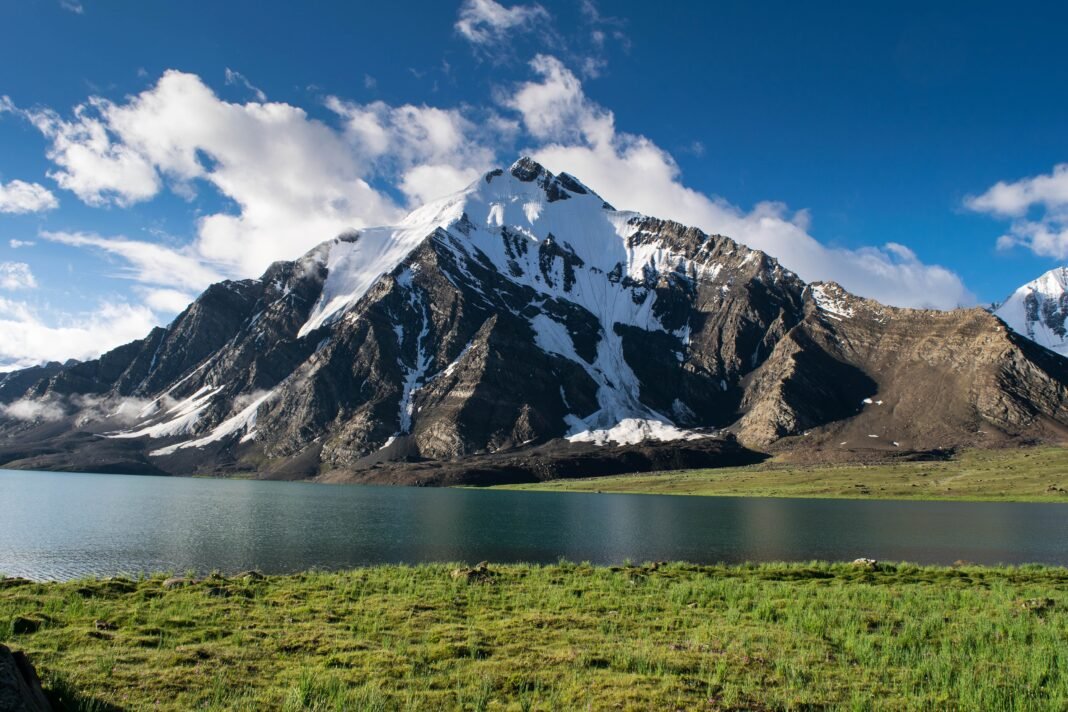
There are lakes you drive to, lakes you walk to, and then there are lakes you earn. Karambar Lake — also written Qurumbar or Karomber — sits at around 4,272 metres in the far northern mountains where Gilgit-Baltistan meets Chitral and the Afghan Wakhan Corridor begins, and reaching it takes a jeep ride to the end of the road plus a high-altitude trek across yak pastures. The reward is one of the highest biologically active lakes on Earth: nearly 4 kilometres of impossibly clear blue water ringed by snow peaks, with water so transparent it holds the highest clarity reading ever recorded for a lake in Pakistan. This Karambar Lake travel guide will help you decide whether this expedition belongs on your list — and exactly when to attempt it. For the wider valley context, see our Ishkoman Valley guide, our Chitral guide, and the Explore Pakistan collection.
Let us be honest up front: Karambar is not a casual day trip. It is a serious multi-day adventure for trekkers, photographers, and mountain lovers who have already done the easy lakes and want the real thing. If that sounds like you, keep reading — because very few places in Pakistan deliver a payoff like this one.
Quick Facts
- Location: Ishkoman Valley, District Ghizer, Gilgit-Baltistan — near the boundary with Chitral (Khyber Pakhtunkhwa) and the Wakhan Corridor of Afghanistan
- Altitude: Around 4,272–4,300 m (roughly 14,000–14,100 ft); sources vary slightly
- Famous For: Being Pakistan’s second-highest lake, among the world’s 35 highest lakes, with record water clarity and exceptional alpine scenery
- Nearest City: Gilgit, about 205 km away; Gahkuch (Ghizer district headquarters) is the nearest major town
- Accessibility: Jeep track to Gharail village, then a 2–3 day high-altitude trek; no road to the lake
- Known Landmarks: The lake itself, Karambar Pass, Lashkargaz village, Broghil Valley, Qurumbar National Park
- Best For: Experienced trekkers, adventure travelers, landscape photographers, and wilderness campers
Why Visit Karambar Lake
Start with the numbers, because they are staggering. Karambar stretches 3.9 kilometres long and 2 kilometres wide, with an average depth of 52 metres — making it the deepest lake in its valley — and a surface area of about 2.63 square kilometres, the second largest of any lake in northern Pakistan after Attabad. Its water clarity, measured at 13.75 on the Secchi disc scale, is the highest value ever recorded in the scientific literature on Pakistan’s lakes. In plain language: this is a vast, deep, astonishingly clear alpine lake sitting higher than almost any other lake you can visit in the country.
The Moment the Lake Appears
But numbers do not capture what it feels like to arrive. After days of travel — the jeep grinding up the Ishkoman or Broghil track, then the trek across high pastures where yaks graze and the only sounds are wind and meltwater — the lake appears suddenly, a sheet of cerulean blue cupped by snow-streaked peaks. Travelers consistently describe the moment as overwhelming: the scale, the silence, the sense of standing somewhere genuinely remote. The mountains on the lake’s northern side form the border with Afghanistan’s Wakhan Corridor. You are looking at one of the great crossroads of Central Asia.
Karambar is also one of the highest biologically active lakes on Earth, part of the Hindu Kush-Himalaya region — one of the world’s richest biodiversity zones — and since 2011 the surrounding area has been protected as Qurumbar National Park. As a result, that protection matters: it means the pastures, the birdlife. The fragile alpine ecosystem have a fighting chance against the pressures that have degraded easier-to-reach destinations.
And there is the exclusivity of effort. Also, Karambar cannot be done as a selfie stop. The trek filters out the crowds. The people you meet at the lake — a handful of trekkers, Wakhi herders, perhaps a research team — share the place in something close to silence. If you have ever wanted to know what the high Himalaya and Hindu Kush felt like before tourism, Karambar is one of the last places that can still tell you.
History of Karambar Lake
Karambar has no ancient monuments and no recorded battles; its history is the history of its valleys. Also, the lake sits at the meeting point of three worlds: the Ishkoman Valley of Ghizer to the east, the Broghil and Yarkhun valleys of Chitral to the west. The Wakhan Corridor of Afghanistan to the north. For centuries these high valleys were summer pastures for Wakhi and Khowar-speaking herders. The routes around the lake were known to shepherds, traders, and the occasional explorer long before any tourist arrived.
Ishkoman or Broghil: The Borderland Debate
The lake’s location has been genuinely debated. Most references, including Wikipedia, place it in Ishkoman Valley, District Ghizer, Gilgit-Baltistan. Its waters drain eastward toward Ishkoman, and it lies within Qurumbar National Park, notified in 2011. Other accounts note that the lake sits essentially on the boundary — the Karambar Pass separates the Broghil side (Chitral, Khyber Pakhtunkhwa) from the Ishkoman side, and trekkers most commonly approach from the Chitral/Broghil direction. Rather than a contradiction, this reflects the lake’s borderland nature: it belongs to the high frontier zone where provinces and countries blur.
Karambar entered Pakistan’s travel consciousness only in recent decades, as trekking pushed beyond the Karakoram’s famous valleys into the remoter Hindu Kush. Early expedition accounts and later travel writing — including a well-known Dawn travelogue describing the jeep ride to Gharail, the trek through Lashkargaz, and nights under the stars at the lake — fixed its reputation as the ultimate northern lake trek. Also, scientific interest followed: limnological studies established its record water clarity and its status among the world’s highest biologically active lakes. Its inclusion in Qurumbar National Park gave it formal protection.
Today Karambar remains deliberately undeveloped — no road, no hotel, no tea stall at the shore — and that is its greatest asset. The annual Broghil Festival each July has brought wider attention to the region. The lake itself still demands the full trek, which keeps it wild.
Top Things to Do in Karambar Lake
Trek to the Lake via Lashkargaz
The trek is the experience. From Gharail — the last village reachable by jeep — the trail runs about 24 kilometres to the lake, typically done over two to three days with an overnight at Lashkargaz village, roughly two hours from Gharail. Also, the path crosses high yak pastures, passes small tarns and springs, and climbs steadily toward the Karambar Pass area. In fact, hire a local porter or guide at Lashkargaz. The trail is unmarked in places and the weather can change in minutes. Walk slowly — at over 4,000 metres, altitude affects everyone.
Camp on the Shore Under the Stars
Camping at Karambar is the payoff the trek promises. Pitch your tent on the grassy shore, and as evening falls the lake turns from blue to silver to black, with snow peaks catching the last light. Also, night skies here, far from any town’s glow, are among the darkest in Pakistan. The Milky Way in high summer is genuinely spectacular. Bring a four-season tent and a warm sleeping bag; even in August, nights at 4,272 metres hover near freezing.
Photograph One of Pakistan’s Clearest Lakes
With record water clarity and a vast, uncluttered shoreline, Karambar is a landscape photographer’s dream. Also, the classic compositions — the lake’s blue water against the snow pyramid peaks, yaks grazing the green shore meadows, reflections at dawn — need no filter. In fact, morning light is usually calmest for reflections; afternoons bring wind and chop. A polarizing filter helps cut the high-altitude glare.
Watch for Wildlife in Qurumbar National Park
The national park around the lake protects Himalayan and Pamir-region fauna. Also, keep binoculars handy for golden eagles, lammergeiers, and high-altitude songbirds. With luck and a local guide you may spot ibex on the crags or hear of the elusive snow leopard that ranges these mountains. The meadows also host hardy alpine wildflowers in the short summer — a brief, brilliant bloom between July and September.
Meet the Wakhi Herders
The summer pastures around the lake belong to Wakhi herders who bring yaks, sheep, and goats up from the valleys. Also, Wakhi is an oral language with no script. In fact, the herders’ way of life — moving with the seasons, living in stone huts, measuring wealth in yaks — has changed little in generations. A respectful greeting, an offer of tea from your own supplies. A local guide to translate can open a window onto one of Pakistan’s most distinctive mountain cultures.
Famous Places In and Around Karambar Lake
- Karambar Pass — the high pass separating the Broghil (Chitral) side from the Ishkoman (Ghizer) side, with commanding views.
- Lashkargaz Village — the classic overnight stop on the trek, with small lakes and marshes nearby.
- Broghil Valley — the vast high valley to the west, home of the July Broghil Festival and its yak polo.
- Ishkoman Valley — the long, quiet valley on the Gilgit-Baltistan side; see our Ishkoman Valley travel guide.
- Chitral and the Yarkhun Valley — the approach valleys from the west; see our Chitral travel guide.
- Attabad Lake — northern Pakistan’s largest lake by surface area, for comparison; see our Attabad Lake guide.
How to Reach Karambar Lake
Reaching Karambar is a genuine expedition, so plan it as one. The standard routing starts in Gilgit: drive west to Gahkuch (Ghizer district headquarters, about 90 km), then continue up the Ishkoman Valley through Chatorkhand and Immit. The jeep track ends at Gharail village — from here, the lake is still about 24 kilometres on foot. The full journey from Gilgit to the lake typically takes four days round trip: one long day of jeep travel each way, plus two to three days of trekking with a night at Lashkargaz. An alternative approach comes from the Chitral side via Mastuj, the Yarkhun Valley.
Broghil — longer overall, but combinable with the Broghil Festival in July.
From Islamabad, fly to Gilgit (about 1 hour, weather permitting) or drive the Karakoram Highway via Besham and Chilas — roughly 600 km and 12–14 hours. From Lahore, add the motorway leg to Islamabad first. Starting from Karachi, fly to Islamabad and connect onward. Also, the all-road option is impractical for a trek of this length. In fact, there is no airport anywhere near the lake itself, and no public transport beyond the main valley towns. You will need a hired 4×4 jeep with a driver who knows the upper tracks, plus porters or pack animals for the trek.
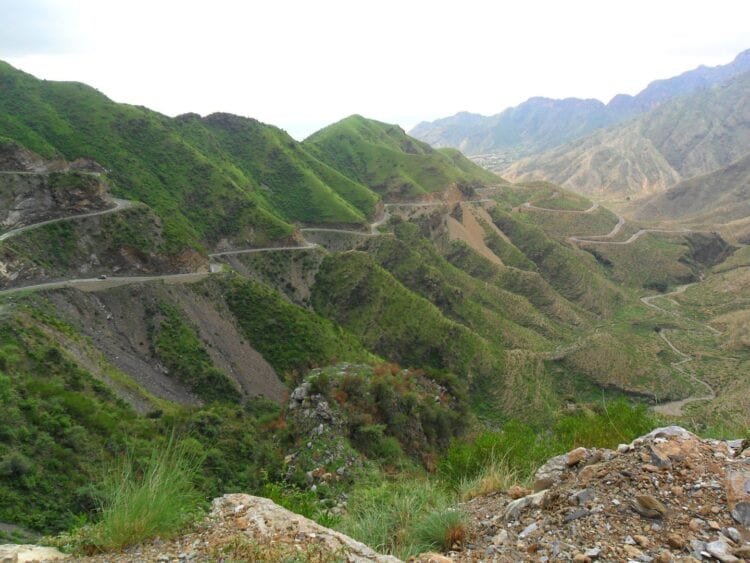
Road conditions are the crux: the upper Ishkoman and Broghil tracks are rough, narrow, river-crossed jeep trails, passable only from about June to October. Also, in winter the entire region is snowbound — five to six feet of snow is normal — and all links disconnect. In fact, travel with an experienced local operator, register at checkpoints as required (the area borders the Wakhan Corridor, and entries are recorded), and build buffer days for weather.
Route Details
- Islamabad → Gilgit: Fly (about 1 hour, weather-dependent) or drive the Karakoram Highway via Besham–Chilas (about 600 km, 12–14 hours).
- Gilgit → Gahkuch → Ishkoman: Drive west along the Gilgit–Shandur road to Gahkuch, then up the Ishkoman Valley through Chatorkhand to Immit (full day).
- Immit → Gharail: Continue by 4×4 jeep to Gharail, the last village on the track; register your entry as required.
- Gharail → Lashkargaz: Begin trekking; about 2 hours to Lashkargaz village — hire porters here and overnight.
- Lashkargaz → Karambar Lake: Trek onward across high pastures to the lake (a full day); camp on the shore.
- Return: Retrace the route, allowing a buffer day for weather — four days minimum for the whole Gilgit-to-Gilgit circuit.
Where to Stay in Karambar Lake
Honesty first: there are no hotels at Karambar Lake, and there should not be. As a result, accommodation on this trek means tents — your own four-season tent, or tents arranged through a trekking operator. In fact, camp on the grassy shore terraces above the waterline, well away from herders’ grazing areas, and practice strict Leave No Trace: carry out everything, bury human waste properly, and never wash directly in the lake.
On the approach, the valley villages offer very basic guesthouses — simple rooms in places like Immit and Ishkoman town, with home-cooked food if arranged in advance. During the Broghil Festival in July, organizers set up a tent village for visitors in Broghil. This can serve festival-goers combining the event with the region. In Gilgit and Gahkuch, mid-range hotels are available for your staging nights. Book jeeps, porters, and any operator services from Gilgit or Chitral town before heading up. There is no tourism infrastructure to improvise with at the top.
Where to Eat: Local Foods of Karambar Lake
On the trek, you eat what you carry — and your porters and guide will expect you to have arranged provisions. Also, in the valleys, the food is hearty mountain fare. In fact, Chitrali cuisine features wheat breads baked in clay ovens, dairy products, and — distinctively — yak meat. In addition, this locals prize for its flavor. Yaks graze wild through winter, and their meat is a staple protein of the high valleys. Expect simple, filling meals: lentils, rice, potatoes, eggs, and endless salted or milky chai.
Carry high-energy trek food from Gilgit or Chitral town: dried fruits and nuts (the valleys produce excellent apricots and walnuts), energy bars, instant noodles, and tea. Your cook or guide can prepare hot meals at camp if you have arranged a kitchen setup. Water from the lake’s inlet streams is generally clean, but purify it — tablets or a filter are essential at this altitude, where stomach trouble can end a trek. Do not expect restaurants, dhabas, or shops beyond the main valley villages.
Weather in Karambar Lake
At around 4,272 metres, Karambar’s weather is genuinely alpine: a short, cool summer and a long, brutal winter. Also, the lake is typically frozen from January to April, and snow five to six feet deep cuts off the entire region in winter — even the valleys below become isolated. Summer days are cool and bright, nights near freezing, and weather can swing from sunshine to sleet within an hour. The only realistic visiting window is July to September, when the tracks are open and the pastures are green.
| Season | Temperature Range (approx.) | Conditions |
|---|---|---|
| Winter (Dec–Apr) | -25°C to -5°C | Lake frozen; 5–6 ft snow; region completely cut off; no access |
| Spring (May–Jun) | -5°C to 10°C | Thaw begins; tracks still blocked early on; late June openings possible |
| Summer (Jul–Sep) | 0°C to 15°C | The visiting season; cool days, near-freezing nights; afternoon showers possible |
| Autumn (Oct–Nov) | -10°C to 5°C | Tracks close with first heavy snow; brief golden window, then winter |
Language and Culture of Karambar Lake
The high valleys around Karambar are home to Wakhi-speaking herders. Wakhi is an oral language with no written script, and outsiders find it famously difficult to learn. In the Yarkhun and lower valleys, Khowar (the language of Chitral) dominates, and on the Ishkoman side you will also hear Shina and Burushaski influences. Urdu works with guides, drivers, and shopkeepers in the towns, but on the trek your guide is your translator.
Culturally, this is a world shaped by altitude. Life follows the yak: herders move stock to the high pastures in summer and retreat before winter, selling yaks in Chitral to buy winter supplies. Hospitality is generous but the environment is unforgiving — accept offered tea and shelter gratefully, ask before photographing people, and respect grazing land and water sources. The Ismaili Muslim communities of the upper valleys are known for their emphasis on education and openness to visitors. Modest dress and courteous behavior are appreciated everywhere.
Shopping in Karambar Lake
There is nothing to buy at the lake, and nothing to buy on the trek — plan accordingly. Also, the shopping happens in the staging towns. In Gilgit and Chitral town, stock up on trek supplies, and consider genuine local products: Chitrali woolen shawls and the famous Chitrali topi (cap), handwoven woolen socks, dried apricots, walnuts, and mulberries from the valleys. Yak-wool handicrafts appear in some Chitral shops.
There are no malls, no souvenir stalls, and no ATMs beyond the main towns — withdraw cash in Gilgit or Chitral and carry everything you need. The best souvenir from Karambar is not something you can buy anyway: it is the photograph of that blue water under the snow peaks. Also, the knowledge that you earned it.
Local Events and Festivals
If you can time your expedition for mid-July, do it: the annual Broghil Festival (Jashan-e-Broghol) takes place each year in mid-July in the Broghil Valley, on the Chitral side of the Karambar region. Held at around 3,690 metres, it is one of Pakistan’s most extraordinary cultural events — yak polo and yak races (a spectacle found almost nowhere else on earth), freestyle horse polo, buzkashi, donkey polo, horse and donkey races, tug of war, wrestling, and traditional Wakhani music, with a tent village set up for visitors. Organized with the Khyber Pakhtunkhwa tourism authorities and the Upper Chitral district administration, it draws Wakhi, Tajik.
Kyrgyz communities from both sides of the nearby Afghan border. Combining the festival with a Karambar trek makes for the ultimate high-summer northern expedition — but book jeeps and tents well ahead, as the tent village fills up.
Travel Tips for Karambar Lake
Packing Essentials
This is a serious high-altitude trek: four-season tent, sleeping bag rated well below freezing, insulated jacket, waterproof shell, warm layers, sturdy broken-in trekking boots, sun protection (the UV at 4,272 m is fierce), water purification, a comprehensive first-aid kit including altitude-sickness medication (consult your doctor), and enough food for the trek plus a buffer day. A satellite communicator is worth serious consideration — there is no mobile signal on the upper trek.
Safety Tips
Altitude is the main risk: ascend gradually, hydrate constantly, and know the symptoms of acute mountain sickness — descend immediately if they worsen. Also, never trek alone; go with a local guide who knows the route and the weather signs. Register at checkpoints as required near the border zone. River crossings on the jeep track can be dangerous after rain — trust your driver’s judgment. Inform someone of your itinerary and expected return.
Money & Connectivity
Carry all cash from Gilgit or Chitral — there are no ATMs, banks, or card facilities anywhere on the route. Also, budget for the 4×4 jeep, porters or pack animals, guide fees, food, and camping fees where applicable. Agree all prices before departure. Mobile signals fade out beyond the main valley villages; the upper trek has no coverage on any network. Download offline maps and carry a power bank or solar charger.
Best Time to Visit Karambar Lake
Summer (July to September) — The Only Real Window
This is when Karambar is accessible and at its best. July brings the Broghil Festival, green pastures, wildflowers. The warmest weather (days up to around 15°C). August is settled and clear — prime trekking. Nights get colder and early snow is possible late in the month.. Still, September is quieter, with golden light and fewer travelers,
June — Early Season Gamble
Late June can work in a light snow year, with the landscape fresh and empty — but tracks may still be blocked and you must confirm locally before committing. Not recommended for first-timers.
October — The Door Closes
Early October sometimes offers a last golden window, but the first heavy snowfall can close the tracks without warning. Only for experienced, self-sufficient teams with flexible plans.
November to May — Inaccessible
Winter at Karambar is absolute: the lake frozen, snow measured in feet, the valleys cut off. Also, do not attempt. In fact, the herders themselves leave for Chitral.
Final Thoughts
Karambar Lake is not for everyone, and that is exactly the point. It asks for fitness, planning, warm clothing, and several days of your life — and in return it gives you one of the most pristine high-mountain experiences left in Pakistan: a vast, record-clear lake at 4,272 metres, cupped by snow peaks on the edge of the Wakhan, shared with yaks and herders and almost no one else.
If you are a trekker looking for the next great objective after the Karakoram’s famous trails. Meanwhile, a photographer chasing the ultimate alpine composition, put Karambar on your list for next July or August. Go prepared, go respectfully, and go with a good local guide. And you will come back with a story that few travelers can match. Some lakes you visit. Karambar is one you earn.
FAQs
Where is Karambar Lake located?
Karambar Lake (also called Qurumbar or Karomber Lake) lies in the Ishkoman Valley of District Ghizer, Gilgit-Baltistan, near the boundary with Chitral (Khyber Pakhtunkhwa) and Afghanistan’s Wakhan Corridor. Its waters drain toward Ishkoman, and it sits within Qurumbar National Park.
What is the best time to visit Karambar Lake?
July to September is the only reliable window. July offers the Broghil Festival and green pastures; August is the most settled trekking month; September is quieter but colder. Also, the lake is frozen and the region snowbound from roughly December to April.
How do I reach Karambar Lake?
Travel to Gilgit, drive up the Ishkoman Valley to Gharail (the last jeep-accessible village), then trek about 24 km via Lashkargaz to the lake — typically 2–3 days on foot. The full Gilgit-to-Gilgit circuit needs at least four days. A 4×4 jeep, local guide, and porters are essential.
How high is Karambar Lake?
Sources place it at around 4,272–4,300 metres (roughly 14,000–14,100 ft) above sea level, making it Pakistan’s second-highest lake after Rush Lake and usually ranked among the 35 highest lakes in the world.
Is Karambar Lake safe for trekkers?
For fit, well-prepared trekkers with a local guide, yes — but it is a serious high-altitude trek. Also, the main risks are altitude sickness, sudden weather changes, and river crossings. Go with an experienced operator, acclimatize, carry proper gear, and never trek alone.
Can families visit Karambar Lake?
Karambar is not suitable for young children or elderly travelers — the multi-day trek at over 4,000 metres is demanding. Also, fit teenagers with trekking experience can manage it with a good guide. For example, families are better served by drive-up lakes like Attabad or Saif-ul-Malook.
Where can I stay near Karambar Lake?
There are no hotels at the lake — you camp in tents on the shore. Also, basic village guesthouses exist in the Ishkoman Valley towns on the approach. A tent village is set up in Broghil during the July festival. Arrange jeeps, porters, and tents from Gilgit or Chitral.
What is the Broghil Festival?
The annual Broghil Festival (Jashan-e-Broghol), held each mid-July in the Broghil Valley near Karambar, features yak polo and yak races — found almost nowhere else on earth — plus freestyle polo, buzkashi, donkey polo, tug of war, and traditional Wakhani music, with a tent village for visitors.