Pakistan Offers Central Asia a Gateway to Global Trade
Pakistan has pitched a Pakistan Central Asia trade gateway to landlocked Central Asian states, offering its three major seaports as their route to international markets. Minister for Board of Investment Qaiser Ahmed Sheikh made the case at the opening session of the Second Tianshan Forum for Central Asian Economic and Quality Investment in Almaty, Kazakhstan, on Monday, 2 November.
Sheikh told the forum that Pakistan could serve as an important trade and transit corridor for countries with no coastline of their own. He said the corridor would give them access to maritime trade routes and global markets, according to a Board of Investment press release reported by Dawn.
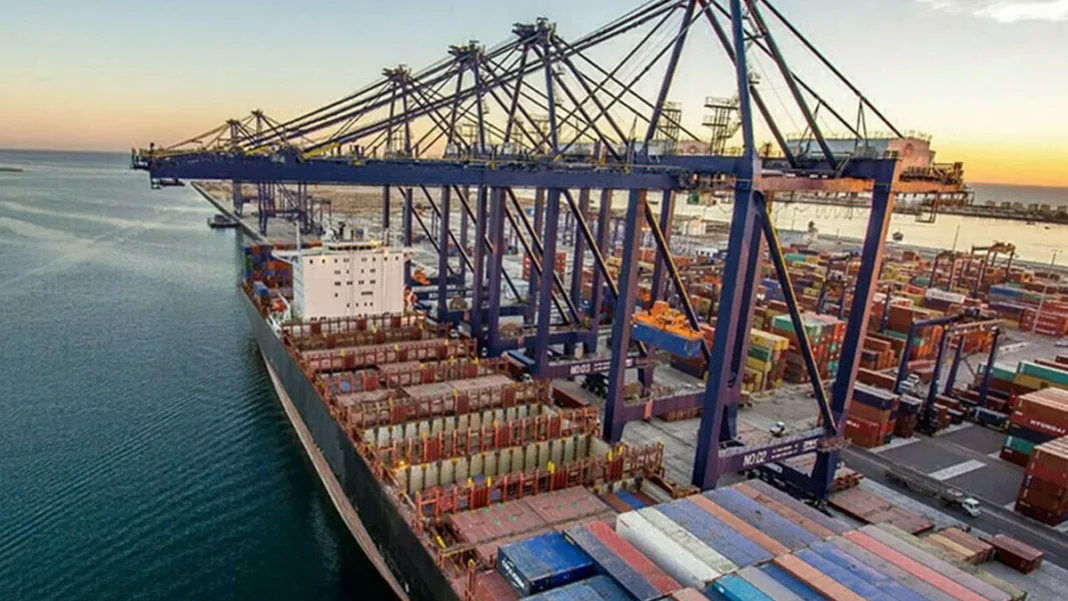
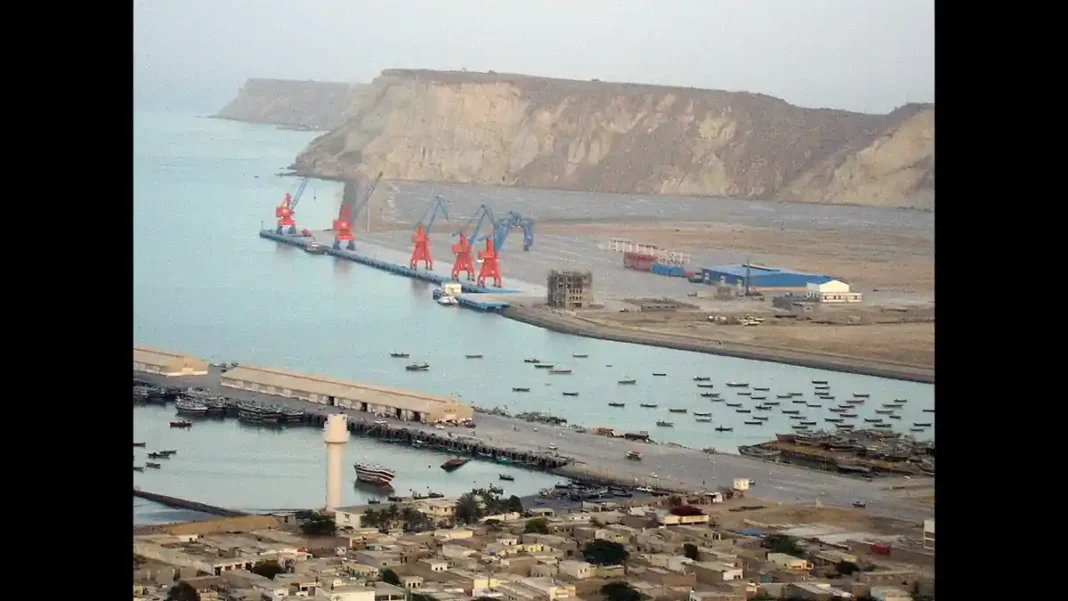
He named Karachi Port, Port Qasim and Gwadar Port as strategic gateways that could ease regional trade, strengthen transport links and provide alternative routes for goods. The pitch puts Pakistan’s ports, rather than any single road or rail link, at the centre of its Central Asia offer.
Why Karachi and Gwadar lead the pitch
Sheikh gave Karachi a central place in the argument. He described the city as Pakistan’s major industrial and commercial hub, with an established industrial base, business infrastructure, financial institutions and port facilities. That combination, he said, opened clear opportunities for trade, industrial partnerships and foreign investment.
He also pointed to Gwadar’s potential to strengthen regional connectivity and economic cooperation. Gwadar sits on the Arabian Sea coast of Balochistan, and its deep-sea port has long been presented as a second southern outlet for trade from Pakistan and beyond. Pakistan’s sea ports and maritime trade explain how the country’s ports handle the bulk of its external trade, while Pakistani ports have recently reported a historic surge in activity.
The minister invited regional and international investors to look at energy, infrastructure, logistics, transportation, manufacturing and trade. He said improved connectivity and reliable energy supplies were essential to realise the region’s economic potential, and he argued that connectivity was about more than roads, ports and markets. In his words, it was also about connecting economies, creating investment opportunities, generating employment and building shared prosperity across the region.
A second report of the same speech, by ARY News, added that Sheikh said nearly 60 per cent of Pakistan’s population was young, giving the country a large workforce for the growth he described.
The forum and the CAREC backdrop
The two-day forum, held under the theme “Strengthening Resilient Connectivity and Quality Investment in Central Asia”, was due to conclude in Almaty on Tuesday. It followed the inaugural Tianshan Forum for Central Asia Economic Cooperation and was aligned with the new CAREC Institute Strategy 2026-2030 and the CAREC 2030 Strategy Midterm Review Rolling Implementation Action Plan.
Sheikh acknowledged the work of the Central Asia Regional Economic Cooperation (CAREC) Programme in promoting transport connectivity, easing trade and supporting economic integration. He described CAREC as a valuable platform for stronger economic partnerships between Pakistan and Central Asian states.
The forum’s own agenda set out why that work mattered. It said the CAREC region faced a highly uncertain external environment in 2026, with geopolitical tensions raising energy and food prices, disrupting transport and logistics, and weakening the reliability of trade corridors. Intra-regional trade stayed limited, the agenda said, because of similar economic structures, weak production complementarities and incomplete market opening.
It also listed persistent bottlenecks, uneven infrastructure, fragmented asset management and capacity mismatches, plus non-physical barriers such as inconsistent customs procedures, weak digitalisation and inefficient border operations.
Representatives from development banks, financial institutions, governments, business and academia attended to discuss transport, trade, logistics, energy and digital connectivity.
Why the Pakistan Central Asia trade gateway matters
For Pakistan, the pitch is a bid to turn geography into income. A transit role for Central Asian cargo would mean more port traffic, more logistics work and more reason for investors to look at warehousing, transport and manufacturing near the ports. That is the minister’s argument, and it matches the direction of recent coverage: Pakistan and China have upgraded their economic partnership under CPEC, Pakistan has built new road links towards Central Asia and China, and Pakistan has signed a free trade agreement with the Gulf states.
The test will be delivery. Central Asian traders already use several routes, and they will judge Pakistan’s offer on port capacity, border clearance times and the cost of moving a container to a ship. The speech announced no new transit deal, tariff cut or construction start. It was a pitch, backed by a forum, not a finished agreement.
Still, the timing matters. With Gulf shipping disrupted and regional corridors under strain, a credible southern route through Pakistan would give Central Asian traders an alternative they do not have today. The next step is whether anyone at Almaty follows the speech with a concrete project.
Frequently asked questions
What did Pakistan pitch at the Tianshan Forum?
Pakistan pitched its Karachi, Port Qasim and Gwadar ports as strategic gateways for Central Asian trade, offering landlocked states access to maritime routes and global markets.
Who made the pitch, and where?
Minister for Board of Investment Qaiser Ahmed Sheikh made the pitch at the opening session of the Second Tianshan Forum for Central Asian Economic and Quality Investment in Almaty, Kazakhstan, on 2 November 2026.
Which sectors did Sheikh invite investors to explore?
He invited investors to explore energy, infrastructure, logistics, transportation, manufacturing and trade, and said improved connectivity and reliable energy supplies were essential for the region.
What is CAREC, and why did it feature in the speech?
The Central Asia Regional Economic Cooperation Programme promotes transport connectivity, trade facilitation and economic integration among participating countries, and Sheikh described it as a valuable platform for partnerships between Pakistan and Central Asian states.
Did the forum announce a new transit deal?
No. The speech was an investment pitch, and no new transit deal, tariff cut or construction start was announced in the reports of the forum.