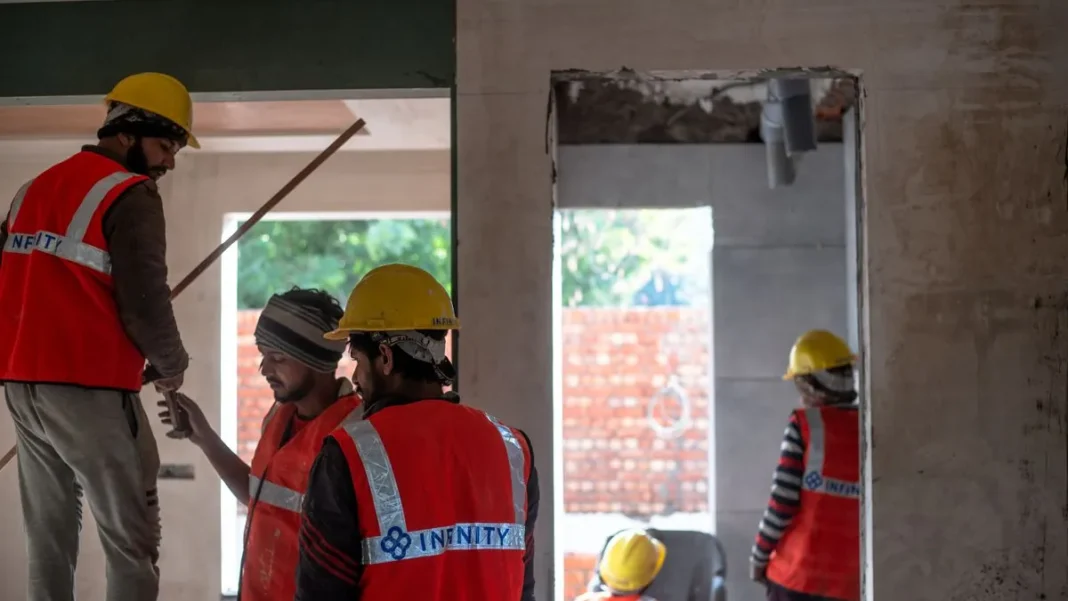
The Punjab Labour Code 2026 extends legal cover to workers who have long stood outside the protection of labour law, including domestic staff, farm workers, construction workers and people who earn through digital platforms.
It reaches workers in offices, shops and factories, in homes and on farms and building sites, and those who earn through apps and online platforms. Its focus is on the basics of fair work: a minimum wage, pay on time, set working hours, overtime pay, leave, fair dismissal rules, freedom from discrimination and safety at work.
For the first time, gig workers who take jobs through apps and online platforms come under the same legal umbrella as factory and office staff. Domestic workers and farm hands, who have often worked without written contracts, also gain formal cover.
What the Punjab Labour Code 2026 changes
Workers who face late pay, unpaid overtime or unfair dismissal now have a legal route to challenge it. The aim is to spell out what employers and institutions owe their workers, so that work is dignified and safe.
The code matters because enforcement has been the weak point of labour law in Pakistan. Labour is a provincial subject since the 18th Constitutional Amendment devolved it to the provinces in 2010, and each province now writes and enforces its own labour rules. Punjab’s new code replaces a patchwork of older laws with a single framework.
The need for cover is clear from the numbers. Punjab has more than 210,000 documented kiln workers, and more than 2,900 victims of forced labour were recorded in the province last year, according to a Dawn editorial published on November 6. Many workers still earn far below the legal minimum wage, and enforcement has relied on spot checks that rarely happen.
The code also arrives after the Punjab cabinet approved a minimum wage of Rs40,000 a month for workers. Pakistan Today reported in August 2025 that the cabinet had approved the wage along with 3,000 new residential flats for labourers in industrial areas. The wage decision sets the floor that the new code is meant to enforce.
How workers can use the new law
Legal guidance under the code sets out clear steps for workers who are not paid on time, denied overtime or dismissed without notice.
- Start by gathering proof. An appointment letter, salary record, bank statement, attendance record, duty hours, WhatsApp messages and a written dismissal order can all support a claim.
- Put the complaint in writing to the employer or the institution concerned, stating how much is owed and for which months or overtime hours.
- Hold on to proof that the application reached them, in case the matter goes to a tribunal or court.
The Punjab Labour Helpline 1314 can take complaints and point workers to the Labour Department for guidance. But a call is only a first step: a written complaint and a formal legal claim are what make a case hold up before a tribunal or a court.
The guidance is practical. Many workers lose cases because they cannot prove what they were owed, and a bank statement or a WhatsApp message recording duty hours can carry real weight.
What it means for Punjab households
The code will matter most in homes and on farms, where work has rarely been documented. Domestic workers in Lahore and other cities often work without appointment letters, and farm workers in rural Punjab are paid in cash, with no record of hours. The new rules give both groups a paper trail to point to.
Lahore food prices stayed far above official rates last week, which shows how tight household budgets already are. For low-paid workers, a delayed salary can mean a missed rent payment or a skipped meal. Salaried workers already pay far more tax than the real estate sector, and the PM’s youth loan limit has been raised to Rs25 million to help young people start work. Punjab heatwaves have also cut farm incomes, while smog continues to choke the province.
The code does not raise wages by itself. Its value lies in giving workers a way to claim what the law already promises.
What happens next
The Labour Department will now have to turn the code into practice. Workers should note the helpline number, 1314, and keep copies of their appointment letters, pay slips and duty records. Employers, for their part, will need to bring contracts and pay practices in line with the new rules. Whether the code changes daily life for workers will depend on how firmly it is enforced in the months ahead.
Frequently asked questions
What is the Punjab Labour Code 2026?
It is a new labour law for Punjab that extends legal cover to workers in offices, shops, factories, households, construction, agriculture and digital platforms, including gig workers.
Who does the code cover?
It covers office, shop and factory staff, household and domestic workers, construction workers, agricultural workers and people who work through digital platforms.
What rights does it protect?
Minimum wages, timely salary payment, working hours, overtime compensation, leaves, termination of employment, protection from discrimination and workplace safety.
How can a worker complain about unpaid wages?
Preserve evidence such as an appointment letter, bank statement and duty records, then submit a written application to the employer stating the amount and period owed. Complaints can also be registered through the Punjab Labour Helpline 1314.
What is Punjab’s minimum wage?
The Punjab cabinet approved a minimum wage of Rs40,000 a month for workers in August 2025.