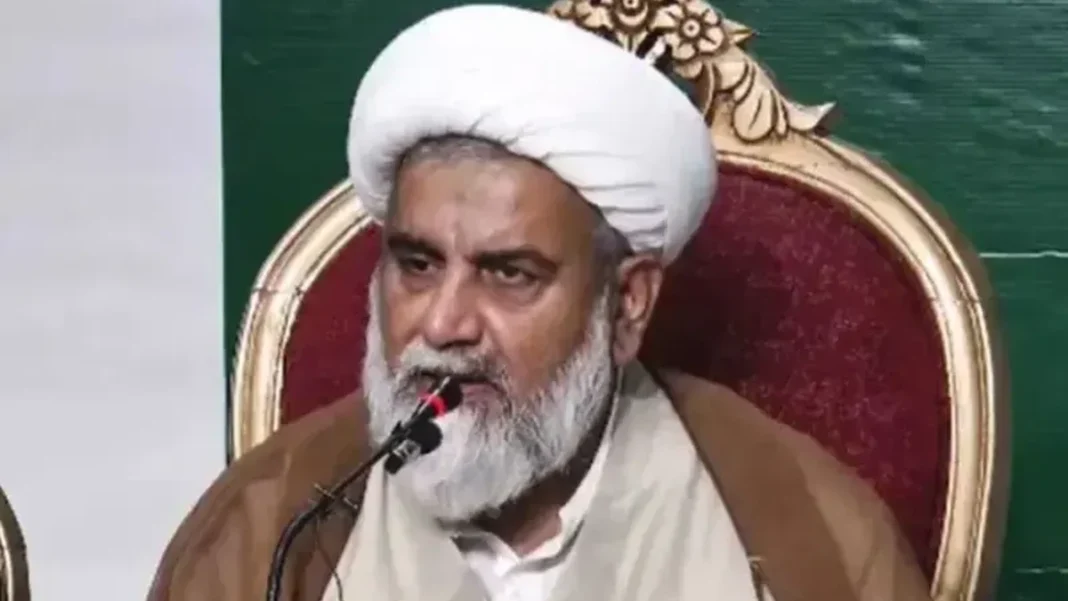
Senate opposition leader Allama Raja Nasir Abbas has urged the government to keep Pakistan out of the Yemen conflict and take up a mediatory role instead, warning that setting aside parliament’s unanimous 2015 resolution would harm national interests.
Abbas, who leads the opposition in the Senate and heads the Majlis Wahdat-i-Muslimeen (MWM), spoke on Sunday at the Shuhada-i-Muqawamat and Tajdeed-i-Ahd Conference in Islamabad. He said parliament had decided in 2015 that Pakistan would not become part of the Yemen conflict or send its troops there.
“On whose authority is Pakistan being made a party to this conflict?” he asked. He called on the government to pull the country out of what he described as a dangerous situation. Dawn reported the speech in full in its November 9 edition.
Why the Yemen conflict still divides opinion
The Yemen conflict has returned to debate in Islamabad in recent weeks. Abbas had first sounded the warning in the Senate on October 20, asking for a briefing on Yemen and recalling the 2015 resolution. He told the house he had already written to the prime minister and the foreign minister, pressing them to mediate instead of getting involved.
Parliament passed the resolution in April 2015, after Saudi Arabia asked Pakistan to join the campaign in Yemen. The house chose neutrality, and the decision has stood as a reference point ever since.
Abbas said Yemen had offered Pakistan a mediatory role. “Yemen has offered Pakistan a mediatory role. I have written to the prime minister, drawing his attention to the sensitivity of the matter,” he said. He said he had also asked the foreign minister how Pakistan could be a party to the conflict and a mediator at the same time.
He pressed the government to work for a ceasefire, talks and peace in the region rather than war with a fellow Muslim state. Yemen, he said, had sided with Gaza and taken on Israeli interests.
The News carried the same account, including the warning that deviating from the resolution would run contrary to national interests.
Attacks on Yemen and Iran condemned
He condemned the attacks on Yemen, saying its people were being punished for backing the Palestinians and speaking out against Israeli aggression. Brushing aside parliament’s will, he said, would weaken national interests, sovereignty and what the people want.
He also condemned the US and Israeli attacks on Iran, saying the strikes and the killing of Iran’s supreme leader were meant to force Tehran to give in within hours. That plan failed, he said, because Iran stood firm with courage, wisdom and resilience.
He warned that American and Israeli plans to redraw the map, split countries and wipe out resistance movements threatened peace across the region.
He also faulted the government for heaping praise on US President Donald Trump and pushing a Nobel Peace Prize nomination for him, calling it beneath the country’s dignity.
His remarks come as regional tensions stay high. Israel faces a deepening diplomatic crisis over its war in Gaza, while Turkiye and Azerbaijan have moved to steady ties after a spell of friction. Three tankers caught fire in the Strait of Hormuz in a separate incident, Egypt has reopened its embassy in Tripoli, and a United Nations report has linked a UAE firm to mercenaries in Sudan.
Call for national reconciliation
On home affairs, he said Pakistan belongs to its people, not to any one person, elite circle or political mafia. He said the state must guard the basic rights of every citizen, in Balochistan, Sindh, Punjab, Khyber Pakhtunkhwa, Gilgit-Baltistan and Azad Kashmir alike.
He argued that force by the state would not settle people’s grievances. He called for former prime minister Imran Khan to be given a part in national reconciliation, calling him a major political asset who commands the trust of a large part of the population.
Other MWM leaders also addressed the conference, paying tribute to those killed in resistance movements.
The government has yet to respond in public to Abbas’s call. Prime Minister Shehbaz Sharif briefed Nawaz Sharif on KP security and the economy in a separate meeting on Sunday.
What happens next
Abbas has put his case in writing to the prime minister and the foreign minister. The test is whether the government answers in parliament or through a formal statement.
Frequently asked questions
What did Raja Nasir Abbas say about the Yemen conflict?
He urged the government to keep Pakistan out of the Yemen conflict and mediate instead, warning that breaking the 2015 resolution would damage national interests.
What did parliament decide in 2015?
In 2015 parliament decided unanimously that Pakistan would stay out of the Yemen conflict and send no troops, after Saudi Arabia asked it to join the campaign.
What role has Yemen offered Pakistan?
Abbas said Yemen had offered Pakistan a mediatory role, and he has written to the prime minister about it. He also asked the foreign minister how Pakistan could be both a party to the conflict and a mediator.
What else did Abbas raise at the conference?
He condemned US and Israeli aggression against Iran, criticised the government’s praise of President Donald Trump, and called for Imran Khan to have a role in national reconciliation.
When did Abbas first raise this warning?
He raised it in the Senate on October 20, when he sought a briefing on the Yemen situation and recalled the 2015 resolution.