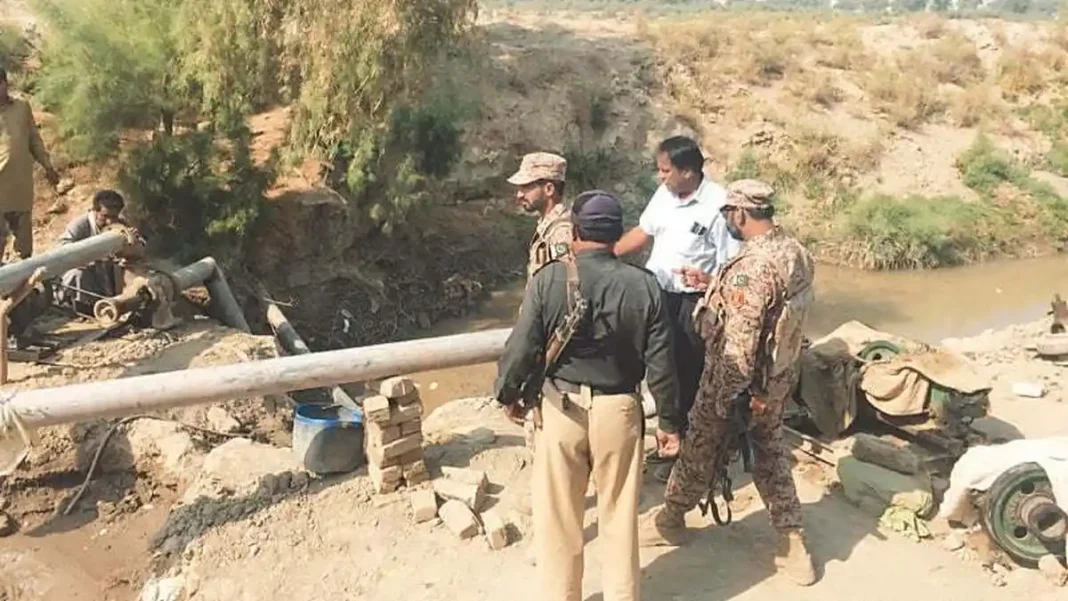
Punjab Canal Crackdown: 200 FIRs, 63 Arrests
Punjab canal water theft is now the target of a province-wide crackdown that has produced 200 first information reports and 63 arrests since mid-October. The Punjab Irrigation Department says its field teams have inspected 19,436 canal outlets since the current Rabi season began on October 15, as the province faces a 22 per cent water shortage for the season.
The campaign targets illegal practices that grow worse when water runs short: unauthorised canal cuts, illegal siphon installations, and tampering with outlets, known as mogas, to steal water at the expense of growers at the tail end of canals. The department’s spokesperson said the campaign runs round the clock, with watch-and-patrol duties, coordinated night operations and mosque announcements to rally the public against irrigation theft.
Punjab canal water theft: the enforcement numbers
Departmental data sets out the scale of the problem and the response so far. Authorities have identified 1,311 tampered canal outlets and repaired 1,148 of them. They also detected 737 other offences, such as illegal pipes and cuts, of which 718 have been rectified. Officials have sent 715 legal notices, known as robkars, to local police, and imposed fines totalling Rs915,500 on water pilferers.
The cases are spread across the province, but some zones stand out. Bahawalpur irrigation zone tops the list with 621 cases of tampered outlets, followed by Faisalabad zone with 326 and Lahore with 121. For FIRs, Sargodha leads with 50, followed by Bahawalpur with 44 and Multan zone with 33. The spokesperson said FIRs were registered and arrests made for repeated offences, illegal widening of outlets, and the installation of siphon pipes.
The crackdown began on recent directives from the chief minister, and it sits inside a much tighter water picture than farmers faced a year ago. The Indus River System Authority (IRSA) has said 29.18 million acre feet (MAF) of water is available against a requirement of 38 MAF under the 1991 Water Accord, and it has cut provincial withdrawal shares accordingly. Under that arrangement, Punjab will receive only 15.564 MAF for Rabi 2026-27. The irrigation authorities say the aim is to curb illegal diversions and ensure fair distribution for the wheat crop, above all for vulnerable farmers at canal tail-ends.
Why tail-end farmers bear the cost
When an outlet upstream is widened or a siphon is fitted illegally, the loss does not fall evenly. Water taken near the head of a canal never reaches the tail, so the growers at the far end, who already receive water last, lose most. That is why the department’s figures pair enforcement with repair: 1,148 tampered outlets fixed and 718 other offences rectified matter as much as the arrests, because each repair restores flow to someone downstream.
The same water stress is visible elsewhere in Punjab’s canal system. Feature Pakistan reported this week on Taunsa farmers hit by the closure of the Chashma canal, where a breach and repair work cut supplies to growers in the command area. The two stories share a cause: a Rabi season with far less water than the system was built to share, which turns every illegal diversion into a direct loss for another farmer.
The wider water programme shows the same pressure from the other side. The Economic Coordination Committee has approved Rs275 billion for major water sector projects, while the cost of three mega dams has soared to Rs3.5 trillion. New storage will take years; the canal crackdown is the short-term answer, policing the water that exists today.
What to watch next
The test of the campaign will be whether the numbers keep moving in the same direction through the Rabi season. Repairs completed, fines collected and repeat offences will tell readers more than the first round of FIRs. The department will also need to show that enforcement reaches large and small offenders alike, since tail-end farmers will judge the campaign by the water that arrives in their fields, not by the count of notices issued.
For wheat growers, the stakes are immediate. Rabi 2026-27 has less water, a fixed provincial share, and a sowing season that cannot wait for the next project to finish. The crackdown’s promise is simple: the water that is available should reach the farmer it was allocated to, and the farmer who takes someone else’s share should face the law.
Frequently asked questions
How many FIRs and arrests has the canal crackdown produced?
200 first information reports and 63 arrests since mid-October, according to the Punjab Irrigation Department.
How many canal outlets have been inspected?
Field teams inspected 19,436 canal outlets since the Rabi season began on October 15.
How many tampered outlets were found and fixed?
1,311 tampered outlets were identified and 1,148 repaired, while 737 other offences were detected and 718 rectified.
Which zone had the most tampered outlets?
Bahawalpur, with 621 cases, followed by Faisalabad with 326 and Lahore with 121. Sargodha led on FIRs, with 50.
Why does canal theft hurt tail-end farmers most?
Water taken illegally upstream never reaches the tail of the canal, so growers at the far end, who already receive water last, lose the most.