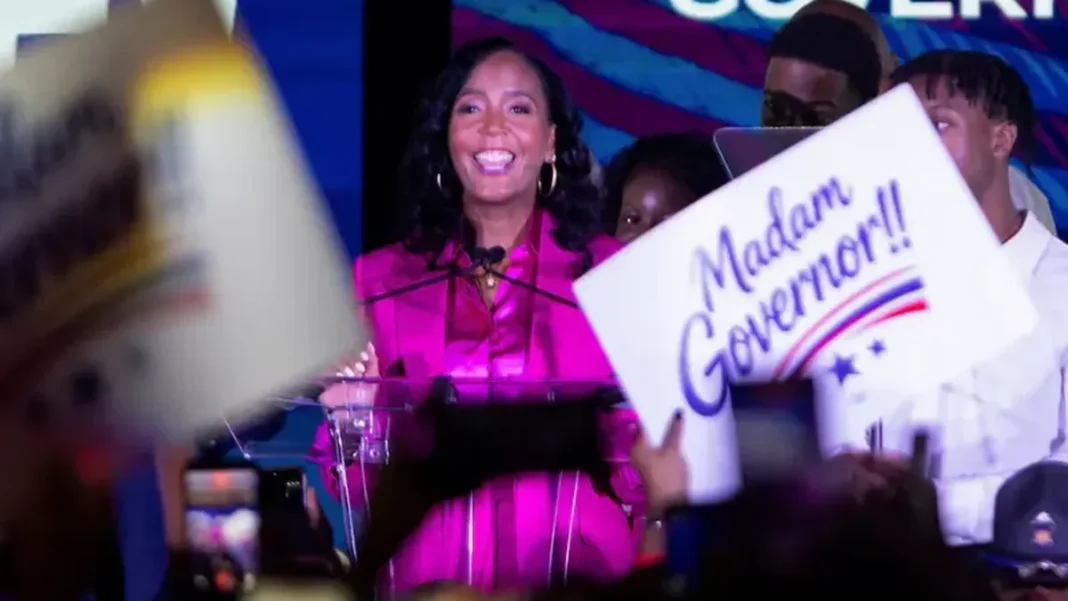
The US midterm historic firsts came in the governors’ races and the Senate, as voters elected a slate of women, candidates of colour and other underrepresented politicians, and Democrats flipped both the House and the Senate.
Gina Hinojosa became the first Latina elected governor of Texas, Abdul El-Sayed of Michigan the first Muslim elected to the US Senate, and Deb Haaland of New Mexico the first Native American woman elected governor. In Georgia, Keisha Lance Bottoms became the first Black woman elected governor of a US state, while Xavier Becerra was the first Latino elected as governor of California. Chris Pappas of New Hampshire made history as the first openly gay man elected to the US Senate.
US midterm historic firsts across the states
The results went beyond the headline names. In Texas, Hinojosa’s defeat of Governor Greg Abbott ended a 31-year Republican hold on the governor’s office. Democrat James Talarico beat Republican Ken Paxton in the Texas Senate race, one of the night’s biggest surprises.
Jon Rosenthal won a seat on the Texas Railroad Commission, the first Jewish candidate elected to statewide executive office there. In Wisconsin, voters chose David Crowley as the state’s first Black governor-elect.
The gains in representation were not limited to Democrats. In Florida, Republican Byron Donalds became the first Black governor elected in the state’s history. “From coast to coast, voters spoke with clarity. Democrats must now govern courageously,” former Georgia gubernatorial candidate Stacey Abrams said in a statement.
Why voters swung
Pollsters and political analysts said the Democratic gains appeared to stem from a combination of economic frustration and dissatisfaction with the Iran war, tariffs, aggressive immigration enforcement, perceived government corruption and the country’s broader direction.
Democrats made unexpected gains in deeply conservative states, suggesting the party attracted Republicans as well as its traditional supporters. “You can’t take for granted the Hispanic voters in this country, the Black voters in this country, the young voters in this country, and if we don’t deliver, they can swing right back,” said Democratic strategist Bakari Sellers.
John Geer, a Vanderbilt University political scientist, called the result an old-fashioned thumping. “Republicans made a series of promises in 2024, and almost none of them were kept,” he said.
Economic concerns, including the rising costs of housing, healthcare, food and fuel, cut across racial and political lines, said Greg Lewis, executive director of Souls to the Polls in Milwaukee. “When you start getting into people’s pockets, you have a problem,” Lewis said. Cost-of-living anger is driving politics elsewhere too: protests filled Paris this weekend over the same pressures.
What it means for Pakistan
The result matters beyond American borders because the issues that drove it touch Pakistan directly. Tariffs, the Iran war and immigration enforcement were all named by analysts as reasons for the swing, and each of them shapes US policy towards this region. A Democratic Congress will constrain the Trump administration on trade and foreign policy.
Islamabad has already moved to protect the relationship. Pakistan’s Foreign Office said this week that the midterm results would not unravel ties with Washington, stressing that engagement would continue across trade, investment and counterterrorism.
The outcome also fits a wider pattern of voters punishing incumbents over the cost of living — New Zealand’s election ended in deadlock this week on similar frustrations — and Trump himself has been weighing his next move on Iran after the midterm rout. For Pakistan, the practical effect is a more divided Washington.
Firsts do not guarantee change
Experts cautioned that winning office does not automatically bring influence: shaping legislation will depend on the institutions they enter and the coalitions they build.
Nadia Brown of Georgetown University warned that longstanding barriers, especially unemployment for Black women, are unlikely to disappear simply because more women and people of colour won office. “What was broken by a stroke of a pen cannot be fixed with another, and so it’s going to take time to rebuild,” she said.
Melik Abdul, a Republican strategist and Trump supporter, called Donalds’ win a rebuke to the party’s attacks on diversity initiatives.
Frequently asked questions
Who were the historic firsts in the US midterm elections?
Gina Hinojosa became the first Latina governor of Texas, Abdul El-Sayed the first Muslim US senator, Deb Haaland the first Native American woman governor, and Keisha Lance Bottoms the first Black woman governor of a US state.
Did Democrats win control of Congress?
Yes. Democrats flipped both the House of Representatives and the Senate.
What drove the Democratic gains?
Analysts pointed to economic frustration over housing, healthcare, food and fuel costs, plus dissatisfaction with the Iran war, tariffs, immigration enforcement and perceived corruption.
Does the result change US policy towards Pakistan?
It may constrain the Trump administration, but Pakistan’s Foreign Office says engagement will continue.