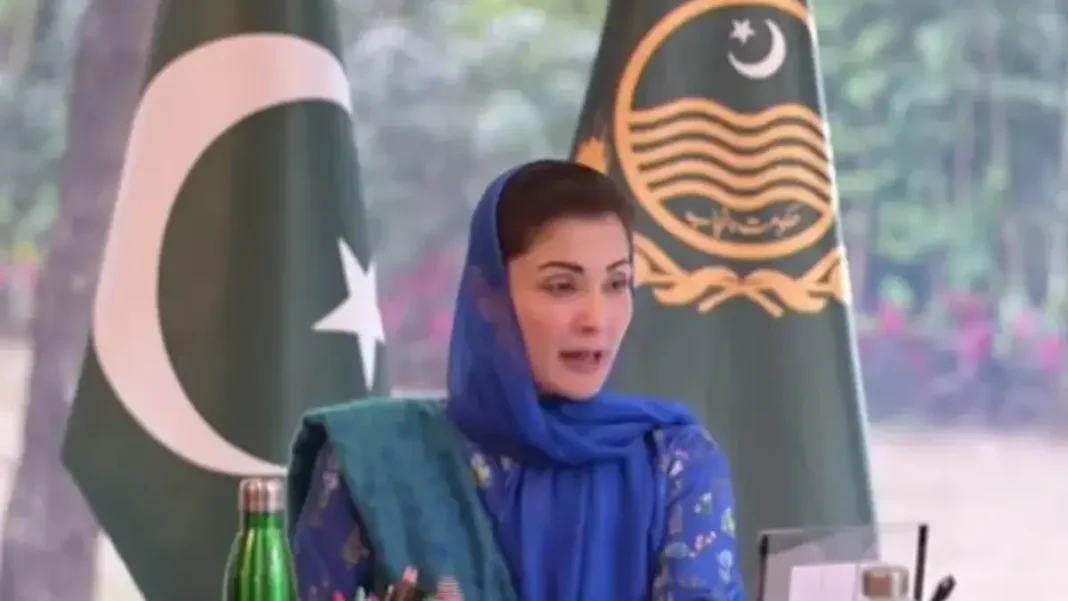
Chief Minister Maryam Nawaz has given Inspector General of Police Abdul Kareem a free hand over Punjab police transfers, allowing him to move 15 district police officers and four regional police officers over low performance figures, Dawn reported. The move follows a follow-up meeting at the Central Police Office in Lahore and a video-link conference at which the chief minister expressed displeasure with the officers concerned.
The officers came under scrutiny through monthly key performance indicator reports prepared by Shoaib Mirza, the special assistant to the chief minister, which assessed the crime graph and the law and order situation in each district. Dawn reported, citing an official familiar with the discussions, that crime against women and children had risen manifold in the 15 marked districts, and that gang-rape incidents against women had also surged there.
Which districts were marked in the Punjab police transfers
The 15 districts marked for low performance are Layyah, Lodhran, Multan, Khanewal, Chakwal, Khushab, Mianwali, Murree, Rajanpur, Rahim Yar Khan, Vehari, Sargodha, Kot Addu, Gujrat and Bhakkar. Four regional police officers were also under scrutiny in the same review.
Rawalpindi remained at the centre of the discussion. The official said Rawalpindi Regional Police Officer Babar Sarfraz Alpa faced questions after the special reports highlighted several individual incidents of crime against women and children in the city. Faisalabad Regional Police Officer Inamur Rehman Malik was questioned over why crime against property had surged all of a sudden in the city during the last few weeks. The Multan and Dera Ghazi Khan regional officers were asked to improve their supervisory role to bring crime down.
During the video-link meeting, the chief minister cited the killing of industrialist Mian Rehan Ashraf Qadri in Lahore. Qadri was shot dead on October 17, 2026, while attempting to recover his stolen vehicle, and the chief minister said the case alone was enough to declare the performance of the officers poor.
Objections from senior officers at the meeting
Not every officer at the meeting accepted the list. Some senior police officers objected to the 15 districts named in the special assistant’s reports, saying some districts had delivered up to the mark.
Sargodha Regional Police Officer Sohail Sukhera and Counter Terrorism Department Punjab chief Wasim Sial defended the district police officers of Sargodha and Mianwali. They said those officers had conducted raids even in Khyber Pakhtunkhwa, along with CTD-trained personnel, in hot pursuit of proclaimed offenders from Sargodha.
Lahore also came under discussion. Capital City Police Officer Bilal Siddique defended the provincial capital, saying it was bigger in population than other major districts and that its crime graph was much better than those of other major cities in the province. The Murree district police officer clarified the crime situation in his district after the report highlighted that homicide and murder incidents had risen by 75 there. The chief minister admonished the Layyah district police officer for ranking lowest on the indicators, and directed the Dera Ghazi Khan regional officer to look into why his region had failed to meet its targets.
Why the chief minister acted now
The chief minister showed her displeasure over the rising incidents of gang rape of women, Dawn reported, saying social media platforms were flooded with such cases. She referred to high-profile gang-rape cases and crimes against children highlighted on X, and warned officers that she would not endure the exploitation of women and children at any cost.
This is the latest step in a police performance drive that Feature Pakistan has already covered. On October 23, the chief minister gave the provincial police a four-week deadline to improve law and order, warning that officers would be removed over crimes against women and children. The latest meeting fits inside that window: in a separate meeting, the inspector general told all district and regional officers that a high-profile meeting would be held after four weeks, a clear signal that officers who do not rectify their performance in the light of the indicators will be transferred.