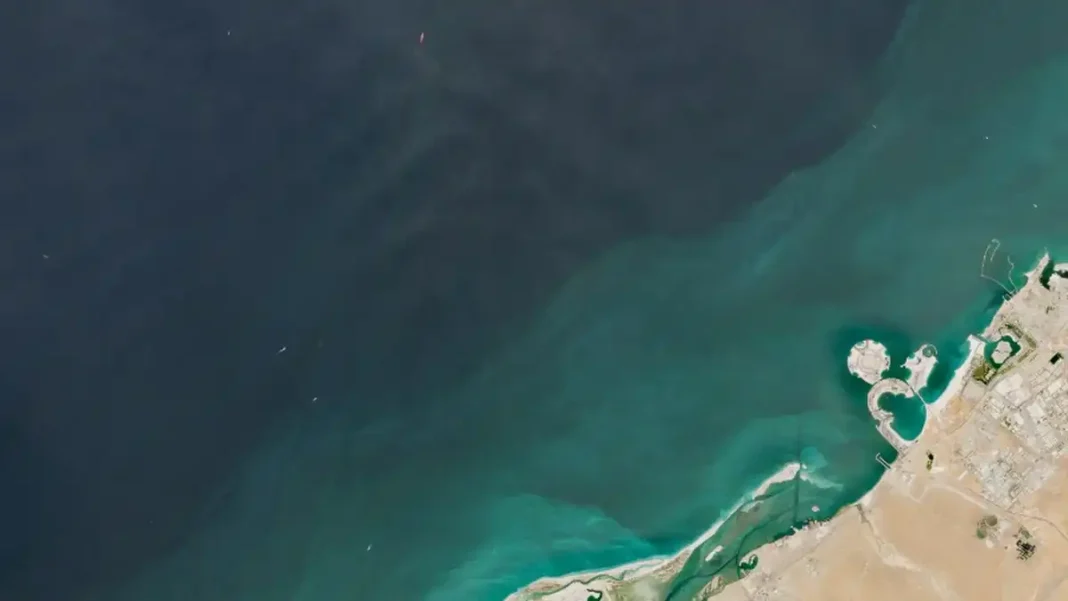
UAE oil spill beach closures now cover all beaches and coastal areas around the city of Umm Al Quwain, after satellite images showed the slick widening and reaching close to the emirate’s shores.
Images from the European Union’s Copernicus satellite network, dated October 24, show the spill has widened over the last few days, with dark layers of oil spreading at sea and along the coastline, Dawn reported. Authorities in neighbouring Sharjah have also shut access to Al Hamriyah Beach as a precaution, while Ras Al Khaimah said on Saturday that all its beaches would stay closed until further notice.
The closures extend steps already reported last week. Feature Pakistan covered the closure of Ras Al Khaimah’s beaches and the wider beach shutdowns across the northern emirates. What is new in the latest reporting is the satellite evidence that the spill is still spreading, and the expert warning that followed it.
UAE oil spill beach closures: the tanker behind the slick
The UAE said on Friday that efforts were under way to contain oil leaking from a tanker offshore, with its Ministry of Climate Change and Environment conducting an environmental assessment. Authorities have not named the tanker involved or said what caused the spill.
Experts said, however, that the spill was coming from a tanker called the Gem No.2. Shipping sources said the vessel had been struck by an unidentified projectile last month, causing a fire that was later extinguished. The Copernicus Sentinel-2 images showed a large oil spill coming from the tanker.
The ministry described the reported spill off Umm Al Quwain as a serious environmental concern. The temporary closure of beaches and coastal areas is a prudent precaution while the extent of the spill and the movement of the oil are assessed, said Nidal Hilal, Professor of Engineering and Director of New York University Abu Dhabi’s Water Research Center.
Wider Gulf shipping danger behind the spill
The spill has spread against a dangerous backdrop for Gulf shipping. Since the start of the US-Israeli war with Iran, attacks on commercial vessels in Gulf shipping lanes have driven up security risks for maritime traffic and heightened fears over the conflict’s environmental fallout.
October has been the worst month for attacks on commercial shipping in the Strait of Hormuz and nearby waterways, according to data compiled by the Washington Institute for Near East Policy think tank. The Gem No.2 case, if confirmed, would fit that pattern: a vessel damaged in an attack last month, now leaking oil into waters shared by several emirates.
Marine life at risk from the slick
The stakes go beyond closed beaches. The UAE’s marine life is rich in fish, plants and corals, with over 500 different species of fish inhabiting Gulf waters, including dolphins and marine turtles, the International Union for Conservation of Nature says on its website.
That is why the closures matter even though they inconvenience tourists and residents. Until the oil stops spreading and the shoreline is assessed, the beaches stay shut, and the slick’s movement will decide which stretch of coast is affected next.
Frequently asked questions
Which beaches are closed because of the UAE oil spill?
All beaches and coastal areas around Umm Al Quwain are temporarily closed, Al Hamriyah Beach in Sharjah is shut as a precaution, and all beaches in Ras Al Khaimah are closed until further notice.
Which tanker is blamed for the spill?
Authorities have not named the tanker or stated the cause. Experts said the spill was coming from the Gem No.2, which shipping sources said was struck by an unidentified projectile last month.
Why does the spill matter for marine life?
Gulf waters hold over 500 fish species plus dolphins, marine turtles, plants and corals, according to the International Union for Conservation of Nature, so a spreading slick threatens a rich marine environment, not just beach access.