Five people were killed in a US drug boat strike in the Eastern Pacific on October 27, the United States Southern Command (SOUTHCOM) announced on Tuesday. The strike targeted a go-fast vessel operating along established narco-trafficking routes, according to the command, which said confirmed intelligence showed the vessel was actively involved in drug trafficking.
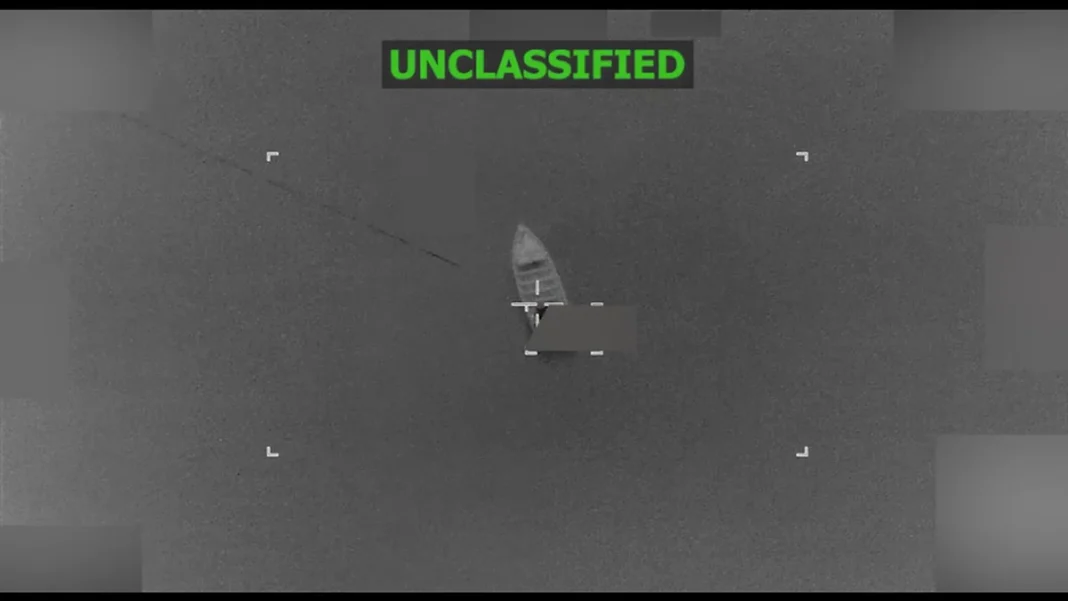
SOUTHCOM said Joint Task Force Western Hemisphere carried out what it called a lethal, kinetic strike under its direction. The command described the five people killed as narco-terrorists. It also released a video clip showing a stationary vessel being engulfed in an explosion, according to Dawn’s report of the announcement.
US drug boat strike: what SOUTHCOM said
The announcement gave few details beyond the core claim. It did not name the vessel, state its origin or destination, or give the quantity of suspected drugs involved. It also did not publish the intelligence it cited. That pattern has held across the campaign, and it is central to the criticism that follows each strike.
The United States began targeting alleged narcotics-smuggling boats in early September 2025. President Donald Trump has argued that Washington is effectively at war with drug cartels operating out of Latin America. Since then, the campaign has expanded from the Caribbean Sea to the Eastern Pacific, with strikes announced every few weeks.
The toll from the campaign now stands at 243 people, according to a tabulation by USNI News and a tracker kept by the Washington Office on Latin America (WOLA). Dawn’s report, citing an Agence France-Presse tally, put the figure at at least 235 people killed before this strike. The difference between the tallies reflects different counting methods and cut-off dates, not a dispute about the latest strike itself. On the WOLA and USNI basis, the toll before Tuesday was 238, and Tuesday’s five deaths take it to 243.
Why rights groups call the strikes unlawful
Legal experts and rights groups have consistently challenged the legal basis for the strikes. They argue that the operations could amount to extrajudicial killings, because they appear to target civilians who do not pose an immediate threat to the United States. Human Rights Watch, Amnesty International and independent United Nations experts have called the strikes unlawful, while the American Civil Liberties Union has described the administration’s claims about those targeted as unsubstantiated and fear-mongering.
Relatives of some of those killed have said the dead were fishermen or workers who were not involved in the drug trade. The government has rarely shared details that would allow those claims to be tested against its own evidence. That gap between claim and proof is now a fixed feature of the debate, and each new strike widens it.
Does the campaign match its stated aim?
The stated aim of the campaign is to cut drug flows and drug deaths in the United States. The evidence for that effect is weak on the administration’s own cited data. USNI News notes that Centers for Disease Control and Prevention data do not show a noticeable decrease in overdoses since the first strike in September 2025. Overdoses in the United States have decreased since September 2023, before the campaign began, which complicates any claim that the strikes caused the fall.
The drug at the centre of the debate also complicates the claim. Fentanyl, which the administration has said is carried in the alleged drug boats, typically enters the United States through the US-Mexico border in passenger vehicles, according to Government Accountability Office reports cited by USNI News. Supplies often come from China. A boat campaign in the Eastern Pacific therefore sits at a distance from the main fentanyl route, even if the vessels struck were carrying drugs.
What happens next
The next step is likely to be political rather than military. Last month, Secretary of State Marco Rubio said the United States would work with regional allies as the most effective way to take on trafficking, according to the Associated Press. That statement points towards cooperation with partner governments, rather than unilateral strikes, as the longer-term approach.