PIMS launches One Patient, One ID system across five hospitals
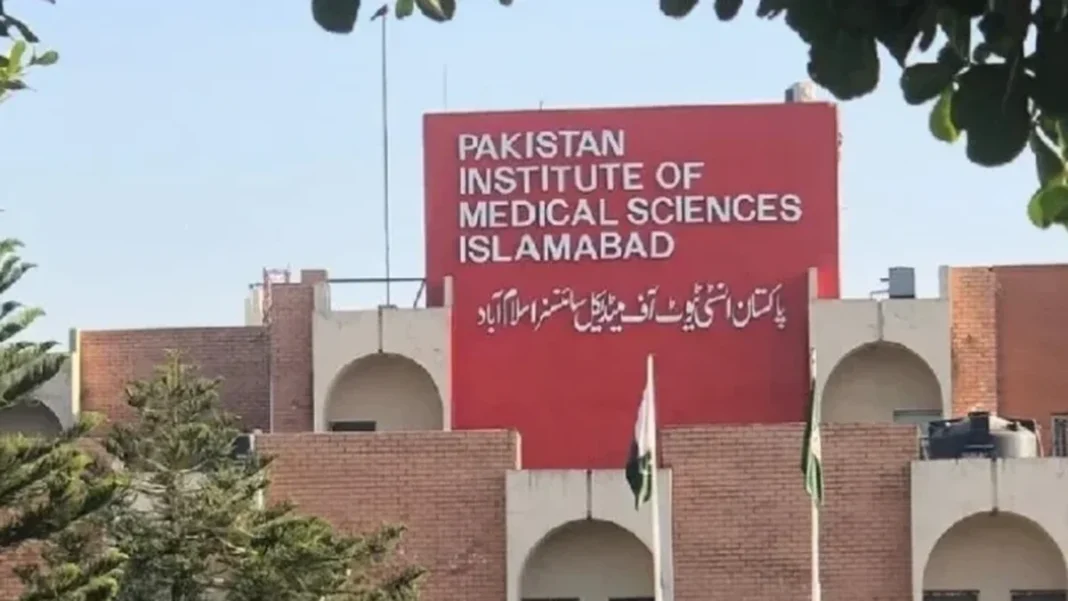
The Pakistan Institute of Medical Sciences (PIMS) has implemented a digital patient management system, called One Patient, One ID, at a cost of more than Rs1.25 billion, connecting all five hospitals and 24 departments.
Under the new system, patient registration and diagnostic services have been integrated, allowing doctors to access patients’ medical records through computers. The system was developed under a joint project of the Ministry of National Health Services and the Ministry of Information Technology, with the National Information Technology Board developing the software.
The reforms follow an incident at PIMS, after which the government moved to improve administrative and healthcare systems at the hospital. The reporting does not give further detail about that incident, and this draft adds none.
Five hospitals, one record
All five hospitals operating under PIMS have been connected to the digital system. They are the Cardiac Centre, the Children’s Hospital, the Burn Centre, the Maternal and Child Health Centre, and the hospital for adult patients.
The project has also integrated 24 departments and services, including laboratories, X-ray units, reception, hospital wards, emergency departments, transport services and outpatient departments.
For patients, the practical change is straightforward. A person who visits one department and is then referred to another should no longer need to start again with a fresh file at each counter. Registration, test results and diagnostic services are linked through a common platform, and doctors can call up a patient’s medical information electronically.
That matters most for repeat patients. People with chronic illness, children under long-term care, and patients moving between emergency care and specialist departments are the ones who currently suffer most from paper records held in different places. A single ID, carried across departments, is meant to end that fragmentation.
What doctors gain
For doctors, the system changes how information moves during a consultation. Instead of waiting for a paper file or a separate test report, a doctor can access a patient’s record on a computer, including diagnostic results linked to the same registration.
Laboratory and X-ray services are part of the same integration. When a test is ordered in one department, its result should be available to the treating doctor without a separate paper trail. In emergency departments, where time matters, that speed can affect treatment decisions.
The system does not by itself improve clinical care. It improves the availability of information on which clinical decisions are based. That distinction is worth keeping in mind when judging whether the Rs1.25 billion investment delivers value.
Paperless next, starting with the Cardiac Centre
The government is also preparing to introduce a paperless system and barcode technology at PIMS in the next phase of digital reforms. Under the plan, the PIMS Cardiac Centre is scheduled to become paperless by 31 October.
Barcode technology, in a hospital setting, usually means wristbands and labels that link a patient, a sample and a prescription to the same digital record. That reduces the risk of samples or medicines being matched to the wrong patient, a common source of error in busy public hospitals.
The Cardiac Centre is a logical first step. Cardiac patients often move quickly between emergency care, diagnostics and wards, and their records need to travel with them. If the paperless system works there, it can be extended to the other four hospitals with lessons already learned.
Part of a wider digitisation push
The PIMS system is not an isolated project. It sits alongside a wider government effort to digitise public services, including the Digital Enhanced Experience Programme reported today, under which ten government services have been shortlisted for a major digital upgrade.
Health is one of the hardest areas to digitise, because it involves sensitive personal data, large numbers of daily transactions, and staff who must learn new systems while continuing to treat patients. A hospital system that works in daily use, under the pressure of a public hospital’s workload, is a stronger test than a service that is used only occasionally.
Questions remain that the reporting does not answer. It does not say how patient data will be protected, who will have access to records, or how the system will perform during power cuts or network failures. Those are not reasons to dismiss the project, but they are the points on which its success will be judged in practice.
Which hospitals are covered by the new system?
How much did the system cost?
When will the Cardiac Centre become paperless?
- ProPakistani, “PIMS Introduces New System Worth Rs. 1.25 Billion” (28 October 2026): https://propakistani.pk/2026/10/28/pims-introduces-new-system-worth-rs-1-25-billion/
- Feature Pakistan draft, Pakistan digital services DEEP 10 services (28 October 2026)