Bangladesh Garment Protests Enter Fourth Day
Bangladesh garment protests entered a fourth day on Tuesday, as police fired tear gas to disperse demonstrators and unrest disrupted factory work and transport in the country’s vital export sector. The protests began on Saturday and have grown despite the government’s move to form a wage board to review pay.
Clashes were reported across industrial belts around Dhaka, including Ashulia, Gazipur, and the capital’s Mirpur area. Workers staged fresh demonstrations and tried to block major highways. Dozens of people, including several police officers, were injured in the clashes. In Ashulia, police fired tear gas and sound grenades after protesters threw bricks and stones at officers, said Mohammad Mominul Islam Bhuiyan, superintendent of Ashulia Industrial Police. Similar crowd-control measures were used in Mirpur.
Additional security forces were deployed to contain the unrest, police said. Several factories in Gazipur and Ashulia again suspended operations or declared holidays, after nearly 700 factories shut a day earlier. The shutdowns strike at the heart of Bangladesh’s export economy at the start of the peak season for spring and summer orders.
Bangladesh garment protests: the 30,000 taka wage demand
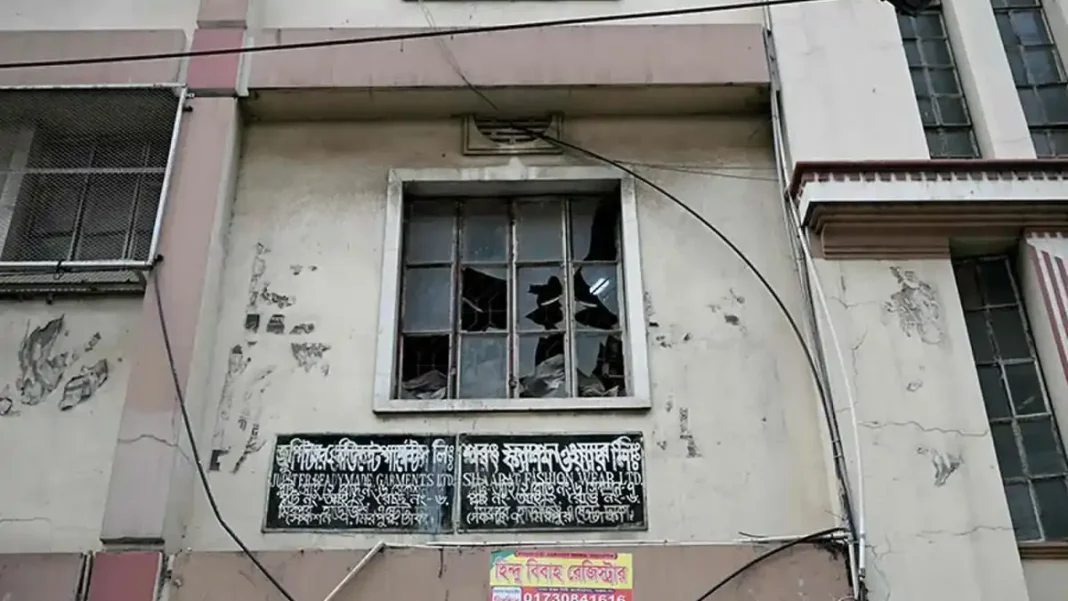
Workers demand a minimum monthly wage of 30,000 taka ($245), up from the current 12,500 taka. They argue that rising living costs and persistent inflation have eroded their purchasing power. Several factories were also vandalised during the unrest, and a shattered factory window in Dhaka showed the scale of the street clashes on Tuesday.
The industry employs about four million workers and supplies global brands such as H&M, Zara, and Gap. It accounts for more than 80 per cent of Bangladesh’s export earnings, which makes any sustained stoppage a national economic risk, not just a factory dispute. Industry officials warn that prolonged closures could delay shipments and damage Bangladesh’s standing as a reliable sourcing hub, as it competes with Vietnam and India for apparel orders.
H&M, the Swedish retailer, said there were no major disruptions in its supply chain so far, with only a limited number of factories temporarily closed. “We are assessing any potential impact on our overall production and supply chain,” the firm told Reuters. It added that it wanted adequate compensation for garment workers and remained committed to improving wages and working conditions.
The government formed a six-member wage board on November 1 to review pay in the garment sector. That move has yet to calm the protests, since workers want a firm wage figure, not just a review. Anne Bienias, from the Clean Clothes Campaign advocacy group, said brands must act at once and speak out in support of workers’ demands. Factory owners, for their part, cite rising operating costs, uncertainty in energy markets linked to conflict in the Middle East, and softer demand in key export markets.
Why the protests matter for Pakistan’s textile trade
For Pakistan, the unrest carries a direct trade angle. Bangladesh is a rival sourcing hub for the same global apparel buyers that Pakistan’s textile firms court. If Bangladeshi shipments slip, some orders could shift to competitors, including Pakistan. But that gain is far from automatic. Pakistan’s own exporters warned recently of a steep fall in orders, as Feature Pakistan reported on textile exporters warning of a steep decline. Weak Western demand, freight costs up sharply, and an unimplemented export finance rate already weigh on Pakistani mills.
The fourth day also extends a story Feature Pakistan has followed since the wage board was formed. The earlier live post on the Bangladesh garment workers clash covered the first clashes and the board’s creation. Tuesday’s developments add a new scale: a fourth day of action, nearly 700 factories shut the previous day, fresh highway blocks, and a first brand response from H&M. The dispute now turns on whether the wage board moves fast enough to offer a figure workers will accept, or whether the protests harden into a longer stoppage.
The protests follow the Bangladesh garment wage board set as factories shut, and Pakistan’s offer of help on Bangladesh’s energy crisis.
Frequently asked questions
How long have the Bangladesh garment protests run?
The protests began on Saturday and entered a fourth day on Tuesday, November 3, 2026.
What wage do garment workers demand?
Workers demand a minimum monthly wage of 30,000 taka ($245), up from the current 12,500 taka.
Where have clashes taken place?
Clashes were reported in Ashulia, Gazipur, and Dhaka’s Mirpur area, with workers trying to block major highways and police firing tear gas and sound grenades.
How many factories have shut?
Nearly 700 factories shut a day earlier, and several more in Gazipur and Ashulia suspended operations or declared holidays on Tuesday.
Why does the sector matter so much?
Bangladesh’s garment industry employs about four million workers, supplies brands such as H&M, Zara, and Gap, and accounts for more than 80 per cent of export earnings.