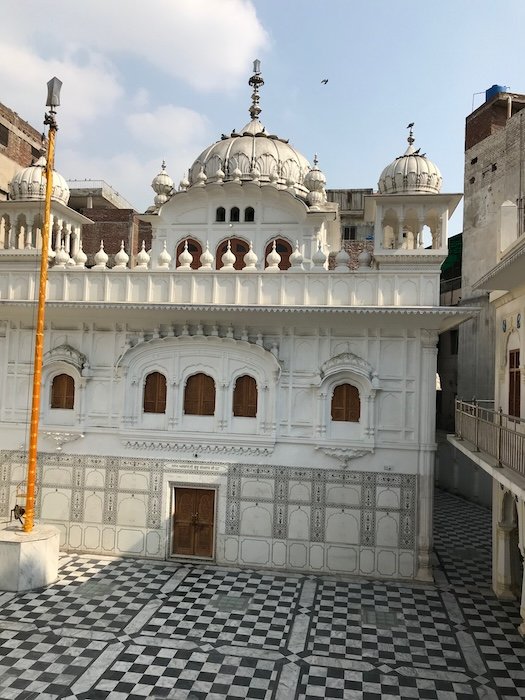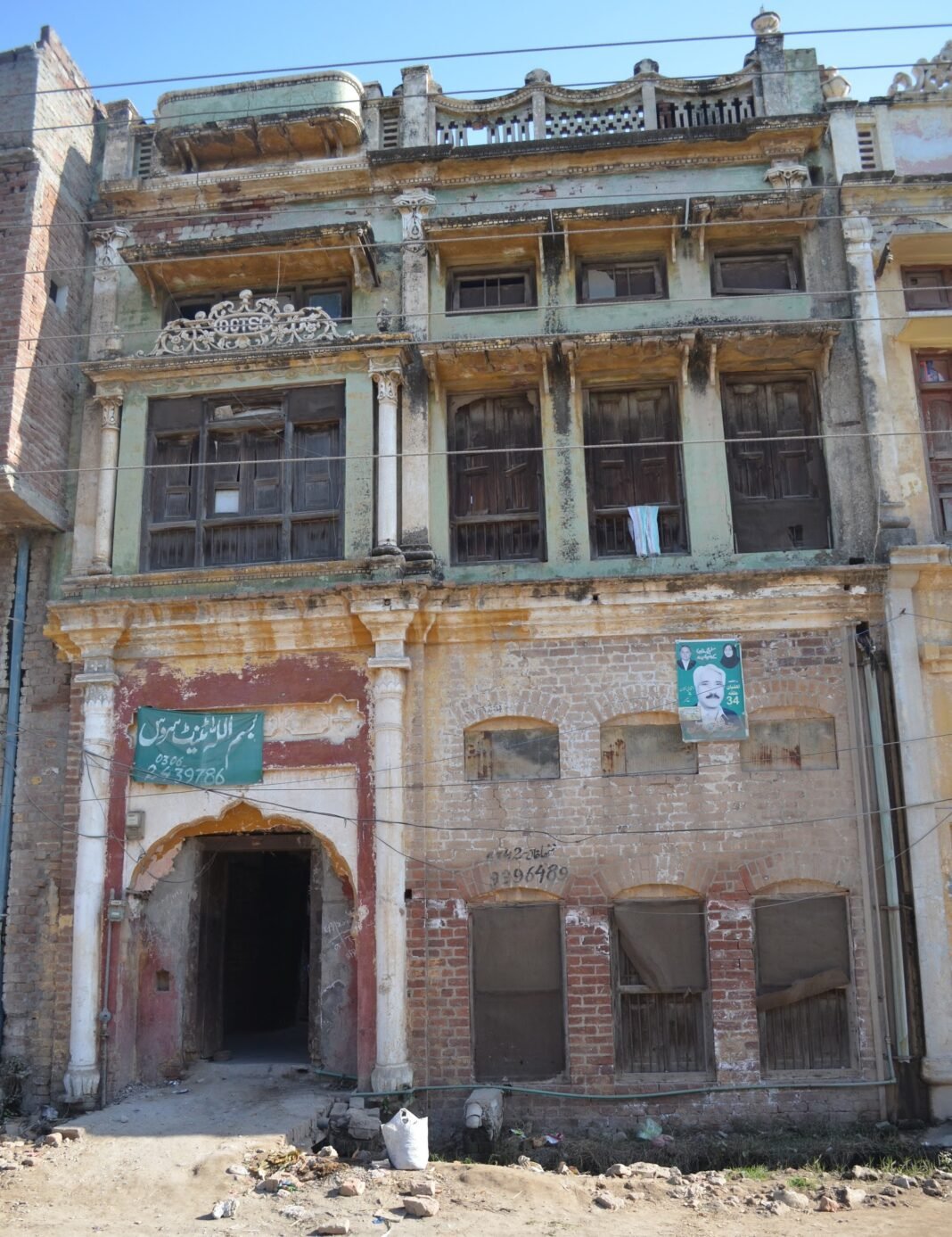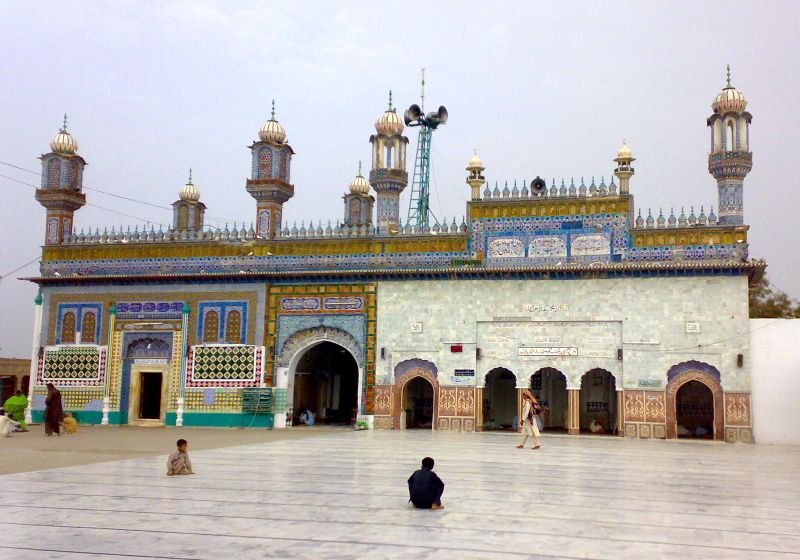
Some heritage sites survive because they are grand. Others survive because a village refuses to forget them. Gurdwara Garh Fateh Shah, in a quiet village off the Chiniot–Jhang road, is the second kind — a village gurdwara that stood empty for 43 years after Partition, became a mosque in 1990, and is still known to everyone around as the gurdware wali maseet, the gurdwara mosque. If your travels through Pakistan’s Punjab ever take you toward Jhang — the land of Heer Ranjha and Sultan Bahu — this is the kind of stop that turns a road trip into a story: a building that has lived two religious lives, in a village named for a Sufi saint.
Quick Facts
- Location: Garh Fateh Shah village, about 3 km northeast of the Chiniot–Jhang road, Jhang district, Punjab, Pakistan
- Altitude: around 150 metres (Punjab plain)
- Famous For: a village gurdwara converted into a mosque in 1990, still called the “gurdware wali maseet” by locals
- Nearest City: Jhang (railway station Jhang Sadar is the nearest major railhead)
- Accessibility: road only — local transport, tongas, taxi or rickshaw from the Chiniot–Jhang road; nearest airport Faisalabad, about 85–90 km away
- Known Landmarks: tomb of Sufi saint Hazrat Fateh Ali Shah just south of the village; Jhang city; Chiniot
- Best For: heritage travelers, Sikh history enthusiasts, photographers of rural Punjab, road-trippers between Lahore, Faisalabad and Jhang
Why Visit Gurdwara Garh Fateh Shah
Let us be honest first: this is not a polished pilgrimage complex. There is no marble, no langar hall in operation, no crowd of devotees. What there is, is something arguably more interesting for the thoughtful traveler — a building that tells the whole complicated story of Punjab in one structure. A gurdwara that commemorated the area’s historic Sikh presence, abandoned at Partition, left empty for decades, then given a second life as a mosque when minarets were raised on it in 1990. Today it is called Jamia Chishtia Nizamia — but ask anyone in the village and they will direct you to the gurdware wali maseet. The name remembers what the building was.
That layered identity is exactly why heritage travelers should come. Punjab’s history is not kept only in grand forts; it is kept in village buildings like this one, where one faith’s architecture carries another faith’s prayers. And the village itself is worth the detour: Garh Fateh Shah is named after the revered Sufi saint Hazrat Fateh Ali Shah, whose tomb lies just south of the settlement — so within a single village you stand at the intersection of Sikh heritage and Sufi tradition, which is Punjab in miniature.
This is also a perfect anchor for a Jhang-country road trip. The district is the legendary home of Heer Ranjha, the land of the great Sufi poet Sultan Bahu, and the gateway to Chiniot’s famed woodwork and Umar Hayat Mahal. If you are the kind of traveler who prefers the road less taken — tonga rides, village tea, conversations with elders who remember — then Garh Fateh Shah will reward you far more than another crowded monument. Come between November and March, when the Punjab plain is at its golden best.
History of Gurdwara Garh Fateh Shah
The village came to be called Garh Fateh Shah after the Sufi saint Hazrat Fateh (Fatela) Ali Shah, whose tomb stands outside the village toward the south — a reminder that this countryside has been a land of saints and shrines for centuries. Within the village, a gurdwara was established to commemorate the historic Sikh presence in the area, serving the local Sikh community of the Jhang countryside in the decades before Partition.
The trauma of 1947 emptied it. Like thousands of village gurdwaras across West Punjab, the building was abandoned when the Sikh population migrated east, and it stood empty and unused from 1947 to 1990 — 43 years of silence. In 1990 the building was converted into a mosque: minarets were added to the original structure, and it took the name Jamia Chishtia Nizamia. The conversion preserved the building rather than letting it crumble, which is more than can be said for many abandoned shrines of the era.
What makes the story remarkable is what the villagers chose to remember. Despite the official mosque name, the people of the area still call it the gurdware wali maseet — the mosque that was a gurdwara. In a region where old identities are often paved over, that stubborn local memory is its own kind of preservation. The building stands today as a working mosque and a living archive at once: minarets over Sikh-era walls, Friday prayers inside a structure raised for a different congregation.
The wider Jhang region around it carries its own deep history. This is the country of the Heer Ranjha legend, one of Punjab’s great tragic romances, and the birthplace of the Sufi mystic poet Sultan Bahu. Chiniot, a short drive away, was famed across the Mughal world for its woodcarvers. Traveling to Garh Fateh Shah is therefore not a trip to a single building — it is a trip into one of Punjab’s most storied districts, where every village has a saint, a legend, or a shrine.
Top Things to Do in Gurdwara Garh Fateh Shah
This is a half-day heritage stop, best combined with Jhang and Chiniot. Keep your expectations village-scale and your manners mosque-perfect.
See the gurdwara-turned-mosque
The building sits inside Garh Fateh Shah village, about 3 km off the Chiniot–Jhang road. Walk around it and read its two lives in the architecture: the older gurdwara structure with the minarets added in 1990. Remember that this is now an active mosque — Jamia Chishtia Nizamia — so dress as you would for any mosque visit, keep your voice low, and avoid prayer times entirely. Ask permission before taking photographs, and accept that the interior may not be accessible to visitors during worship hours. The respectful visitor is welcomed; the casual sightseer should adjust.
Visit the tomb of Hazrat Fateh Ali Shah
Just south of the village lies the tomb of the Sufi saint after whom the village is named. Sufi shrines in rural Punjab are living places — quiet courtyards, green cloth, the occasional dervish — and a short visit here completes the village’s story: a Sufi saint’s resting place guarding a village that holds a gurdwara-mosque. Remove your shoes, keep your head covered if others do, and take a few minutes of stillness.
Ride a tonga through the village
Tongas — horse-drawn carts — are still available to reach and move around the village, and they are the most atmospheric way to do it. The 3 km track from the main road to the village, at the pace of a horse, is rural Punjab at its most unhurried: wheat and sugarcane fields, buffalo carts, children waving. It is worth doing for the journey alone.
Build a Jhang-country circuit
Do not come only for the one building — make it a day. Jhang city holds the shrine of Sultan Bahu and the lore of Heer Ranjha; Chiniot offers the spectacular Umar Hayat Mahal and the town’s legendary woodwork bazaars. Our Gurdwara Bhai Khan Chand, Jhang travel guide and Dharamsala Bhai Hema Ji, Jhang travel guide cover more of the district’s Sikh heritage, and the Ghanta Ghar, Faisalabad travel guide is handy if you route through Faisalabad. More ideas live in our Explore Pakistan collection.
Famous Places In and Around Gurdwara Garh Fateh Shah
- Tomb of Hazrat Fateh Ali Shah — the Sufi saint’s shrine just south of the village
- Jhang city — shrine of Sultan Bahu and the legendary land of Heer Ranjha
- Chiniot — Umar Hayat Mahal and the town’s world-famous woodcarving bazaars
- Trimmu Barrage — the meeting of the Chenab and Jhelum rivers, a classic Punjab riverside stop
- Faisalabad’s Ghanta Ghar — the colonial-era clock tower at the heart of the city’s eight bazaars
How to Reach Gurdwara Garh Fateh Shah
The village is reached by road only, and the final 3 km are on a village track — which is part of the charm. Plan it as a detour on a Jhang or Chiniot trip.
- From Lahore: around 230 km to Jhang via Faisalabad, roughly 3.5 to 4 hours by car. From Jhang, take the Chiniot road and turn off for Garh Fateh Shah village (about 3 km northeast of the main road). Regular buses connect Lahore and Faisalabad with Jhang.
- From Islamabad: around 480 km, roughly 6 to 7 hours by road via the motorway network toward Faisalabad and on to Jhang. Best done as an overnight trip.
- From Karachi: around 1,150 km by road — fly to Lahore or Faisalabad (about 2 hours) and drive onward; trains connect Karachi with Faisalabad and Multan.
- Nearest airport: Faisalabad International Airport, about 85–90 km from the village; Lahore’s Allama Iqbal International is the bigger gateway at roughly 230 km.
- Nearest railway station: Jhang Sadar — from there hire a taxi or rickshaw toward the Chiniot road and the village turnoff.
- Road conditions: the intercity roads (Lahore–Faisalabad–Jhang) are good year-round. The village track is unpaved in stretches and can get muddy after monsoon rains — a car with decent clearance is wise in July–September.
- Transport options: private car or hired taxi is the practical choice; buses and vans cover the intercity legs, and tongas or rickshaws handle the last stretch from the main road.
Route Details
Step 1: Reach Jhang by road from Lahore/Faisalabad or by train to Jhang Sadar station. Step 2: Take the Chiniot–Jhang road toward Chiniot. Step 3: About 3 km before/after the village marker (ask locally — signage is minimal), turn northeast onto the village track; tongas are available at the turnoff. Step 4: In the village, ask for the gurdware wali maseet — everyone knows it. Step 5: Visit respectfully outside prayer times, then walk or ride to the saint’s tomb south of the village.
Where to Stay in Gurdwara Garh Fateh Shah
You will not stay in the village — you stay in Jhang or Faisalabad and visit on a day trip. Jhang has a solid spread of mid-range hotels and guesthouses catering to business and family travelers; expect clean, air-conditioned rooms with the essentials at budget-friendly rates. Faisalabad, the bigger city about 85–90 km away, offers the full range from luxury hotels to dependable mid-range options and is the better base if you want more comfort and dining choice. For the adventurous, farmhouse stays and rural guesthouses around the Jhang countryside can sometimes be arranged through local contacts — ask your driver or a Jhang-based guide. There is no camping infrastructure at the village itself, and an overnight village stay would need a local host’s invitation. Book Jhang hotels a few days ahead in winter wedding season (December–February), when rooms fill fast.
Where to Eat: Local Foods of Gurdwara Garh Fateh Shah
Jhang’s food is hearty Punjabi country cooking, and the district has one sweet that travels across Pakistan: sohan halwa, the dense, ghee-rich confection studded with nuts — buy it fresh from a Jhang halwai and you will understand why the city is famous for it. In the villages, expect tandoori rotis, dal, saag in winter, and lassi churned thick enough to stand a spoon in. Roadside dhabas along the Chiniot–Jhang road serve dal fry, chicken karahi and fresh tandoori naan at genuinely budget-friendly prices — a full dhaba meal for two costs only a few hundred rupees. In Jhang city you will find proper restaurants with barbecue, desi breakfasts of halwa puri and paya, and sweet shops piled with sohan halwa. Carry bottled water in the village, eat where the food is cooked fresh in front of you, and do not leave Jhang without a box of sohan halwa for the road.
Weather in Gurdwara Garh Fateh Shah
The Jhang plain runs hot — this is the heart of the Punjab summer belt. Winter is the reward: clear, golden, made for village wandering. Summer visits are possible only for the very determined.
| Season | Temperature Range | Conditions |
|---|---|---|
| Winter (Dec–Feb) | 4–20°C | Crisp mornings, sunny afternoons — the ideal season |
| Spring (Mar–Apr) | 16–33°C | Warming up; mornings still pleasant for the village walk |
| Summer (May–Jul) | 33–46°C | Fiercely hot; the open village track is brutal by midday |
| Autumn (Sep–Nov) | 22–35°C | Cooling gradually; November turns genuinely pleasant |
Monsoon (July–September) brings humidity and the odd downpour that can mire the village track. For the best Gurdwara Garh Fateh Shah weather, come between November and March.
Language and Culture of Gurdwara Garh Fateh Shah
The village speaks Punjabi — the Jhangvi (Jatki) dialect, with Saraiki influences as you move south — and Urdu is widely understood. This is a traditional rural community, so modest dress is essential: long trousers or shalwar kameez, covered shoulders, and a head covering for the mosque and the Sufi shrine. Because the gurdwara building is now an active mosque, all mosque etiquette applies: remove shoes, keep voices down, avoid prayer times, and ask before photographing people or interiors. At the saint’s tomb, follow the lead of local devotees. A few words of Punjabi greeting — Assalam-o-Alaikum works everywhere — and a willingness to accept a cup of village tea will open more doors than any guidebook.
Shopping in Gurdwara Garh Fateh Shah
There is no souvenir market at the village — and that is fine, because the shopping of this region happens in the nearby towns. Jhang’s bazaars sell everyday Punjabi goods, fresh sohan halwa by the kilo, and desi ghee. Chiniot is the real prize for shoppers: the town’s woodcarvers are legendary, and carved furniture, screens and small decorative pieces from Chiniot workshops are genuine craft heritage — buy from the workshops themselves for the best prices. Faisalabad’s eight bazaars around Ghanta Ghar offer textiles at wholesale-adjacent prices. Do not expect malls on this route; the authentic buys here are edible (sohan halwa, ghee) and hand-carved (Chiniot woodwork).
Travel Tips for Gurdwara Garh Fateh Shah
Packing Essentials
Modest clothing and a headscarf or cap, slip-on shoes for mosque and shrine visits, sun protection (the plain offers no shade), drinking water, and cash — the village runs entirely on cash. A power bank helps; rural electricity can be patchy.
Safety Tips
Rural Punjab is generally safe and famously hospitable, but travel with a local driver who knows the area, let someone know your plans, and time your visit for daylight — arrive mid-morning and leave well before dusk. Keep to the village tracks and ask locals for directions; they are the best GPS here.
Money & Connectivity
Bring all the cash you need from Jhang or Faisalabad — there are no ATMs in the village. Mobile coverage from Jazz, Telenor, Zong and Ufone reaches the area, though data speeds in the village can be slow. Download offline maps before you leave the main road.
Best Time to Visit Gurdwara Garh Fateh Shah
Winter (November to March) — the season to come
Daytime temperatures sit in the comfortable high teens, the wheat fields are green, and the light is made for photography. This is when the village track is firm, the tonga ride is pleasant, and you can linger over tea without melting.
Spring (March to April) — a short sweet spot
Early spring mornings are still lovely, though afternoons warm quickly. Fine for a quick detour if winter is out.
Summer (May to July) — only for the hardy
With the mercury pushing toward 46°C, an open village visit becomes an endurance exercise. If you must, go at dawn and be gone by 10 a.m.
Autumn (October to November) — the return of comfort
November especially is excellent: cool mornings, warm afternoons, harvest season in the fields, and clear skies for the drive.
Final Thoughts
Gurdwara Garh Fateh Shah is not a destination you visit for grandeur — you visit it for the story, and for what the story says about Punjab itself. A village gurdwara that became a mosque but kept its old name in the mouths of the villagers; a Sufi saint’s tomb watching over it all; tonga tracks, wheat fields, and sohan halwa waiting in Jhang. Fold it into a Jhang–Chiniot road trip and it will be the stop you remember longest.
Go respectfully, go in winter, and go with time to spare for the village. The gurdware wali maseet has waited decades for visitors who come to listen — be one of them. For more off-the-beaten-path heritage, keep browsing our Explore Pakistan guides.
FAQs
Where is Gurdwara Garh Fateh Shah?
In Garh Fateh Shah village, about 3 km northeast of the Chiniot–Jhang road in Jhang district, Punjab, Pakistan.
What is the best time to visit Gurdwara Garh Fateh Shah?
November to March — winter days are mild and sunny, ideal for the village track and outdoor exploring.
How do I reach Gurdwara Garh Fateh Shah?
Drive or take a bus to Jhang (Jhang Sadar is the nearest railway station), then follow the Chiniot–Jhang road to the village turnoff; tongas and rickshaws cover the last 3 km.
Can visitors enter the building?
It is now an active mosque (Jamia Chishtia Nizamia) — visit respectfully outside prayer times, dress for a mosque, and ask permission before entering or photographing.
Is it safe for families?
Yes — rural Punjab is welcoming. Travel by day with a local driver, dress modestly, and plan it as a day trip from Jhang or Faisalabad.
Where should I stay?
In Jhang (mid-range hotels and guesthouses) or Faisalabad (wider choice including luxury options), about 85–90 km away.
What food is the area known for?
Jhang’s famous sohan halwa, village tandoori rotis, dal and saag, and hearty dhaba meals along the Chiniot–Jhang road.
Why is it called the “gurdware wali maseet”?
Because the building was a gurdwara before Partition, stood abandoned from 1947 to 1990, and was converted into a mosque in 1990 — locals still use the old name, remembering its Sikh past.