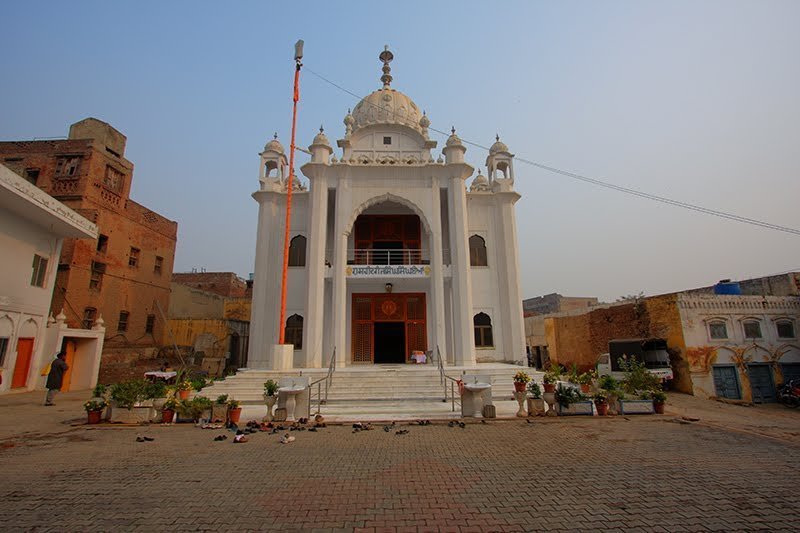
Some places you visit for what they still are. Others you visit for what they remember. Gurdwara Shikargarh — also known as Guru Arjan Niwas — belongs to the second kind. In the village of Kacha, about 15 kilometres south of Lahore on the old Ferozepur Road, a knoll in the earth marks where the sixth Sikh Guru, Guru Hargobind, once hunted in a thick forest. A great water tank built by Diwan Lakhpat Rai still stands outside the village. The surviving rooms and langar hall of the old gurdwara still stand too. And the story of what happened here after 1947 — the vanished shrine, the mansion raised over its foundations, the girls’ college that never got built — is the story of Partition itself, written in brick and dust. If you are a heritage traveler, a Sikh pilgrim tracing the lesser-known shrines, or simply someone who believes the most honest history is found off the highway, this Gurdwara Shikargarh (Guru Arjan Niwas), Kacha travel guide will help you decide whether this quiet corner of Lahore district deserves your journey — and how to make the most of it if it does.
Quick Facts
- Location: Kacha village, Lahore District, Punjab, Pakistan — about 4 km west of the Kahna bus stop on Ferozepur Road; Kacha railway station lies about 3 km from the village
- Famous For: The hunting ground of Guru Hargobind (the sixth Sikh Guru) during his Lahore visit; the great tank of Diwan Lakhpat Rai; a vanished gurdwara also called Guru Arjan Niwas
- Nearest City: Lahore, roughly 15 km north — a day trip from the city
- Accessibility: Road only; the last stretch is village track off Ferozepur Road. Nearest airport: Allama Iqbal International Airport, Lahore
- Known Landmarks: The knoll (original gurdwara site), Diwan Lakhpat Rai’s tank (now with the Fisheries Department), surviving langar hall and residential rooms, Kacha railway station
- Best For: Sikh heritage pilgrims, Partition-history travelers, heritage photographers, off-beat Lahore explorers
- Honest Note: The main shrine building no longer stands — a mansion was raised over its site. Come for the story and the setting, not for a grand monument
Why Visit Gurdwara Shikargarh (Guru Arjan Niwas), Kacha
The first reason to come to Kacha is the Guru. In the early 1600s, when the sixth Sikh Guru, Guru Hargobind, visited Lahore, he rode out to hunt in the thick forest that then covered this land south of the city. Where his horses trod, the faithful later raised a gurdwara on a knoll in the village — a shrine to a day when the Miri-Piri Guru, the saint-soldier, passed through. For Sikh pilgrims who have seen the great shrines of Nankana Sahib, Panja Sahib and Kartarpur, Kacha offers the other side of the heritage map: the small, half-forgotten shrines where history happened without witnesses, and where the visit feels personal rather than ceremonial. Standing on that knoll, with the fields stretching where the forest once stood, you are as close to Guru Hargobind’s Punjab as it is possible to get.
The second reason is the story — and it is a story worth telling honestly. This is one of the many shrines whose fortunes broke in 1947. Before Partition, the gurdwara committee had even drawn up plans for a college for the higher education of girls, a remarkably forward-looking project that the violence of 1947 left incomplete. After Partition the shrine’s remains crumbled; within living memory the collapsed walls were still standing, and then they disappeared entirely — a mansion raised by a local Mayo family over the very site. The residential rooms, the tank and the langar hall survive, occupied now by local families. For travelers who want to understand Partition not as a chapter in a textbook but as something that happened to real buildings and real courtyards, Kacha is a classroom with no walls. Come with respect, ask before photographing homes, and you will find people willing to talk about what stood where.
The third reason is the tank of Diwan Lakhpat Rai — a great water reservoir built outside the village in front of the gurdwara street, and the one piece of the complex that still reads as heritage on sight. Waterworks built by Sikh-era administrators are among the least celebrated and most enduring monuments of 19th-century Punjab, and this one — now managed by the Fisheries Department — anchors the whole site. Pair the tank with the surviving langar hall and residential rooms and you can reconstruct, in your mind’s eye, the working gurdwara that once fed pilgrims and housed travelers.
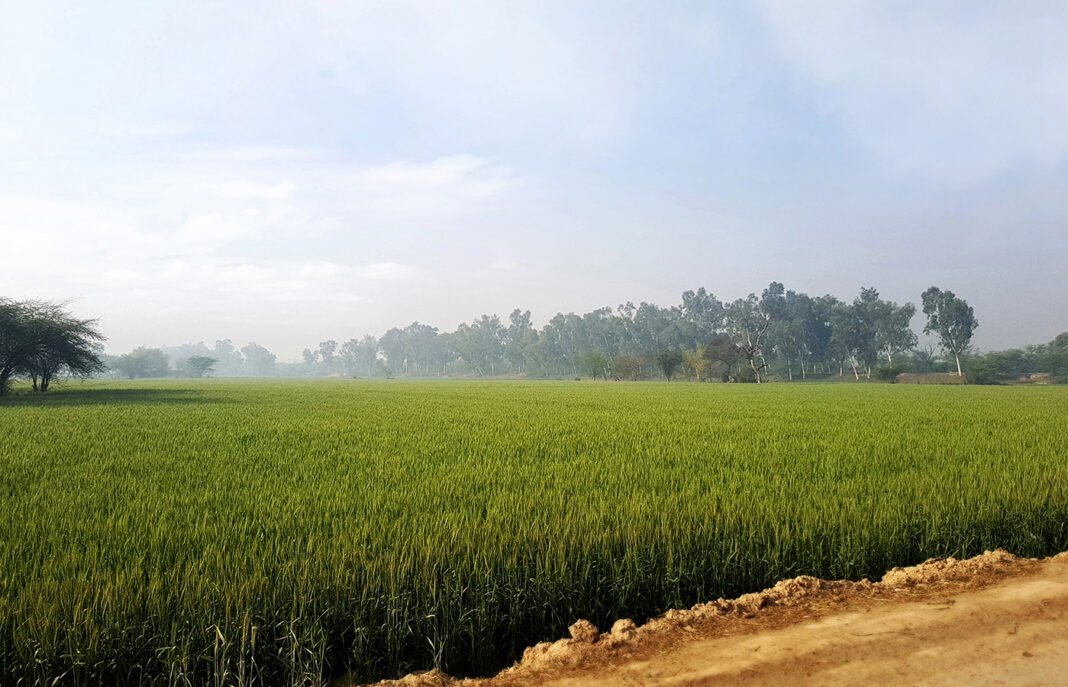
Finally, come for the setting itself. The forest where Guru Hargobind hunted is long gone, but the Lahore countryside around Kacha — wheat and mustard fields, buffalo carts, the slow rhythm of a Punjabi village — has a beauty that needs no monument. The trip is short enough to fold into any Lahore itinerary: an hour’s drive from the city, a walk through the village, a pause at the tank, and you are back in Lahore for dinner. For heritage photographers, the light on the fields at golden hour, the brick textures of the old gurdwara buildings, and the wide Punjab sky are rewards in their own right. This is a Gurdwara Shikargarh travel guide for people who travel to feel, not just to see.
It is also worth coming precisely because so few people do. In an age when every famous shrine in Punjab has a paved approach, a ticket counter, and a queue, Kacha offers the rare luxury of a historical site with no performance attached — no guides hawking tours, no shops selling trinkets, just a village and its memory. The traveler who plans a Lahore trip around the great monuments should save half a day for this detour; it will change how the grander shrines feel afterward, because you will have seen the other end of the spectrum — the shrine that history nearly forgot, kept alive only by the people who never left. If your idea of travel is collecting quiet, true places rather than famous ones, Gurdwara Shikargarh at Kacha belongs on your list, and the best season to claim it is the cool, clear winter, when the whole of the Lahore countryside glows.
History of Gurdwara Shikargarh (Guru Arjan Niwas), Kacha
The history of Gurdwara Shikargarh begins with a hunting party. During his visit to Lahore, Guru Hargobind — the sixth Sikh Guru (1606–1644), the founder of the Akal Takht and the first Guru to take up arms in defense of the faith — rode out with his companions to hunt in the dense forest south of the city. The ground where he camped and hunted, a knoll in what is now the village of Kacha, was remembered and sanctified. A gurdwara was later built on that knoll, known locally as Guru Arjan Niwas (also rendered Guru Arjun Nawas). The name “Shikargarh” itself preserves the memory: shikar is the hunt.
The shrine’s documented modern history belongs to the 19th and early 20th centuries. The great water tank in front of the gurdwara street was built by Diwan Lakhpat Rai, a Sikh-era administrator whose endowment of waterworks served the village for generations. During the British period, Bhai Mal Ji began the prakash (ceremonial installation and reading) of the Guru Granth Sahib at the gurdwara — a sign of a living, functioning shrine with a granthi and a sangat. In time the control of the gurdwara passed into the hands of the Singh Sabha, the reform movement that managed many of Punjab’s historic shrines in the early 20th century.
The pre-1947 chapter closes on a note of promise and loss. The gurdwara committee had finalized plans to establish a college for the higher education of girls on the shrine’s lands — an ambitious project for its time and place. The plan, like so much else in Punjab, did not survive 1947. Partition emptied the village of its Sikh population, and the gurdwara lost its sangat and its custodians.
What followed is recorded in the field surveys of the historian Iqbal Qaiser, whose Historical Sikh Shrines in Pakistan remains the authoritative record of these sites. Within a year of one survey, the remains of the collapsed shrine — still standing at the time — had disappeared completely, and a mansion raised by a local Mayo family now stands over the site of the knoll. The residential rooms of the gurdwara, the great tank and the langar hall still stand, though local families now live in these buildings. The tank itself passed to the Fisheries Department. That is the honest condition of Gurdwara Shikargarh today: not a functioning shrine, but a site of memory — a place where history is read in foundations, in a tank, and in the stories of the village elders.
Top Things to Do in Gurdwara Shikargarh (Guru Arjan Niwas), Kacha
Stand on the Knoll Where Guru Hargobind Hunted
The knoll in Kacha village is the heart of the site — the ground where the sixth Guru’s hunting party passed and where the gurdwara of Guru Arjan Niwas was later raised. The shrine building is gone and a private mansion now occupies the site, so there is no monument to photograph; what you come for is the ground itself and the story it carries. Walk the village lanes, find the rise of land, and picture the thick forest the old accounts describe. For Sikh visitors this is an act of remembrance (simran in place); for heritage travelers it is a lesson in how sacred geography survives even when buildings do not. Be discreet and respectful — you are in a residential neighborhood, and the current occupants are private citizens, not custodians.
See Diwan Lakhpat Rai’s Great Tank
The big water reservoir outside the village, built by Diwan Lakhpat Rai, is the most substantial surviving structure of the old complex. It stands in front of the street that once led to the gurdwara — a reminder that the great Sikh-era shrines were also public works, feeding and watering whole villages. The tank is now under the Fisheries Department, so access may be restricted; view it from the roadside and the village lanes, and do not trespass on departmental land. Early morning light on the water, with village life stirring around it, makes for the site’s best photographs.
Walk the Surviving Gurdwara Buildings
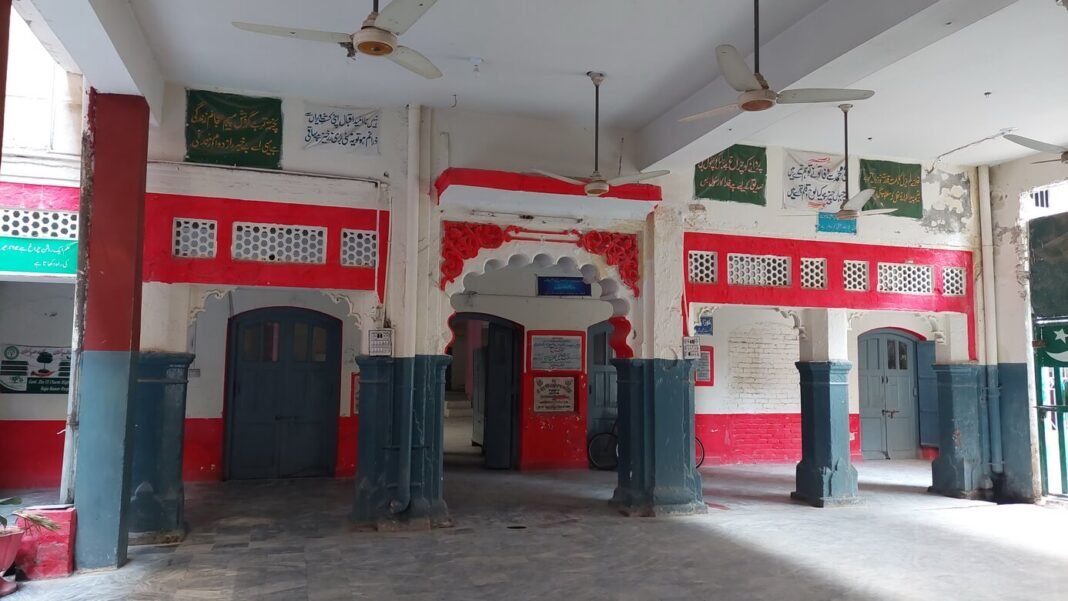
The residential rooms and the langar hall of the old gurdwara still stand along the gurdwara street, though local families live in them now. Their brickwork, arches and courtyard layouts are recognizably those of a 19th-century Punjabi gurdwara complex — the pilgrims’ quarters (musafir khana) and the community kitchen that once served travelers on the Ferozepur Road. Do not enter occupied homes uninvited; admire the exteriors from the lane, and if a resident invites you in, accept graciously and listen — village elders often remember more than any book.
Ride the Rails: Kacha Railway Station
Kacha has its own railway station, about 3 km from the village — a small colonial-era halt on the line south of Lahore. Rail enthusiasts can combine the visit with a ride on a local train, one of the most atmospheric ways to see the Punjab countryside. Check current Pakistan Railways schedules before planning, as small halts see limited service.
Explore Kahna and the Ferozepur Road Villages
Kacha sits about 4 km west of the Kahna bus stop on Ferozepur Road, and Kahna itself rewards a stop: a historic market town with its own gurdwara heritage. The Gurdwara Baba Jamiat Singh at Kahna Nau is nearby and makes a natural pairing for a Sikh-heritage day out from Lahore. The Ferozepur Road corridor is thick with history — old havelis, colonial-era mile markers, and villages that remember the days when this was the grand trunk of southern Lahore.
Famous Places In and Around Gurdwara Shikargarh, Kacha
- Kahna Nau — historic market town 4 km east, with its own gurdwara heritage and old bazaars
- Gurdwara Baba Jamiat Singh, Kahna Nau — a companion Sikh shrine for a combined heritage circuit
- Gurdwara Chhevin Patshahi, Hudiara — another historic Guru Hargobind shrine in Lahore district
- Ali Baig Gurdwara — a further Sikh heritage stop in the Lahore region
- Lahore city — Badshahi Mosque, Lahore Fort, Shalimar Gardens and the Walled City, all within an hour’s drive
- Changa Manga forest — the great planted forest south of Lahore, a reminder of the woodland that once covered this whole region
How to Reach Gurdwara Shikargarh (Guru Arjan Niwas), Kacha
Reaching Kacha is straightforward because it sits just off one of Lahore’s great arterial roads. From anywhere in Lahore, take Ferozepur Road south toward Kahna — the drive from central Lahore (Gulberg/Liberty) to the Kahna bus stop takes roughly 30–45 minutes depending on traffic, covering about 15 km. At Kahna, turn west (right if you are heading south) and follow the village road about 4 km to Kacha. The last stretch is a rural track — fine for any car in dry weather, but take it slowly after rain. Ask any villager for the gurdwara wali jagah (the gurdwara site) or Diwan Lakhpat Rai’s tank, and you will be pointed the right way.
From Islamabad, the journey is about 375 km via the M-2 motorway to Lahore (roughly 4.5–5 hours), then the Ferozepur Road leg south. From Karachi, it is a long haul of about 1,230 km — fly into Lahore and drive, or take the train to Lahore and hire a car for the day. The nearest airport is Allama Iqbal International Airport, Lahore; the nearest railway station is Kacha station itself, about 3 km from the village, though service at small halts is limited — Lahore Junction is the practical railhead.
Transport options: a private car or hired car with driver is by far the easiest, since the village track and the short hops between Kacha, Kahna and the tank are not served by public transport. Ride-hailing cars from Lahore will take you to Kahna; negotiate the village leg separately or keep the car waiting. Local wagons and rickshaws run along Ferozepur Road between Lahore and Kahna. Tour vans from Lahore’s heritage tour operators can be hired for a half-day Sikh-heritage circuit covering Kacha, Kahna Nau and Hudiara.
Route Details
Lahore → Kacha (the classic day trip): Start at Kalma Chowk / Ferozepur Road. Drive south past Model Town, the Township, and the Kahna Kacha area. Continue to the Kahna bus stop (the landmark flyover/market area). Turn west toward Kacha village — about 4 km on the village road. Total: roughly 15 km from central Lahore, 30–45 minutes. Visit the knoll site, the tank and the surviving gurdwara buildings (1–2 hours on foot), stop for tea in Kahna, and return the same way.
Islamabad → Kacha: M-2 motorway south to Lahore (Thokar Niaz Beg / Babu Sabu interchange), then across the city to Ferozepur Road and south as above. Allow a full day: 4.5–5 hours each way plus 2 hours at the site. An overnight in Lahore makes this comfortable.
Karachi → Kacha: Fly Karachi → Lahore (about 2 hours), then the Lahore–Kacha drive. Alternatively, the train (Karachi → Lahore, 18–22 hours) then a day car. This is a Lahore-based excursion, not a standalone Karachi trip.
Road conditions: Ferozepur Road is a major dual carriageway in good condition year-round. The 4 km village track to Kacha is unpaved in places — passable for cars in dry months (October–June), potentially muddy during the monsoon (July–September). Winter mornings can bring dense fog on Ferozepur Road; drive after 10 a.m. in December–January.
Where to Stay in Gurdwara Shikargarh (Guru Arjan Niwas), Kacha
Kacha is a village — there are no hotels, guesthouses or restaurants aimed at travelers in the village itself, and that is part of its charm. Stay in Lahore, where the full range of options sits 30–45 minutes away. Luxury travelers will find five-star hotels in Gulberg and around the airport; mid-range hotels and serviced apartments cluster along Ferozepur Road, Multan Road and in DHA, all convenient for an early start south. Budget travelers can choose from the many guesthouses and small hotels near the railway station and in Mozang/Ichhra — basic, clean and inexpensive, with the city’s food streets a short ride away.
If your itinerary is a multi-day Sikh-heritage circuit of the Lahore region (Kacha, Kahna Nau, Hudiara and the city’s own gurdwaras such as Dera Sahib and Janam Asthan Guru Ram Das), base yourself in Lahore for two to three nights and do Kacha as a half-day trip. Camping is not appropriate at the site — it is a residential village, not wilderness — and there are no tourist camps in the area.
Where to Eat: Local Foods of Gurdwara Shikargarh (Guru Arjan Niwas), Kacha
In Kacha village itself, eat as the village eats: fresh roti from a clay tandoor, saag and seasonal vegetables cooked in desi ghee, daal, and tall glasses of lassi — the honest, rich food of the Punjab countryside. Roadside dhabas near Kahna on Ferozepur Road serve the traveler staples: daal fry, mixed sabzi, chicken karahi, and chai strong enough to stand a spoon in. A dhaba meal here is budget-friendly — a full meal for one typically costs no more than a few hundred rupees.
Back in Lahore, the eating deepens gloriously. The Fort Road Food Street near Badshahi Mosque, the food lanes of Anarkali, and the desi restaurants of Lakshmi Chowk serve the canon: nihari, paye, chanay with kulchay, chargha, halwa puri breakfasts, and rabri and kulfi for dessert. For a Kacha day trip, the winning formula is a Lahori breakfast of halwa puri before you leave, a dhaba lunch near Kahna, and dinner back in the city. Carry water and snacks for the village walk — there are no cafes at the site.
Weather in Gurdwara Shikargarh (Guru Arjan Niwas), Kacha
Kacha shares Lahore’s classic Punjab-plains climate: a short, foggy winter, a brief and beautiful spring, a long furnace of a summer, and a monsoon that breaks the heat. The shrine is an outdoor, on-foot site with no shade to speak of, so season choice matters more here than at a city monument.
| Season | Temperature Range | Conditions |
|---|---|---|
| Winter (Dec–Feb) | 5–20°C | Cool, pleasant days; dense morning fog on Ferozepur Road; cold nights — the best walking weather once the fog lifts |
| Spring (Mar–Apr) | 18–35°C | Beautiful — mustard fields in flower, clear skies; ideal for photography and village walks |
| Summer (May–Jul) | 30–45°C | Intensely hot; visit only at dawn or dusk, carry water, avoid midday entirely |
| Monsoon (Jul–Sep) | 28–38°C | Humid with heavy showers; the village track can turn muddy; dramatic skies for photographers |
| Autumn (Oct–Nov) | 18–33°C | Dry, clear and comfortable — harvest season in the fields; an excellent time to visit |
Language and Culture of Gurdwara Shikargarh (Guru Arjan Niwas), Kacha
The language of Kacha is Punjabi — the Majhi dialect of central Punjab — with Urdu widely understood, especially by younger villagers. A few words of Punjabi greeting (Sat Sri Akal will be recognized and warmly received given the site’s Sikh history; Assalam-o-Alaikum works universally) open doors that English cannot. The village is Muslim-majority today, and the old gurdwara buildings are private homes — so the cultural contract is simple: ask before photographing people or entering courtyards, keep your voice low near homes, and accept tea when it is offered, because it will be.
Dress modestly as you would anywhere in rural Punjab — covered shoulders and knees; women may want a dupatta or scarf, useful both for sun and for custom. If you wish to say a quiet prayer at the knoll, cover your head as you would at any gurdwara. Remove shoes if you step onto any platform or threshold that was part of the old shrine. And remember the golden rule of lost-heritage travel: you are a guest in a village, not a visitor to a monument. The elders who remember the shrine’s last standing walls are the real guides here — treat their memories as the treasure they are.
Shopping in Gurdwara Shikargarh (Guru Arjan Niwas), Kacha
There are no souvenir shops at Kacha — and that is honest. Do your shopping in Lahore, where the options are among Pakistan’s best. Anarkali Bazaar and Ichhra offer Punjabi jutti (embroidered shoes), phulkari textiles, brassware and spices at bargain prices; Liberty Market in Gulberg is the mid-range fashion stop; the Fort Road area has craft shops aimed at heritage tourists. In Kahna’s local bazaar you can buy the countryside’s own souvenirs: fresh desi ghee, mustard oil, and seasonal produce sold by the roadside. There is no shopping mall anywhere near Kacha — plan city shopping for your Lahore base days.
Travel Tips for Gurdwara Shikargarh (Guru Arjan Niwas), Kacha
Packing Essentials
Sun protection is non-negotiable: a wide-brimmed hat or cap, sunscreen, and sunglasses — the site is entirely outdoors. Sturdy walking shoes for village lanes and field paths. A scarf or dupatta for head-covering and sun. A fully charged phone and a power bank (no charging points in the village). Drinking water and light snacks. A small notebook — you will want to write down what the elders tell you. Binoculars are a bonus for birdwatching over the tank and fields in winter, when migratory birds visit Punjab’s wetlands.
Safety Tips
Kacha is a quiet, settled agricultural village and perfectly safe for daytime visits; the usual rural-Punjab common sense applies. Go with a local contact or guide if possible — not for safety so much as for access and translation. Do not climb on old structures or the tank embankment. Keep to the lanes; fields are private farmland. If you are a foreign visitor, carry your passport and hotel details, and let your hotel know your day-trip plan. Drive back to Lahore before dark — the village track is unlit.
Money & Connectivity
Carry cash — there are no ATMs in Kacha village (ATMs are plentiful in Lahore and at Kahna’s banks). Mobile signals from all major networks (Jazz, Telenor, Zong, Ufone) generally work in the area, though data speeds dip inside the village. There is no Wi-Fi anywhere near the site; download offline maps of the Kahna–Kacha area before you leave Lahore.
Best Time to Visit Gurdwara Shikargarh (Guru Arjan Niwas), Kacha
Winter (November–March): The Ideal Season
This is the sweet spot — cool, dry days made for walking, clear light for photography, and the mustard fields in full yellow glory in February. Morning fog on Ferozepur Road usually burns off by mid-morning; plan to reach Kacha around 10 a.m. Winter is also when village life is most outdoors and sociable, so your chances of long conversations with elders are highest.
Spring (March–April): Beautiful but Brief
Spring in the Lahore countryside is short and lovely — flowering fields, mild mornings, and the wheat turning gold before harvest. Visit early in the day as temperatures climb toward 35°C by April. This is also the season of Vaisakhi (mid-April), the great Sikh harvest festival — while no fair is held at Kacha itself, the festival gives a Sikh-heritage trip its emotional context, and Lahore’s active gurdwaras celebrate it.
Summer and Monsoon (May–September): Avoid
Punjab’s summer is punishing — 40°C-plus days with no shade at the site — and the monsoon turns the village track muddy. If you must travel in these months, restrict the visit to dawn, carry abundant water, and combine it with indoor Lahore sightseeing (museums, the Fort) for the rest of the day.
Autumn (October–November): The Second-Best Window
Post-monsoon clarity, comfortable temperatures, and harvest activity in the fields make autumn nearly as good as winter. Fewer travelers than the winter peak, and the light — low, golden, long-shadowed — is a photographer’s gift.
Final Thoughts
Gurdwara Shikargarh will not overwhelm you with domes and marble. It will do something quieter: it will show you how history actually survives — not in the buildings that endure, but in the ground that remembers, in a tank that still holds water, in a village that still knows the Guru hunted here. The shrine of Guru Arjan Niwas is gone, and the honest traveler should know that before going. But the knoll remains, the story remains, and the Punjab countryside around Kacha remains one of the most evocative landscapes in Pakistan.
Go in winter, when the mustard is flowering and the light is kind. Walk slowly. Ask questions. Listen more than you photograph. Pair it with Kahna Nau and Hudiara for a full day of Lahore’s forgotten Sikh heritage, and end the day with nihari in the Walled City. You will come home with no grand monument photos — and with a far better story than most tourists bring back from Lahore. For the traveler who chooses depth over spectacle, Kacha is exactly the right choice. Explore more of the country’s hidden heritage in our Explore Pakistan series.
FAQs
Where is Gurdwara Shikargarh (Guru Arjan Niwas), Kacha?
It is in Kacha village, Lahore District, Punjab — about 15 km south of Lahore, roughly 4 km west of the Kahna bus stop on Ferozepur Road. Kacha railway station is about 3 km from the village.
What is the best time to visit Gurdwara Shikargarh, Kacha?
November to March, when the weather is cool and dry and the countryside is at its most beautiful. Spring (March–April) is also lovely. Avoid the May–September heat.
How do I reach Gurdwara Shikargarh from Lahore?
Drive south on Ferozepur Road to the Kahna bus stop (30–45 minutes), then turn west on the village road for about 4 km to Kacha. A private car or hired car is the easiest option.
Is the gurdwara building still standing?
No — the main shrine collapsed and its remains have disappeared; a private mansion now stands over the site. The residential rooms, langar hall and Diwan Lakhpat Rai’s tank still survive, occupied or managed locally.
Is Gurdwara Shikargarh safe for tourists and families?
Yes for daytime visits — it is a quiet agricultural village. Go with a local contact if possible, respect private homes, and return to Lahore before dark.
Where can I stay near Gurdwara Shikargarh?
There are no hotels in Kacha village. Stay in Lahore (30–45 minutes away), which offers everything from luxury hotels to budget guesthouses.
What food is available near Kacha?
Village dhabas near Kahna serve roti, daal, sabzi, karahi and chai at budget prices; for the full Lahori spread (nihari, paye, halwa puri), eat in Lahore before or after your trip.
Why is it called both Shikargarh and Guru Arjan Niwas?
“Shikargarh” recalls the shikar (hunt) of Guru Hargobind in the forest that once stood here, while “Guru Arjan Niwas” (Guru Arjan’s abode) is the name under which the gurdwara built on the knoll was locally known.