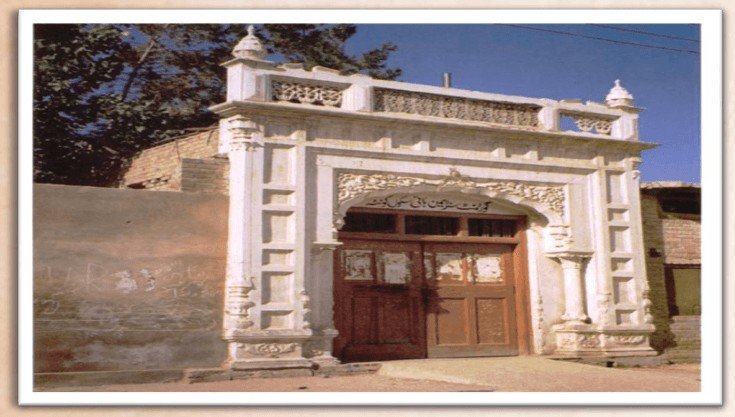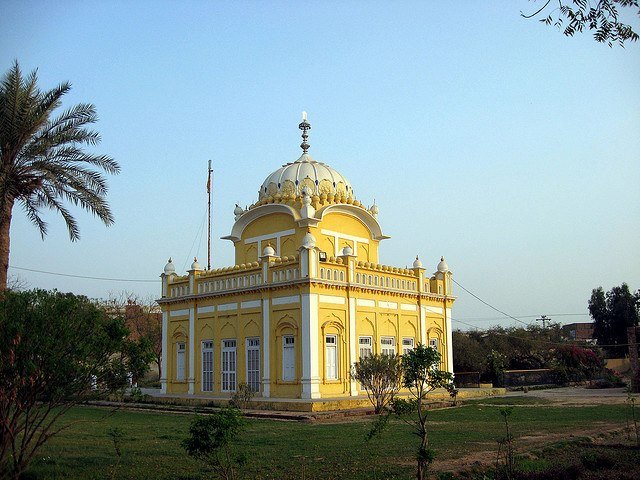
Some places overwhelm you with grandeur. The twin shrines of Gurdwaras Panjvin and Chhevin Patshahi, Nankana Sahib do the opposite — they quieten you down. Standing within one shared boundary wall near Gurdwara Tambu Sahib, these two modest shrines carry the footprints of the Fifth and Sixth Sikh Gurus: Guru Arjan Dev Ji, the first Sikh martyr, and Guru Hargobind Sahib Ji, the warrior-saint who introduced the twin swords of Meeri and Peeri. If you are drawn to places where history is felt rather than displayed, this corner of Nankana Sahib deserves a place on your itinerary.
This Panjvin and Chhevin Patshahi travel guide walks you through why these twin gurdwaras matter, the remarkable story of the tree preserved in glass inside the domed shrine, when to time your visit around Nankana Sahib’s great Sikh festivals, and how to reach them easily from Lahore as a day trip.
Quick Facts
- Location: Near Gurdwara Tambu Sahib, on the road leading to Gurdwara Janam Asthan, Nankana Sahib, Punjab, Pakistan
- Famous For: Twin shrines dedicated to the Fifth Guru (Arjan Dev) and Sixth Guru (Hargobind); the preserved piece of the tree Guru Hargobind rested under, kept in a glass case inside the domed shrine
- Nearest City: Nankana Sahib town (minutes away); Lahore about 91 km east
- Accessibility: Easily reached by road and rail from Lahore; local rickshaws and taxis within Nankana Sahib
- Known Landmarks: The domed shrine of the Sixth Guru, the domeless shrine of the Fifth Guru, Gurdwara Tambu Sahib (about 300 metres away), Gurdwara Janam Asthan
- Best For: History lovers, Sikh pilgrims, heritage travellers, spiritual seekers, families combining Nankana Sahib’s shrines in one day
Why Visit Gurdwaras Panjvin and Chhevin Patshahi, Nankana Sahib
Nankana Sahib is the birthplace of Guru Nanak, the founder of Sikhism, and most visitors head straight for the grand Gurdwara Janam Asthan. But those who know the town’s deeper history make a quiet detour to these twin shrines — because they connect you to two of Sikhism’s most dramatic turning points. The Panjvin Patshahi shrine honours Guru Arjan Dev, whose martyrdom in Lahore in 1606 changed the course of Sikh history, while the Chhevin Patshahi shrine marks where his son, Guru Hargobind, rested during his return from Kashmir in 1613 and where his followers established a Gur Mela in his memory.
What makes the Chhevin Patshahi shrine genuinely moving is not architecture — the buildings are simple — but the relic inside. The tree under which the Sixth Guru stayed has long since withered away, but a preserved piece of it rests in a glass case within the domed shrine. For the sangat who visit, seeing that fragment is like touching a living thread to 1613. There is something profoundly honest about a shrine whose greatest treasure is not gold or marble, but a piece of wood that once shaded a Guru.
The twin shrines are also the perfect starting point for walking Nankana Sahib’s sacred geography. They sit near Tambu Sahib, roughly 300 metres away, on the road that pilgrims walk toward the Janam Asthan. Tradition holds that the Gurus themselves first stopped at this spot and then walked barefoot for the darshan yatra of Janam Asthan. Visiting here first, then continuing on foot to the birthplace gurdwara, lets you retrace a pilgrimage route that is centuries old — a small act of travel that connects you physically to the faith’s history.
Finally, this is one of the most peaceful stops in a town that can get crowded during pilgrim seasons. Because no daily Prakash is held here and the crowds concentrate at the larger gurdwaras, you often have the courtyard nearly to yourself. Come in the morning, cover your head, sit quietly for a while, and let the weight of four centuries settle in. For anyone building a deeper Explore Pakistan itinerary of Punjab’s heritage, this is the kind of stop that turns a sightseeing day into a memory.
History of Gurdwaras Panjvin and Chhevin Patshahi, Nankana Sahib
The history of these twin shrines is inseparable from the history of Nankana Sahib itself. The town, originally founded as Raipur, was destroyed during the early Muslim conquests; a new settlement was later raised here by Rai Bhoi, a Rajput whose ancestor had converted to Islam, and it became known as Rai-Bhoi-Di-Talwandi. It was in this town, in 1469, that Guru Nanak was born — an event that would eventually give the city its present name, bestowed by Rai Bular Bhatti, the great-grandson of Rai Bhoi. For two centuries the shrines associated with Guru Nanak’s birth and early life grew in importance, and by the Mughal era a gurdwara stood at the Janam Asthan, later renovated by Maharaja Ranjit Singh in 1819–20.
The two shrines that form our subject commemorate the Fifth and Sixth Gurus. The shrine of Sat Guru Arjan Dev Ji is built without a dome — a deliberately simple structure. Guru Arjan, the Fifth Guru, compiled the Adi Granth (the first version of the Guru Granth Sahib) and built the Harmandir Sahib at Amritsar; his martyrdom under Mughal emperor Jahangir in 1606, after torture in Lahore, is one of the defining events of Sikh history. The Chhevin Patshahi shrine, by contrast, rises with a dome and belongs to his son, Guru Hargobind Sahib Ji — revered as the Patshah of Meeri-Peeri, the spiritual and temporal authority, who donned two swords and transformed the Sikh community’s relationship with power.
According to the tradition recorded by historians of the Sikh shrines of Pakistan, the Sixth Guru came to Nankana Sahib in the month of Har, Samvat 1670 (1613 AD), while returning from Kashmir. He rested at this spot, and in memory of that visit his disciples established a Gur Mela here. Thirteen ghumaon of land — traditional land units — were endowed for the upkeep of the Gurdham. The two shrines share a common boundary wall and stand adjacent to each other, a physical reminder that the Fifth Guru’s sacrifice and the Sixth Guru’s response belong to a single story.
The tree under which Guru Hargobind stayed has withered with time, but the sangat refused to let it vanish entirely: a piece of the tree has been preserved in a glass case and placed inside the dome of the Sixth Guru’s shrine, where visiting pilgrims can see it. Today, regular Prakash — the formal daily opening and recitation of the Guru Granth Sahib — does not take place at these shrines in the way it does at the larger gurdwaras; the buildings stand as historical shrines that yatrees visit for solace and connection to this chapter of Sikh history. The structures themselves remain original, and that authenticity is precisely their power.
Top Things to Do in Gurdwaras Panjvin and Chhevin Patshahi, Nankana Sahib
See the Preserved Tree Fragment in the Domed Shrine
The single most moving moment of a visit to the Panjvin and Chhevin Patshahi shrines is standing before the glass case inside the domed Chhevin Patshahi shrine. The preserved piece of the tree under which Guru Hargobind rested in 1613 is kept here for the sangat to see. Take your time; the shrine keepers and visiting pilgrims treat this relic with deep reverence, and the quiet of the small domed chamber makes it one of the most intimate heritage experiences in Punjab.
Compare the Domeless and Domed Architecture
Architecture enthusiasts will appreciate the deliberate contrast the two shrines present. The Panjvin Patshahi shrine, dedicated to Guru Arjan Dev, is built without a dome — simple, grounded, austere. Right beside it within the same boundary wall, the Chhevin Patshahi shrine rises with its dome, marking the warrior-saint era of Guru Hargobind. Reading the two buildings side by side is like reading the turning point of Sikh history in brick and plaster.
Walk the Old Pilgrimage Route to Janam Asthan
Tradition says the Gurus first arrived at this spot and then walked barefoot for the darshan yatra of Janam Asthan. You can honour that tradition by walking from the twin shrines toward Gurdwara Janam Asthan, the birthplace of Guru Nanak and a nationally Protected Heritage Monument. The walk passes Tambu Sahib and threads through Nankana Sahib’s old town, turning a short distance into a meaningful pilgrimage.
Visit During Gur Mela Gatherings
The Gur Mela established by the Sixth Guru’s disciples at this site was the original reason these shrines became a gathering place. While the great crowds now gather for Gurpurb in November and the Saka Nankana anniversary in February, even on ordinary days small groups of pilgrims arrive, sit together, and share stories. If your visit coincides with a festival, the twin shrines become part of a much larger, joyful tapestry of devotion.
Famous Places In and Around Gurdwaras Panjvin and Chhevin Patshahi, Nankana Sahib
- Gurdwara Janam Asthan — the birthplace of Guru Nanak, Nankana Sahib’s holiest shrine and a Protected Heritage Monument.
- Gurdwara Tambu Sahib — about 300 metres from the twin shrines, marking where Guru Nanak received enlightenment.
- Gurdwara Bal Lila Sahib, Nankana Sahib — commemorating Guru Nanak’s childhood pastimes in the town.
- Gurdwara Kiara Sahib, Nankana Sahib — another of the town’s historic shrines, easy to combine in one day.
- Gurdwara Patti Sahib, Nankana Sahib — linked to Guru Nanak’s early education, a favourite with history-minded visitors.
- Gurdwara Mal Ji Sahib, Nankana Sahib — one more stop on a full-day shrine circuit of the town.
How to Reach Gurdwaras Panjvin and Chhevin Patshahi, Nankana Sahib
Reaching the twin shrines is straightforward, which is one reason they make such an easy addition to a Lahore-based trip. Nankana Sahib sits about 91 km west of Lahore and about 75 km east of Faisalabad, and the shrines themselves are inside the town near Tambu Sahib on the road to Janam Asthan. Once you are in Nankana Sahib, local rickshaws and taxis know the shrines well — ask for the Panjvin-Chhevin Patshahi gurdwaras near Tambu Sahib, along the Mananwala Bypass side.
From Lahore: The simplest route is the most popular — drive or take a bus/taxi west from Lahore to Nankana Sahib, a journey of around 91 km that takes roughly 1.5 to 2 hours depending on traffic. Many visitors combine this with a full day covering Janam Asthan and the town’s other gurdwaras. Trains also run from Lahore Railway Station to Nankana Sahib Railway Station; from the station, a rickshaw or taxi will get you to the shrines in minutes.
From Islamabad: Take the M-2 motorway toward Lahore and exit for Sheikhupura/Nankana Sahib, continuing on the connecting roads into the town. The drive is around 350–380 km and takes roughly 4.5 to 5.5 hours. Most travellers from the capital treat Nankana Sahib as a day trip from Lahore or as a stop on a longer Punjab heritage circuit.
From Karachi: The nearest airport is in Lahore, about 91 km from Nankana Sahib. Fly from Karachi to Lahore (around 2 hours), then continue by road or rail. Long-distance travellers can also take the train to Lahore or Faisalabad and connect onward.
Road conditions and transport options: The highways to Nankana Sahib are paved and in good condition year-round. Within the town, the roads to the shrines are narrow in places, so walking the last stretch — as pilgrims traditionally do — is often the most pleasant option. Private cars, tour vans, ride-hailing services from Lahore, and local rickshaws all work well. If you are travelling in the monsoon months, allow extra time for rain-slowed traffic on the plains.
Route Details
- Lahore → Nankana Sahib: Head west out of Lahore on the road toward Sheikhupura/Mananwala (around 91 km). Follow signs for Nankana Sahib town.
- Enter the town and make for the old shrine quarter around Gurdwara Janam Asthan.
- Tambu Sahib → twin shrines: From Gurdwara Tambu Sahib, take the road leading toward Janam Asthan; the twin shrines of Panjvin and Chhevin Patshahi stand about 300 metres away, sharing one boundary wall. Park or leave your vehicle and walk the final stretch.
- Return: Continue on foot or by rickshaw to Janam Asthan to complete the pilgrimage route.
Where to Stay in Gurdwaras Panjvin and Chhevin Patshahi, Nankana Sahib
Most visitors see the twin shrines as a day trip from Lahore, but if you want to stay over — especially during Gurpurb or Saka Nankana, when the town fills with pilgrims — Nankana Sahib has workable options. The town has a cluster of budget and mid-range hotels and guesthouses near the main roads and the railway station, offering clean rooms with air-conditioning and attached baths at prices that are generally lower than Lahore’s. During major festivals, book well ahead, as pilgrim groups fill the town.
For Sikh pilgrims, the large gurdwaras in Nankana Sahib — particularly the Janam Asthan complex — traditionally provide sarai (pilgrim rest-house) accommodation for visiting sangat, especially during festival seasons. Arrangements are typically made through the gurdwara management or with organised yatra groups. These stays are simple and communal but place you at the very heart of the town’s spiritual life.
Luxury travellers will find the best high-end hotels back in Lahore, about 1.5 to 2 hours away — a comfortable base if you prefer premium accommodation and are happy to drive in for the day. Camping is not a feature of this destination; this is a town-and-shrine visit, so plan on roofed accommodation.
Where to Eat: Local Foods of Gurdwaras Panjvin and Chhevin Patshahi, Nankana Sahib
Eating in Nankana Sahib is a pleasure for lovers of Punjabi food. The town’s dhabas and small restaurants serve the classics of the region: sarson ka saag with makki di roti in winter, rich dal makhani and mixed dal, tandoori rotis and naan straight from clay ovens, and tall glasses of lassi — sweet or salted — that the Punjab plains are famous for. Breakfast here often means halwa puri or anda paratha at a roadside dhaba, and you will find chana chaat, samosas, and pakoras at every corner.
One experience you should not miss is the langar — the free community kitchen — served at Nankana Sahib’s major gurdwaras, where volunteers cook simple, wholesome vegetarian meals for everyone who comes, regardless of faith. Eating langar seated in rows on the floor is as much a cultural experience as a meal. A full day of dhaba-hopping in Nankana Sahib is easy on the wallet; expect hearty meals at very budget-friendly prices compared with the big cities. For snacks, the bazaars around the shrines sell jaggery (gur), roasted peanuts, and seasonal fruit from local farms.
Weather in Gurdwaras Panjvin and Chhevin Patshahi, Nankana Sahib
Nankana Sahib sits on the Punjab plains, so it shares the classic plains climate: pleasant winters, scorching summers, and a monsoon that drenches the region in July and August. The most comfortable months for shrine-hopping on foot are October through March, when the air is cool and the skies are clear. Here is what to expect across the seasons:
| Season | Temperature Range | Conditions |
|---|---|---|
| Winter (Dec–Feb) | 8°C – 20°C | Cool, foggy mornings; the most pleasant season for walking between shrines. Carry a warm jacket for evenings. |
| Spring (Mar–Apr) | 15°C – 32°C | Warming up, clear skies, wheat fields turning golden. A lovely time to visit. |
| Summer (May–Jun) | 28°C – 41°C | Hot and dry with dust-laden winds; plan shrine visits for early morning or late afternoon. |
| Autumn (Sep–Nov) | 18°C – 33°C | Cooling down after the monsoon; November brings Gurpurb and ideal weather. |
Note: July–August is monsoon season, with heavy rain and high humidity — travel is still possible but plan around downpours.
Language and Culture of Gurdwaras Panjvin and Chhevin Patshahi, Nankana Sahib
Punjabi is the mother tongue of Nankana Sahib, spoken in its warm, central-Punjab dialect, with Urdu widely understood and used in shops, hotels, and transport. During pilgrim seasons you will also hear plenty of Punjabi from across the border, as Indian yatrees arrive for the festivals.
The culture of the town revolves around its shrines. Visitors to any gurdwara should observe the standard etiquette: cover your head (scarves are usually available at the entrance if you forget), remove your shoes before entering, wash your hands and feet where facilities are provided, and dress modestly. Photography inside the sanctum is best avoided unless you have permission. If you are offered langar, accept it graciously — it is served to all without distinction, and eating together is part of the experience.
Because these are historical shrines rather than grand congregational gurdwaras, the atmosphere is quieter and more contemplative. Speak softly, give pilgrims their space, and you will be welcomed warmly — Nankana Sahib’s residents are accustomed to visitors and proud of their town’s heritage.
Shopping in Gurdwaras Panjvin and Chhevin Patshahi, Nankana Sahib
Shopping here is about small, meaningful souvenirs rather than malls — there are no shopping malls in the shrine quarter, and that is part of the charm. The bazaars around Janam Asthan and the town centre sell religious souvenirs: framed pictures of the Gurus, rumallas (cloth coverings), kara bracelets, and books on Sikh history in Punjabi, Urdu, and English. Pilgrims often buy these as gifts for family back home.
Beyond religious items, Nankana Sahib’s markets offer the everyday delights of a Punjab market town: phulkari-embroidered textiles, juttis (traditional footwear), dry fruits and roasted nuts, and in season, fresh kinnows and guavas from surrounding orchards. Prices are modest and bargaining is expected in the bazaars. If you want branded shopping, Lahore — 91 km away — is the place; come to Nankana Sahib for the authentic and the handmade.
Local Events and Festivals
Gurpurb — Guru Nanak’s Birth Anniversary (November): The biggest event in Nankana Sahib’s calendar. Celebrated on the full moon of Kartik (usually November), Gurpurb draws tens of thousands of pilgrims — including yatrees from India — to the town. The Janam Asthan complex glows with lights, Akhand Path (continuous recitation of the Guru Granth Sahib) fills the air, and langar runs around the clock. The twin shrines of Panjvin and Chhevin Patshahi receive a steady stream of visitors as part of the wider pilgrimage.
Saka Nankana (20 February): The solemn anniversary of the 1921 Nankana massacre, when Mahant Narain Das’s men fired on Akali protesters at the Janam Asthan gurdwara. Sikhs gather to honour the martyrs, and the day carries deep emotional significance across the town’s shrines. Visiting during Saka Nankana offers a powerful, if sombre, window into Sikh history.
Vaisakhi (April): The spring harvest festival and the anniversary of the Khalsa’s founding is also celebrated by Nankana Sahib’s Sikh community and visiting pilgrims, with processions and gatherings at the town’s gurdwaras.
Travel Tips for Gurdwaras Panjvin and Chhevin Patshahi, Nankana Sahib
Packing Essentials
Bring a headscarf or dupatta for gurdwara visits, comfortable walking shoes (you will remove them at shrines, so slip-ons are handy), sun protection for summer, and a warm layer for winter mornings when fog rolls over the plains. Carry a water bottle and some cash in small notes for rickshaws and bazaar shopping.
Safety Tips
Nankana Sahib is a peaceful pilgrim town and welcoming to visitors of all backgrounds. Standard travel sense applies: keep valuables secure in crowded festival times, drink bottled or filtered water, and follow the guidance of gurdwara staff. During Gurpurb, the crowds are large but well-managed; arrive early in the day for the calmest experience.
Money & Connectivity
ATMs and bank branches are available in Nankana Sahib town, but carry enough cash for the day — small shrines, rickshaws, and bazaar stalls run on cash. Mobile signals from all major Pakistani networks work well across the town, and 4G data is generally reliable.
Best Time to Visit Gurdwaras Panjvin and Chhevin Patshahi, Nankana Sahib
Winter (November–February): The Festival Season
This is the prime time. The weather is cool and clear — perfect for walking between shrines — and the calendar brings Gurpurb in November and Saka Nankana in February. Expect crowds at the major gurdwaras during festivals, but the twin shrines themselves remain relatively serene. If you want atmosphere and mild weather together, plan for this window.
Spring (March–April): Pleasant and Quiet
Spring offers warm days, blooming fields, and far fewer crowds than winter. Vaisakhi in April adds a festive note. This is an excellent choice if you prefer a contemplative visit without the festival rush.
Summer (May–August): For the Determined
Summer on the plains is fiercely hot, and the July–August monsoon brings heavy rain. Shrine visits are still possible — go at dawn or dusk, stay hydrated, and use air-conditioned transport between stops. Off-season travel means empty courtyards and unhurried time at the relics.
Autumn (September–October): The Sweet Spot
As the monsoon retreats, October brings clear skies and comfortable temperatures. It is arguably the best month for a relaxed, crowd-free visit before the Gurpurb season begins.
Final Thoughts
The twin shrines of Panjvin and Chhevin Patshahi will not impress you with scale — and that is precisely their gift. In a town anchored by the magnificent Janam Asthan, these two small shrines guard the quieter, more personal chapters of Sikh history: a Guru’s rest stop on the road from Kashmir, a withered tree remembered in glass, thirteen ghumaon of endowed land, and four centuries of pilgrims finding solace in unadorned buildings. They remind you that heritage is not always monumental; sometimes it is a fragment of wood in a glass case that says more than a dome ever could.
If you are planning a Punjab heritage journey — whether your anchor is Malam Jabba in the north or the valleys of Hunza further afield — make room for a day in Nankana Sahib, and make room within that day for these twin shrines. Walk from Tambu Sahib, stand before the glass case, and then continue barefoot in spirit to the Janam Asthan. Few travel experiences in Pakistan connect you so directly to living history.
FAQs
Where are the Gurdwaras Panjvin and Chhevin Patshahi located?
They stand near Gurdwara Tambu Sahib, about 300 metres away on the road leading to Gurdwara Janam Asthan in Nankana Sahib, Punjab — around 91 km west of Lahore. The two shrines share a common boundary wall.
What is the best time to visit the twin shrines?
October to March offers the best weather. November is special because of Gurpurb (Guru Nanak’s birth anniversary), and 20 February marks Saka Nankana, the massacre anniversary — both draw large pilgrim gatherings to the town.
How do I reach Nankana Sahib from Lahore?
Drive or take a taxi/bus west from Lahore — about 91 km, roughly 1.5 to 2 hours. Trains also run from Lahore Railway Station to Nankana Sahib Railway Station, from where a rickshaw reaches the shrines in minutes.
Is it safe for non-Sikh visitors?
Yes. Nankana Sahib welcomes visitors of all faiths. Observe gurdwara etiquette — cover your head, remove shoes, dress modestly — and you will be received warmly.
Are the twin shrines suitable for families and elderly visitors?
Very much so. The site is small, flat, and easy to walk around, and it combines naturally with the other shrines of Nankana Sahib for a relaxed family day trip from Lahore.
Where can I stay near the shrines?
Budget and mid-range hotels and guesthouses in Nankana Sahib town cover most needs; gurdwara sarais accommodate pilgrims during festivals. Lahore, 1.5–2 hours away, offers luxury hotels for a day-trip base.
What food should I try in Nankana Sahib?
Punjabi classics — sarson ka saag with makki di roti in winter, dal, tandoori roti, lassi, and halwa puri breakfasts at local dhabas. Do not miss the langar (free community kitchen) at the major gurdwaras.
What is inside the domed shrine of the Sixth Guru?
A preserved piece of the tree under which Guru Hargobind rested during his 1613 visit, kept in a glass case for pilgrims to see — the most treasured relic of the twin shrines.