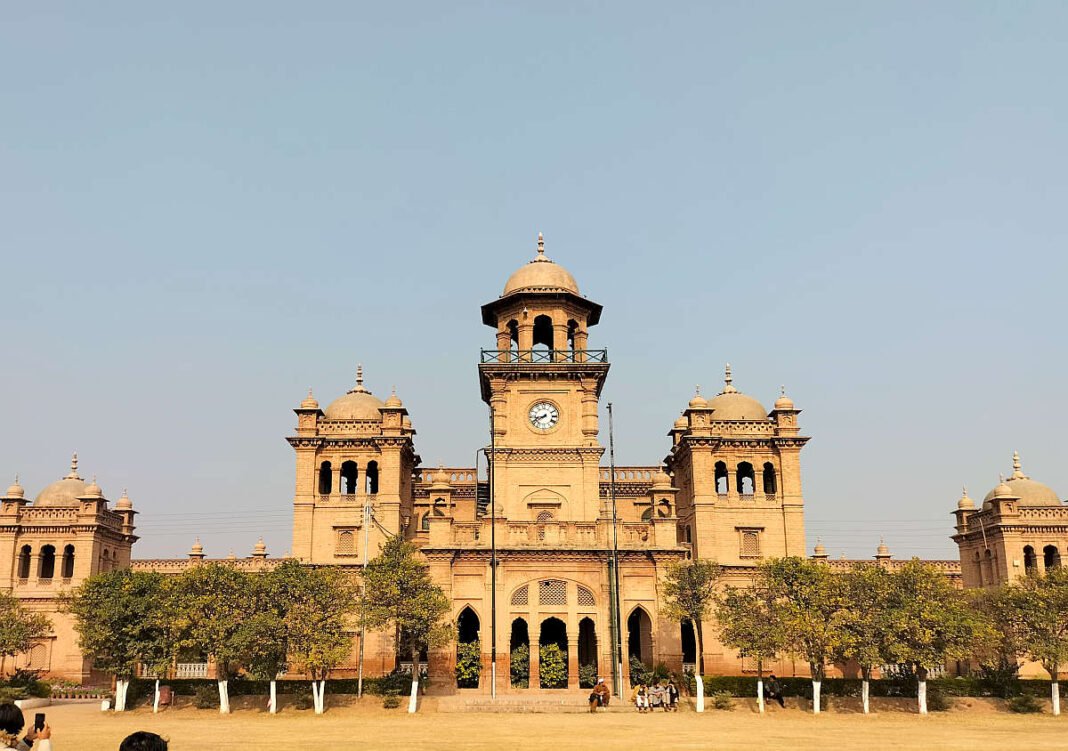
You have probably held it in your hand without ever visiting it: the clock tower of Islamia College Peshawar, printed on the back of Pakistan’s Rs. 1,000 currency note. But this is no mere pretty building. Founded in 1913, visited three times by Quaid-e-Azam, named in his will, and the cradle of the Pakistan Movement in the northwest, Islamia College is where the nation’s history and its future study side by side. This Islamia College Peshawar travel guide will show you why this living monument deserves a place on your Peshawar itinerary.
Quick Facts
- Location: University Road, Peshawar, Khyber Pakhtunkhwa — in the city’s university town
- Founded: October 1, 1913, by Nawab Sir Sahibzada Abdul Qayyum Khan and Sir George Roos-Keppel
- Famous For: The iconic clock-tower building (featured on the Rs. 1,000 note), its central role in the Pakistan Movement, and Quaid-e-Azam’s three visits
- Nearest City: In Peshawar itself — minutes from the city center
- Accessibility: Easy; a working university campus open to respectful daytime visitors
- Known Landmarks: The main building and clock tower, the college mosque, Khyber Union hall
- Best For: History lovers, students, photographers, and anyone tracing Pakistan’s independence story
Why Visit Islamia College, Peshawar
Most heritage sites in Pakistan are places where history happened. Islamia College Peshawar is a place where history is still happening. Also, Walk through its gates on a working morning and you will see thousands of students streaming to lectures across a campus that has been doing exactly this — educating the youth of the frontier — for over a century. The lawns are manicured, the old trees are enormous, and at the center of it all rises the great white building with its clock tower, as photographed on the currency in your wallet. It is one of the most beautiful campuses in South Asia, and it is alive.
The Frontier’s Aligarh Moment
The history here is not decorative. Also, it is the reason Pakistan exists as it does in the northwest. This was the Aligarh of the frontier — the institution that gave the Pakhtun people modern education and, crucially, political consciousness. The college’s students powered the Muslim League’s cause in the North-West Frontier Province: they debated in the Khyber Union, they welcomed Quaid-e-Azam in 1936, 1945, and 1948, and in 1945 they pressed rs. 8,000 into his hands for the Pakistan Movement.
When the Quaid wrote his will in 1939, he named Islamia College Peshawar among the three institutions to inherit his property, alongside Aligarh Muslim University and Sindh Madressatul Islam. Few places in Pakistan can claim that level of trust from the founder of the nation.
For the traveler, Islamia College offers something Peshawar’s bazaars and forts cannot: a quiet, green, contemplative counterpoint to the city’s glorious chaos. Also, an hour wandering the campus — the main building, the mosque whose foundation was laid by the Haji Sahib of Turangzai, the old hostels, the tree-lined avenues — is an hour well spent. In fact, and for students and educators, standing where the Quaid stood and addressed the “future builders of Pakistan” is genuinely moving.
Come for the architecture, stay for the story. Also, Islamia College is not a museum you observe from behind a rope. In fact, it is a living institution that lets you walk through a century of the nation’s life in a single afternoon.
History of Islamia College, Peshawar
The story begins in 1909. Also, Nawab Sir Sahibzada Abdul Qayyum Khan and the British Chief Commissioner Sir George Roos-Keppel visited Aligarh Muslim University. Students from the North-West Frontier Province told them of their homesickness and asked for a hostel. And Nawab Sahib replied that instead of building them a hostel at Aligarh, he would build them a college at Peshawar. The idea, rooted in Sir Syed Ahmad Khan’s Aligarh Movement, was to bring modern education to the Pakhtun people.
Raising the College, Rupee by Rupee
What followed was one of the great fundraising campaigns of colonial India. For example, on April 12, 1911, Nawab Sahib convened like-minded notables at the Peshawar residence of Abdul Karim. In fact, the meeting launched a subscription drive that drew donations from across the frontier and beyond. In addition, the great Peshawar businessman Karim Bakhsh Sethi gave rs. 50,000. For example, Abdul Karim gave rs. 10,000. The Nawab of Dir contributed rs. 125,000 plus 400 trees. Rs. 150,000 was collected from Hashtnagar. The Nizam of Hyderabad sent rs. 150,000; and the Nawab of Amb contributed rs. 100,000 toward construction.
Even the students’ own first collection — a modest sixty rupees — is remembered as the seed of the institution. A large plot of 916 kanals and 17 marlas was purchased from the Khalils of Tehkal for the campus.
The college opened its doors on October 1, 1913. Meanwhile, the first principal was the British educationist mr. Lipping. The first registered student was Sahibzada Khurshid, who would later become the first governor of the province. The inaugural batch numbered just 26 students, with 10 faculty members and two hostels — Qayyum Manzil and Hardinge. The college mosque’s foundation was laid by the revered Haji Sahib of Turangzai.
Quaid-e-Azam’s Three Visits
The college’s political awakening came with the Khyber Union debating society, founded in 1936, which turned students into politically conscious leaders. Quaid-e-Azam Muhammad Ali Jinnah visited three times — in 1936, 1945, and finally in 1948 as Pakistan’s first Governor-General. He praised the students’ patriotism and called them the “future builders of Pakistan” in his April 12, 1948 address. During the 1945 visit, students and the Muslim Students Federation presented him rs. 8,000 for the Pakistan Movement. In his will of May 30, 1939, the Quaid named Islamia College among his three institutional heirs.
The Quaid Trust eventually paid over rs. 10.8 million to the college, funding the Quaid-i-Azam College of Commerce, Jinnah College for Women, faculty residences. The Takbeer Block.
The institution kept growing: in 1950 the University of Peshawar was founded as its offshoot, and in 2008 Islamia College itself was granted university status — retaining the word “College” in its title to honor its roots. For example, its honorary members over the decades read like a who’s who of the 20th century: Eleanor Roosevelt, Jawaharlal Nehru, Maulana Abul Kalam Azad. In fact, Sardar Abdur Rab Nishtar among them. Today it educates students from kindergarten to PhD level. Its clock tower — long printed on the back of the rs. 1,000 note — remains Peshawar’s proudest symbol.
Top Things to Do in Islamia College, Peshawar
Islamia College is a working university, not a ticketed attraction — visit respectfully, during daytime hours. Also, you will be welcomed. Allow one to two hours for the campus.
See the Main Building and Clock Tower
The great white colonial-era building with its clock tower is the image on the rs. 1,000 note and the soul of the campus. Also, Walk up the central approach slowly — the symmetry, the arched verandas, the tower rising over old trees — and take the classic photograph from the main lawn. Early morning or late afternoon light is kindest. Remember you are looking at a building that has watched the entire arc of Pakistan’s history since 1913.
Visit the College Mosque
The campus mosque, whose foundation was laid by the Haji Sahib of Turangzai, is among the oldest structures on the grounds. Also, its quiet courtyard is a peaceful pause in the campus walk. In fact, dress modestly and observe prayer-time etiquette, as with any working mosque.
Walk the Historic Campus
The 916-kanal campus is a green refuge of old trees, playing fields, and heritage blocks. Find the original hostels — Qayyum Manzil and Hardinge — and the later additions funded by the Quaid Trust: the Takbeer Block, Jinnah College for Women. Also, the faculty residences. The Khyber Union’s debating hall is where generations of frontier leaders learned to argue for Pakistan. The campus rewards slow walking; every turn has a story.
Reflect at the Quaid’s Legacy
Stand where Jinnah stood during his three visits, and recall his April 1948 address to the students as the “future builders of Pakistan.” The college’s connection to the Quaid — his honorary membership of the Khyber Union, his will, the Trust’s millions — is commemorated across the campus. For students of the Pakistan Movement, this is hallowed ground.
Combine with University Town
The college anchors Peshawar’s University Road, the city’s academic and café strip. Meanwhile, after the campus, walk the road’s bookshops and tea houses — the intellectual life of modern Peshawar happens here. Meanwhile, the nearby University of Peshawar, founded as Islamia College’s offshoot in 1950, continues the story next door.
Famous Places In and Around Islamia College
- University of Peshawar — founded 1950 as the college’s offshoot, adjacent on University Road
- Gor Khatri — Peshawar’s ancient archaeological complex in the old city; see our Gor Khatri guide
- Bala Hisar Fort — the historic fort overlooking Peshawar; see our Bala Hisar Fort guide
- Qissa Khwani Bazaar — the legendary Storytellers’ Bazaar of the old city
- Bagh-e-Naran, Peshawar — the city’s beloved park; see our Bagh-e-Naran guide
- Peshawar Museum — one of Pakistan’s finest Gandhara collections, in a beautiful Victorian building
- Mahabat Khan Mosque — the 17th-century Mughal jewel of the old city
How to Reach Islamia College, Peshawar
Islamia College sits on University Road in Peshawar — one of the easiest heritage stops in the city to reach. Also, from anywhere in Peshawar, a taxi or ride-hailing car reaches the campus in 10–25 minutes depending on traffic. In fact, from the old city (Qissa Khwani, Chowk Yadgar), allow about 20 minutes. Ask for “Islamia College University, University Road” — every driver knows it.
From Islamabad: The M-1 motorway connects Islamabad to Peshawar in about 2–2.5 hours (around 175 km). Also, daewoo and other coaches run constantly; from any Peshawar bus terminal, the campus is a short taxi ride. By air, fly to Bacha Khan International Airport, Peshawar (about 1 hour from Islamabad, Karachi. Lahore), then 20–30 minutes by car to University Road.
From Lahore: Drive via the M-2/M-1 motorways (about 5–6 hours), or fly to Peshawar in about an hour. Overnight trains and deluxe buses also serve Peshawar’s stations.
From Karachi: Fly to Peshawar (about 1.5–2 hours) — by far the sensible option. Also, by rail, Karachi–Peshawar is a long overnight-plus journey; the railway station is about 20 minutes from the campus by taxi.
Route Details
- By air: Land at Bacha Khan International Airport; take a taxi or ride-hailing car to University Road (20–30 minutes).
- By road from Islamabad: M-1 motorway to Peshawar; exit toward University Road and follow signs for Islamia College.
- Within Peshawar: The campus is on the main University Road strip — rickshaws, taxis, and ride-hailing all serve it. Enter through the main gate; daytime visitors are generally welcome.
- Combine it: Pair the campus with the Peshawar Museum (same western side of the city) in one morning, and the old city — Qissa Khwani, Mahabat Khan Mosque, Gor Khatri — in the afternoon.
Where to Stay Near Islamia College
University Road is Peshawar’s most convenient base for travelers, with options at every level. Luxury: the Pearl Continental Peshawar on Khyber Road offers five-star comfort about 10 minutes from the campus. Mid-range: University Road and the Cantonment area have comfortable three- and four-star hotels popular with business and academic travelers. Also, the natural choice for a heritage trip. Budget: guesthouses around University Town and Saddar offer clean, affordable rooms. In fact, the old city’s traditional inns are cheapest of all. For a college-focused visit, stay on or near University Road: you can walk to the campus, the bookshops. The area’s famous food streets.
Where to Eat: Local Foods of Peshawar
Eating in Peshawar is half the reason to come, and University Road puts you within reach of it all. Also, the city’s signature dishes are legendary: chapli kebab — the great flat minced-meat kebab, best eaten fresh off the griddle. Namkeen gosht and namkeen karahi, the salt-and-meat minimalist masterpieces. Kabuli pulao with its sweet carrots and raisins; chargha (whole steamed-then-fried chicken); and dum pukht. Finish with qehwa (green tea) — Peshawar runs on it — or the city’s famous kulfi and Peshawari ice cream.
For the full experience, venture to Namak Mandi, the old city’s food street, where the tikka and karahi shops have served for generations. Also, the Qissa Khwani area for traditional breakfasts. On University Road itself, modern cafés and desi restaurants serve students and travelers alike. A hearty Peshawari meal costs roughly rs. 400–1,000 per person at local spots. Namak Mandi’s famous restaurants run a little higher but remain excellent value.
Weather in Peshawar
Peshawar has a hot-summer, mild-winter climate. The campus is green and walkable most of the year, but summer afternoons are fierce — plan campus walks for morning or evening in the hot months. Also, winter is the most pleasant season for sightseeing.
| Season | Temperature Range | Conditions |
|---|---|---|
| Winter (Dec–Feb) | Around 5°C to 18°C | Mild, sunny days; chilly mornings; the best season for walking the campus and the old city |
| Spring (Mar–Apr) | Around 18°C to 32°C | Pleasant and green; jacaranda season on University Road; excellent for sightseeing |
| Summer (May–Jul) | Around 32°C to 45°C | Very hot; visit the campus early morning or late afternoon; stay hydrated |
| Monsoon (Jul–Aug) | Around 28°C to 38°C | Humid with occasional heavy showers; the campus turns lush green |
| Autumn (Sep–Nov) | Around 18°C to 35°C | Cooling and comfortable; clear light — a fine second season after winter |
Language and Culture of Peshawar
Peshawar is the cultural capital of the Pakhtuns, and Pashto is the city’s soul language. Also, you will hear it everywhere, from the bazaars to the campus. Hindko is widely spoken in the old city. Urdu and English work everywhere, including throughout Islamia College. The college itself was founded to educate Pakhtun youth. Pakhtunwali — the code of hospitality, honor, and generosity — still shapes campus culture. Guests are treated with genuine warmth.
Visitors should dress modestly (the campus is a working educational institution — neat, respectful dress is appreciated), ask permission before photographing students, and observe mosque etiquette at the campus mosque. The old city’s bazaars are conservative. Women travelers may prefer a headscarf in the old city, though University Road is relaxed. Peshawar’s famed hospitality is real: accept tea when offered, and do not be surprised by strangers’ kindness.
Shopping Near Islamia College
Peshawar is one of Pakistan’s great shopping cities. Also, the college sits within easy reach of it all. Qissa Khwani Bazaar and the old-city markets offer Peshawari chappals (the iconic leather sandals — buy the real thing here), khaddar and woolen fabrics, dry fruits and nuts from Afghanistan and Central Asia, carpets, and brass and copper ware. Namak Mandi is famous for gemstones. In fact, University Road’s own markets serve students with books, stationery, and everyday goods at honest prices. There are modern shopping malls on University Road too, for anything the bazaars lack.
Bargaining is expected in the old bazaars — start at half the asking price and meet in the middle with good humor.
Travel Tips for Islamia College, Peshawar
Packing Essentials
- Modest, neat clothing suitable for a university campus visit
- Comfortable walking shoes — the 916-kanal campus is best explored on foot
- Sun protection and water, especially for summer visits
- A camera for the main building — morning light is best
- A scarf for mosque and old-city visits
Safety Tips
- Peshawar’s University Road area is accustomed to visitors; standard urban awareness applies
- Visit the campus during daytime working hours; avoid wandering into restricted administrative areas
- Carry your CNIC or passport — university security may ask at the gate
- Keep valuables secure in the old city’s crowded bazaars
Money & Connectivity
- ATMs: Plentiful on University Road and across Peshawar
- Mobile signals: All networks work well in the city
- Costs: There is no ticket for the campus itself; your costs are transport, food, and shopping — all very reasonable by big-city standards
- Guides are not stationed at the college; a knowledgeable local friend or a Peshawar tour operator enriches the visit
Best Time to Visit Islamia College, Peshawar
Winter (December to February) — Peak Season
The ideal time: mild sunny days, crisp air. Also, the campus at its greenest. Combine the college with the old city’s bazaars and the Peshawar Museum in perfect walking weather.
Spring (March to April) — Beautiful
Jacaranda blooms on University Road, pleasant temperatures, and the academic year in full swing — the campus feels most alive. Also, an excellent alternative to winter.
Autumn (October to November) — Very Good
Comfortable temperatures return after the summer heat; clear light for photography. Also, a fine shoulder season with fewer visitors.
Summer (May to August) — Hot but Doable
Peshawar’s summer is fierce — visit the campus early in the morning, retreat to air conditioning at midday, and save the old city for the cooler evening hours. The monsoon brings some relief and lush greenery.
Final Thoughts
Islamia College Peshawar is that rare destination that is simultaneously a beautiful campus, a national monument, and a living school. In a single visit you can photograph the clock tower from your currency note, walk the lawns where the Pakistan Movement’s frontier chapter was written, and watch today’s students hurrying to the lectures that will shape tomorrow’s Pakistan. Few places connect the country’s past and future so tangibly.
Give it a morning — ideally combined with the Peshawar Museum and an afternoon in the old city — and you will leave understanding Peshawar. Also, Pakistan, a little more deeply. In fact, for more journeys through the nation’s story, browse our Explore Pakistan collection or continue north with Hunza Valley.
FAQs
Where is Islamia College Peshawar located?
On University Road in Peshawar, Khyber Pakhtunkhwa — in the city’s university town, about 10–25 minutes from the city center and 20–30 minutes from Bacha Khan International Airport.
When was Islamia College Peshawar founded?
October 1, 1913, by Nawab Sir Sahibzada Abdul Qayyum Khan and Sir George Roos-Keppel, growing out of the Aligarh Movement’s mission to educate the Muslims of the frontier.
Why is Islamia College famous?
Its iconic clock-tower building appears on the back of Pakistan’s rs. 1,000 note. Also, it was the cradle of the Pakistan Movement in the northwest. In fact, Quaid-e-Azam visited three times (1936, 1945, 1948) and named it among the three heirs in his 1939 will.
Can tourists visit Islamia College Peshawar?
Yes — it is a working university whose campus is generally open to respectful daytime visitors. Walk the main building, the mosque, and the lawns. Carry ID, dress neatly, and avoid restricted administrative areas.
How much time do I need at Islamia College?
One to two hours is enough for the campus itself. Also, Combine it with the nearby Peshawar Museum in the same morning and the old city (Qissa Khwani, Mahabat Khan Mosque) in the afternoon for a full Peshawar heritage day.
What is the Khyber Union?
The college’s debating society, founded in 1936, which played a key role in raising political awareness among frontier students. Also, Quaid-e-Azam became an honorary member — a mark of the bond between the college and the Pakistan Movement.
What food should I try near Islamia College?
Peshawar’s classics: chapli kebab, namkeen gosht, Kabuli pulao, chargha, and qehwa. Also, head to Namak Mandi’s famous food street for the full experience, or eat along University Road’s student-friendly restaurants.
Is Islamia College good for families and students?
Excellent for both. Also, families get a beautiful, safe, green campus with a great story. Students — especially those studying Pakistan’s history — get to walk through the independence movement itself. It is one of Peshawar’s most inspiring educational visits.