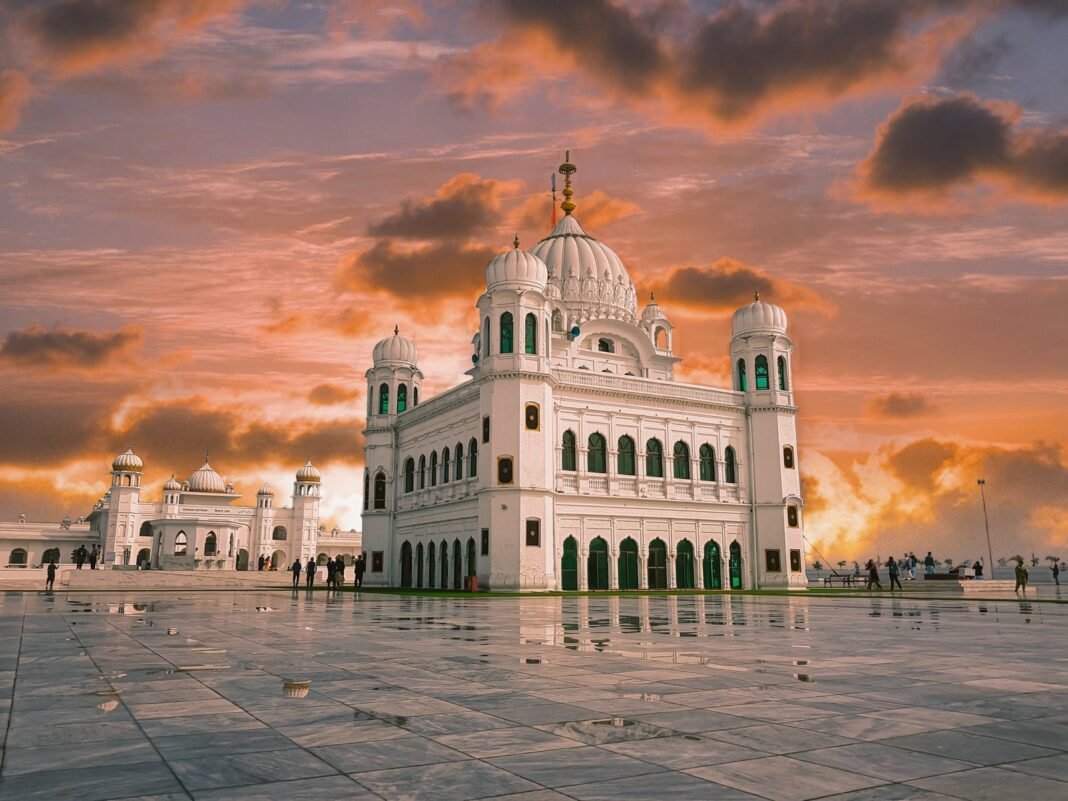
Some places you visit for fun. Also, a few you visit for photographs. Your heart tells you to go. Kartarpur Sahib is one of those rare places.. As a result, and then there are rare places you visit This is where Guru Nanak, the founder of Sikhism, spent the last eighteen years of his life, farmed the land with his own hands, and finally passed away in 1539. Today it is home to Gurdwara Darbar Sahib Kartarpur, widely described as the largest gurdwara in the world and one of the holiest sites in the Sikh faith.
Sitting on the quiet banks of the Ravi River in Narowal District, just a few kilometres from the India-Pakistan border, Kartarpur Sahib carries a weight of history and emotion that is hard to find anywhere else in Pakistan. In November 2019, the Kartarpur Corridor opened and allowed Indian Sikh pilgrims visa-free access to the shrine for the first time since Partition — a moment that made headlines around the world. But here is what many people do not realise: Kartarpur Sahib is also open to Pakistani visitors and foreign tourists. It makes a deeply moving day trip from Lahore.
Whether you are Sikh, Muslim, Hindu, Christian, or simply a traveller drawn to places where history breathes, this Kartarpur Sahib travel guide will walk you through everything — why this place deserves your visit, the best time to go, how to reach it, what to see, and how to plan a respectful, smooth trip.
Quick Facts
- Location: Kartarpur, Shakargarh Tehsil, Narowal District, Punjab, Pakistan — on the west bank of the Ravi River, around 4.5 km from the India-Pakistan border
- Altitude: Around 240 metres (lowland Ravi River plains)
- Famous For: Gurdwara Darbar Sahib Kartarpur — the final resting place of Guru Nanak; one of the holiest sites in Sikhism and said to be the largest gurdwara in the world
- Nearest City: Narowal (the last major town before the shrine); Sialkot is the nearest large city with an international airport
- Accessibility: Excellent by road from Lahore (around 120 km, roughly 2 to 2.5 hours); the shrine complex has its own parking, registration centre, and shuttle buses
- Known Landmarks: The white-domed Darbar Sahib complex, the 500-year-old well from Guru Nanak’s lifetime, the Kartarpur Corridor terminal, the Ravi riverbank
- Best For: Spiritual travellers, history lovers, Sikh pilgrims, families, photographers, and anyone on a Punjab heritage circuit
Why Visit Kartarpur Sahib
Stand in the courtyard of Darbar Sahib in the early morning and you will understand immediately. Meanwhile, the white domes catch the first light, kirtan (devotional hymns) drifts from the Darbar Hall, and hundreds of people — Sikhs from across the world, Pakistani families, curious students, foreign tourists — sit together in the langar hall sharing the same simple meal. In fact, Kartarpur Sahib is not a museum of a dead past. It is a living, breathing place of worship, and visitors are welcomed into that life with remarkable warmth.
The history alone makes it unmissable. This is not just another beautiful shrine. It is the ground where Guru Nanak actually walked, farmed, and taught during the final eighteen years of his life. Also, the well on the premises is believed to be 500 years old, dating to the Guru’s own lifetime. Few religious sites anywhere in the world can offer that direct a connection to their founder. For Sikhs, it ranks alongside the Golden Temple in Amritsar and Gurdwara Janam Asthan in Nankana Sahib as one of the faith’s holiest places.
A Corridor of Peace
Then there is the modern story, which is just as powerful. For over seventy years after Partition, Indian Sikhs could only gaze at the shrine through binoculars from a viewing platform at Dera Baba Nanak across the border. The opening of the 4.7-kilometre Kartarpur Corridor on 9 November 2019 — days before Guru Nanak’s 550th birth anniversary — changed that overnight, creating a visa-free passage that the world hailed as a corridor of peace. Walking that same ground today, knowing what it took to open it, gives the visit a meaning no ordinary sightseeing can match.
Practically speaking, Kartarpur Sahib is one of the easiest major heritage sites in Punjab to visit. Also, the roads from Lahore are good, the complex is purpose-built for visitors with clear signage and facilities, entry for Pakistani nationals is inexpensive. The whole experience fits comfortably into a single day. If you are building a Punjab itinerary, pair it with the Sikh heritage sites of Nankana Sahib, the birthplace of Guru Nanak, for a journey through the two most sacred chapters of his life.
History of Kartarpur Sahib
The story of Kartarpur begins with Guru Nanak himself. Meanwhile, after decades of missionary travels — the Udasis that took him to Haridwar, Mecca and Medina, Lanka, Baghdad, Kashmir. In fact, Nepal — Guru Nanak settled on the banks of the Ravi River in the early 1500s and founded the town of Kartarpur. In addition, here he did something revolutionary: he ploughed fields, worked the land. It established the first Sikh commune, giving his followers three guiding principles — Kirat Karo (earn an honest living), Naam Japo (remember God). Wand Chako (share with others).
The langar, the free community kitchen that remains the beating heart of every gurdwara, was born from this spirit of equality and sharing.
Guru Nanak lived in Kartarpur for eighteen years until his death in 1539. Also, the gurdwara stands on the site where he passed away. A beloved legend tells of the dispute after his death between his Hindu and Muslim followers over his remains — and how his body was found to have transformed into flowers. These the two communities divided between them. It is a story that captures everything Kartarpur represents: unity beyond division.
From Patiala to Partition
The shrine’s more recent history is equally layered. The main gurdwara building was constructed in 1925 at a cost of Rs 1,35,600, donated by Sardar Bhupinder Singh, the Maharaja of Patiala. When Partition drew the new border in 1947, Kartarpur — lying barely 4.5 km inside Pakistan — was cut off from the Sikh community in Indian Punjab. They could thereafter only view it from afar. In November 2018, Pakistan began a major expansion of the complex — a new courtyard, museum, library, dormitories, and locker rooms spread across 42 acres — and in 2019 the government rebuilt and restored the shrine ahead of the 550th birth anniversary celebrations.
Then came 9 November 2019. Also, Prime Minister Imran Khan inaugurated the Kartarpur Corridor, officially granting Indian Sikh pilgrims visa-free access to the shrine. The corridor was designed to handle up to 5,000 pilgrims a day (10,000 on special occasions). It has faced interruptions — including a long closure during the COVID-19 pandemic and a suspension of services by Indian authorities in May 2025 — so Indian pilgrims should always check the corridor’s current operational status before planning. For Pakistani visitors, the shrine has remained steadily accessible. Its story continues to grow as one of Pakistan’s most significant religious tourism destinations.
Top Things to Do in Kartarpur Sahib
Pay Obeisance at the Darbar Hall
The spiritual centre of the complex is the Darbar Hall, where the Guru Granth Sahib is enthroned and daily prayers and kirtan are held. Visitors of all faiths are welcome to sit quietly, listen to the hymns, and soak in the atmosphere. Remember to cover your head (scarves are usually available if you forget your own), remove your shoes at the Jora Ghar, and dress modestly. Photography inside the prayer hall is generally discouraged — ask the staff if you are unsure.
See the 500-Year-Old Well
One of the most treasured relics of the complex is a 20-foot-deep well believed to have been built during Guru Nanak’s own lifetime — making it roughly 500 years old. Pilgrims consider its water sacred. It is a small, humble structure compared to the grand domes around it, but for many visitors it is the most moving spot on the premises: a direct, tangible link to the Guru’s daily life in Kartarpur.
Share a Meal at the Langar Hall
Do not leave without eating at the langar. The free community kitchen serves simple vegetarian food — typically roti, dal, and sabzi — to every visitor regardless of religion, nationality, or status, all seated together on the floor as equals. Also, it is the living embodiment of Guru Nanak’s teaching of Wand Chako, and honestly one of the warmest dining experiences in Pakistan. The langar hall can get crowded on weekends; weekdays are calmer.
Explore the Museum and Galleries
The 2018-2019 expansion added a museum and galleries that trace the life of Guru Nanak, the history of the shrine. Also, the story of the Kartarpur Corridor. If you want context before or after your visit to the prayer halls, spend half an hour here. The exhibits make the history you have just read about feel vivid and real.
Walk the Courtyards and Gardens
The rebuilt complex is genuinely beautiful: pristine white domes, marble flooring, wide courtyards, and serene gardens spread across 42 acres. Also, early morning is the best time for a slow walk and photographs. In fact, the crowds are thin and the light is soft. The shrine’s silhouette against the sky is striking from almost every angle.
Visit the Kartarpur Corridor Terminal
The passenger terminal and the corridor route itself are part of the experience. Even if you are visiting from the Pakistani side, seeing the terminal buildings, the immigration counters. As a result, the road that runs the short distance to the international border gives you a real sense of what this “corridor of peace” means — a passage that reconnects families and faith across one of the world’s most sensitive borders.
Famous Places In and Around Kartarpur Sahib
- Dera Baba Nanak (India): The town across the border where the corridor begins; the gurdwara there has a viewing deck from which the shrine at Kartarpur is visible.
- Narowal City: The nearest major town, around 15-20 km away — the last stop for fuel, snacks, and supplies before the shrine.
- Nankana Sahib: Guru Nanak’s birthplace and home to Gurdwara Janam Asthan — the natural companion visit to Kartarpur on a Sikh heritage circuit.
- Ravi Riverbank: The river that has flowed past Kartarpur since the Guru’s time; quiet stretches near the town offer a peaceful moment away from the crowds.
- Sialkot: The historic city of Iqbal, under an hour away, with its own forts, shrines, and famous sports-goods bazaars.
How to Reach Kartarpur Sahib
Reaching Kartarpur Sahib from the Pakistani side is straightforward. The shrine lies about 120-130 km from Lahore. The drive takes roughly 2 to 2.5 hours on mostly good roads. From Lahore, take the GT Road toward Muridke, then follow the Muridke-Narowal road. Signboards for Narowal and then Kartarpur Sahib guide you most of the way. Narowal is the last big town — fill up on fuel and pick up anything you need there. Be careful near the end of the route not to take a wrong turn toward the border fence.
Follow the official signboards to the shrine’s dedicated parking lot, from where shuttle buses take you to the registration centre.
From Islamabad, the journey is considerably longer — around 300 km, roughly 4.5 to 5.5 hours via the M-2 motorway and then the Narowal road network. Also, most visitors from the capital either make it a very early day trip or stay overnight in Lahore or Narowal. From Karachi, the sensible option is to fly to Lahore (or Sialkot) and drive from there. The road journey from Karachi would take the better part of two days.
The nearest airport is Sialkot International Airport, roughly an hour’s drive from Kartarpur. Lahore’s Allama Iqbal International Airport is the main gateway for international visitors, about 2.5 hours away by road. Public transport is possible but fiddly: from Lahore’s general bus stand you can find vans and minibuses heading toward Narowal or Shakargarh and ask to be dropped at the Kartarpur/Dera stop on the main road, from where it is a couple of kilometres to the parking area. For comfort and reliability, a private car or a hired van is strongly recommended, especially for families and elderly visitors.
Route Details
Lahore to Kartarpur Sahib (approx. Also, 120-130 km, 2-2.5 hours): Start on the GT Road toward Muridke. In fact, At Muridke, take the Muridke-Narowal road. Continue to Narowal, then follow signboards toward Shakargarh/Kartarpur Sahib. Park at the dedicated parking lot. Shuttle buses run to the registration centre, where Pakistani nationals present their original CNIC (a photo and thumb impression are taken) and receive a yatree card to wear inside the premises. Foreigners should carry their passport and valid visa. Entry for local visitors has been ticketed at a nominal fee (around Rs 200 per person in recent years — confirm the current fee before you go).
Islamabad to Kartarpur Sahib (approx. Also, 300 km, 4.5-5.5 hours): Take the M-2 motorway toward Lahore, exit toward the Narowal route, and follow the same Narowal-Kartarpur road. Leave very early to reach before the midday crowds.
From India via the Kartarpur Corridor: Indian pilgrims register online in advance, report at the Passenger Terminal Building at Dera Baba Nanak (Gurdaspur) with their passport, cross the 4.7 km corridor. Also, it must return the same day — travel is permitted from dawn to dusk. A USD 20 service fee per pilgrim has applied. Only a small bag (up to 7 kg) and limited currency may be carried. Important: corridor services were suspended by Indian authorities in May 2025 — check the latest status through official channels before planning a cross-border visit.
Where to Stay in Kartarpur Sahib
Let’s be honest: Kartarpur Sahib is a day-trip destination, and that is how most people experience it. Also, there are no luxury resorts at the shrine itself, and you do not need one. The complex is designed for daytime visits, with entry running from the morning to mid-afternoon.
If you do need to stay overnight, Narowal city has a range of budget and mid-range hotels and guesthouses that cater to travellers and wedding parties. They are simple but serviceable, and the town is only a short drive from the shrine. For more comfort and choice, most visitors base themselves in Lahore, which has everything from five-star hotels to boutique guesthouses, and drive up early in the morning. It is an easy two-and-a-half-hour run. Sialkot is another option, closer than Lahore, with decent mid-range hotels. During major religious occasions like Gurpurab. Thousands of pilgrims arrive, book your Lahore or Narowal accommodation well in advance as rooms fill quickly.
Where to Eat: Local Foods of Kartarpur Sahib
The single most important meal of your visit is the one you do not pay for: the langar. The community kitchen at Darbar Sahib serves free vegetarian meals — fresh tandoori roti, dal, sabzi, and often rice or kheer — to every single visitor. It is delicious in the way that food made with devotion always is, and sharing it cross-legged with hundreds of fellow travellers is an experience in itself. Partake if you can; it is customary and deeply appreciated.
Outside the langar, options at the shrine itself are limited. There are some snack stalls and a small bazaar area, but no proper restaurants, so plan accordingly. For a full meal, head back toward Narowal, where dhabas and restaurants serve classic Punjabi fare: saag with makki di roti in winter, dal makhani, chicken karahi, fresh lassi, and tandoori breads straight from the clay oven. Meals at these local spots are very budget-friendly. If you are day-tripping from Lahore, you are spoiled for choice on your return. The city’s food streets need no introduction. Carry drinking water for the road, especially in summer.
Weather in Kartarpur Sahib
Kartarpur sits on the lowland plains of the Ravi. Also, its weather follows the classic Punjab pattern: pleasant winters, brutal early summers, and a humid monsoon. The shrine complex is largely open courtyards and marble walkways with limited shade. The season you choose genuinely shapes your experience. Winter mornings can be foggy — beautiful, but allow extra driving time.
| Season | Temperature Range | Conditions |
|---|---|---|
| Winter (Dec-Feb) | Approx. 5-20°C | Cool, pleasant days; cold mornings with occasional dense fog; the most comfortable season for walking the complex |
| Spring (Mar-Apr) | Approx. 15-32°C | Warming up, clear skies, green fields around Narowal; lovely for photography |
| Summer (May-Jun) | Approx. 30-45°C | Intensely hot and dry; marble courtyards glare in the midday sun — visit early morning only if you must come now |
| Autumn (Oct-Nov) | Approx. 15-32°C | Pleasant and clear; the festive season around Gurpurab brings the shrine beautifully alive |
Note: the monsoon months of July-September bring heat, humidity, and heavy showers; temperatures hover around 30-38°C with high humidity.
Language and Culture of Kartarpur Sahib
The everyday language of the area is Punjabi (the Majhi dialect), with Urdu widely understood and English workable around the shrine’s facilitation staff. Inside the gurdwara you will also hear Gurmukhi Punjabi in the hymns and announcements. Meanwhile, a reminder that this is, first and foremost, a living Sikh institution that graciously opens its doors to everyone.
Cultural etiquette matters here more than at most tourist sites. It is simple to get right. Cover your head before entering the complex (carry a scarf or dupatta. Spares are often available). Remove your shoes and deposit them at the Jora Ghar, keeping the token safe. Dress modestly — cover shoulders and knees. Tobacco, smoking, and alcohol are strictly prohibited on the premises. Wash your hands before entering the langar hall, accept food with both hands or your right hand, and sit respectfully. Photography of the architecture is fine; inside the Darbar Hall, put the camera away unless staff explicitly allow it.
Speak softly in prayer areas, and you will find the sevadaars (volunteers) extraordinarily helpful if you have questions.
Shopping in Kartarpur Sahib
Do not come expecting a shopping destination — Kartarpur Sahib is a pilgrimage, not a bazaar. Also, that said, the small Kartarpur Bazaar near the complex sells religious souvenirs: framed images of Guru Nanak and the shrine, kara (steel bangles), rumallas (cloths for the Guru Granth Sahib), prayer books, and postcards. Prices here are aimed at pilgrims and can be on the higher side, so browse before you buy.
For anything practical — snacks, water, phone accessories — Narowal city’s bazaars are the place, with everyday Punjabi market goods at local prices. If you want serious souvenir hunting, save it for Lahore on your way back: Anarkali, Ichhra. Also, Liberty Market offer everything from Sikh religious items to Punjabi juttis and textiles.
Local Events and Festivals
Kartarpur Sahib’s calendar revolves around the great Sikh observances, and timing your visit to one of them is unforgettable.
Gurpurab — Birth Anniversary of Guru Nanak (November): The biggest event of the year at Kartarpur. Also, the shrine is illuminated, kirtan darbars run for days, and thousands of pilgrims gather. Meanwhile, the 550th birth anniversary in November 2019, days after the corridor opened, was a historic celebration. Expect large crowds and book accommodation early.
Baisakhi (April): The Sikh harvest festival and the anniversary of the founding of the Khalsa is celebrated with devotion at Kartarpur, drawing pilgrim groups and adding colour to the spring season.
Joti Jot Divas (September): The remembrance of Guru Nanak’s passing is observed solemnly at the very place where it happened — a deeply moving occasion for the faithful.
Travel Tips for Kartarpur Sahib
Packing Essentials
Carry a light scarf or dupatta for head covering, comfortable slip-on shoes (you will remove them often), sunscreen and a cap for the open courtyards, drinking water. Also, a power bank. In winter, bring a warm layer for foggy mornings. In summer, the marble floors get scorching — thick socks help if you must walk barefoot across the courtyards at midday.
Safety Tips
Kartarpur Sahib is a well-managed, secure complex with a heavy presence of facilitation and security staff. Also, it is among the safer day trips in Punjab. Keep your yatree card visible inside the premises, keep your CNIC/passport on you, and stay with your group near the border-sensitive areas. Do not wander toward the border fence or restricted zones; follow signboards and staff directions. Weekdays are calmer than weekends, when crowds and queues grow long.
Money & Connectivity
There are no ATMs inside the shrine complex, so carry enough cash for the entry ticket, bazaar purchases, and the drive. Narowal has ATMs and banks if you need them. Data can be patchy inside the large complex.. Still, mobile signals from all major networks (Jazz, Telenor, Zong, Ufone) generally work in the area, Mobile phones are allowed inside, but keep them silent in prayer halls.
Best Time to Visit Kartarpur Sahib
October to March — The Ideal Window
This is hands down the best time for a Kartarpur Sahib travel guide to recommend. Also, days are pleasant (roughly 15-30°C in October-November, cooler in December-February), the marble courtyards are comfortable underfoot. The winter light makes the white domes glow. November adds the magic of Gurpurab, when the shrine is at its most vibrant.
April and September — The Shoulder Months
Warm but manageable, especially with an early start. Also, baisakhi in April brings festive energy. Carry water and sun protection, and plan to finish your visit by early afternoon.
May to August — Avoid If You Can
Punjab’s peak summer (40°C and above) plus monsoon humidity make the open complex genuinely uncomfortable. Also, the marble floors radiate heat. If you must visit, arrive at opening time and leave by late morning.
Final Thoughts
Kartarpur Sahib is that rare destination that exceeds its reputation. Also, you may arrive expecting a beautiful shrine and an interesting history lesson. In fact, you will leave having shared a meal with strangers who treated you as family, having stood where one of history’s great spiritual teachers farmed his fields, and having walked a corridor that briefly made the impossible — an open border — feel real. It is humbling, it is moving, and it is unmistakably worth the drive.
For Pakistani travellers especially, Kartarpur Sahib deserves a place on the must-visit list alongside Lahore’s Mughal monuments and the northern valleys. Also, it is our shared heritage — a place where the lines between faiths blur into something simpler and kinder. Go on a crisp winter weekday, arrive early, eat the langar, sit awhile in the Darbar Hall, and let the place speak for itself. For more inspiration on heritage journeys across the country, explore our Explore Pakistan series.
FAQs
Where is Kartarpur Sahib located?
Kartarpur Sahib is in Kartarpur town, Shakargarh Tehsil of Narowal District, Punjab, Pakistan — on the west bank of the Ravi River, about 4.5 km from the India-Pakistan border and roughly 120 km from Lahore.
What is the best time to visit Kartarpur Sahib?
October to March offers the most pleasant weather. November is especially atmospheric with Gurpurab celebrations, while May to August is best avoided due to extreme heat.
How do I reach Kartarpur Sahib from Lahore?
Drive via GT Road to Muridke, then the Muridke-Narowal road to Narowal, following signboards to Kartarpur Sahib — about 120-130 km, roughly 2 to 2.5 hours. A private car or hired van is the most comfortable option.
Open to All Visitors
Can Pakistani citizens visit Kartarpur Sahib?
Yes. Also, the shrine is open to Pakistani nationals and foreign tourists, not just Indian pilgrims using the corridor. In fact, bring your original CNIC (foreigners: passport and visa); a nominal entry ticket applies.
Is Kartarpur Sahib safe for families?
Yes. Also, it is a well-managed, secure complex with facilitation staff throughout, and families with children and elderly visitors are common. Weekdays are less crowded than weekends.
Where can I stay near Kartarpur Sahib?
Most visitors do it as a day trip from Lahore. Narowal has budget and mid-range hotels if you need to stay overnight; Sialkot offers more options about an hour away.
What food is available at Kartarpur Sahib?
The free langar serves vegetarian meals (roti, dal, sabzi) to all visitors. Outside the langar there are only snack stalls, so plan a proper meal in Narowal or back in Lahore.
What should I wear and observe when visiting?
Cover your head, remove shoes at the Jora Ghar, dress modestly, and note that tobacco, smoking, and alcohol are strictly prohibited on the premises. Photography inside the Darbar Hall is generally discouraged.