Religious scholars reaffirm fatwa against suicide attacks
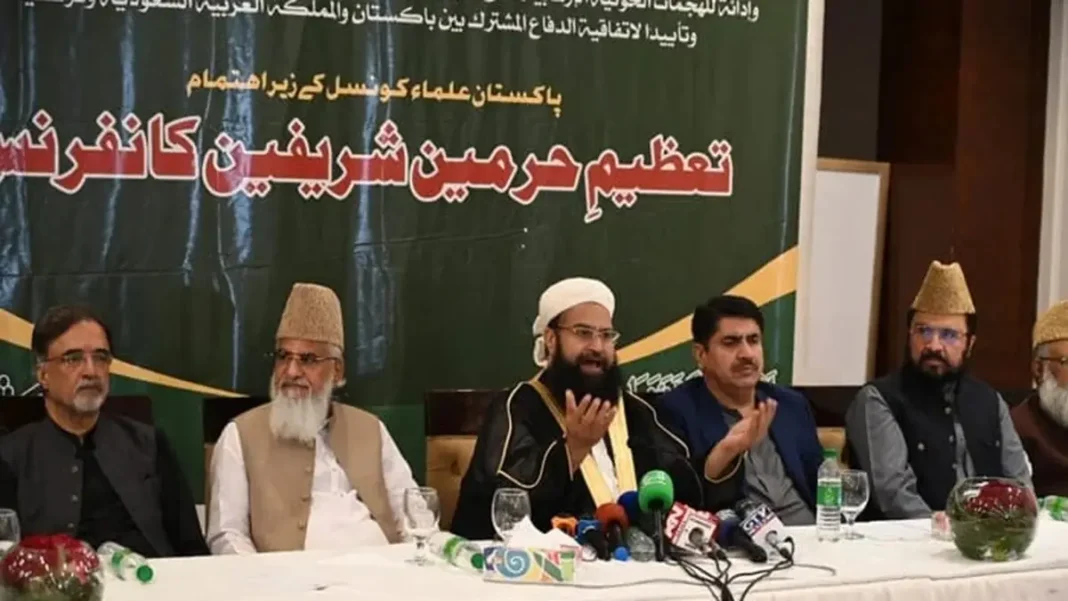
Religious scholars, spiritual leaders and representatives of different faiths unanimously reaffirmed the fatwa against suicide attacks, terrorism, extremism and the killing of innocent people at a joint meeting in Quetta on Wednesday.
The declaration also fully endorsed the national narrative of Paigham-e-Pakistan. It called for united efforts to protect young people from extremist ideologies.
The meeting was organised by the National Paigham-e-Aman Committee (NPAC) and the Balochistan Paigham-e-Aman Committee at Jamia Salafia Dawat-ul-Haq in Quetta.
What the declaration says
The declaration stated that suicide attacks are forbidden in Islam, the killing of innocent people is impermissible, and terrorism runs contrary to the fundamental teachings of Islam and other religions.
It said no individual, group or organisation had the right to engage in bloodshed, carry out armed actions against the state, or take the law into its own hands in the name of religion, sect or any ideology.
The participants strongly condemned the exploitation of women, children, young people and students for terrorism and suicide attacks. They described such acts as religiously forbidden, morally reprehensible and serious crimes against humanity.
The declaration warned that those who mislead the younger generation and turn them into instruments of terrorism are enemies of human life and Pakistan’s future.
Protecting the country’s security, stability and the lives and property of its people was described as a shared national responsibility.
A united stand in Balochistan
Emphasising peace in Balochistan, the participants resolved to stand united against terrorism, extremism and sectarian violence. They stressed that no one should be allowed to undermine peace under the guise of religion or sect.
The meeting pledged continued joint efforts to promote inter-sectarian and interfaith harmony, religious tolerance, national unity and peace in the province. Participants also committed to addressing issues faced by mosques and religious seminaries, and to strengthening cooperation with the government and relevant institutions.
The participants expressed full support for the efforts of the Pakistan Army and national security institutions against what the declaration described as Fitna al-Khawarij and Fitna al-Hindustan. They said the nation stood alongside the armed forces in efforts to eliminate terrorism and safeguard national security and stability.
Fitna al-Khawarij is the state-designated term for the banned Tehreek-i-Taliban Pakistan (TTP). Last year, the federal government officially designated all terrorist groups operating in Balochistan as Fitna al-Hindustan, accusing India of sponsoring a proxy war through the outfits.
Protecting young people
The meeting called for a coordinated effort by scholars, faith leaders, parents, teachers and prominent social figures to protect young people from extremist ideologies, hate speech and the influence of terrorist organisations.
Mosques, religious seminaries, educational institutions and religious and social centres should be used to promote peace, tolerance, unity and national cohesion, the declaration said.
The younger generation represented the country’s future and must not be allowed to become fuel for terrorism, the participants stressed.
What Paigham-e-Pakistan means
Paigham-e-Pakistan is Pakistan’s national narrative against extremism and terrorism, built around a religious ruling that rejects violence in the name of religion. The Quetta declaration reaffirmed that narrative and endorsed it in full.
Tribute to Field Marshal Munir
Separately, the participants unanimously adopted a resolution paying tribute to Chief of Defence Forces and Chief of Army Staff Field Marshal Syed Asim Munir. The resolution cited his efforts towards unity in the Muslim world, cohesion within the Muslim Ummah, regional stability and global peace.
It commended his diplomatic efforts to promote peace and negotiations between the United States and Iran, improve relations between Saudi Arabia and Iran, and facilitate high-level talks among Saudi Arabia, Pakistan, Turkiye and Iran in Tehran on October 26.
The resolution described those initiatives as significant for reducing regional tensions and strengthening cooperation among Muslim countries. The participants appealed to all political and religious parties in Pakistan to support constructive diplomatic initiatives undertaken in the national interest.
The meeting was chaired by Pakistan Ulema Council chairman and NPAC Coordinator Hafiz Muhammad Tahir Mehmood Ashrafi, and attended by scholars and representatives of different faiths including Pastor Simon Bashir and Sardar Jasbir Singh.
Where was the meeting held?
The joint meeting was held at Jamia Salafia Dawat-ul-Haq in Quetta, organised by the National and Balochistan Paigham-e-Aman Committees.
What did the declaration say about suicide attacks?
Who chaired the meeting?
- The Express Tribune (APP), “Religious scholars reaffirm fatwa against suicide attacks, terrorism” (28 October 2026): https://tribune.com.pk/story/2637428/religious-scholars-reaffirm-fatwa-against-suicide-attacks-terrorism
- Feature Pakistan, “ISPR reports Balochistan IBOs in Kachhi and Wadh” (published): https://featurepakistan.com/ispr-balochistan-ibos-kachhi-wadh-october-2026/
- Feature Pakistan, “Prince of Kalat and guards kidnapped in Balochistan” (published): https://featurepakistan.com/kalat-prince-guards-balochistan-october-2026/
- Feature Pakistan, “Pakistan rejects Afghan claims on Angoor Adda” (published): https://featurepakistan.com/pakistan-rejects-afghan-angoor-adda-claims-october-2026/
- Feature Pakistan, “KP governor’s rule to end in six months, says Tariq Fazal” (published): https://featurepakistan.com/kp-governors-rule-end-six-months-tariq-fazal-october-2026/