DG ISPR: Cautiously Optimistic on US-Iran Mediation
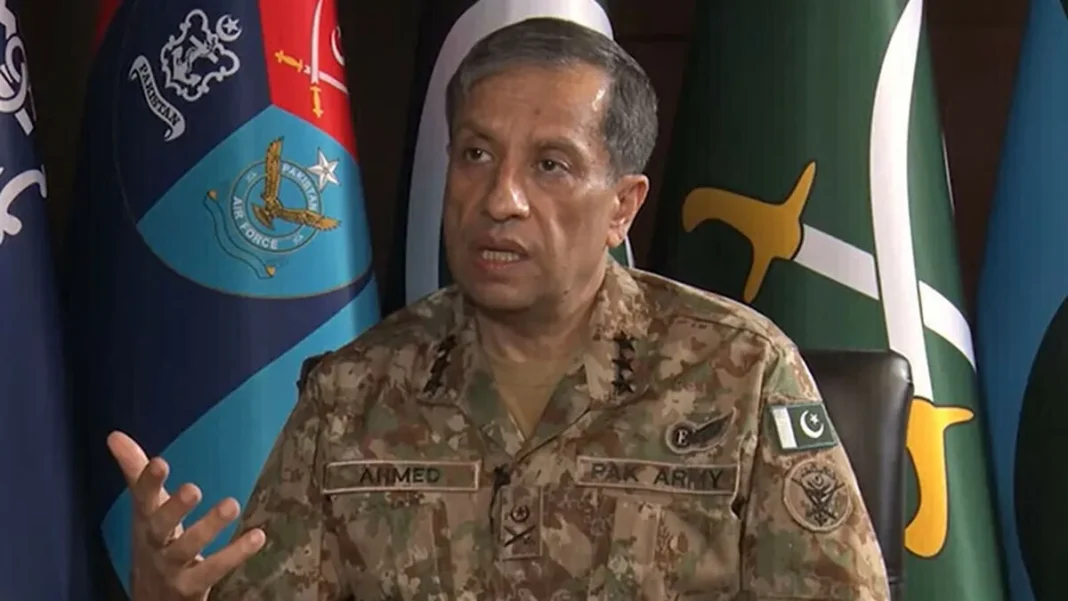
Pakistan is “cautiously optimistic” about its US-Iran mediation, the military’s spokesman said on Friday, in his first interview since a high-level delegation visited Tehran this week. The comment is the clearest public signal yet from Rawalpindi about where Pakistan’s quiet diplomacy between Washington and Tehran stands.
Inter-Services Public Relations (ISPR) Director General Lieutenant General Ahmed Sharif Chaudhry spoke in Rawalpindi on Friday, October 30, 2026. He declined to say what was discussed in Tehran, or whether the United States had backed the trip. But he left no doubt that Pakistan sees a reason to keep trying.
“Why would the Field Marshal be going twice if it is not for some positivity? So yes, of course,” Lt Gen Chaudhry said, when asked whether the trips were a positive sign. “The word that we would use is always cautiously optimistic,” he added.
Chief of Defence Forces and Chief of Army Staff Field Marshal Asim Munir has been to Tehran twice this month, most recently on Monday alongside Saudi and Turkish officials. Saudi Defence Minister Prince Khalid bin Salman and Turkish intelligence chief Ibrahim Kalin joined him for the talks.
Why the US-Iran mediation matters for Pakistan
The talks were the first high-level contact between Iran and all members of the Makkah Defence Alliance since Saudi Arabia was drawn deeper into the conflict. Under the Makkah pact, signed on August 7, an armed attack on one member is considered an attack on all. Saudi Arabia and Turkiye are both members of the pact.
That is why Pakistan’s role carries weight beyond its own borders. Pakistan sits between Iran and the Gulf, shares a long border with Iran, and is bound by the Makkah pact to Saudi Arabia. A wider war in the region would reach Pakistan first through trade, energy supplies and border security, not through headlines alone.
Pakistan has already felt the cost of regional tension at home. Dawn reported this week that the closure of the Iran border disrupted liquefied petroleum gas supplies and pushed up prices, with market rates reported far above the official price of around Rs280 per kg. For households that cook on LPG, diplomacy in Tehran is not an abstract subject. It shows up in the kitchen budget.
After Monday’s talks, Mohsen Rezaei, secretary of Iran’s Supreme National Security Council, said regional security should be ensured by regional countries without foreign intervention. Lt Gen Chaudhry, for his part, warned that there were still “powerful spoilers and detractors” who believed conflict serves them. He did not name them.
Could Iran join the Makkah pact?
Asked whether Iran could join the Makkah Defence Alliance, Lt Gen Chaudhry said the wording of the pact does not bar new members. “Anyone who has a shared vision of collective deterrence and regional peace, why not? Everyone is most welcome,” he said. He added that it was for the political leadership of the three principal parties to decide.
The point matters because the pact has taken on added significance as the Iran war has redrawn regional alliances and raised fears of a broader Middle East conflict. Opening the door to Iran, even in principle, points in the opposite direction from a widening war.
On Saudi Arabia, Lt Gen Chaudhry was direct. He said Pakistan was committed to defending Saudi Arabia and the holy sites of Makkah and Madina. Asked whether more Pakistani troops were being sent to Saudi Arabia under the agreement, he said that would depend on the situation and the decision of both countries’ political leadership.
He drew one clear line. “We are not part of the Yemeni conflict, which is an intra-Yemen conflict,” he said. That distinction has been a constant in Pakistan’s position: support for Saudi defence does not mean joining Yemen’s war.
No larger campaigns in KP, says DG ISPR
Asked if there would now be larger military-led campaigns in Khyber Pakhtunkhwa following the imposition of emergency and governor’s rules, Lt Gen Chaudhry said that was not how the army conducted counter-terrorism.
“Our counter-terrorism operations are based on what we call IBOs, intelligence-based operations… The tempo of the freedom of action of (those) IBOs will further increase,” he said.