COP17 Science Row Puts Nature Talks at Risk
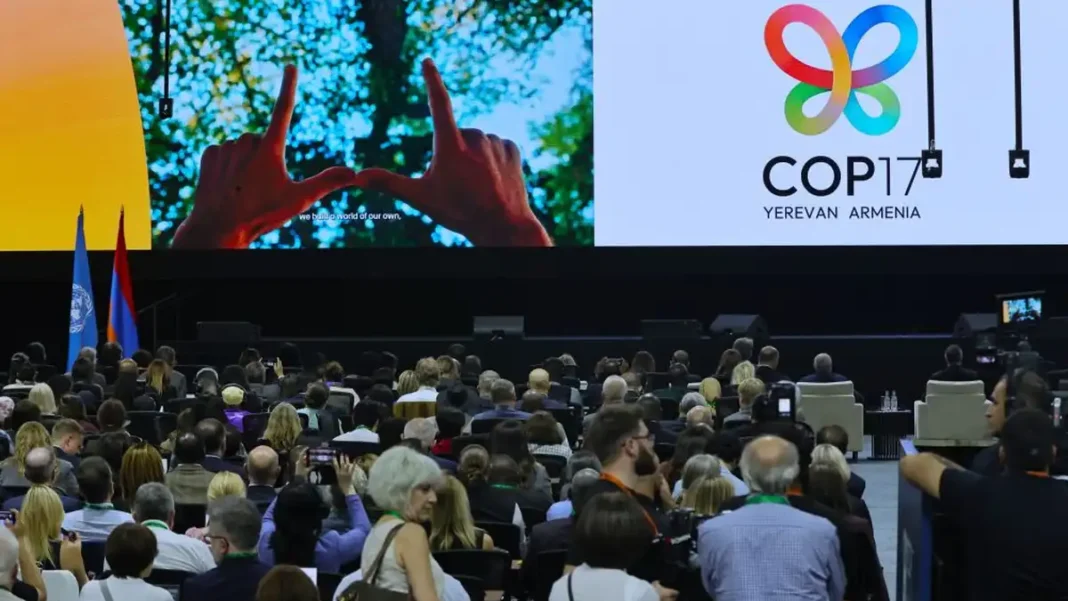
Political tensions are mounting in the final days of the COP17 nature talks in Yerevan, Armenia, where a handful of countries stand accused of trying to weaken the science that underpins global nature policy. The COP17 nature talks are due to end on Friday, October 30, but a dispute over two scientific assessments remains unresolved, and veteran negotiators have voiced alarm at the state of the negotiations.
A French government delegate at the COP17 summit told AFP that four countries, Saudi Arabia, Russia, Argentina and Brazil, were frustrating progress. The delegate spoke on condition of anonymity, since negotiations were still under way. A negotiator from another developed nation told AFP that the same four countries were leading the push, and described a clear alliance of Russia, Saudi Arabia and Argentina, with Brazil involved to a lesser extent, working to water down the reports, refuse to welcome them, or use them as bargaining chips on other items.
The pushback is directed at two scientific assessments by the UN-backed Intergovernmental Science-Policy Platform on Biodiversity and Ecosystem Services, known as IPBES. The assessments examine the overlap between the nature and climate crises, and the economic forces driving both. Nearly 200 nations were due to agree how these findings should guide efforts to protect nature, but some countries did not want to acknowledge them, the French delegate added.
COP17 nature talks: welcome or take note
Much of the dispute comes down to a few paragraphs of text in a draft agreement, and to a single choice of verb. Delegates are debating whether countries should welcome the IPBES findings, or merely take note of them. In the language of UN negotiations, where every word is closely scrutinised, taking note is considered far weaker than welcoming.
Welcoming a report signals that governments accept its findings as a basis for action. Taking note signals only that governments have seen the report, without endorsing its conclusions. That difference matters because the IPBES assessments are meant to guide how countries implement the Kunming-Montreal Global Biodiversity Framework, the pact adopted in 2022 with 23 targets to halt and reverse biodiversity loss by 2030.
The French delegate described the current draft as a text without ambition, and warned that without a shared scientific basis, everything discussed at the talks becomes merely a matter of opinion. IPBES chair David Obura declined to comment while the talks were still ongoing, when approached by AFP in Yerevan.
COP17 nature talks: a parallel with the climate panel
The feud over science at COP17 follows recent efforts by fossil fuel-reliant nations to delay reports by the Intergovernmental Panel on Climate Change, the global authority on climate change. The French delegate drew that parallel directly, saying the same thing is happening at the nature talks as at the climate panel.
The IPCC is currently deadlocked, as countries including Saudi Arabia and India push to delay publication of its next set of benchmark reports on global warming. The pattern in both cases is similar: scientific assessments that point to urgent action meet resistance from governments that want weaker language, later publication, or both.
COP17 itself has made some progress. The conference, which opened on October 19 under the theme Taking Action for Nature, has adopted 14 decisions and secured more than $1.8 billion in financial commitments, according to CGTN. It is also conducting the first global review of collective progress under the Kunming-Montreal framework, which aims to halt and reverse biodiversity loss by 2030, with a vision of living in harmony with nature by 2050. Armenian Environment Minister Hambardzum Matevosyan was elected president of the conference for a two-year term, and Convention on Biological Diversity Executive Secretary Astrid Schomaker has expressed hope that the talks will show multilateralism can still deliver.