Senate Bill Proposes Quarterly Gas Pricing in Pakistan
A bill proposing quarterly determination of natural gas prices landed in the Senate on Friday, in a move set to stir fresh debate over how household and business gas bills are set.
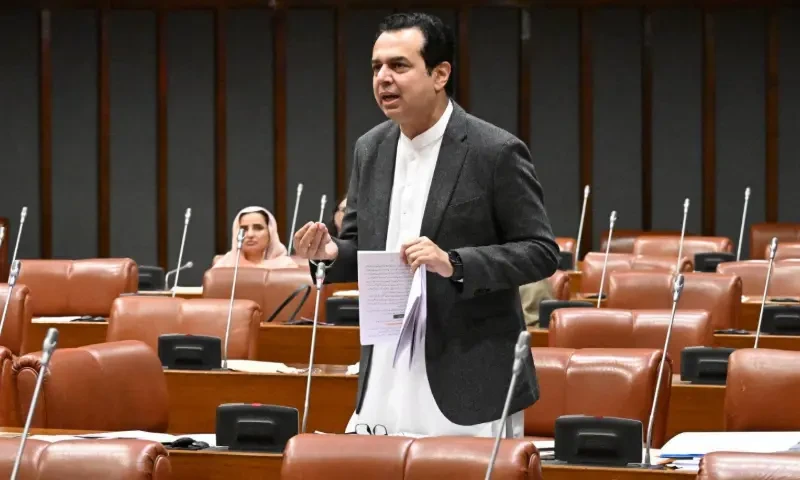
The Oil and Gas Regulatory Authority (Ogra) (Amendment) Bill, 2026, was introduced in the upper house by Minister of State for Interior Tallal Chaudhry. It arrived at a time when the daily fuel pricing mechanism has drawn widespread criticism, and consumers are complaining of unpredictable fuel price shocks.
How quarterly pricing would work
The bill seeks to insert a new Section 8A in the Ogra Ordinance, 2002. Under the proposed mechanism, a licensee for natural gas will submit its total revenue requirement on a quarterly basis, but only to the extent of wellhead gas prices and the cost of imported gas, including Re-Gasified Liquefied Natural Gas (RLNG). Ogra will review that submission.
Ogra will then advise the federal government, which must, within 30 days, advise minimum charges and sale prices for each category of retail consumer for gazette notification.
The bill also empowers the federal government to advise Ogra to carry forward the entire or part of a quarterly adjustment to its forthcoming half-yearly determination under Section 8. That clause means a quarterly change need not hit bills in full at once; it can be spread into the next half-yearly round.
If passed, the bill shall come into force at once.
Why the government says it is needed
The statement of objects and reasons says the primary objective is to align tariffs with market realities by adjusting for rupee-dollar parity in a timely manner. It also aims to signal accurate pricing, curb the accumulation of circular debt in the gas sector and ensure the financial and operational stability of the gas supply chain. Much of Pakistan’s gas cost is linked to imports and to the dollar, so a tariff fixed months earlier stops reflecting the real cost, and the gap appears as circular debt.
For consumers, faster alignment cuts both ways. Prices would follow costs down as well as up, but households budget on stability, and a quarterly cycle means bills could change four times a year on the gas component alone.
The clause likely to trigger debate
In a clause likely to trigger debate, the bill amends Section 9 to state: “Provided that public hearing shall not be held by the Authority for revision of prescribed prices under Section 8A.”
Public hearings are the one stage where consumer groups, industry bodies and provincial representatives can question a tariff proposal on the record before it is decided. Removing them for quarterly revisions would make the process faster, but it would also remove a public check.
A second row in the same session
The same Senate session also heard a separate row over the proposed shifting of Pakistan Petroleum Limited’s (PPL) head office from Karachi to Islamabad. PPP Senator Waqar Mehdi warned that a pattern was emerging of moving federal headquarters, ministries and corporations away from Karachi.
“The head office has been in Karachi since around 1951. Now attempts are being made to shift it to Islamabad through the board of directors, whose members are not elected representatives of the people,” Mehdi said.
He pointed out that the current office’s rent was around Rs4 million per month, but shifting would cost billions, and around 500 officers and employees from Sindh work in PPL. “From the federal government’s conduct, it seems tomorrow they will talk of shifting Karachi’s sea to Islamabad as well,” he remarked. He demanded the decision be withdrawn.
PPP Senator Zamir Ghumro said oil and gas came under the domain of the Council of Common Interests (CCI). “How can you shift it without the will of the CCI?” he asked.
In response, Chaudhry said PPL was a company and its board had repeatedly said vacating the office had become inevitable. “No employees are being affected. There is no provincialism in shifting this office from Karachi,” he said.
What happens next
The bill is only at the introduction stage. It must pass through Senate scrutiny, where the public hearing clause and the 30-day pricing clock are likely to face the closest questions. Gas consumers will also watch how quarterly pricing interacts with winter supply, after a winter gas loadshedding proposal, covered in our report on the winter loadshedding plan, and a winter gas shortage linked to delayed LNG imports, covered in our report on the LNG import delay.