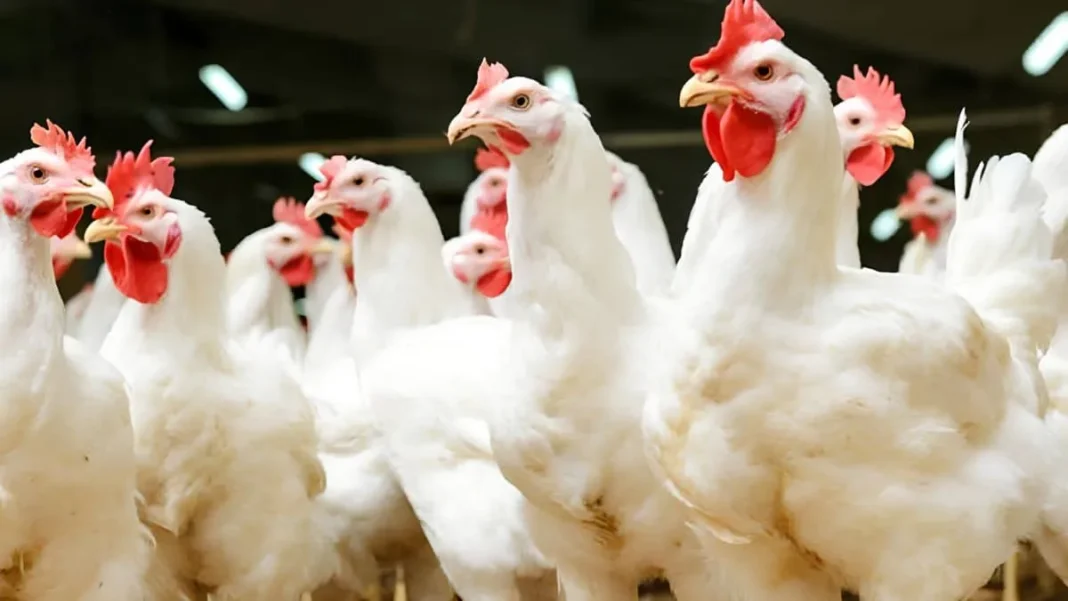
Pakistan Trials Antibiotic Alternatives on Chicken
Pakistan will trial antibiotic alternatives on chicken farms, under a research agreement signed with Denmark-based International Centre for Antimicrobial Resistance Solutions (ICARS). The Ministry of National Food Security and Research signed a memorandum of understanding with ICARS to tackle antimicrobial resistance in the country’s livestock and poultry sectors.
The agreement was signed at a virtual ceremony attended by Federal Minister for National Food Security and Research Rana Tanveer Hussain, senior ministry officials, ICARS representatives and researchers. Under the deal, ICARS will provide $540,855 in funding for a three-year research project.
How the trial will work
The University of Agriculture Faisalabad will lead the study, in collaboration with the Poultry Research Institute, Rawalpindi. The project will examine organic acids as a potential alternative to antibiotics, through a randomised controlled trial involving 30 poultry farms.
Of these, 15 farms will receive the intervention, while the remaining 15 will serve as control farms. Researchers will monitor antibiotic consumption, antimicrobial resistance, poultry health and overall farm performance. The study aims to reduce antimicrobial treatments by at least 20 per cent, without affecting poultry productivity.
Why antibiotic alternatives matter
Antimicrobial resistance poses a serious threat to human and animal health, food security and agricultural productivity. That was the warning from Rana Tanveer Hussain at the ceremony. He stressed that responsible antibiotic use and research-based interventions are essential for sustainable livestock production.
Pakistan’s poultry sector is large, and chicken is a staple protein for millions of households. A change in how poultry farms use antibiotics would therefore touch dinner tables across the country, not just farm balance sheets. That scale is also why the trial uses 30 farms, not a single showcase farm. A result that holds across 30 farms, with controls, is harder to dismiss than a result from one well-run unit.
Who is running the research
The minister acknowledged Principal Investigator Dr Mashkoor Mohsin Gillani and his team at the University of Agriculture Faisalabad, along with the ministry’s Animal Health Technical Focal Person, Dr Syed Muzammil Hassan Gillani, for their contributions.
ICARS Executive Director Helle Engslund Krarup said the partnership would generate scientific evidence on alternatives to antibiotics and help reduce antimicrobial consumption and resistance in Pakistan’s poultry industry. She added that the ministry’s continued leadership would be important for expanding successful interventions across the sector.
ICARS Senior Science Advisor for Veterinary Sciences Rodolphe Mader shared details of the research plan at the ceremony. His role is to ensure the trial design can answer the question it sets: do organic acids cut antibiotic use without cutting output, and at what cost?
Food safety context in Pakistan
Food safety has been under pressure in Pakistan this year. Punjab’s food safety department halted the supply of old imported wheat to flour mills over quality concerns, as reported in the old imported wheat quality halt report. The antibiotic trial sits inside that wider food story. It is not a consumer warning, and it does not say that chicken on sale today is unsafe. It is a research project, funded for three years, designed to test whether farms can use fewer antibiotics and still produce the same amount of chicken at a cost farmers can afford.
What happens next
The trial will run for three years, so results will not arrive quickly. The first signs to watch will be interim reports on antibiotic consumption and farm performance, and whether the 15 intervention farms hold their output while cutting treatments.
If the trial succeeds, the next step will be wider adoption: guidance for farmers, supply of organic acids, and training on how to use them. If it fails, either on output or on cost, the project will still have produced useful evidence, because it will show which alternatives do not work at farm scale.
For now, the agreement itself is the news. Pakistan has secured Danish-backed funding, a 30-farm trial with controls, and a clear target: at least 20 per cent fewer treatments, with no loss in productivity.
The original report on this agreement was published by ProPakistani.
What are antibiotic alternatives in this trial?
The trial will test organic acids as a potential alternative to antibiotics in poultry farming, to see if they can cut antibiotic use without harming bird health or output.
How many farms are in the trial?
Thirty poultry farms will take part. Fifteen will receive the intervention, and 15 will serve as control farms for comparison.