Quick Facts
- Location: Farooqabad (formerly Chuhrkana), Sheikhupura district, Punjab, Pakistan — about 55 km west of Lahore
- Altitude: around 210 metres above sea level, on the Punjab plain
- Famous For: the “True Bargain” — where a young Guru Nanak spent his father’s twenty rupees feeding the hungry instead of trading
- Nearest City: Sheikhupura (district headquarters); Lahore about 55 km east; Nankana Sahib about 36 km away
- Accessibility: easy year-round by road and rail; Farooqabad lies on the Lahore–Faisalabad–Karachi main railway line and on Sargodha Road, near the M-2 Motorway
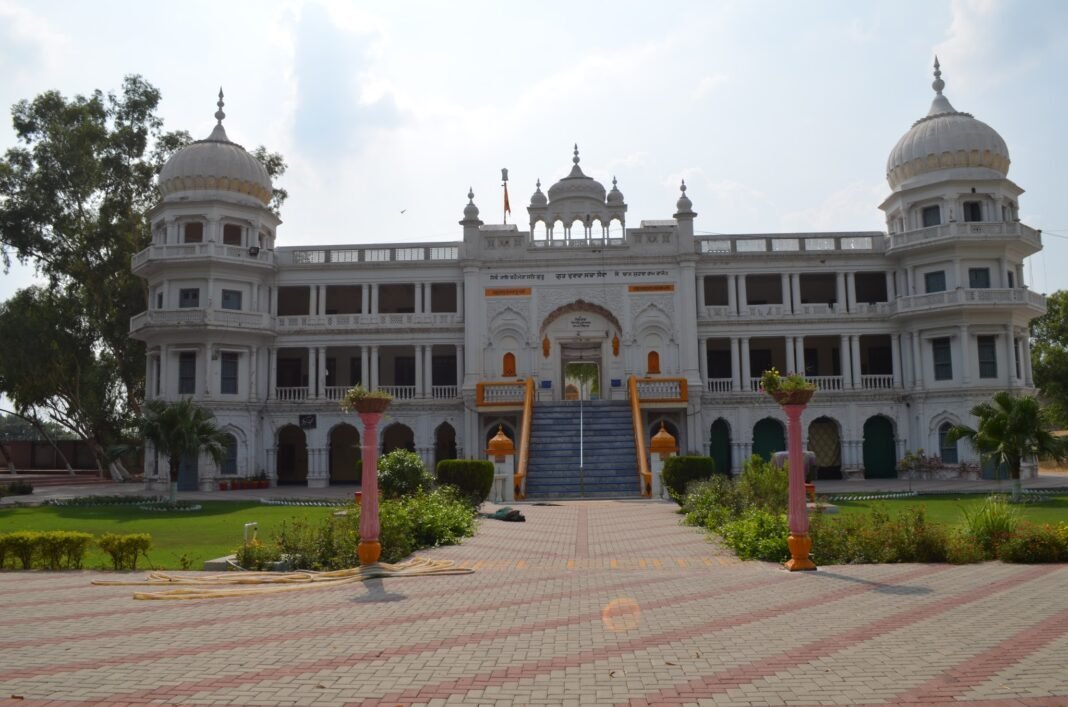
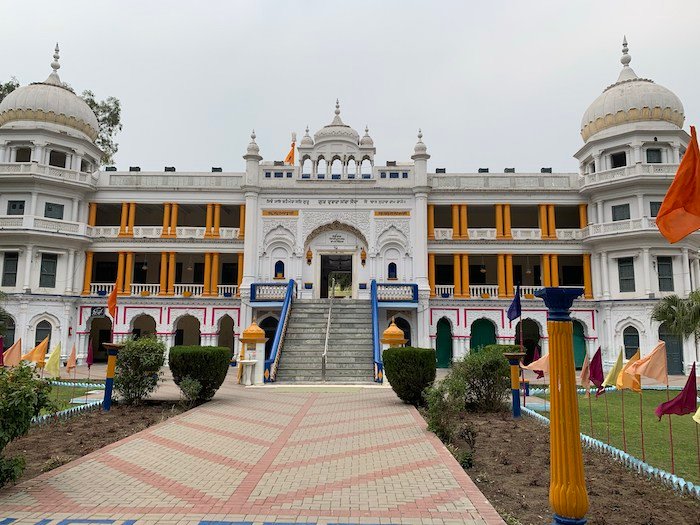
- Known Landmarks: the fort-like gurdwara complex with its Darshani Deorhi, sarovar (holy pond), langar hall, and the nearby Gurdwara Sach Khand in the fields
- Best For: Sikh pilgrims, heritage travellers, families, interfaith visitors, and anyone who believes travel should feed the soul as well as the eyes
Why Visit Gurdwara Sacha Sauda, Farooqabad
Every great place of pilgrimage has a founding story. Few have one as quietly radical as this. When Guru Nanak Dev Ji was about eighteen, his father Mehta Kalu gave him twenty rupees and told him to go to the market and strike a profitable bargain — to learn, as fathers do, the ways of the world. On the road outside Mandi Chuharkana, the young Nanak came upon a group of starving holy men. He spent every rupee on food for them and returned home empty-handed. His father was furious. And Nanak answered, in words that echo across five centuries: I have struck the true bargain — Sacha Sauda.
That sentence is why this gurdwara exists, and why you should come. The shrine stands on the very ground where the twenty rupees became a meal, where a boy chose compassion over commerce. Sikh tradition holds that this is where the spiritual foundation of langar — the free community kitchen that feeds millions around the world today — was laid. To stand here is to stand at the birthplace of one of the world’s great ideas: that feeding a stranger is the best profit a person can make.
But Gurdwara Sacha Sauda is not only a story; it is a living, breathing place. The fort-like complex built at the command of Maharaja Ranjit Singh is among the most impressive Sikh structures in Pakistan — whitewashed walls, a grand Darshani Deorhi that draws your eyes upward, the calm surface of the sarovar, and, during pilgrim season, the sound of kirtan drifting across the courtyard. This is one of the major gurdwaras managed by Pakistan’s Evacuee Trust Property Board, and it welcomes Sikh jathas from India and the diaspora every year, especially at Gurpurab in November and Baisakhi in April.
Come for the history. Come for the architecture. But most of all, come for what this place does to you. Few visitors leave Gurdwara Sacha Sauda unchanged — there is something about a shrine built on pure generosity that makes you want to be a slightly better person. That is a rare souvenir, and it is free.
History of Gurdwara Sacha Sauda, Farooqabad
The story belongs to Guru Nanak’s youth, when he lived at Talwandi (today’s Nankana Sahib) with his family. His father, Mehta Kalu, worried about his spiritually inclined son, decided to set him up in business. He gave him twenty rupees and sent him off with Bhai Mardana to buy goods he could resell at a profit. It is said that Guru Nanak was about eighteen at the time.
Outside Mandi Chuharkana — the market town that is today’s Farooqabad — the two travellers encountered starving jogis, wandering ascetics with no food. Nanak could not bear the sight of their hunger. He spent the entire twenty rupees on edibles and distributed the food among them. When his father learned what had happened, he was very annoyed at the “wasted” money. But Nanak explained that he had made a sachcha sauda — a true bargain — the best profit that money could buy. The act would become one of the defining episodes of the Guru’s early life, and Sikhs remember it as the moment the idea of selfless service that became langar took root.
A shrine grew at the spot where the food was distributed. The present magnificent building — a fort-like, spacious and beautiful complex — was erected at the royal command of Maharaja Ranjit Singh during his reign in the early 19th century. In the beginning, the shrine was served by Udasi caretakers; after the Gurdwara Reform Movement it came under Panthic administration. Then came 1947. When Punjab was partitioned, the Sikhs and Hindus of the area fled east, and the gurdwara was closed. For 46 years it stood silent. Then, on Baisakhi in April 1993, Sikh congregations were allowed to return and pay homage — and the shrine has been alive again ever since. Today it stands under the care of the Evacuee Trust Property Board as one of Pakistan’s most important Sikh pilgrimage sites.
Top Things to Do in Gurdwara Sacha Sauda, Farooqabad
Enter Through the Darshani Deorhi
The gateway of Gurdwara Sacha Sauda is an attraction in itself. The Darshani Deorhi — the ceremonial entrance — is the first thing that strikes visitors, its scale and detail setting the tone for everything inside. Pause here, take it in, and remember that you are walking through the same threshold that pilgrims have crossed for two centuries.
Sit by the Sarovar
The gurdwara complex includes a sarovar, the holy pond where devotees perform ritual ablutions. Even if you do not take a dip, sitting quietly at its edge in the early morning — watching the light move across the water while the town wakes up — is one of the most peaceful moments this trip can offer.
Share a Langar Meal
This is the essential Sacha Sauda experience. The gurdwara’s langar hall serves free vegetarian meals to all visitors, continuing the tradition that began here with twenty rupees and a group of hungry strangers. Sit in the rows on the floor, eat simply, and think about what you are part of: a chain of generosity five centuries long. During pilgrim season the langar runs at full scale, and the atmosphere is unforgettable.
Walk to Gurdwara Sach Khand
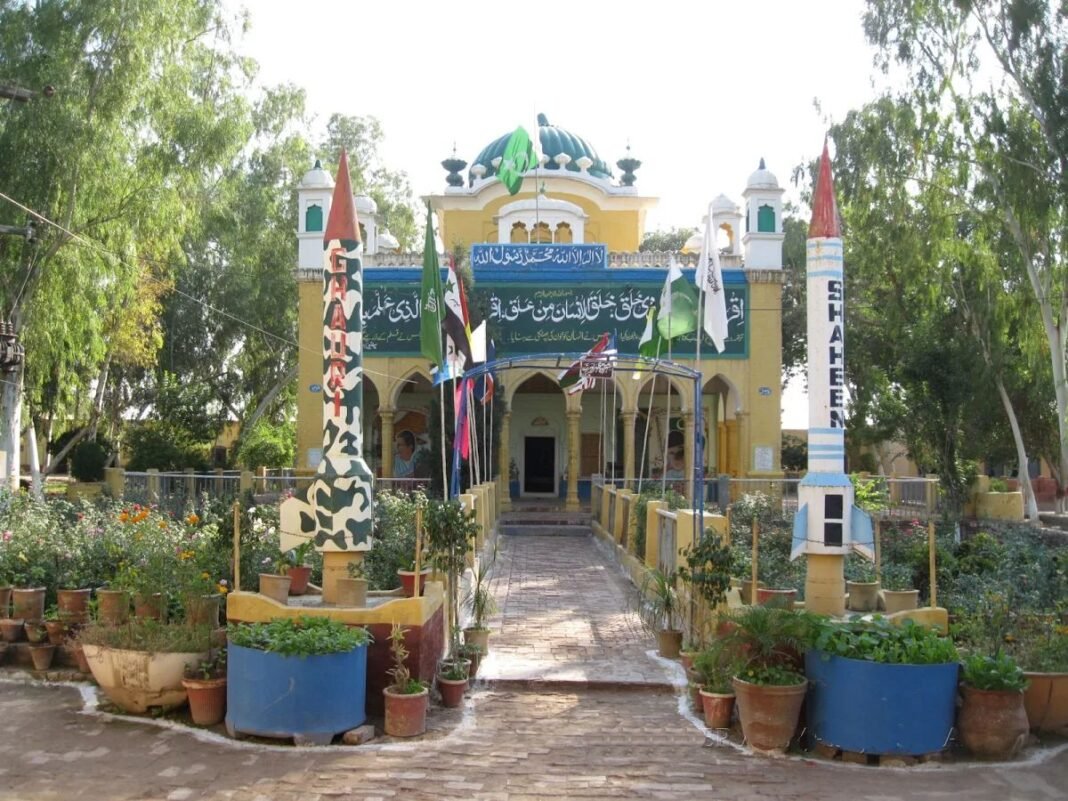
Just across the railway line, about a kilometre into the fields, stands Gurdwara Sach Khand — the quiet, domed shrine of the sugar-and-sand miracle from Guru Nanak’s travels with Bhai Mardana (read our full travel guide before you go). Pair the two in one visit: the living shrine and the sleeping one, the bargain and the miracle, side by side.
Explore Farooqabad Town
The town around the shrine — founded by Sardar Chuhar Singh and named Chuhar Kana until 1983 — sits between the Qadirabad Balloki Link Canal and the Upper Gogera Branch Canal. Walk the bazaar, see the site of the historic railway station built during British rule, and feel a small Punjabi market town going about its day.
Famous Places In and Around Gurdwara Sacha Sauda, Farooqabad
- Gurdwara Sach Khand, Chuhrkana — the domed shrine of the sugar miracle, about 1 km away in the fields
- Nankana Sahib — birthplace of Guru Nanak Dev Ji, about 36 km away; don’t miss Gurdwara Kiara Sahib, Gurdwara Bal Lila Sahib, and Gurdwara Mal Ji Sahib
- Sheikhupura — district headquarters, home to the Mughal-era Hiran Minar
- Lahore — 55 km east; pair your visit with Gurdwara Janam Asthan Guru Ram Das in the old city
How to Reach Gurdwara Sacha Sauda, Farooqabad
Gurdwara Sacha Sauda is one of the easiest major Sikh shrines in Pakistan to reach — a straightforward drive from Lahore and well connected by rail. The gurdwara sits in Farooqabad town, clearly signposted and known to every local driver.
- From Lahore: about 55 km west on Sargodha Road (or via the M-2 Lahore–Islamabad Motorway), roughly 1 to 1.5 hours by car. Rickshaws, vans, and coasters also run regularly between Lahore and Farooqabad.
- From Islamabad: about 320 km via the M-2 Motorway, roughly 4 to 4.5 hours by car. Exit toward Sheikhupura/Farooqabad.
- From Karachi: about 1,400 km by road — most visitors fly or take the train to Lahore and continue by road (around 1.5 hours from Lahore).
- By train: Farooqabad Railway Station lies on the Lahore–Faisalabad–Karachi main line, with regular passenger services from Lahore.
Nearest airport: Allama Iqbal International Airport, Lahore — about 70 km (roughly 1.5 hours) from Farooqabad.
Road conditions: Sargodha Road and the M-2 are in good condition year-round; town roads around the shrine are paved. Monsoon rains (July–September) can slow travel but rarely block it.
Transport options: private car or hired van is most comfortable; public vans and coasters connect Lahore’s bus terminals with Farooqabad throughout the day. Sikh pilgrim jathas usually travel in organised groups with ETPB-coordinated transport during Gurpurab and Baisakhi.
Route Details
- From Lahore, take Sargodha Road west (or the M-2 Motorway) toward Sheikhupura.
- Continue to Farooqabad (formerly Chuhrkana) — the town is about 55 km from Lahore.
- Follow local signs to Gurdwara Sacha Sauda; the fort-like complex is a landmark visible from the main road.
- Park outside the complex, cover your head, remove your shoes, and enter through the Darshani Deorhi.
- Allow 2–3 hours for the shrine, sarovar, and langar; add an hour if walking to Gurdwara Sach Khand in the fields.
Where to Stay in Gurdwara Sacha Sauda, Farooqabad
Most day visitors stay in Lahore, which offers the full range from five-star hotels on Mall Road and in Gulberg to comfortable mid-range hotels and budget guesthouses — all about 1 to 1.5 hours from the shrine. Sheikhupura, the district headquarters, has mid-range hotels and government rest houses suitable for an overnight stop. In Farooqabad itself you will find basic guesthouses and lodges near the bazaar; these are simple but adequate, and best booked by phone ahead of a festival visit. During Gurpurab (November) and Baisakhi (April), Sikh pilgrim groups are accommodated through arrangements coordinated with the Evacuee Trust Property Board, and private visitors should book Lahore hotels well in advance as the city fills up. For a two-day heritage circuit, many travellers split their nights between Lahore and Nankana Sahib, where pilgrim guest facilities are well established.
Where to Eat: Local Foods of Gurdwara Sacha Sauda, Farooqabad
The most meaningful meal of your trip is waiting inside the gurdwara: langar, the free community kitchen, serves simple vegetarian food — dal, roti, rice, and sabzi — to everyone who comes, continuing the very tradition this shrine commemorates. Eating it here, where the idea began, is a pilgrimage in itself. Beyond the shrine, Farooqabad’s bazaar serves classic Punjabi dhaba food: sarson ka saag with makki di roti in winter, chana and dal fry year-round, fresh tandoori naan, and tall glasses of sweet or salted lassi crowned with malai. A dhaba lunch here is genuinely budget-friendly. In summer, look for fresh mangoes and sugarcane juice; in winter, kinnow oranges and gajar ka halwa. For fancier dining, Lahore’s restaurants are an easy drive back. Carry bottled water, and note that langar is vegetarian and served to all without distinction — the truest taste of Sacha Sauda.
Weather in Gurdwara Sacha Sauda, Farooqabad
Farooqabad sits on the Punjab plain, so expect classic lowland weather: cold, foggy winters; a brief, beautiful spring; a long, hot summer; and a humid monsoon. Winter is the prime visiting season — and it coincides with Gurpurab in November, the shrine’s great festival. Summer afternoons are harsh, so schedule shrine visits for early morning or late afternoon. Monsoon downpours (July–September) rarely disrupt travel but can make the walk to nearby Gurdwara Sach Khand muddy.
| Season | Temperature Range | Conditions |
|---|---|---|
| Winter (Dec–Feb) | 5°C – 22°C | Cold with foggy mornings; sunny afternoons; peak pilgrim season |
| Spring (Feb–Apr) | 15°C – 30°C | Pleasant; mustard fields blooming; Baisakhi in April |
| Summer (May–Jul) | 28°C – 45°C | Very hot and dry; visit at dawn or dusk |
| Autumn (Oct–Nov) | 15°C – 30°C | Mild and golden; Gurpurab celebrations in November |
Note: the monsoon (July–September) brings heavy rain and high humidity; the shrine complex itself remains fully accessible.
Language and Culture of Gurdwara Sacha Sauda, Farooqabad
Punjabi — the Majhi dialect of central Punjab — is the mother tongue here, with Urdu spoken and understood everywhere. The culture is warm, agrarian, and deeply hospitable; visitors asking for directions are often escorted to the shrine gates personally. As an active place of worship, gurdwara etiquette matters: cover your head (scarves are usually available at the entrance), remove your shoes before entering, dress modestly with shoulders and knees covered, and do not bring alcohol or tobacco onto the premises. Photography is generally welcome in the courtyard and around the sarovar, but ask before photographing people at prayer and switch cameras off inside the main sanctum if requested. Sikh volunteers (sewadars) maintain the shrine; a word of thanks goes a long way. The shrine also stands as a symbol of interfaith harmony in Pakistan — Muslim neighbours of Farooqabad take visible pride in it, and visitors of all faiths are received with the same warmth.
Shopping in Gurdwara Sacha Sauda, Farooqabad
Farooqabad’s bazaar is a cheerful, unpretentious market town stop: Punjabi khussay (embroidered shoes), phulkari textiles, cotton fabrics, and fresh seasonal produce — kinnows in winter, mangoes in summer — at village prices. Near the gurdwara during pilgrim season, stalls sell religious items, kara bracelets, headscarves, and books on Sikh history in Urdu, Punjabi, and English — a Janam Sakhi (traditional life story of Guru Nanak) makes a meaningful souvenir. There are no shopping malls in Farooqabad; for serious shopping, Lahore’s markets and malls are 1.5 hours away. Keep your purchases light if you are walking to Sach Khand afterwards.
Local Events and Festivals
Gurpurab — Guru Nanak’s birth anniversary, in November — is the great festival of Gurdwara Sacha Sauda and one of the most moving religious gatherings in Pakistan. Sikh jathas arrive from India and the diaspora for days of akhand path (continuous scripture reading), kirtan, processions, and massive langars. The whitewashed complex glows, the Nishan Sahib flags fly, and the whole town of Farooqabad takes on a festive air. Baisakhi, in April, is the second major gathering — doubly significant here, because it was on Baisakhi in April 1993 that pilgrims returned to the shrine after 46 years. Both festivals are extraordinary times to visit, but book Lahore accommodation well ahead and expect large, joyful crowds. Between festivals, the shrine is calm and contemplative — choose your mood.
Travel Tips for Gurdwara Sacha Sauda, Farooqabad
Packing Essentials
Carry a headscarf or cap, modest clothing, comfortable slip-on shoes (you will remove them often), sun protection, drinking water, and a camera. In winter, a warm jacket for foggy mornings; in summer, a hat and extra water.
Safety Tips
The shrine and town are safe and welcoming. Keep valuables secure in crowds during festivals, stay hydrated in summer, and use marked railway crossings on the walk to Gurdwara Sach Khand. Women travellers will find the shrine respectful and comfortable; modest dress is appreciated everywhere in town.
Money & Connectivity
Bring cash for the bazaar — small shops rarely take cards; ATMs are available in Farooqabad town. All major mobile networks (Jazz, Telenor, Zong, Ufone) have good coverage, and 4G data works well around the shrine.
Best Time to Visit Gurdwara Sacha Sauda, Farooqabad
Winter (November–February) — The Best Season
November is the crown jewel: Gurpurab brings the shrine to glorious life with pilgrims, kirtan, and langar on a grand scale. December to February is quieter but equally pleasant — crisp air, clear light, and the shrine at its most serene.
Spring (February–April) — Beautiful and Festive
Mild weather, blooming fields, and Baisakhi in April — the festival that reopened this shrine to the world in 1993. A wonderful time for heritage travellers.
Summer (May–July) — Visit Early
Heat is intense by midday; come at dawn, enjoy the cool marble and the quiet, and retreat to Lahore by afternoon.
Autumn (October–November) — Excellent
The weather softens, the festival season approaches, and October offers the year’s most comfortable sightseeing before the November crowds.
Final Thoughts
Twenty rupees. A group of hungry strangers. A boy who decided that feeding them was the best business in the world. Five centuries later, the building still stands, the langar still feeds, and the idea — that generosity is the truest profit — still travels the world from this small town in Sheikhupura. Gurdwara Sacha Sauda is not just a heritage site; it is an argument for a kinder way to live, made in brick and marble.
Make it a day trip from Lahore, pair it with the quiet fields of Gurdwara Sach Khand and the holy city of Nankana Sahib, and you will have walked through the most beloved chapters of Guru Nanak’s youth. Explore more of Pakistan’s living heritage in our Explore Pakistan series — and when you sit down to langar here, remember whose twenty rupees started it all.
FAQs
Where is Gurdwara Sacha Sauda located?
In Farooqabad (formerly Chuhrkana), Sheikhupura district, Punjab — about 55 km west of Lahore on Sargodha Road, on the Lahore–Faisalabad–Karachi railway line.
What is the story of Sacha Sauda?
As a youth of about eighteen, Guru Nanak was given twenty rupees by his father Mehta Kalu to start a business; instead he spent it all feeding starving holy men outside Mandi Chuharkana, calling it the “true bargain” (Sacha Sauda).
When is the best time to visit Gurdwara Sacha Sauda?
November to March. November’s Gurpurab (Guru Nanak’s birth anniversary) and April’s Baisakhi are the great festival seasons.
How do I reach Gurdwara Sacha Sauda from Lahore?
Drive about 55 km west on Sargodha Road or the M-2 Motorway (1–1.5 hours), or take a train or van/coaster to Farooqabad — the shrine is a well-known town landmark.
Is langar served at the gurdwara?
Yes — the free community kitchen serves vegetarian meals to all visitors, continuing the tradition this shrine commemorates. It runs at full scale during pilgrim festivals.
Is Gurdwara Sacha Sauda suitable for families and non-Sikh visitors?
Absolutely. Visitors of all faiths are warmly welcomed; families will find it comfortable. Cover your head, remove shoes, and dress modestly.
Where should I stay?
Most visitors stay in Lahore (1–1.5 hours away). Sheikhupura has mid-range hotels, and Farooqabad has basic guesthouses. Book early for November and April festivals.
Can I combine it with other shrines?
Yes — Gurdwara Sach Khand is 1 km away in the fields, and Nankana Sahib (36 km) makes a perfect same-day or two-day circuit.