Quick Facts
- Location: Allama Iqbal Road (formerly McLeod Road), Lahore, Punjab
- Famous For: The last residence of Allama Muhammad Iqbal, Pakistan’s national poet and philosopher; now the Allama Iqbal Museum, a national monument on UNESCO’s tentative list
- Nearest City: Central Lahore — minutes from the old city, Lahore Fort and Badshahi Mosque
- Accessibility: Easy city access by rickshaw, ride-hailing or car; wheelchair access is limited in parts of the heritage building
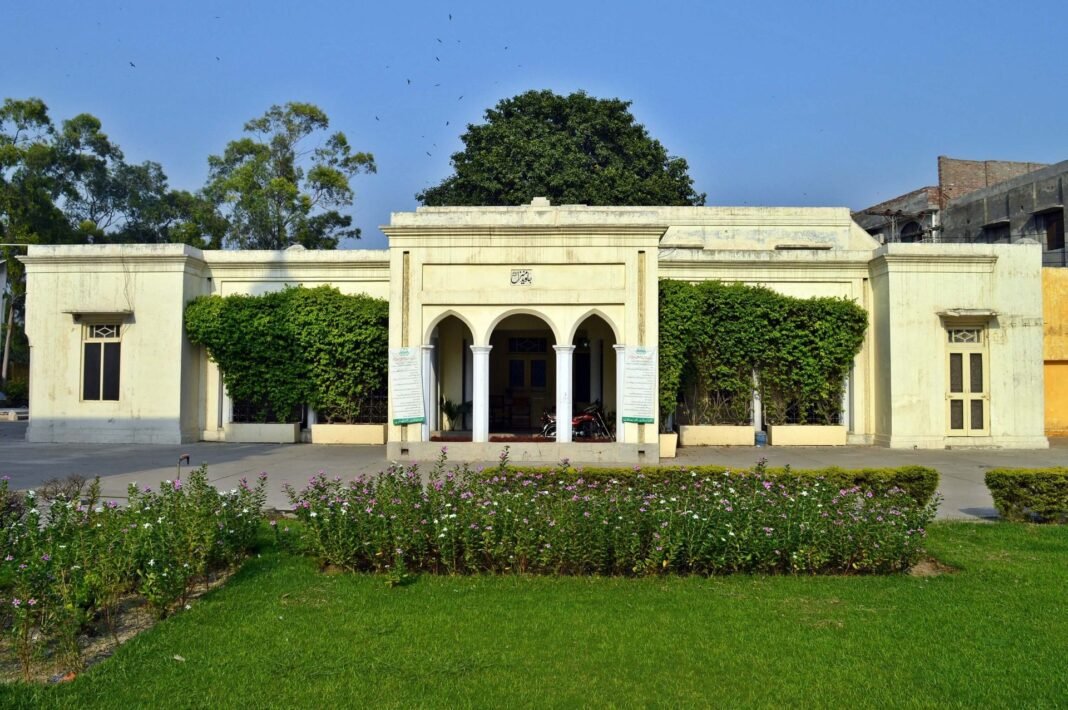
- Known Landmarks: The white European-style mansion itself, its nine galleries, the library, the front garden and portico
- Best For: Literature lovers, students, history buffs, school trips, and anyone who wants to understand the mind behind Pakistan’s founding idea
Why Visit Javaid Manzil
Every nation has a house where its idea was born. For Pakistan, that house is Javaid Manzil. This white, single-story mansion on Allama Iqbal Road is where Allama Muhammad Iqbal — the poet-philosopher whose vision inspired the Pakistan Movement — spent the last three years of his life, and where he died on 21 April 1938. Walking through its nine galleries is not a museum visit in the ordinary sense; it is a walk through a mind. Here are his handwritten drafts, his letters from the independence movement, his degrees from Cambridge and Munich, his watches, his clothes, his prayer mat. Few places in Pakistan make history feel this personal.
What makes Javaid Manzil special is that it is not a grand palace or a monument built by admirers — it is the actual house, the only residence in Lahore that Iqbal personally owned, preserved almost exactly as a working home of the 1930s. You stand in the rooms where he received visitors, scholars and political leaders; you see the desk where the poetry was written; you read the final verses he composed, “Sarood-e-Rafta,” in the minutes before his death. The museum covers his whole life, from his birth in Sialkot in 1877 to his death here in 1938, and it does so through objects he actually touched. For students of Urdu and Persian literature, for CSS aspirants, for schoolchildren learning their first Iqbal couplets, this is a pilgrimage site.
And it is an easy one. Javaid Manzil sits in central Lahore, a short ride from the Lahore Fort, Badshahi Mosque and Anarkali — which means you can pair a deeply moving morning at the museum with the great Mughal sights in the afternoon. Hundreds of students, scholars and ordinary visitors come every day, and the atmosphere is quiet, respectful and genuinely inspiring. If you want to understand Pakistan not as a place but as an idea, start here.
History of Javaid Manzil
The house was Iqbal’s own project. In 1934 he purchased a plot of about seven kanals on McLeod Road (today’s Allama Iqbal Road) for Rs. 25,025, and in 1935 completed the European-style, single-story mansion at a construction cost of Rs. 42,025. He named it Javaid Manzil — also spelled Javed Manzil — after his son, Javid Iqbal. Of all Iqbal’s residences in Lahore, this was the only one he owned; his earlier homes, including the famous Quadrangle near Government College, were rented.
Iqbal moved here with his wife Sardar Begum, son Javid and daughter Munira, and spent his final three years in these rooms. He was already ill, yet these were enormously productive years — years of poetry, letters and political counsel that shaped the independence movement. According to the museum’s custodians, he composed his final verses, “Sarood-e-Rafta,” just minutes before his death here on 21 April 1938.
After his death, the house passed to his son. On 10 May 1961, the Government of Pakistan announced plans to convert it into a museum preserving Iqbal’s belongings and manuscripts; the government purchased the residence from Javid Iqbal for Rs. 3.5 million, and Javid Iqbal donated some six hundred objects belonging to his father — manuscripts, books, photographs, furniture — to the collection. The site was protected under the Punjab Antiquities Act of 1975, declared a national monument in 1977, and placed on UNESCO’s tentative list of World Heritage Sites. After renovation, the museum was inaugurated in December 1984 by President Muhammad Zia-ul-Haq. A new building with a lecture hall was later added to the premises, where gatherings on Iqbal’s philosophy, poetry and thought are regularly held. In 2025, Turkiye’s cooperation agency TİKA announced a restoration project for the museum, scheduled for completion by 2027 — the 150th anniversary of Iqbal’s birth.
Top Things to Do in Javaid Manzil
Walk the Nine Galleries
The museum’s nine galleries trace Iqbal’s life from 1877 to 1938: his childhood in Sialkot, his education at Government College Lahore, his years in England (Trinity College, Cambridge; Lincoln’s Inn) and Germany (doctorate at the University of Munich), his legal practice, and his emergence as the poet-philosopher of the East. Each gallery mixes photographs, documents and personal objects so that the timeline reads like a life, not a lecture. Give this at least an hour — rushing the galleries is the one mistake visitors regret.
Read the Handwritten Manuscripts
The museum’s greatest treasures are Iqbal’s handwritten drafts of his works — the actual pages where the poetry took shape, with crossings-out and marginal notes. Alongside them are handwritten letters from the independence movement, official correspondence, certificates, awards, medals and his educational degrees. Standing inches from the handwriting of the man who wrote the idea of Pakistan is the experience visitors remember longest.
See Iqbal’s Personal Belongings
His clothes, his passport, his watches, his prayer mats, his furniture — the small, human objects that make a historical figure real. The museum staff note that visitors, especially young people, are often most moved by these: the everyday things of an extraordinary mind. Some of the personal items remain the property of Iqbal’s family and are kept on public display by their generosity.
Visit the Library
The museum’s library holds works by and about Iqbal — an essential stop for researchers, students and anyone who wants to go deeper than the galleries. If you are writing a paper or preparing for competitive exams, ask the staff what is available; they are accustomed to serious visitors.
Sit in the Garden
The impressive front garden and the prominent portico facing the main road are part of the building’s late-colonial European character. After the intensity of the galleries, the garden is the place to sit with your thoughts — many visitors say this is where the visit settles into something lasting.
Attend a Lecture or Gathering
The lecture hall in the newer building on the premises hosts gatherings on Iqbal’s philosophy, poetry and ideas. If your visit coincides with one, stay — hearing Iqbal discussed by scholars in his own house is a rare experience. Iqbal’s family members are also known to visit the house and spend time with visitors.
Pair It With Old Lahore
Javaid Manzil’s central location makes it the perfect anchor for a heritage day: the museum in the morning, then the Badshahi Mosque and Lahore Fort, the Minar-e-Pakistan, Anarkali Bazaar for lunch and shopping, and the Alhamra Arts Council if there is an evening performance. Iqbal’s own Government College — where he studied and taught — is also nearby; see our Government College University Lahore travel guide.
Famous Places In and Around Javaid Manzil
- Lahore Fort (Shahi Qila): The great Mughal fortress, a short drive away, with the Sheesh Mahal and Alamgiri Gate.
- Badshahi Mosque: One of the world’s great Mughal mosques, facing the fort across Hazuri Bagh.
- Minar-e-Pakistan: The tower marking the site of the 1940 Lahore Resolution — the political realization of Iqbal’s dream.
- Government College University Lahore: Iqbal’s alma mater and teaching home; his first Lahore residence, the Quadrangle (now Iqbal Hostel), is on its premises.
- Anarkali Bazaar: Lahore’s legendary old market — food, books, fabrics and centuries of bustle.
- Lahore Museum: The great colonial-era museum on the Mall, with Gandharan art and Mughal treasures.
- Shalimar Gardens: The Mughal paradise gardens, a UNESCO World Heritage Site.
How to Reach Javaid Manzil
Javaid Manzil stands on Allama Iqbal Road (the old McLeod Road) in central Lahore — easy to reach from anywhere in the city by auto-rickshaw, Careem/InDrive, or private car. If you are coming from the old city side, it is minutes from the Railway Station area; from Gulberg or DHA, allow 25–40 minutes depending on traffic. Parking is on the surrounding streets.
From Islamabad, Lahore is about 375 km via the M-2 motorway — roughly 4 hours by car or comfortable bus (Daewoo and other services run constantly). From Karachi, fly to Lahore (about 1.5 hours) and take a 30–45 minute ride into the city. From anywhere in Punjab, Lahore is the best-connected city in the province by road and rail. The museum is a half-day visit at most, so it fits easily into any Lahore itinerary — and because it opens in the morning, it pairs perfectly with an afternoon at the Fort and Badshahi Mosque.
Route Details
- Within Lahore: Head to Allama Iqbal Road (McLeod Road) in central Lahore; the white mansion with its prominent portico is visible from the main road.
- From Islamabad: M-2 motorway to Lahore (~375 km, ~4 hours), then city roads to Allama Iqbal Road.
- From Karachi: Fly to Allama Iqbal International Airport (~1.5 hours), then 30–45 minutes by road to the museum.
- Heritage day circuit: Javaid Manzil (morning) → Badshahi Mosque & Lahore Fort (afternoon) → Fort Road Food Street (evening).
Where to Stay in Javaid Manzil
Javaid Manzil is a half-day museum visit, so stay anywhere in Lahore that suits your budget and plans. The areas around the Mall Road and Gulberg have the widest choice — from budget guesthouses to comfortable mid-range hotels — and put you within easy reach of both the museum and the old city. DHA and Johar Town offer newer, quieter options at the mid-range and upmarket end. If your trip is heritage-focused, staying near the old city (around the Fort and Badshahi Mosque) keeps Javaid Manzil, Anarkali and the Mughal sights all within short rides. Book ahead during winter (Lahore’s peak tourist season) and around public holidays.
Where to Eat: Local Foods of Javaid Manzil
You are in Lahore — eating well is not optional, it is the itinerary. Near the museum and across the old city, the Lahori classics await: nihari and paye for breakfast, halwa puri on weekend mornings, chargha and BBQ platters, and kulcha-naan with lassi at every turn. The Fort Road Food Street, facing the Badshahi Mosque, is the classic evening choice — dozens of restaurants with rooftop views of the illuminated mosque and fort. Anarkali’s food street and the dhabas around it serve the same beloved dishes at local prices. A full Lahori meal for two at a good dhaba is genuinely budget-friendly; the Food Street rooftops cost more but the view earns it. End with falooda or a thick rabri lassi — this is Lahore, after all.
Weather in Javaid Manzil
Lahore’s climate shapes the visit: summers are fiercely hot, winters mild and pleasant, and the monsoon brings humid drama in July and August. The museum is indoors, so it is actually a perfect summer-morning activity — cool galleries while the city bakes outside. But the garden and the walk between buildings are best enjoyed from October to March, when Lahore is at its most beautiful. Smog can affect the city in November and December; mornings are usually clearest.
| Season | Temperature Range | Conditions |
|---|---|---|
| Winter (Dec–Feb) | 5°C to 20°C | Mild and pleasant; occasional smog; peak tourist season |
| Spring (Mar–Apr) | 20°C to 35°C | Warm and lovely; garden at its best |
| Summer (May–Jul) | 35°C to 45°C | Very hot; visit the museum in the morning, stay indoors midday |
| Monsoon (Jul–Sep) | 30°C to 38°C | Humid with heavy showers; dramatic skies over the old city |
| Autumn (Oct–Nov) | 18°C to 32°C | Clear and comfortable — ideal for the full heritage circuit |
Language and Culture of Javaid Manzil
Lahore speaks Urdu and Punjabi in the same breath — often in the same sentence. Museum staff and guides communicate comfortably in Urdu and English, and the gallery labels are accessible to general visitors. This is a site of national reverence, so the etiquette is that of a shrine and a library combined: speak quietly in the galleries, do not touch the exhibits or manuscripts, and follow the staff’s guidance on photography (rules can vary by gallery). Modest dress is appreciated. School groups are a daily sight here — if you visit on a weekday morning, you may find yourself sharing the galleries with a class of students discovering Iqbal for the first time, which is rather wonderful.
Shopping in Javaid Manzil
The museum itself is not a shopping stop, but its neighbourhood is one of Lahore’s great commercial districts. Anarkali Bazaar — one of South Asia’s oldest markets — is close by, with books, fabrics, traditional shoes, and street food at every corner. Ichhra and Liberty Market offer modern clothing and household goods at local prices. For books on Iqbal, the bookshops of Urdu Bazaar (near the museum area) are unmatched — you can find his complete works in Urdu, Persian and English translation. As with any old-city bazaar, bargaining is expected and part of the fun.
Travel Tips for Javaid Manzil
Packing Essentials
Comfortable walking shoes, a water bottle, a notebook if you are a student or researcher, and a camera (check the current photography policy at the entrance). In summer, carry a hat and sunscreen for the garden; in winter, a light jacket for the morning.
Safety Tips
Central Lahore is busy and the museum area is safe during visiting hours. Keep valuables secure in the surrounding bazaars as you would in any crowded market. Follow all museum rules — the manuscripts and belongings are irreplaceable national treasures.
Money & Connectivity
ATMs and banks are everywhere in central Lahore; carry small cash for rickshaws, bazaar shopping and street food. All mobile networks work well, and most hotels and cafes offer Wi-Fi.
Best Time to Visit Javaid Manzil
Winter (November to February) — The Best Season
Mild weather, clear skies, and Lahore at its most enjoyable. The garden is pleasant, the old city walks are comfortable, and the whole heritage circuit — museum, fort, mosque, food street — works beautifully in a single long day.
Spring (March to April) — Lovely and Green
Warm but not yet hot, with the museum garden looking its best. A great time for the full outdoor circuit.
Summer (May to August) — Mornings Only
Visit the museum first thing in the morning when it is cool inside, then retreat to air conditioning until evening. The monsoon skies make for dramatic old-city photography.
Autumn (September to October) — Clear and Comfortable
The heat breaks, the skies clear, and the crowds thin — an underrated season for Lahore sightseeing.
Final Thoughts
Javaid Manzil is small — a single-story house, nine galleries, a garden — and that is precisely its power. Great men are often buried under great monuments; here, the monument is the house he actually lived in, and the exhibits are the things he actually touched. You leave understanding something about Iqbal that no biography quite delivers: the discipline of the study, the intimacy of the letters, the finality of those last verses written minutes before death.
If you are building a Lahore itinerary, put Javaid Manzil first — not last, not “if we have time.” See the idea of Pakistan in the morning, then go stand in front of the Badshahi Mosque and the Minar-e-Pakistan in the afternoon and watch the idea become a country. Few travel days in Pakistan are this meaningful. For more destinations that tell Pakistan’s story, browse our Explore Pakistan collection.
FAQs
Where is Javaid Manzil located?
Javaid Manzil (the Allama Iqbal Museum) is on Allama Iqbal Road — formerly McLeod Road — in central Lahore, Punjab, a short drive from the Lahore Fort and Badshahi Mosque.
Who lived in Javaid Manzil?
Allama Muhammad Iqbal, Pakistan’s national poet and philosopher. He built the house in 1935, lived there for the last three years of his life, and died there on 21 April 1938.
Why is it called Javaid Manzil?
Iqbal named the house after his son, Javid Iqbal (the spellings Javaid/Javed both refer to the same name). It was the only residence in Lahore that Iqbal personally owned.
When did Javaid Manzil become a museum?
The government announced the museum in 1961, purchased the house from Iqbal’s son for Rs. 3.5 million, declared it a national monument in 1977, and inaugurated the museum in December 1984.
What can I see inside Javaid Manzil?
Nine galleries covering Iqbal’s life (1877–1938), his handwritten manuscripts and letters, photographs, degrees, awards, medals, and personal belongings including clothes, watches, his passport and prayer mats — plus a library and garden.
How much time do I need for Javaid Manzil?
Two to three hours is enough for the galleries, library and garden. It pairs perfectly with the Lahore Fort and Badshahi Mosque in a single heritage day.
Is Javaid Manzil good for children and students?
Absolutely — hundreds of students visit daily, and the museum is one of the best educational outings in Lahore. The handwritten manuscripts and personal belongings make history tangible for young visitors.
What is the best time to visit Javaid Manzil?
November to February for the most pleasant weather, though the indoor museum works year-round — visit in the morning during Lahore’s hot summers.