Karachi Anti-Encroachment Drive Falls Flat, Mayor Told
Karachi’s citywide anti-encroachment drive has cleared less than 10 per cent of illegal structures and occupations in 12 days, with only three days left before Mayor Murtaza Wahab’s 15-day ultimatum expires.
The slow progress has raised fresh questions about the Karachi Metropolitan Corporation’s (KMC) Anti-Encroachment Department and about whether the mayor’s directives are being enforced on the ground. Reports also suggest that the position of the department’s Senior Director, Sher Ali, may be at risk.
Mayor Wahab took notice of encroachments across the city and described earlier operations by the relevant departments as largely cosmetic. On 24 October, he directed anti-encroachment officials to launch an immediate citywide crackdown and to clear illegal occupations within 15 days. With the deadline now close, there are few signs of meaningful progress.
What the Karachi anti-encroachment drive figures show
Sources familiar with the operations described the department’s performance over the past 12 days as disappointing. They said even 10 per cent of encroachments had yet to be removed.
They alleged that, under the department’s conventional methods, encroachers were often tipped off ahead of scheduled operations. That warning allowed them to move goods and belongings to safer locations before teams arrived. As a result, many drives amounted to little more than symbolic exercises.
The operations have also seen isolated clashes between enforcement teams and encroachers, including a confrontation in Pehlwan Goth. More tellingly, the KMC has reportedly failed to clear encroachments even from the vicinity of its own head office. That gap between official directives and ground realities is now the central embarrassment for the department.
Where encroachments remain
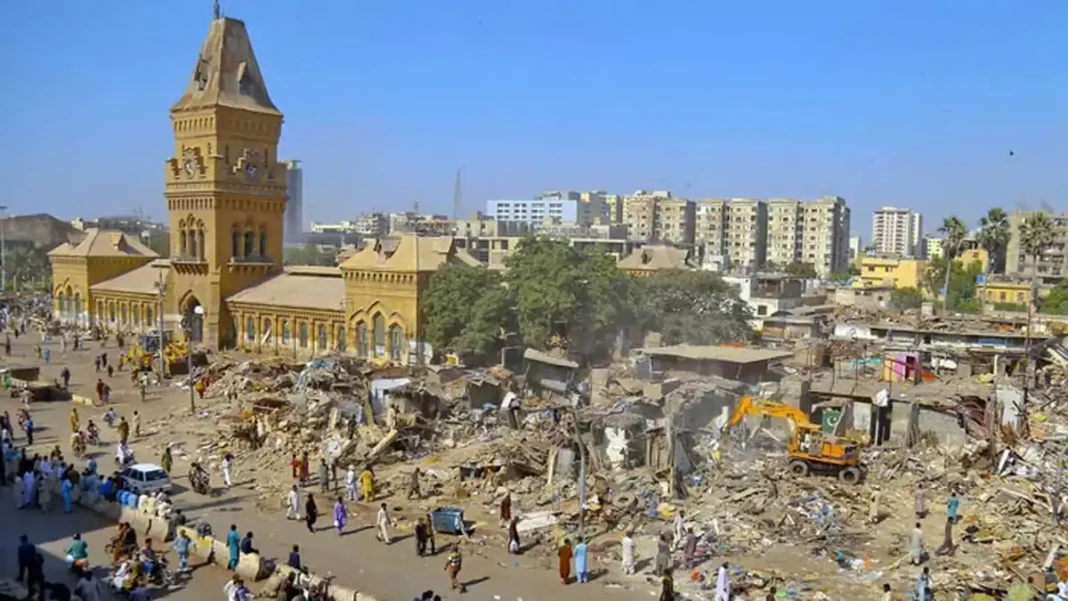
Encroachments continue to affect several parts of the city. The areas named include Liaquatabad Super Market in District Central, and the areas around Empress Market, Bohri Bazaar, Jama Cloth Market and Bolton Market in Saddar. Shahrah-e-Pakistan and North Nazimabad are also listed.
These are among Karachi’s busiest commercial corridors. Footpaths, roads and public spaces in such markets are used daily by shoppers, traders and commuters. When stalls and structures spill onto them, pedestrians are pushed onto roads and traffic slows. That is why clearance drives in these areas are watched closely, and why a drive that stalls here is noticed at once.
What the mayor ordered on 24 October
The mayor’s ultimatum was issued at an emergency meeting with department officials, after complaints from citizens about encroachments blocking pedestrian movement and traffic. Dawn reported on 25 October that Wahab directed officials to ensure effective removal of encroachments from major roads, streets, footpaths and public spaces across the city.
He warned that failure to deliver tangible results within the period would invite strict departmental action, including termination of services and proceedings under the Efficiency and Disciplinary Rules. Business Recorder reported the same warning and the same 15-day period.
Officials were told to launch a comprehensive, citywide operation, with particular emphasis on major roads, commercial areas, busy thoroughfares, streets and footpaths. They were also told to prepare a clear action plan and to deliver measurable results within 15 days.
That background matters for what happens next. The ultimatum was not framed as a request. It was framed as a final deadline, with consequences for officers who failed to meet it. The latest assessment, that less than a tenth of encroachments have been cleared, therefore puts the department’s leadership directly under scrutiny.
What happens when the deadline expires
The Tribune report does not record a fresh statement from the mayor or from the KMC on the latest figures. It does not say whether the deadline will be extended, whether action will be taken against officials, or whether a new operation plan has been prepared.
Three questions will decide how this episode is judged. First, will the mayor act on his warning if the 15 days pass without tangible results. Second, will the department change its methods, so that operations are not undermined by advance warnings. Third, will clearance be followed by measures that keep roads and footpaths clear, rather than a cycle in which structures return within weeks.
For now, the numbers tell their own story. Twelve days into a 15-day ultimatum, less than 10 per cent of the task is reported done. Unless the final three days produce a sharp change, the drive will end well short of what the mayor ordered.
Related Karachi coverage includes the plan for pedestrian-only roads in Karachi, the Nishtar Road flyover traffic diversion, the new block at Abbasi Shaheed Hospital, and Karachi’s double-decker electric buses.
Frequently asked questions
What did Mayor Murtaza Wahab order on 24 October?
He directed the KMC Anti-Encroachment Department to launch an immediate citywide crackdown and to clear illegal occupations from major roads, streets, footpaths and public spaces within 15 days.
How much has been cleared so far?
Sources familiar with the operations say less than 10 per cent of illegal structures and occupations have been removed in the past 12 days.
Which areas are still affected?
Liaquatabad Super Market, the Empress Market, Bohri Bazaar, Jama Cloth Market and Bolton Market areas in Saddar, Shahrah-e-Pakistan and North Nazimabad are among the areas named.
What action did the mayor warn of for failure?
He warned of strict departmental action, including termination of services and proceedings under the Efficiency and Disciplinary Rules.
What happens next?
No fresh statement from the mayor or the KMC on the latest figures has been reported. The deadline expires in three days, and the response to the shortfall is not yet known.