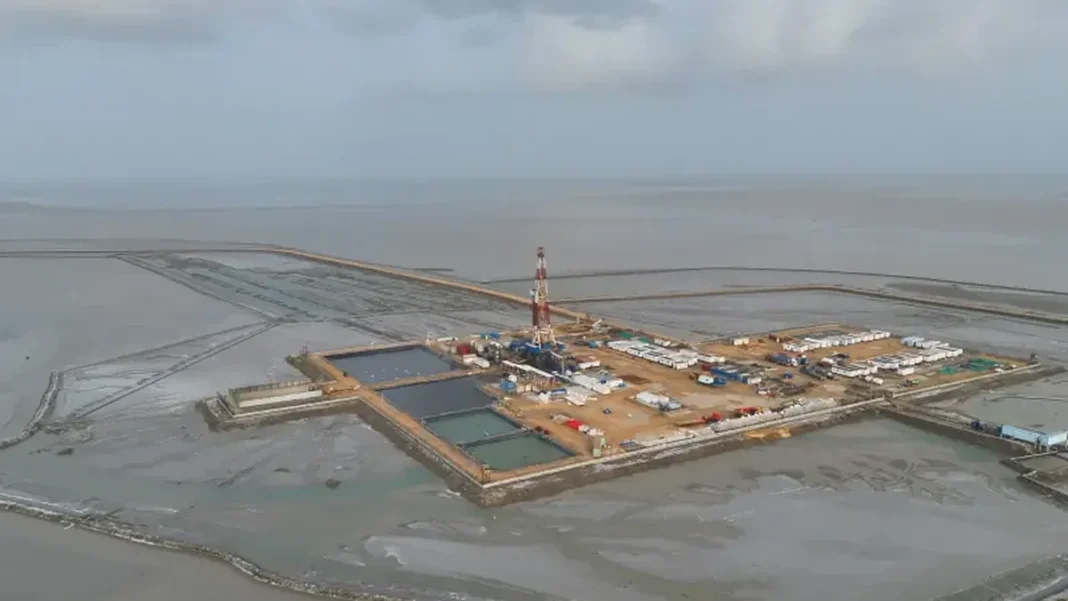
Pakistan Petroleum Ltd (PPL) has reported a PPL Rs99 billion profit after tax for financial year 2026, alongside its highest-ever collections of Rs284 billion. The results were disclosed at the company’s 75th annual general meeting in Karachi on Tuesday, where shareholders approved the financial statements for FY26 along with the auditors’ and directors’ reports.
Shareholders also approved a final cash dividend of 60 per cent on ordinary shares. That payment brings the total dividend for the year to 120 per cent. The meeting drew a large number of shareholders, according to the company, and the approvals close the book on a year in which production rose even as gas curtailment continued.
PPL Rs99 billion profit: what drove the result
The company drilled seven exploration wells and four development wells during FY26. Average production remained at 649 million cubic feet per day, around 3 per cent higher than the previous year, despite gas curtailment. That combination of higher output and firm collections sits at the centre of the result.
PPL made 11 discoveries during the year. Two came from assets the company operates itself, and nine came from partner-operated assets. Together, the discoveries added 242 billion cubic feet to the company’s 2P reserves. In industry terms, 2P reserves cover proved and probable reserves, so the addition gives the company a larger base of gas it expects to recover from its fields.
The collections figure also matters. At Rs284 billion, it is the highest the company has recorded, and it points to cash actually received rather than sales booked on paper. For a company operating in a sector where circular debt has weighed on producers, that distinction is important for readers following energy finances in Pakistan.
Offshore blocks and a wider energy footprint
Beyond its onshore work, PPL secured eight offshore blocks after taking part in Pakistan’s Offshore Bidding Round 2025. It will operate two of the blocks itself and hold a partner share in the other six. Offshore exploration takes longer to turn into production than onshore drilling, so these blocks are best read as a pipeline for future years rather than an immediate supply gain.
Managing Director and Chief Executive Officer Khalid Abdul Rehman also pointed to a farm-out agreement with Turkish Petroleum Overseas Company for Eastern Offshore Indus Block C. He said the agreement had strengthened Pakistan-Türkiye energy cooperation. PPL continued development work at Offshore Block 5 in Abu Dhabi through its operated Pakistan International Oil Ltd, which keeps a direct overseas operating interest in the company’s portfolio.
The company is also moving into minerals. PPL Minerals has been set up as a dedicated business unit, and the BLZ project has entered its execution phase. Its mineral exploration footprint has expanded in Chagai, and the company is evaluating opportunities in Khyber Pakhtunkhwa. That diversification sits outside the company’s traditional oil and gas work, and it will be judged over time on whether it adds earnings rather than only activity.
Why the result matters for Pakistan’s energy picture
Rehman said the company had shown resilience despite geopolitical uncertainty, volatile energy markets, gas curtailment, declining mature fields, security challenges and mounting circular debt. He linked that resilience to a focus on operational efficiency and financial discipline. The statement does not remove those pressures, but the FY26 numbers show that the company grew production and collections while they persisted.
For households and businesses, the direct link runs through fuel and power costs. Pakistan’s energy debate this week has already covered petrol and diesel prices for October 28, a rise in LPG prices linked to the border closure and an electricity relief plan for consumers using up to 250 units. Against that background, a producer reporting higher output and record collections is a useful data point, not a promise of lower bills.
The wider fiscal picture also matters. Feature Pakistan reported that Pakistan gave Rs11 trillion in tax exemptions over five years, which shows how much revenue policy shapes the energy and business environment in which companies like PPL operate. A profitable state-linked producer and a strained public purse can exist at the same time, and readers should keep both facts in view.