Pakistan Offers Saudi Arabia Tax-Free Oil Storage
Pakistan has offered Saudi Arabia tax-free oil storage facilities, allowing Saudi companies to hold commercial oil reserves in the country without paying local taxes. Federal Minister for Petroleum Ali Pervaiz Malik shared the offer with the new Saudi Ambassador to Pakistan, Dr Rajeh bin Tami Al-Baqami, during a meeting in Islamabad on Friday, October 30, 2026.
The meeting covered cooperation in mining, petroleum and energy. Oil storage, refinery upgrading and liquefied petroleum gas (LPG) supplies were all on the agenda. The tax-free oil storage offer was the most concrete step to come out of the talks.
How the tax-free oil storage offer works
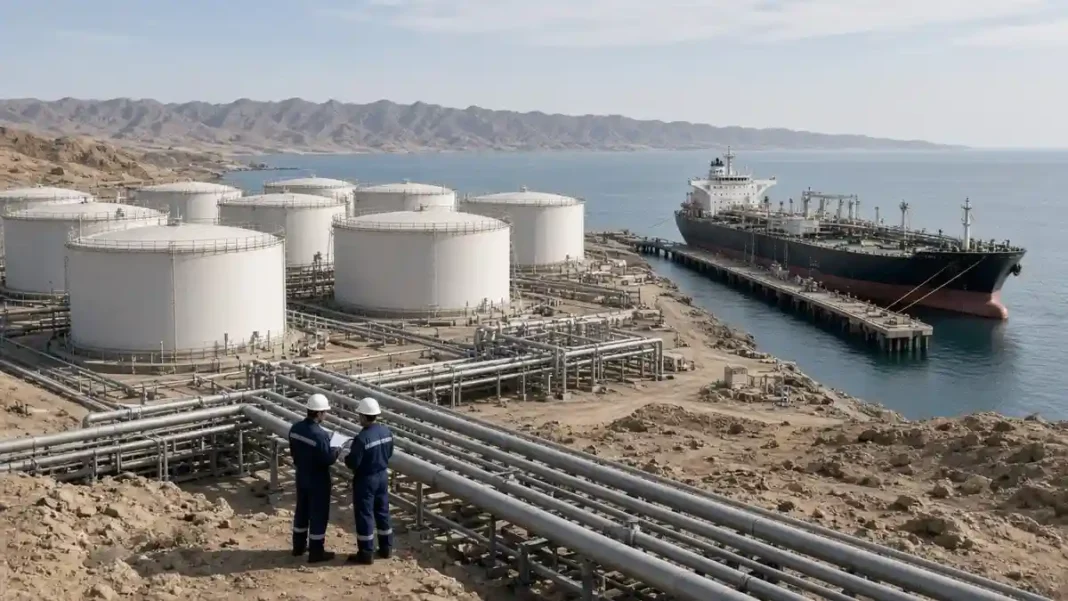
The minister told the envoy that Pakistan has approved a tax-neutral bonded policy for oil storage. The policy is benchmarked against international energy hubs such as Fujairah and Singapore. Under the framework, Saudi companies can store oil in Pakistan without local tax liabilities.
According to the official statement, the arrangement would help Saudi Arabia diversify maritime transit risks linked to the Strait of Hormuz and the Bab el-Mandeb Strait. Both waterways have faced disruption in recent months, and both matter for oil shipments to Asia. Storage in Pakistan would give the kingdom easier access to Asian markets, and more flexibility in managing supply routes when a strait is disrupted.
Hub storage and refining complex
Ali Pervaiz also highlighted plans for a major petroleum storage and refining complex at Hub, in Balochistan. The facility will be able to handle Very Large Crude Carriers, the largest class of oil tanker. It is meant to strengthen Pakistan’s role as an energy corridor for Central Asian and Chinese markets.
The minister also invited Saudi investment in Pakistan’s refinery upgrading programme. That programme aims to modernise local refineries and move them to Euro 5 fuel standards. Cleaner fuel standards matter for air quality in Pakistani cities, and they also decide whether local refineries can keep pace with imported fuel.
Crude, LPG and winter demand
The minister thanked Saudi authorities at Yanbu port for prioritising crude oil shipments to Pakistan during recent global market disruptions. He also discussed working with Saudi Aramco on more crude oil cargoes and dedicated LPG shipments ahead of higher gas demand in winter.
Pakistan’s gas position this month shows why the timing matters. The country received a third Qatar LNG cargo in October, and officials expect to arrange three to four cargoes in November, with nine in December and 11 in January. Against that background, a Saudi storage deal would add a second layer of supply security, one based on stored oil rather than on cargoes still at sea.
Visas and the minerals forum
The meeting also produced two smaller items for ordinary Pakistanis. The Saudi Ambassador announced that the Saudi Embassy in Islamabad has introduced same-day visa processing for Pakistani citizens. That change will matter most for workers, pilgrims and business travellers who now wait longer for appointments.
What happens next
Three things will show whether the offer turns into real storage. First, Saudi companies must decide to use the bonded facilities, which will depend on the detailed rules and on storage charges. Second, the Hub complex must move from plan to construction, including the handling capacity for very large tankers. Third, the refinery upgrading programme must attract investment on terms that work for both sides.
For now, the offer itself is the news. Pakistan has put a tax-neutral storage option on the table, aimed at a partner that needs flexibility around Hormuz and Bab el-Mandeb, and it has tied that offer to refinery upgrades, winter LPG supplies and a minerals forum in November.
The original report on this offer was published by ProPakistani.
What is tax-free oil storage?
Under the tax-neutral bonded policy, Saudi companies can store oil in Pakistan without paying local taxes on the stored oil. The policy is benchmarked against energy hubs such as Fujairah and Singapore.
Where would the oil be stored?
The plan highlights a major storage and refining complex at Hub, in Balochistan, able to handle Very Large Crude Carriers. The government had earlier announced plans for an oil city at Hub.
Why does the offer matter for winter?
Pakistan’s gas demand rises in winter, and the minister discussed dedicated LPG shipments from Saudi Aramco alongside more crude cargoes, as an extra source of fuel for the cold months.