Lahore Fire Hotspots Jump 15% as Smog Builds
Lahore fire hotspots rose sharply in the last week of October, with satellite data showing more burning around the city than a year earlier and far more than the eight-year average. The Pakistan Air Quality Initiative (PAQI) counted 3,712 fire hotspots within a 300-kilometre radius of Lahore over one week, including 2,753 in Pakistan and 957 in India.
The Pakistan figure for October 27 to November 2, 2026, was 15 per cent higher than the 2,390 recorded in the same period last year. It was also 51 per cent above the eight-year average of 1,824 for those dates between 2018 and 2025. The India figure, by contrast, sat far below its own eight-year average of 10,448 for the same week.
Lahore fire hotspots: what the satellite data shows
The analysis uses data from NASA’s Fire Information for Resource Management System (FIRMS). PAQI set the week’s combined Pakistan-India total of 3,712 against a longer record: the two countries together recorded 19,674 hotspots in 2018, 10,563 in 2019, 21,157 in 2020, 15,860 in 2021, 16,118 in 2022, 6,743 in 2023, 4,464 in 2024 and 3,667 in 2025. This year’s week sits close to last year’s combined figure, but the balance has shifted: Pakistan’s share is up, while India’s is far lower than its past average.
The same analysis linked the burning to Lahore’s air. PAQI found that a rise in fire hotspots in the second half of October coincided with rising fine particulate matter (PM2.5) in the city. The daily average PM2.5 concentration in Lahore rose from around 220 to 285 micrograms per cubic metre near November 1 and 2. The analysis does not claim that crop residue burning alone caused that rise, and that caution matters: a hotspot is a heat detection, not a confirmed field fire.
To trace where Lahore’s air came from, researchers used the United States National Oceanic and Atmospheric Administration’s HYSPLIT model, tracking air movement at 500 metres over the previous 72 hours. The model mapped air trajectories reaching Lahore from Afghanistan and India. Punjab Senior Minister Marriyum Aurangzeb has said winds from the Indian cities of Amritsar and Attari add to Lahore’s pollution, but the report notes that trajectory modelling shows possible movement of air masses and does not by itself prove the source of pollutants.
A wider count around Punjab’s cities
A second dataset, published by HamariHawa on November 3, paints a busier picture across Pakistani Punjab. Over the previous seven days it recorded 10,494 fire hotspots within a 250-kilometre radius of Faisalabad, 10,115 around Lahore, 9,537 around Sargodha and 8,836 around Gujranwala. Indian Punjab showed lower counts: 8,892 around Amritsar, 6,853 around Ludhiana and 3,210 around Chandigarh. Experts quoted in the report warn against reading any satellite count as a direct count of crop burning. Each detection covers about 375 metres, cloud cover can hide fires, and a detection shows heat or fire without naming the activity behind it or measuring its smoke.
Why the numbers matter for Lahore
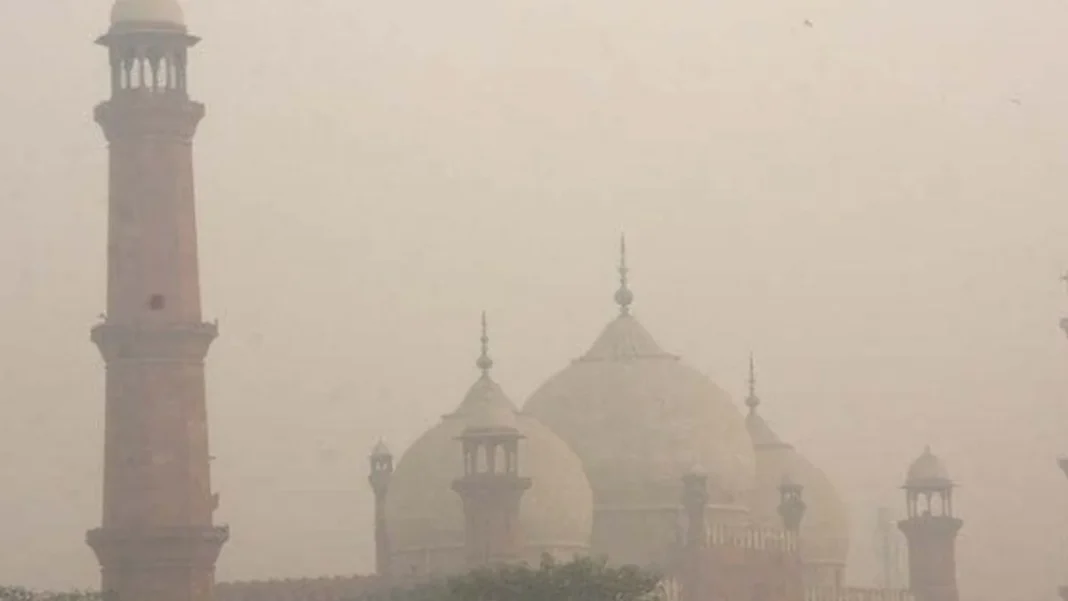
The hotspot rise lands in a city already paying a heavy price for dirty air. Feature Pakistan reported this week that air pollution costs Pakistan around 6.5 per cent of GDP a year and causes more than 248,000 early deaths, with Lahore’s air quality index crossing 530 into the hazardous range and Gujranwala recording 606. In that report, vehicles accounted for 35 per cent of Lahore’s fine-particle pollution, heavy industry 28 per cent and brick kilns 17 per cent, with crop-residue burning adding to the winter load.
That mix is the reason experts insist on a combined assessment. Satellite observations, ground monitoring and weather data together can separate what burning adds from what traffic, industry and kilns already produce. The $300 million Punjab Clean Air Programme, which aims to cut PM2.5 by 35 per cent over a decade through measures including 600 electric buses and 5,000 super seeders, is built on the same idea: no single source explains Lahore’s smog, so no single fix will clear it. The province’s winter pressures are also visible in Balochistan’s winter showers deepening the gas crisis and in Karachi’s new double-decker electric bus routes, which show cleaner transport being rolled out elsewhere.
Frequently asked questions
How many fire hotspots were found near Lahore?
PAQI counted 3,712 hotspots within 300 kilometres of Lahore in the week of October 27 to November 2, 2026, including 2,753 in Pakistan and 957 in India.
How does that compare with last year?
Pakistan’s 2,753 was 15 per cent higher than the 2,390 in the same period last year, and 51 per cent above the eight-year average of 1,824.
Did Lahore’s air get worse at the same time?
Yes. The daily average PM2.5 concentration in Lahore rose from around 220 to 285 micrograms per cubic metre near November 1 and 2, coinciding with the rise in hotspots.
Does a hotspot prove crop residue burning?
No. Experts caution that a satellite detection shows heat or fire over about 375 metres, but does not identify the activity behind it or measure its smoke.
Where did Lahore’s air come from in this period?
HYSPLIT modelling traced air trajectories reaching Lahore from Afghanistan and India, but trajectory modelling alone does not prove the source of pollutants.