Azad Kashmir keeps its oldest secrets in its quietest corners. Drive a few kilometres out of Kotli, past the wheat fields and the village houses, down to the bank of a small stream — and there, framed by green hills, stands a cluster of four old Hindu temples that almost nobody has heard of. This is the Kaini Bayan Temple Complex: four shrines of the Dogra era, built of grey stone and burnt brick, their lotus domes cracked with age and sprouting small plants, their painted arches still holding the floral designs of another century. There is no ticket office, no crowd, no souvenir stall. There is just you, the stream, and two hundred years of history.
This kaini bayan temples kotli travel guide tells the real story of the complex — when it was built, who built it, and what the carved stonework means — and gives you everything practical: how to reach it from Islamabad, Lahore and Karachi, what to see around Kotli, where to eat and stay, the weather, and the best time to go. If you love discovering places before the crowds do, read on.
Quick Facts
- Location: About 4 km east of Kaini Bayan village, Kotli district, Azad Jammu and Kashmir — on the bank of a small stream, set among hills, fields and lush vegetation.
- Altitude: Around 600 metres above sea level — the Kotli valley floor sits at roughly 601 m (1,972 ft).
- Famous For: A rare surviving complex of four Hindu temples; octagonal stone-and-brick shrines with lotus domes; Dogra-period architecture (18th–19th century).
- Nearest City: Kotli (district headquarter), a short drive away; Mirpur is about 90 km south via Rajdhani.
- Accessibility: Reachable by metal road from Kotli; roughly 141 km by road from Islamabad/Rawalpindi via Kahuta, Holar and Sehnsa.
- Known Landmarks: Temple No. 1 (the great octagonal shrine with its lotus dome), the stream beside the complex, the hills of the Kotli valley.
- Best For: Heritage explorers, architecture lovers, photographers, offbeat travellers, and anyone tracing the Hindu and Sikh heritage of Azad Kashmir.
Why Visit Kaini Bayan Temples, Kotli
First, the rarity. Hindu temples that survive in Azad Kashmir tend to be single, battered structures — the pre-Partition temple on the left bank of the River Poonch in Kotli town, for instance, is a crumbling shell. Kaini Bayan is different: it is a complex, four temples standing together in their original grouping, set in a landscape that has barely changed in two centuries. You can walk from shrine to shrine, compare their sizes and details, and read the whole composition like a page from a vanished world. For anyone interested in the religious architecture of the Dogra period, this is one of the most complete ensembles of its kind in the region.
Second, the architecture rewards close looking. Temple No. 1 is the star: an octagonal shrine on a 9-by-9-metre stone platform, built of grey stone masonry with lime pilasters touched with pink, rising to a round dome worked in an inverted-lotus-petal design and crowned with a lotus-flower finial. Step through the pointed-arch entrance — past the little niches where oil lamps once burned — and you find yourself inside a chamber with eight painted arches decorated with floral designs, five rectangular niches, and a slit window on the southern side. It is folk-classical architecture at its most sincere: not a royal monument, but a community’s best effort, built with care and love. The smaller temples echo the same language at a humbler scale.
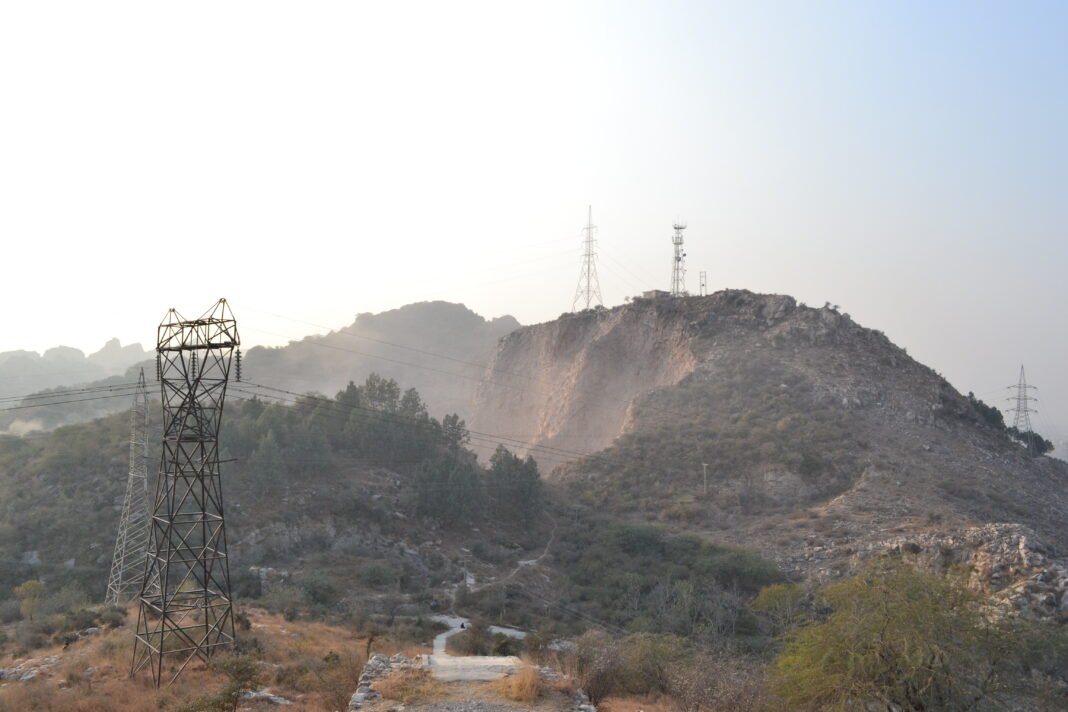
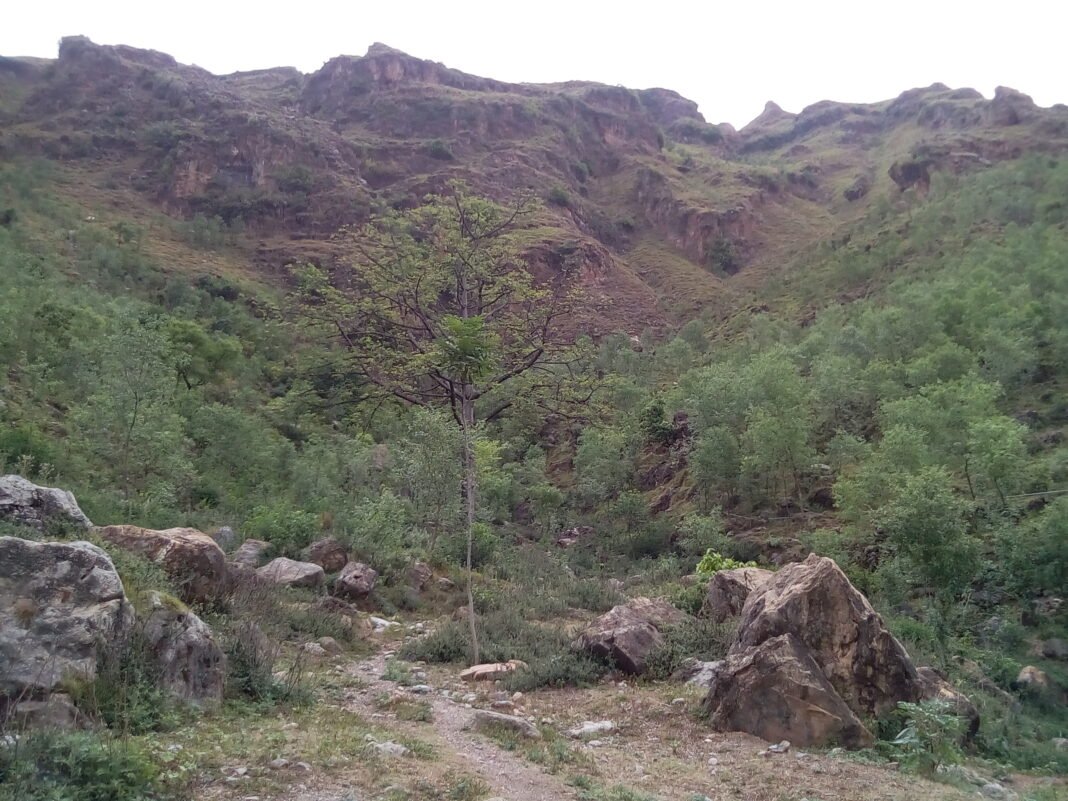
Third, the setting. The complex stands on the bank of a small stream, with Kaini Bayan village to the north-east, mountains all around, and agricultural fields spreading green in the foreground. It is the kind of place where the journey is part of the pleasure — the metal road winding out of Kotli, the hills closing in, the sudden quiet when the engine stops. Bring a picnic, sit by the stream, and listen. Heritage sites this peaceful are getting harder to find.
And finally, the timing is right. In 2025, the Kotli administration launched a heritage-restoration push for the district’s neglected sites — new access roads, parking and visitor facilities are planned for places like Throchi Fort and Kotli’s old town temple. Kaini Bayan stands to benefit from this renewed attention. Visit now, while it is still undiscovered, and you will see it at its most authentic — before the signboards and the crowds arrive. For photographers, the soft light of a spring or autumn afternoon on old stone is unforgettable.
History of Kaini Bayan Temples, Kotli
The temples of Kaini Bayan belong to the Dogra period of Kashmir’s history — the century between 1846 and 1947 when the Dogra Rajas ruled the princely state of Jammu and Kashmir, of which today’s Kotli district was a part. Pakistan’s Directorate of Archaeology and Museums, which lists the site as a protected monument, dates the complex to the 18th–19th century CE and attributes it to the Dogra Raj era. They were almost certainly built by the Hindu administrators, traders and settlers who lived and worked in the Kotli region under Dogra rule — a community substantial enough to raise four temples in a single valley.
To understand why, you need Kotli’s political story. In the early 19th century the area was contested between the Rajas of Poonch and Bhimber; in 1827 it was absorbed into the Sikh Empire and granted as a jagir to Raja Dhian Singh, brother of the famous Gulab Singh. After the Anglo-Sikh wars, Gulab Singh took the region into his expanding dominion from 1845 onward, and the Treaty of Amritsar in 1846 made him the first Dogra Maharaja of Jammu and Kashmir. Dogra administration brought revenue surveys, road-building and a settled Hindu official class to towns like Kotli — and with them, temples. The Kaini Bayan complex, with its confident octagonal plans and lotus domes, is the architecture of that settled, prosperous Hindu community.
But Kotli’s history runs far deeper than the Dogras, and the temples sit in a landscape of extraordinary antiquity. Archaeological work around Kotli has found prehistoric rock shelters, rock-cut caves, limestone boulders carved with human figures, ancient water reservoirs, mounds and pottery fragments — evidence of continuous human habitation stretching back to the 4th millennium BCE. Inscriptions in Brahmi and Sharda scripts on boulders, baolis (stepwells) adorned with Hindu deities, and the remains of numerous temples testify that this valley was part of the broader pan-Indian cultural world for thousands of years. The Kaini Bayan temples are the latest chapter of that very long story.
1947 changed everything. When the region became part of Pakistan-administered Kashmir, the Hindu and Sikh populations moved across the Line of Control, and their places of worship — temples, shrines and gurdwaras — passed to the evacuee department. Without their communities, buildings like Kaini Bayan slowly decayed: domes cracked, plants took root in the masonry, and the great lotus finial of Temple No. 1 lost its top, leaving only the iron rod. In recent years, Azad Kashmir’s courts and administration have taken notice — the apex court has directed the protection and restoration of minority worship places, and the 2025 district restoration drive promises access roads and visitor facilities. The temples’ future, after decades of neglect, finally looks hopeful.
Top Things to Do in Kaini Bayan Temples, Kotli
Study Temple No. 1, the Great Octagonal Shrine
Give the largest temple the time it deserves. Walk around the 9-by-9-metre stone platform and note the grey stone masonry, the lime pilasters with their pinkish tint, and the small burnt bricks of the dome. Look up at the round dome with its inverted lotus-petal design and the surviving lotus finial — the iron rod where the crown once sat. Then step inside: the chamber rises 4.4 metres, ringed by eight painted arches with floral decoration, five rectangular niches, and that single slit on the southern side that washes the interior with a blade of light. The little niches flanking the entrance once held oil lamps; stand there at dusk in your imagination and the temple comes alive.
Compare the Four Temples
The complex’s real lesson is in comparison. Temple No. 1 is the grand statement — octagonal, tall, richly detailed. Temples 2 and 3 are smaller, simpler versions of the same idea: Temple 2 rises only 2.8 metres externally, Temple 3’s octagon sides are just 0.75 metres. Walking between them, you can see how a single architectural vocabulary was adapted to different budgets and purposes — the difference between a community’s main shrine and its humble satellites. Photograph them from the stream bank for the classic wide shot of the whole ensemble.
Walk the Stream and the Fields
The temple complex sits on the bank of a small stream, with agricultural fields and green hills all around. After the shrines, take the slow walk along the water — this is the Kotli countryside at its most typical, and in spring the fields are vivid green. It is an easy, flat walk suitable for families, and a fine spot for a picnic (carry your rubbish out with you).
Explore Kotli City and the River Poonch
Back in Kotli town, walk the long central bazaar that the old town grew around, and go down to the River Poonch, the valley’s defining waterway. The pre-Partition Kotli Temple on the river’s left bank at Bulyah Mohallah is another heritage stop — currently in poor condition, but part of the district’s restoration plans. The riverbanks at sunset, with the hills beyond, are the valley’s simplest pleasure. For another Kotli heritage site, see our Gurdwara Chhevin Patshahi, Kotli Bhaga guide.
Day Trip to Baghsar Fort and Mangla
If you have a second day, head south toward Bhimber district for Baghsar Fort, the historic Mughal-era fort on the lake — our Baghsar guide covers it in detail. The Mangla Dam reservoir, about 115 km south-east of Islamabad on the River Jhelum, is another possible extension for travellers heading back toward Punjab.
Famous Places In and Around Kaini Bayan Temples, Kotli
Kaini Bayan Temple Complex — the four Dogra-era temples themselves, 4 km east of Kaini Bayan village.
River Poonch — the valley’s river, with walks and views at Kotli town.
Throchi Fort — Kotli district’s historic fort, included in the 2025 restoration drive.
Kotli Town Temple (Bulyah Mohallah) — the pre-Partition temple on the Poonch’s left bank.
Baghsar Fort, Bhimber — the Mughal fort on Baghsar Lake, south of Kotli.
Sehnsa and Holar — the hill towns on the Islamabad–Kotli road, worth a stop for tea and views.
How to Reach Kaini Bayan Temples, Kotli
Kotli is the district headquarter of its namesake district in Azad Jammu and Kashmir, and it is closer to Islamabad than most people expect. From Islamabad/Rawalpindi, the road distance is about 141 km via Kahuta, Holar and Sehnsa — roughly 3.5 to 4 hours of driving through increasingly pretty hill country. From Lahore, the distance is around 220 km (about 5 hours); the usual route runs up the GT Road corridor to the Mirpur region and then takes the Mirpur–Rajdhani road (about 90 km) up to Kotli. From Karachi, it is a long haul of roughly 1,170 km — fly to Islamabad and drive, or break the road journey with an overnight stop.
There is no commercial airport in Kotli; the nearest practical air gateway is Islamabad International Airport, from where you hire a car or take a van to Kotli. Public transport runs from Rawalpindi’s and Islamabad’s bus terminals to Kotli town. Once in Kotli, take the metal road toward Kaini Bayan village — the temple complex lies about 4 km east of the village, on the bank of a small stream. Any local driver will know the village; from there, ask for the old mandir by the stream.
Road conditions on the Islamabad–Kotli route are generally good tarmac, though the hill sections demand careful driving, especially after rain. The monsoon months (July–September) can bring landslides on the hill roads — check conditions before setting out. In winter the route stays open, but mornings can be foggy in the lowlands.
Route Details
From Islamabad (recommended route): Leave Islamabad toward Kahuta (about 35 km south-east). Continue through Holar and Sehnsa into Azad Kashmir, following the signs for Kotli. The road climbs gently through pine-dotted hills — about 141 km total, 3.5 to 4 hours. From Kotli town, ask for the Kaini Bayan road; the temples are 4 km east of the village, by the stream.
From Lahore: Take the GT Road/M-2 corridor toward Gujranwala and on to the Mirpur region, then follow the Mirpur–Rajdhani road north to Kotli (about 90 km from Mirpur). Total: roughly 220 km, 5 hours.
From Karachi: Fly to Islamabad (the sensible option), then follow the Islamabad route. By road, it is a two-day drive — break at Multan or Lahore.
Where to Stay in Kaini Bayan Temples, Kotli
Kotli is a working district town rather than a tourist resort, so set your expectations accordingly — and you will be pleasantly surprised. The town has a solid stock of mid-range hotels and guesthouses along its main roads, the kind that serve traders, officials and wedding parties: clean rooms, hot water, air conditioning or heating as the season demands, and usually a restaurant. They are affordable and perfectly comfortable for a heritage trip.
For more choice, Mirpur (about 90 km south via Rajdhani) has the region’s best-developed hotel sector, and some travellers base themselves there. But for Kaini Bayan itself, staying in Kotli town keeps you within half an hour of the temples and close to the bazaar and the river. Book ahead on summer weekends, when domestic tourists fill Azad Kashmir’s towns. There is no accommodation at the temple complex itself — and camping by the stream is not advisable without local guidance.
Where to Eat: Local Foods of Kaini Bayan Temples, Kotli
Kotli eats Pahari food — hearty, desi-ghee-rich mountain cooking. The signature plate is makki ki roti with sarson ka saag in winter, when the mustard greens are fresh; in the bazaar dhabas you will also find desi chicken karahi, dal fry, and rajma chawal (kidney-bean curry with rice), a staple across the Pahari belt. Kashmiri chai — the pink, salted tea — is served in the traditional bakeries and tea houses, and the local kebab and tikka shops do a brisk evening trade.
Do not leave without trying the dairy: the region’s desi ghee and fresh lassi are famous, and roadside vendors sell walnuts and dried fruit from the surrounding hills. A full meal at a Kotli dhaba is very budget-friendly — this is one of the most affordable food regions in northern Pakistan. As elsewhere, eat where the locals queue, drink bottled water, and carry snacks for the temple visit itself, as there are no eateries at the complex.
Weather in Kaini Bayan Temples, Kotli
Kotli sits at about 600 metres in a valley with a humid subtropical climate — warmer than the high hills of Azad Kashmir, but far milder than the Punjab plains. The monsoon (July–September) is the wettest period; winter is cool and mostly dry. The temples have no shelter for visitors, so the season shapes the experience.
| Season | Temperature Range | Conditions |
|---|---|---|
| Winter (Dec–Feb) | 5–18°C | Cool and crisp; clear skies, excellent for photography; chilly mornings — bring a warm layer. |
| Spring (Mar–Apr) | 15–28°C | Pleasant and green; fields in flower; arguably the prettiest season at the complex. |
| Summer (May–Jun) | 28–38°C | Hot and dry; visit the temples early morning or late afternoon; carry water. |
| Monsoon/Autumn (Jul–Nov) | 22–33°C | Heavy monsoon rains Jul–Sep can make hill roads tricky; October–November are pleasant and clear. |
Language and Culture of Kaini Bayan Temples, Kotli
The valley speaks Pahari (Pothwari) as its mother tongue, with Gojri spoken by the Gujjar community and Urdu understood everywhere. Kotli’s culture is the warm, conservative culture of the Pahari belt: deeply hospitable, family-centred, and proud of the valley’s history. Visitors are welcomed, but modesty matters — dress conservatively (covered shoulders and knees), greet elders respectfully, and ask before photographing people.
The temples themselves are disused places of worship. Treat them as you would any sacred site anywhere in the world: do not climb the shrines, do not deface the plaster or the painted arches, do not remove stones or bricks, and keep noise low. The complex sits beside village farmland — stay on the paths, do not trample crops, and if a local farmer or resident offers guidance, accept it with thanks. Your respectful behaviour is part of what keeps such sites safe for future visitors.
Shopping in Kaini Bayan Temples, Kotli
Kotli’s main bazaar — the long central market the old town grew around — is where you shop. Look for Pahari handicrafts: embroidered shawls and woollens, desi ghee sold by local dairies, walnuts, almonds and dried apricots from the hills, and everyday Kashmiri-style souvenirs in the general stores. The bazaar also has good bakeries selling the region’s traditional breads and sweets. There is no craft market at the temple complex and no shopping mall near the destination — the town bazaar is the authentic shopping experience, and its prices are refreshingly local.
Travel Tips for Kaini Bayan Temples, Kotli
Packing Essentials
Sturdy walking shoes for the uneven ground around the temples, sun protection (hat, sunscreen, sunglasses), drinking water, and snacks — there are no shops at the complex. A camera with a wide-angle lens does justice to the temple ensemble; a small flashlight helps inside the dimmer chambers. Carry a light jacket even in spring, as valley evenings cool quickly.
Safety Tips
Kotli district is a settled, peaceful area and the temple visit is a straightforward daytime excursion. Travel in daylight, keep to the metal roads, and check monsoon road conditions in July–September. The stream bank can be slippery after rain. As with any disused heritage structure, do not enter chambers that look unstable and do not climb the domes.
Money & Connectivity
Bring cash from Kotli town — ATMs and banks are available there, but there are no facilities at the temples. Mobile signals (Jazz, Telenor, Zong, Ufone) cover Kotli town well; coverage at the complex itself may be patchy. Download offline maps before heading out to the village.
Best Time to Visit Kaini Bayan Temples, Kotli
Spring (March–April): The Sweet Spot
Mild temperatures, green fields, flowering trees and soft light — spring is the most beautiful season at Kaini Bayan. The stream runs full, the hills are at their greenest, and photography is at its best. If you can choose one season, choose this.
Autumn (October–November): Clear and Calm
Post-monsoon clarity, comfortable temperatures and harvest-season colour in the fields make autumn the second-best choice. Roads are in good shape and crowds are thin.
Winter (December–February): Crisp and Quiet
Cool, clear days are excellent for exploring, though mornings are chilly and the landscape is browner. The temples photograph beautifully in the low winter sun. Bring warm layers.
Summer and Monsoon (May–September): Manageable with Care
May–June heat means early-morning or late-afternoon visits only. July–September brings the monsoon — the valley is lush, but hill roads can be affected by rain and landslides. If you travel then, check conditions daily and keep plans flexible.
Final Thoughts
The Kaini Bayan Temples are the kind of discovery that reminds you why you travel: four old shrines by a stream, built by a community that left in 1947, standing in green silence while the world rushes past on the highways. They will not overwhelm you with scale or spectacle. They will do something better — they will make you slow down, look closely, and think about the layers of history under every valley in this country.
Go in spring, walk the complex slowly, sit by the stream, and then explore the rest of Kotli — the bazaar, the river, the forts. You will come home with photographs nobody else has and a story nobody else is telling. For more offbeat heritage across the country, explore our Explore Pakistan collection — and if the mountains call, our Malam Jabba guide is a good next read.
FAQs
Where are the Kaini Bayan Temples located?
About 4 km east of Kaini Bayan village in Kotli district, Azad Jammu and Kashmir — on the bank of a small stream, a short drive from Kotli town.
How old are the Kaini Bayan Temples?
They date to the 18th–19th century CE, the Dogra Raj period of Kashmir’s history (1846–1947), according to Pakistan’s Directorate of Archaeology and Museums.
How many temples are in the complex?
Four. Temple No. 1 is the largest — an octagonal shrine on a 9×9 m platform with a lotus dome; the others are smaller versions of the same design.
What is the best time to visit Kaini Bayan Temples?
March–April for the prettiest weather and greenest landscape; October–November is also excellent. Avoid the midday heat of May–June and check road conditions in the July–September monsoon.
How do I reach Kaini Bayan from Islamabad?
Drive about 141 km via Kahuta, Holar and Sehnsa (3.5–4 hours) to Kotli town, then take the metal road to Kaini Bayan village — the temples are 4 km east of the village.
Is it safe for families?
Yes. Kotli is a peaceful district town and the site is an easy daytime outing on flat ground. Bring water and sun protection, as there is no shelter or shops at the complex.
Where can I stay near the temples?
In Kotli town, which has affordable mid-range hotels and guesthouses. Mirpur (about 90 km south) offers more choice if you want it.
What else can I see near Kaini Bayan?
Kotli’s bazaar and the River Poonch, Throchi Fort, the old town temple at Bulyah Mohallah, and — with a second day — Baghsar Fort in Bhimber district to the south.