Quick Facts
- Location: Muhammad Ali Jinnah Road, Kharadar, Karachi, near the Native Jetty Bridge
- Altitude: Sea level
- Famous For: The century-old colonial headquarters of the Karachi Port Trust — a landmark of British Raj architecture with its grand dome and yellow stone facade
- Nearest City: Karachi itself — in the historic Kharadar quarter near the port
- Accessibility: Excellent — central Karachi, a short drive from Saddar, Tower, and the harbour
- Known Landmarks: The central Roman-style dome, the twin anchors at the entrance, Merewether Clock Tower and Imperial Custom House nearby
- Best For: Architecture lovers, photographers, history enthusiasts, and heritage walkers
Why Visit Karachi Port Trust Building
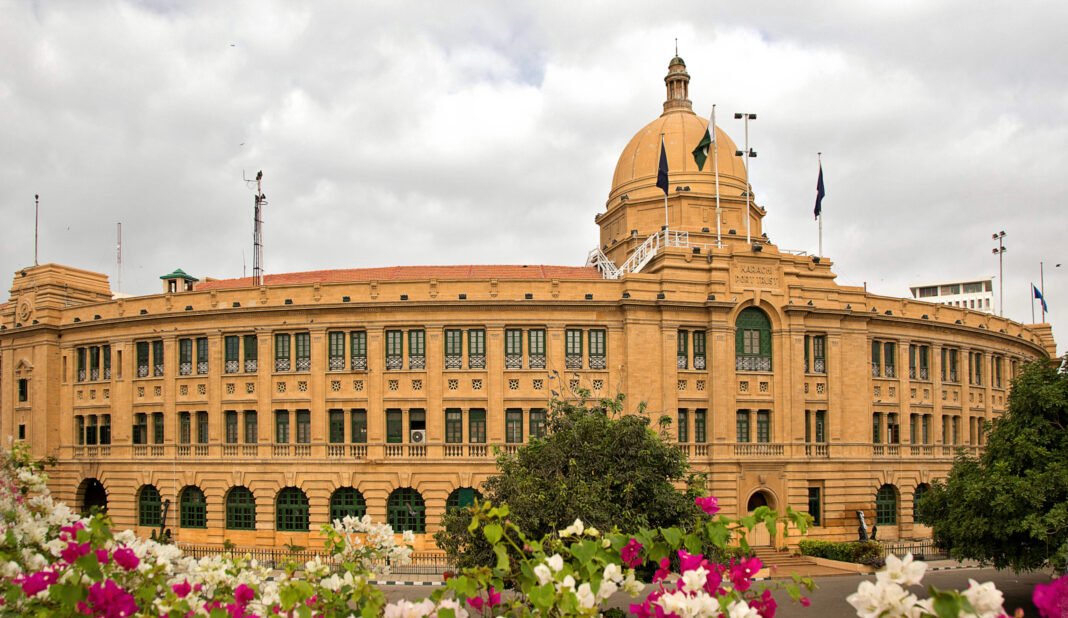
There are old buildings in Karachi, and then there is the Karachi Port Trust Building — the one that makes you stop the car and stare. Its curved yellow-stone facade sweeps around the corner of Kharadar like the hull of a great ship, crowned by a grand Roman dome that has watched over the port for more than a century. Completed in 1915 and inaugurated on 5 January 1916, it is quite simply one of the finest colonial-era buildings in Pakistan.
This Karachi Port Trust Building travel guide is for the traveler who believes architecture is history you can walk around. Also, the building is the headquarters of the Karachi Port Trust, the authority that runs one of South Asia’s busiest deep-water ports. And it has done so from this very address for over a hundred years. Its design, by the Scottish architect George Wittet, blends British, Hindu. Gothic traditions with Roman influences: high ceilings, teak woodwork, arched loggias. That unmistakable sepia-toned stone exterior that glows in the late-afternoon sun.
The building also carries a remarkable secret: during the First World War it was converted into a 500-bed military hospital, serving wounded soldiers until May 1919. Stand before its twin entrance anchors and you are standing where the port’s administrators once diverted an entire headquarters to the service of humanity. It is a working office, not a museum — but even from the street, it is one of the most rewarding sights in old Karachi.
It is perfect for architecture and photography lovers, history buffs, and anyone exploring Kharadar’s heritage quarter. Also, the best time to visit is the cool season, from November to February. In fact, the light is soft and you can comfortably walk the surrounding streets.
History of Karachi Port Trust Building
The Karachi Port Trust itself was born of the port’s explosive growth. The Karachi Harbour Board had administered the port since 10 March 1880, and under Act IV of 1886 the Karachi Port Trust formally came into existence on 1 April 1887. Port administration had been keeping its records at the Kharadar site since 1893, but as the port expanded — 17 berths in a continuous 2.5-kilometre line by 1910 — the Trust needed a headquarters worthy of its importance.
Construction of the new head office began in 1912 in the Renaissance style, to the design of George Wittet, the Scottish architect who shaped much of Bombay’s colonial architecture. Also, the building was completed in 1915 at a cost of Rs 9,74,990, covering some 1,400 square metres. In fact, it was formally inaugurated on 5 January 1916 by Lord Willingdon, the Governor of Bombay. Its distinctive yellow stone facade, central curved dome, and airy loggias and staircases made it an instant landmark — designed, in part, to impress visitors arriving by sea.
Almost immediately, history intervened. With the First World War underway, the brand-new building was requisitioned as a military hospital — the Indian General Hospital, with around 500 beds — and it served in that role until May 1919. This act of wartime service became part of the Trust’s institutional memory and its tradition of civic contribution to the city. Through Partition, the wars, and the port’s modern expansion, the building has remained the Trust’s headquarters, its Board Room still sitting beneath the great dome on the second floor, its Records Room still holding original port records dating back to the late 1800s.
Top Things to Do in Karachi Port Trust Building
Admire the Facade and the Great Dome
Start across the street, where you can take in the building’s full sweep. Also, the curved yellow-stone frontage, the rows of arched windows with their green shutters, the decorative stonework. In fact, the great central dome with the Pakistani flag flying above it make for one of Karachi’s most photogenic sights. The inscription “KARACHI PORT TRUST” is carved into the stone beneath the dome. Morning light flatters the facade; late afternoon turns the stone a deep golden colour.
See the Twin Anchors at the Entrance
Two large anchors flank the building’s main entrance — a proud statement of its connection to the sea. Also, they are a favourite photo spot and a reminder that this was never just an office: it was the command centre of a great ocean port. In fact, look closely at the stonework around the entrance arches for the carved details that reward a patient eye.
Walk the Kharadar Heritage Quarter
The building anchors one of Karachi’s richest heritage neighbourhoods. Meanwhile, within a short walk are the Merewether Clock Tower, the Imperial Custom House (built 1914–1917) next door, the old Napier Mole and Native Jetty area. In fact, the bustling lanes of Kharadar itself. In addition, this is old Karachi at its most atmospheric — colonial stone buildings shoulder to shoulder with markets, mosques. The everyday life of the port city. A heritage walk here pairs beautifully with the harbour; see our Karachi Harbour travel guide and our Jinnah Bridge and Native Jetty travel guide.
Photograph Colonial Karachi
For photographers, the KPT Building is the centrepiece of a whole district of colonial architecture. The Edulji Dinshaw Dispensary, another Kharadar heritage gem, is nearby — see our Edulji Dinshaw Dispensary travel guide. Early mornings bring soft light and quieter streets. The monsoon clouds of July and August can make for dramatic skies above the dome, if you don’t mind the rain.
Famous Places In and Around Karachi Port Trust Building
Native Jetty Bridge (Jinnah Bridge): The harbour bridge with sweeping port views, minutes away.
Merewether Clock Tower: Victorian-era clock tower in the old city.
Imperial Custom House: The 1914–1917 colonial customs building next door.
Edulji Dinshaw Dispensary: Another Kharadar heritage landmark — see our Edulji Dinshaw Dispensary travel guide.
Port Grand: The waterfront food and entertainment complex on the historic Napier Mole.
Karachi Harbour and Keamari: The working port itself — see our Karachi Harbour travel guide.
How to Reach Karachi Port Trust Building
The building stands in Kharadar on Muhammad Ali Jinnah Road, near the Native Jetty Bridge — right in the historic port quarter of Karachi. Also, Visitors from Islamabad or Lahore should fly into Jinnah International Airport (KHI): roughly two hours from Islamabad and about an hour and forty minutes from Lahore. The road distances are long — approximately 1,425 km (19–21 hours) from Islamabad and approximately 1,200 km (16–18 hours) from Lahore — so flying is the sensible option. Discover more heritage destinations in our Explore Pakistan series.
From the airport, the building is approximately 15 km, about 35–45 minutes by car via Shahrah-e-Faisal, M.A. Also, Jinnah Road, and the Tower/Kharadar roads. Ride-hailing is the easiest choice. Note that the KPT Building is a working government headquarters: the interior is not open to tourists, so plan to admire and photograph it from the street and the surrounding pavements. Combine it with a walk to the Native Jetty Bridge and Port Grand, both minutes away.
Route Details
Step 1: Fly into Jinnah International Airport (KHI).
Step 2: Take Shahrah-e-Faisal west, then M.A. Jinnah Road toward Tower, the old city centre.
Step 3: Continue into Kharadar toward the Native Jetty Bridge — the KPT Building’s curved facade is unmissable on Muhammad Ali Jinnah Road.
Step 4: Park nearby and explore on foot: the building exterior, Merewether Clock Tower, and the Imperial Custom House.
Finally, walk or drive on to the Native Jetty Bridge viewpoint and Port Grand for the harbour side of the story.
Where to Stay in Karachi Port Trust Building
There are no hotels at the building itself. Also, Kharadar and the surrounding old city put you within easy reach of everywhere. In fact, budget and mid-range hotels and guesthouses in Saddar and Kharadar are the closest options — simple, affordable. A short ride from the port quarter, the markets, and Burns Road’s food streets. These suit travelers whose focus is heritage Karachi.
For greater comfort, the business hotels along Shahrah-e-Faisal and the five-star hotels of Clifton are 20–30 minutes away, with full amenities and sea views. Mid-range guesthouses in PECHS and Gulshan-e-Iqbal offer quieter residential stays. Book ahead during the winter season (November to February) and public holidays. Plan your KPT Building visit for the morning light, then spend the afternoon at the harbour and the evening at Port Grand.
Where to Eat: Local Foods of Karachi Port Trust Building
Kharadar and the neighbouring Saddar district are superb eating territory. Also, Burns Road Food Street is the headline act: nihari, haleem, kebabs. In fact, Karachi’s famous biryani, all at prices that will make you smile. The old city’s street food — bun kebabs, dahi baray, fresh juices, and doodh patti from the Irani cafes — is the real taste of Karachi.
For a sit-down meal with a view, Port Grand’s waterfront restaurants on the historic Napier Mole serve desi barbecue, Chinese, and continental food with the harbour lights as your backdrop. Also, Keamari’s seafood eateries, a short drive away, serve the day’s catch fried or grilled. In fact, Around Tower and Kharadar, small dhabas serve hearty, budget-friendly meals to the port’s workers — eat where the dockworkers eat and you will eat well. Carry cash for the street stalls.
Weather in Karachi Port Trust Building
The building stands at sea level in coastal Karachi. Also, its weather is the city’s weather: warm and humid, eased by the sea breeze. In fact, for a heritage walk around Kharadar — which involves a fair amount of time on foot in the sun — the dry winter months are by far the most comfortable. Summer visits are best kept short and scheduled for early morning.
| Season | Temperature Range | Conditions |
|---|---|---|
| Winter (Nov–Feb) | Approximately 8–27°C | Dry, sunny, and ideal for heritage walks and photography. |
| Spring (Mar–Apr) | Approximately 20–34°C | Warming up; mornings are still good for walking the quarter. |
| Summer/Monsoon (May–Aug) | Approximately 28–38°C | Hot and humid; July–August rains can flood Kharadar’s streets. |
| Autumn (Sep–Oct) | Approximately 25–35°C | Warm; evenings become pleasant again toward October. |
Language and Culture of Karachi Port Trust Building
Kharadar is one of Karachi’s oldest quarters, and its culture is the culture of the port city itself. Also, a working-class, multi-ethnic neighbourhood where Urdu is the common tongue and Sindhi, Punjabi, Balochi, Pashto, and English are all heard. In fact, the area around the KPT Building is a government and commercial district by day and a bustling bazaar neighbourhood always.
Remember that the building is a functioning federal headquarters. Dress modestly, behave respectfully around the gates and security posts. Also, it do not attempt to enter without official business. Photography of the exterior from public streets is normal and fine, but avoid photographing security installations or personnel. The neighbourhood is welcoming to visitors who show the area and its workers the same respect they would want themselves.
Shopping in Karachi Port Trust Building
Kharadar’s lanes and nearby Saddar offer classic Karachi shopping. Also, Empress Market, the colonial market hall, is the essential stop for spices, dry fruits, and fresh produce. In fact, Zainab Market and Bohri Bazaar are famous for clothes, shoes, and fabrics at bargain prices — haggling is expected. Jamaa Cloth Market on M.A. Jinnah Road is the fabric specialist’s choice.
For modern malls, Dolmen Mall Clifton by the sea, Ocean Mall. Also, Dolmen Mall Tariq Road carry local and international brands. In fact, good souvenirs from the area: Sindhi ajrak, embroidered lawn fabric, dry fruits, and brass or camel-skin crafts from the Saddar shops. The craft stalls at nearby Port Grand are convenient for a quick keepsake.
Local Events and Festivals
The KPT Building does not host public events. Also, Karachi’s calendar gives you reasons to time your trip. Karachi Eat, usually in January, is the country’s biggest food festival. In fact, the Karachi Literature Festival, usually in February, brings authors and thinkers to the city. And the Karachi International Book Fair, usually in December, is a major publishing event. Pakistan Day (23 March) and Independence Day (14 August) are celebrated across the city with flags, lights, and fireworks — the port quarter joins in with its own displays.
Travel Tips for Karachi Port Trust Building
Packing Essentials
Light cotton clothing, a hat, sunglasses, and sunscreen for walking the Kharadar streets. Also, comfortable walking shoes are a must — the heritage quarter is best explored on foot. In fact, bring water, and a light jacket for winter mornings and evenings.
Safety Tips
Kharadar is busy and generally safe during the day, but stay alert in crowded lanes and keep valuables secure. Do not cross security barriers at the KPT Building or any port installation, and follow instructions from guards. Use ride-hailing after dark rather than walking unfamiliar streets, and keep to well-lit main roads in the evening.
Money & Connectivity
Banks and ATMs are plentiful around Tower, Saddar, and Kharadar. Also, cards work at malls and larger restaurants; bazaars and street food are cash-only. In fact, mobile signals are strong across the area on all major networks — Jazz, Zong, Telenor. Ufone — with solid 4G coverage.
Best Time to Visit Karachi Port Trust Building
Winter (November to February) — The Best Season
Cool, dry, and sunny — perfect for walking the heritage quarter and photographing the facade in soft light. The winter months are also when Karachi’s cultural calendar is busiest.
Spring (March to April) — Still Pleasant
Warmer but manageable, especially in the mornings. A good time for photography with clear skies and fewer visitors.
Summer and Monsoon (May to August) — Visit Briefly
Heat and humidity make long walks uncomfortable, and monsoon rains can flood the old city’s streets. If you visit, go early in the morning and keep it short.
Autumn (September to October) — Recovering
The rains end and October evenings turn pleasant again. Also, a reasonable shoulder season for a quick heritage stop combined with the harbour.
Final Thoughts
The Karachi Port Trust Building is proof that an office can be a monument. Also, for over a century it has stood at the edge of the harbour, running one of the great ports of South Asia from behind a facade of yellow stone and a dome that belongs on a postcard. In fact, it survived a world war as a hospital, watched a port grow into a giant, and never stopped working.
You cannot go inside as a tourist, and you do not need to. Also, stand across the street at golden hour, watch the light move across the stone, walk the Kharadar lanes it has presided over for generations. In fact, you will have met one of the grandest buildings in Pakistan. Pair it with the harbour and Port Grand, and old Karachi will have told you its whole story in a single day.
FAQs
1. Also, where is the Karachi Port Trust Building located?
On Muhammad Ali Jinnah Road in Kharadar, Karachi, near the Native Jetty Bridge and the harbour.
2. Also, what is the best time to visit the Karachi Port Trust Building?
November to February. In fact, the weather is cool and dry — ideal for walking the heritage quarter and photography.
3. Also, can tourists go inside the Karachi Port Trust Building?
No. In fact, it is a working federal headquarters. Visitors admire and photograph the exterior from the public streets.
4. When was the Karachi Port Trust Building built?
Construction began in 1912 and finished in 1915. Also, it was inaugurated on 5 January 1916 by Lord Willingdon, Governor of Bombay. It was designed by the Scottish architect George Wittet.
5. Also, how do I reach the Karachi Port Trust Building?
Fly to Jinnah International Airport and drive about 15 km (35–45 minutes) to Kharadar. In fact, ride-hailing is the easiest option.
6. What is the building’s connection to World War I?
Shortly after completion, the building was converted into a 500-bed military hospital (the Indian General Hospital) and served in that role until May 1919.
7. Also, what else is near the Karachi Port Trust Building?
The Native Jetty Bridge, Merewether Clock Tower, Imperial Custom House, Edulji Dinshaw Dispensary, Port Grand. In fact, the Karachi Harbour waterfront are all minutes away.
8. Is the area safe for visitors?
Yes, during the day the Kharadar quarter is busy and welcoming. Meanwhile, stay on public streets, respect the building’s security zones, and use ride-hailing after dark.