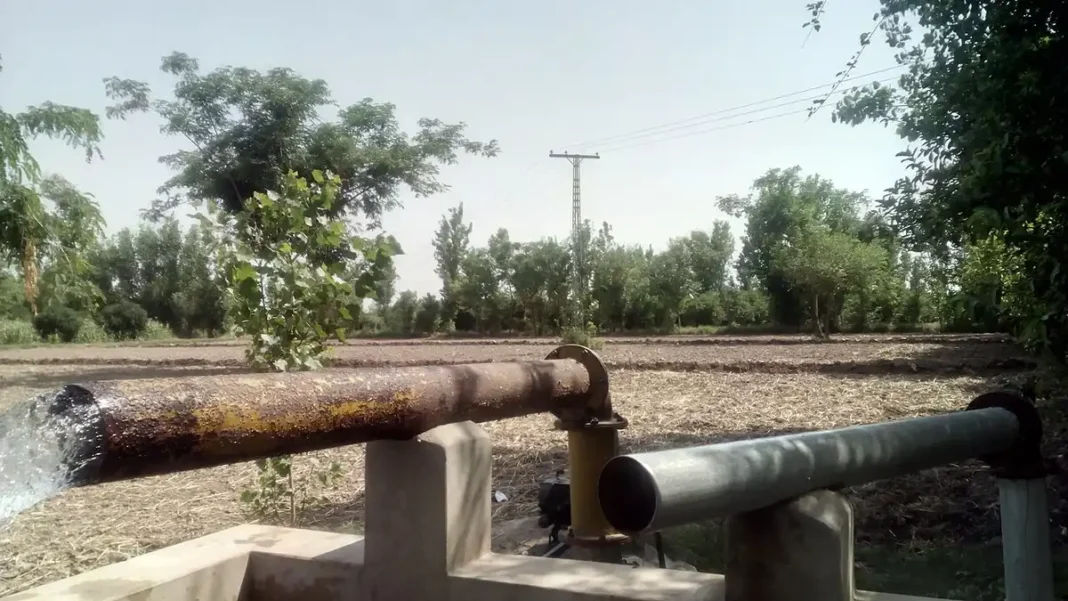
Nuclear Science Sharpens Pakistan Groundwater Tracking
Pakistan groundwater tracking has strengthened through nuclear science, enabling scientists to identify recharge sources, determine groundwater age and trace contamination pathways, according to an International Atomic Energy Agency (IAEA) report released on Saturday.
The Regional Cooperative Agreement (RCA) for Research, Development and Training Related to Nuclear Science and Technology for Asia and the Pacific, Hydrology and Groundwater programme has significantly enhanced Pakistan’s capacity for continuous groundwater monitoring through the application of isotope-based techniques.
This advancement has considerably strengthened the connection between scientific research and water governance, allowing for more precise and systematic observation of groundwater dynamics across diverse hydrogeological settings, the IAEA report said.
What isotope techniques add to Pakistan groundwater tracking
Before Pakistan joined the programme, groundwater monitoring was not a primary focus of national hydrological investigations. Several studies were conducted using conventional methods, such as hydro-chemical analyses and physical measurements, but these approaches provided only basic information on water table depth, water quality and aquifer dynamics.
Isotope techniques go further. By reading the isotopic signature of water, scientists can estimate how fast an aquifer recharges, how water moves between aquifers, and where pollution enters the system. That turns a single water-level reading into a picture of how the whole aquifer behaves over time.
The report says studies undertaken through RCA-supported projects have generated reliable estimates of groundwater recharge rates, aquifer interconnections and pollution pathways in key regions. Those estimates are the raw material for long-term water management plans, because they show which aquifers can sustain more pumping and which cannot.
Where the work has been done
The findings cover three key regions: the Indus Plain, the Quetta Valley and the Cholistan Desert. Each presents a different problem. The Indus Plain carries the country’s largest irrigated area and its heaviest pumping load. The Quetta Valley depends on a confined aquifer system under urban and agricultural pressure. Cholistan is arid, where knowing recharge rates matters most because water is scarcest.
These findings have deepened the scientific understanding of Pakistan’s groundwater systems while providing essential inputs for developing long-term strategies for water resource management, the agency noted.
The laboratory network
Through its participation in the programme, Pakistan has significantly strengthened its laboratory capacity for isotope hydrology. The Pakistan Institute of Nuclear Science and Technology (Pinstech) now hosts one of the region’s most advanced isotope analysis facilities, complemented by 12 laboratories nationwide.
Currently, Pinstech and the Pakistan Council of Research in Water Resources work in close collaboration to incorporate isotopic data into national groundwater management models.
“This integration supports the early detection of over-extraction, salinity intrusion and other forms of aquifer stress, thereby contributing to more sustainable groundwater utilisation,” the report said.
Why it matters for water policy
The focus on data-driven management has built a stronger culture of evidence-based decision-making within national and provincial water institutions. Policymakers are increasingly relying on isotope hydrology data to inform regulatory frameworks, resource allocation and long-term planning, reflecting a significant shift from reactive to preventive and science-informed groundwater management.
That shift matters because the pressures are already visible. Feature Pakistan reported earlier on the National Water Security framework, which warns that groundwater levels are falling by 0.5 to 1 metre each year across Punjab and identifies the Indus Basin Aquifer as one of the world’s most overstressed aquifer systems. Isotope monitoring is the tool that can show, aquifer by aquifer, where that decline is fastest and where pumping limits need to bite first.
Water quantity is only half the story. Sindh’s sharp monsoon rainfall deficit this year shows how surface supplies can fall short, which pushes more demand onto groundwater in dry years. Better tracking of recharge and contamination therefore protects both the amount and the quality of water available.
Pakistan’s participation has delivered substantial economic, social and environmental benefits, the IAEA report concluded, without putting a figure on those gains.
Frequently asked questions
What has improved in Pakistan’s groundwater monitoring?
Pakistan can now track groundwater continuously using isotope-based techniques, identifying recharge sources, groundwater age and contamination pathways, according to an IAEA report.
What is the RCA programme?
The Regional Cooperative Agreement for Research, Development and Training Related to Nuclear Science and Technology for Asia and the Pacific runs a Hydrology and Groundwater programme that supported Pakistan’s isotope hydrology work.
Where has the research been applied?
Studies through RCA-supported projects covered the Indus Plain, the Quetta Valley and the Cholistan Desert, producing estimates of recharge rates, aquifer interconnections and pollution pathways.
Which institutions lead the work?
Pinstech hosts one of the region’s most advanced isotope analysis facilities, supported by 12 laboratories nationwide, and works with the Pakistan Council of Research in Water Resources to feed isotopic data into national groundwater management models.