LPG prices Iran supply news brought some relief on Wednesday, as prices fell by Rs30 to Rs40 per kilogram over the last two days after supply from Iran temporarily resumed. A further cut of Rs30 per kilogram is expected in the next two to three days, according to the LPG Distribution Association.
The senior vice chairman of the association said the market rate is falling gradually, but he warned that the risk of an LPG crisis this winter has not gone away. The relief, in other words, is real but fragile.
LPG prices Iran supply: only pre-October 16 cargo allowed in
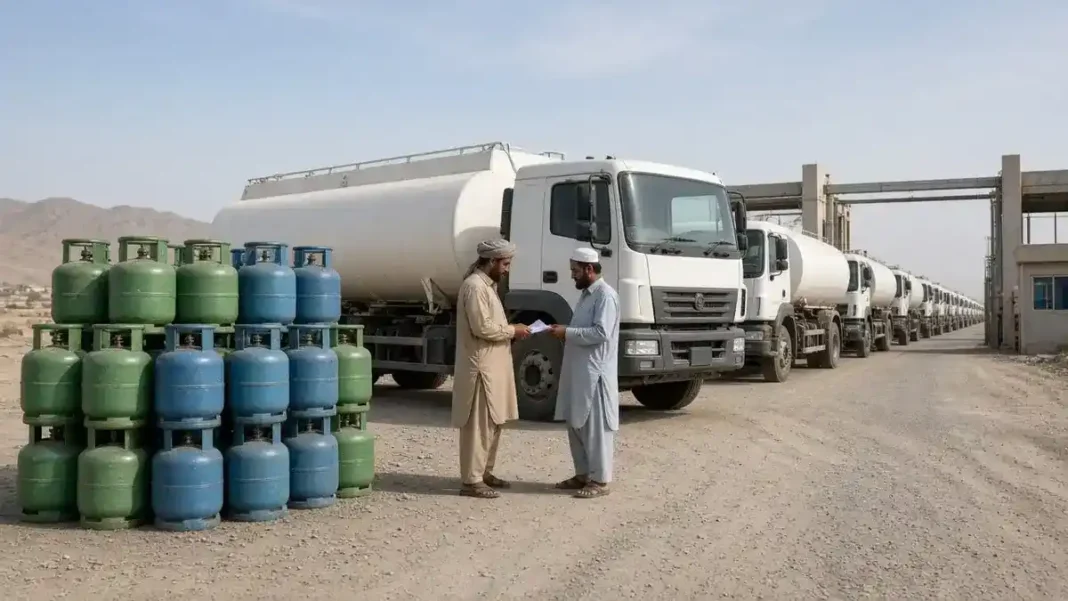
The resumption comes with a strict limit. Only LPG bowsers that were loaded at Iranian refineries and reached the Pakistan-Iran border before October 16 have been allowed to enter Pakistan. Nothing loaded after that date is part of this release.
The quantity loaded until October 16 is around 8,000 to 9,000 tonnes. The association said that stock will meet the country’s demand for only three days. A temporary supply of that size cannot end a crisis that built up over weeks of border closure and short shipments.
The association has proposed a longer fix. It has asked the federal government to grant a six-month exemption from the Electronic Import Form requirement for LPG imports from Iran. It has also informed the Prime Minister’s Adviser, Haroon Akhtar, that the old import mechanism should be restored for six months to meet winter demand.
The warning behind the proposal is stark. If supply from Iran is not restored on a regular basis, the association said, LPG could reach Rs1,000 per kilogram in winter. That warning follows earlier fears that the price of a domestic cylinder could pass Rs10,000.
What the fall means in the market
Reports from the market do not all give the same figure, and the difference matters. The association puts the national fall at Rs30 to Rs40 per kilogram over two days. Dealers in Lahore, separately reported by UrduPoint on October 28, put the local fall at Rs50 per kilogram, with LPG selling in the city at Rs550 per kilogram.
Both figures point in the same direction, but they cover different markets and different days, so they should not be averaged into a single number. What they agree on is that prices remain far above the official rate. The Oil and Gas Regulatory Authority’s official October price is Rs279.34 per kilogram, yet market prices in Lahore are still roughly double that level, even after the fall.
That gap is why consumers in Lahore have demanded enforcement of the official rate. It is also why the association’s proposal focuses on supply rather than price controls alone. Without regular imports, dealers argue, any fall will reverse as soon as the three-day stock runs out.
Why this winter is the test
LPG matters most in winter, when piped gas supply tightens and households without a gas connection depend on cylinders for cooking and heating. Feature Pakistan earlier reported how the border closure pushed LPG prices up, with market rates far above the official price, and how prices eased in Hyderabad when a shipment arrived. The government has also been weighing a winter gas plan that could limit piped supply to eight hours a day.
Against that background, three days of stock is a warning in itself. It covers the immediate shortage, but it does not carry the country through winter. The association’s six-month exemption proposal is, in effect, a request for time: time to rebuild supply lines before cold weather raises demand further.
The next test is simple to state. If more Iranian cargo is allowed in beyond the pre-October 16 loads, prices should keep falling towards the official rate. If it is not, the Rs30 to Rs40 fall of the last two days could prove to be a pause rather than a recovery. Consumers will know which outcome they are living with within days, not months.
Frequently asked questions
How much have LPG prices fallen?
Prices fell by Rs30 to Rs40 per kilogram nationally over two days, according to the LPG Distribution Association, with a further Rs30 fall expected in two to three days. Lahore dealers separately reported a Rs50 fall, to Rs550 per kilogram.