Air pollution cuts life expectancy in Pakistan by an estimated 3.9 years, according to a new national report by the Pakistan Air Quality Initiative (PAQI). The Pakistan air pollution life expectancy finding puts a human figure on a problem that usually appears only as a daily air quality reading, and it links dirty air to around 128,000 premature deaths each year.
The report also puts the economic burden of pollution at 6.5 per cent of gross domestic product. That figure covers health costs, lost work and the wider drag on daily life in cities where smog settles for weeks at a time. For Lahore, the estimate is sharper still. Prolonged exposure in the city could cut life expectancy by up to seven years, the report says.
Pakistan air pollution life expectancy: what the report found
The report presents the first harmonised, multi-sector emissions inventory for Pakistan alongside a multi-city assessment of air quality. It covers four urban airsheds: Lahore, Karachi, Islamabad-Rawalpindi and Peshawar. The team behind it drew on ground-based air quality measurements, satellite data and local activity records, including fuel use, vehicle fleet data, industrial records and sector estimates of pollutants released.
The pollutants covered include fine particulate matter (PM2.5), carbon monoxide, nitrogen oxides and sulphur dioxide. In Lahore, the annual average PM2.5 level stands above 110 micrograms per cubic metre, the report says. That is more than 22 times the World Health Organisation annual guideline of five micrograms per cubic metre.
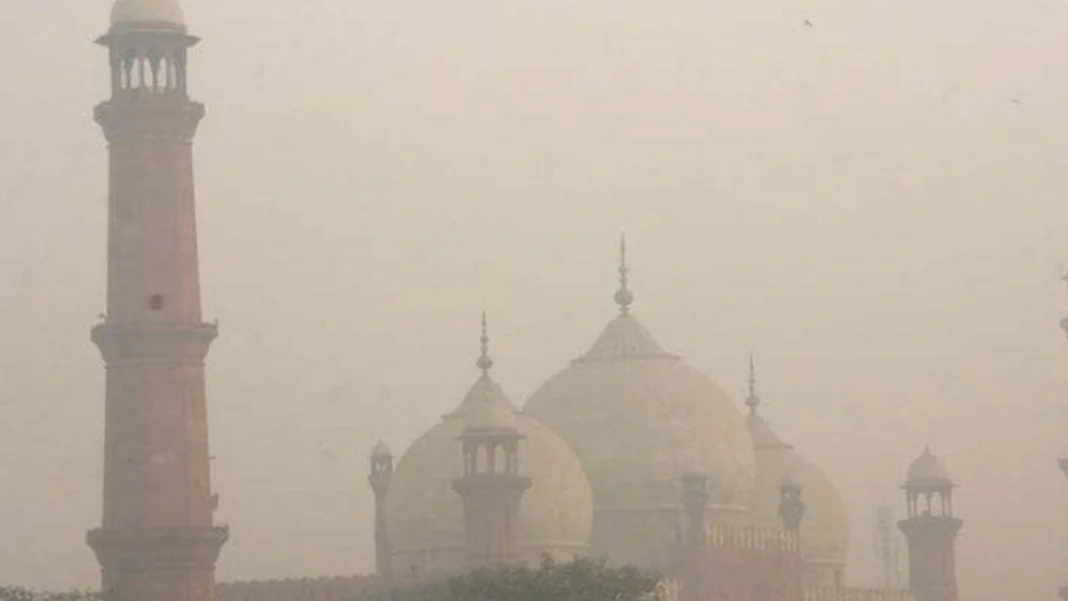
Winter makes the problem worse. Temperature inversions in cold months restrict vertical dispersion, so pollutants accumulate close to the ground instead of clearing. The result is the thick winter smog that has become a regular feature of life in Lahore and other Punjab cities, closing schools at times and forcing residents indoors.
Where the pollution comes from
Lahore and Karachi do not share the same pollution profile, and the report treats them separately. In Lahore, transport is the largest source of primary PM2.5 emissions, at 35 per cent. Industry follows at 28 per cent, and brick kilns account for 17 per cent. Those three sources together explain most of the fine particles that residents breathe in the city.
Karachi presents a different picture. Industrial activity accounts for 49 per cent of emissions there, according to the report. The contrast matters for policy. A single national rule will not fix both cities, since the dominant sources differ from one airshed to another.
The report also sets out measures that could reduce emissions by up to 50 per cent. It does not present that cut as easy or automatic. It depends on action across transport, industry and kilns, and on sustained enforcement rather than short campaigns during the worst smog weeks.
Why this report lands now
The timing gives the findings added weight. Feature Pakistan reported that Lahore ranked as the second-most polluted city in Punjab during the current smog spell, and that a return of smog pushed Lahore air quality readings higher earlier in October. A revived clean environment fund has also been announced for Pakistan, which gives the report a live policy audience.
Winter is the test period. If emissions measures stay on paper while inversions trap pollution near the ground, the gap between the report and daily life will stay visible in hospital visits and missed school days. If transport, industry and kiln controls tighten together, the report offers a baseline against which any improvement can be measured.
Rain can give short relief, as Feature Pakistan noted when rain and hail brought Lahore some air relief, but rain does not change the sources. The report argues that only source-level cuts will change the annual averages that drive the life expectancy figures.
What happens next
The next step belongs to provincial and city authorities in the four airsheds studied. They must decide which measures from the report to adopt, how to enforce them, and how to report progress in public. Residents will judge those choices by the air they breathe in the coming winter, not by the launch of another report.