Pakistan agriculture financing has reached Rs1.329 trillion, covering about 3.5 million borrowers, the Finance Division told a steering committee in Islamabad on Wednesday.
Finance Minister Muhammad Aurangzeb chaired the sixth meeting of the Access to Finance Steering Committee. The committee reviewed progress on expanding affordable finance for small and medium enterprises, agriculture, exports and housing.
Aurangzeb called for faster disbursements and stronger implementation. He said access to credit must turn into tangible benefits for farmers, businesses and underserved communities.
Pakistan agriculture financing: the smallholder scheme
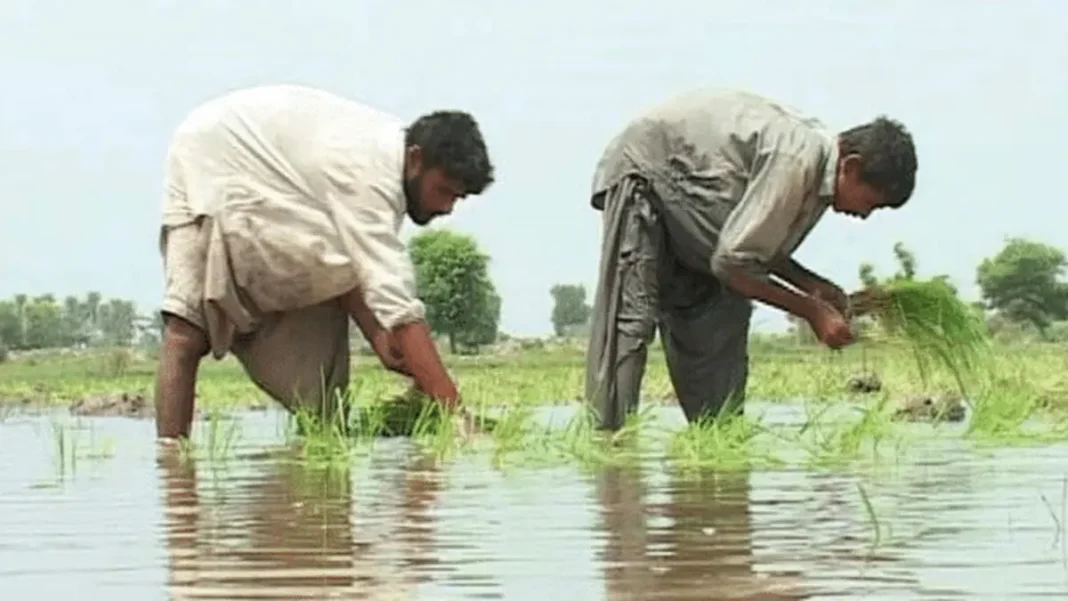
Under the Zarkhez-e: Asaan Zarai Qarza Scheme, officials had approved 20,176 loan applications worth Rs8.674 billion. Of those, 6,132 collateral-free loans worth about Rs2.34 billion had been disbursed to smallholder farmers.
Collateral-free lending matters for small farmers. Many smallholders do not own land titles or assets that banks usually demand as security. A loan without collateral can therefore open formal credit to farmers who would otherwise borrow from informal lenders at higher cost.
The committee also discussed ways to expand financing for livestock and dairy businesses. It discussed greater private-sector participation across agricultural supply chains, from inputs and storage to processing and sales.
The wider access-to-finance picture
The same meeting reviewed small business finance. Outstanding financing for small and medium enterprises reached Rs1.148 trillion, including Rs538 billion for small enterprises, as of October 23, 2026. That figure came from the Finance Division press release reported by Business Recorder.
The committee reviewed the Small and Medium Enterprises Development Authority’s capacity-building roadmap. The roadmap focuses on financial literacy, better documentation, accounting support and digital tools. Those steps aim to help small firms become ready for formal loans.
Housing finance also featured in the review. Outstanding housing finance stood at Rs455 billion, serving 241,500 borrowers. Under the Apna Ghar Programme, 86,896 applications involving Rs511 billion had been approved, while 15,584 loans worth about Rs91 billion had been disbursed.
The committee stressed that access to finance supports economic inclusion, entrepreneurship, job creation and poverty reduction. It reviewed progress on earlier agreed actions and heard updates from sectoral sub-committees on implementation and remaining bottlenecks.
Why farm credit matters now
Farm credit arrives at a sensitive time for rural households. Wheat and flour prices have been under close watch, with the government importing wheat to steady supplies and raising the wheat support price for 2027. Credit that reaches small farmers on time can help them buy seed, fertiliser and other inputs for the next crop.
The test for the Zarkhez-e scheme is disbursement, not approval. Approvals worth Rs8.674 billion show demand and processing. Disbursements of Rs2.34 billion show how much money has actually reached smallholders so far. The gap between the two figures is the number to watch at the next committee meeting.
Livestock and dairy financing also deserve attention. Livestock forms a large part of rural incomes, yet it often receives less formal credit than crop farming. Stronger financing for livestock and dairy, with private-sector participation, could spread risk and income across the year, rather than leaving farmers dependent on a single harvest.
The committee’s message was clear on pace. Aurangzeb urged financial institutions and implementing agencies to move faster. For farmers, faster means loans approved and paid before the planting window closes, not after it.
Feature Pakistan earlier reported on a government order for a Smeda revival plan in four weeks, on a five-year kinnow exports roadmap, on imported wheat reaching Karachi port and on a World Bank package linked to wheat and sugar reforms.
Frequently asked questions
How much is Pakistan’s outstanding agriculture financing?
Outstanding agriculture financing has reached Rs1.329 trillion, covering about 3.5 million borrowers.
What is the Zarkhez-e scheme?
Zarkhez-e: Asaan Zarai Qarza is a scheme for smallholder farmers. It had approved 20,176 loan applications worth Rs8.674 billion, with 6,132 collateral-free loans worth about Rs2.34 billion disbursed.
How much SME financing is outstanding?
Outstanding small and medium enterprise financing reached Rs1.148 trillion as of October 23, 2026, including Rs538 billion for small enterprises.
What did the finance minister ask for?
Muhammad Aurangzeb called for faster disbursements and stronger implementation, so that access to finance brings tangible benefits to farmers and businesses.